Ries Crater Nordlingen Meteorite Impact Geopark Fossil Hunting Guide
Image: Calistemon (CC BY-SA 4.0)
Nördlingen's Ries Crater is a 24 km meteorite impact structure formed 14.8 million years ago. Walk the town wall built from suevite and visit the RiesKrater Museum.
By Edward Chen · Updated 30 July 2026
Introduction
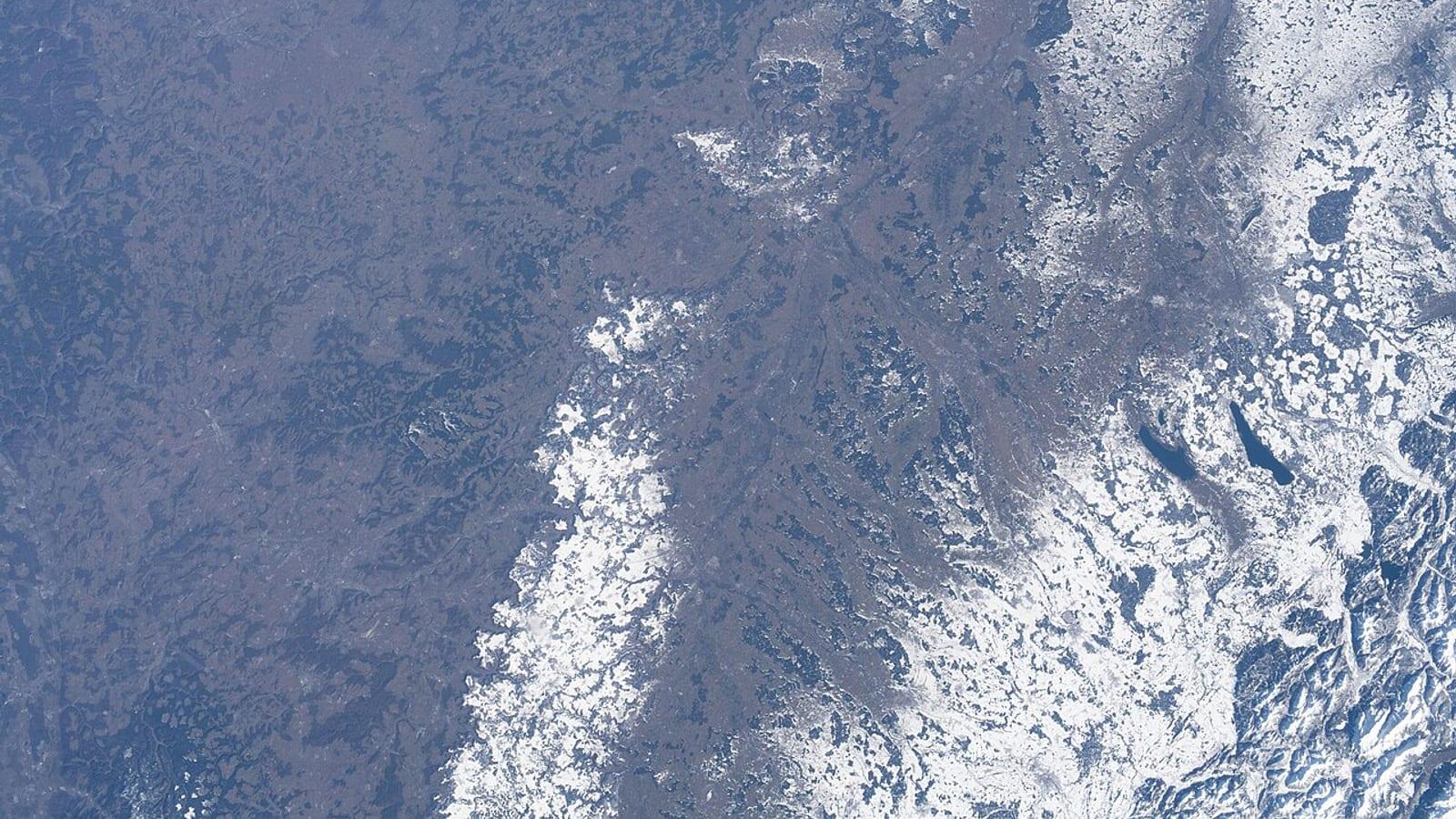
Fourteen point eight million years ago, a meteorite roughly one kilometre in diameter struck the area now occupied by the town of Nördlingen and the surrounding farmland of the Donau-Ries district in Bavaria. The impact released energy orders of magnitude greater than any recorded volcanic event, excavating a crater 24 kilometres in diameter, vaporising and ejecting billions of tonnes of rock, and creating entirely new mineral phases that had never before existed on Earth's surface. Today, that crater is one of the best-preserved impact structures on the planet, the town of Nördlingen stands at its centre surrounded by a medieval wall built from suevite impact breccia, and the RiesKrater Museum at the heart of the old town provides what is widely regarded as one of the world's best public explanations of impact geology.
The Ries is not a fossil site in the conventional sense. There are no ammonite beds or dinosaur tracks. What you will find instead are in-situ geological structures that exist nowhere else in Germany: shatter cones in exposed bedrock, suevite boulders visible in building facades across the town, and the crater rim itself as a visible feature of the landscape. NASA sent Apollo astronauts here to train in the 1960s and 1970s because the Ries resembles lunar impact craters so closely. The UNESCO Geopark Ries encompasses the entire impact structure and manages public access to key geological sites. This guide covers the museum, the in-situ geological features accessible to visitors, the science of the impact, and how to plan a visit to one of Europe's most significant geological sites.
 Photo: Earth Science and Remote Sensing Unit, NASA Johnson Space Center, Public domain, via Wikimedia Commons

Location and Directions
Address
RiesKrater Museum, Eugene-Shoemaker-Platz 1, 86720 Nördlingen, Bavaria, Germany.
Directions
From Nuremberg, take the A6 west toward Heilbronn. Exit at Dinkelsbühl/Fichtenau (exit 52), then follow the B25 south for approximately 30 km to Nördlingen. Total distance is approximately 100 km. Allow around 75 minutes.
From Munich, take the A8 west to Augsburg, then the B2 north to Donauwörth, then the B25 west to Nördlingen. Total distance is approximately 145 km. Allow around 110 minutes. Alternatively, take the A9 north to Ingolstadt and then local roads northwest.
From Stuttgart, take the A7 north toward Würzburg, exit at Ellwangen, then follow the B29 east to Aalen and then east toward Nördlingen on local roads. Alternatively, use the B25 north from the Ulm/Augsburg direction. Total distance is approximately 110 km. Allow around 90 minutes.
Nördlingen is fully enclosed by its medieval town wall and the old town centre is partially pedestrianised. Follow signs to the central Marktplatz car parks (Parkhaus Alte Bastei or Parkplatz Kaiserwiese) and walk to the museum. The museum is located at Eugene-Shoemaker-Platz 1, a short walk from the Rathaus. Nördlingen has a train station on the Donau-Ries regional line connecting to Augsburg and Aalen. The museum is a 10-minute walk from the station.
What You'll See at the Ries
The Ries crater offers a range of in-situ geological features visible to the public, in addition to the museum's extensive exhibits.
Suevite is the most visible impact rock at Nördlingen. This polymict breccia contains fragments of rock from multiple pre-impact formations mixed with glass produced by the intense heat of the impact. It forms the majority of the Nördlingen town wall, and you can examine suevite blocks in detail at close range by walking the wall circuit. The rock has a distinctive appearance: angular rock fragments of various sizes and colours set in a fine-grained matrix, with glass shards and impact melt visible under a hand lens.
Shatter cones are striated conical fracture structures formed by the shock wave passing through rock at hypervelocity. They are the definitive field evidence of a meteorite impact and are found in exposed bedrock on the crater rim. The RiesKrater Museum can direct you to localities within the geopark where shatter cones are accessible for viewing. The museum's own collection displays excellent specimens from the region.
The crater rim is visible as a subtle but continuous ridge of elevated terrain encircling the Ries basin. The best views are from elevated points near Oettingen to the northeast or the Hahnenberg hill near Nördlingen. The rim marks the boundary of the original excavation cavity and has been modified by 14.8 million years of erosion, but its fundamental structure is intact.
The RiesKrater Museum's exhibits cover the physics of the impact event, the sequence of formation from initial contact to crater modification, the unique minerals and rocks created by the impact, the history of scientific recognition of the Ries as an impact structure, and the role of the Apollo astronauts' training visits in popularising impact geology. The museum holds an exceptional reference collection of impact rocks and shocked minerals from the Ries and from impact structures worldwide.
Geologic History
The Ancient Environment and Impact Event
During the middle Miocene Epoch, approximately 14.8 million years ago, the area that is now the Donau-Ries district was a moderately elevated plateau covered by Jurassic and Cretaceous sedimentary rocks, underlain by older crystalline basement. The climate was warm temperate, and the region was partly forested. This ordinary landscape was unchanged in an instant when a meteorite approximately 1 km in diameter struck at a velocity of 20–25 km per second.
The impact sequence lasted only seconds but was geologically transformative. Contact and compression of the incoming body with the target rock generated a shock wave that propagated outward at supersonic velocity, fractured and pulverised the target rock to depths of several kilometres, and produced pressures and temperatures far beyond those achievable by any volcanic or tectonic process. The excavation stage ejected billions of tonnes of rock and vaporised material into the atmosphere. Ejecta from the Ries has been found as far away as the Czech Republic (moldavite tektites). The modification stage saw the crater walls collapse inward, the central uplift of basement rock, and the settling of the suevite fallback breccia into the crater basin.
The resulting structure was a 24 km diameter crater with a rim of elevated, disrupted rock, a central basin, and a fill of fallback breccia and later sediments that accumulated in the lake that occupied the crater for millions of years after the impact. The Miocene Ries lake sediments that fill the basin floor contain freshwater fossils, including ostracods, molluscs, and plant material, as well as the impact breccias. The lake sediments are not the primary attraction of the site from a geological standpoint, but they provide stratigraphic context for the post-impact history.
The recognition of the Ries as an impact structure came only in 1960, when American geologists Eugene Shoemaker and Edward Chao identified coesite, a high-pressure polymorph of quartz that can only be formed by shock pressures exceeding those of any volcanic eruption. This was the first confirmed identification of an impact structure on Earth based on the presence of shock metamorphism minerals, and it changed the direction of planetary geology as a discipline.
How the Ries Became a Public Geological Site
Before 1960, the Ries basin was interpreted by German geologists as a volcanic maar or a tectonic depression. The circular form of the basin had been noted since the early nineteenth century, but no accepted mechanism for non-volcanic circular structures existed in European geological thinking at the time. Shoemaker and Chao's 1960 identification of coesite in Ries rocks, published in the same year, overturned this interpretation completely and established the Ries as the first confirmed terrestrial meteorite impact structure recognised by shock metamorphism evidence.
International scientific attention followed rapidly. NASA organised training visits for Apollo astronaut crews between 1965 and 1970, using the Ries as an analogue for lunar impact craters and the suevite as an analogue for lunar regolith. Apollo 14 and Apollo 17 crews trained at the Ries, and the association with the moon landings gave the site lasting popular recognition.
The RiesKrater Museum opened in 1990 in the Holzhofstadel, a barn of 1503 in Nördlingen's old town, purpose-built to explain the impact science and display the geological collection. The site was designated as a UNESCO Geopark (now Geopark Ries, part of the UNESCO Global Geoparks Network) in recognition of its outstanding geological significance. The geopark encompasses the entire 24 km impact structure and manages a network of geological viewpoints, information panels, and guided tours within the crater and on the rim.
Visiting Information and Regulations
Is Rock Collecting Allowed?
The Ries is a UNESCO Geopark and a protected geological monument under Bavarian natural heritage law. Commercial or systematic rock collection is not permitted. Small pieces of suevite or other impact rock that are found loose on the surface in non-protected areas may be collected as personal souvenirs in modest quantities, but removing material from protected outcrops, quarry walls, or designated geopark viewpoints is prohibited. Check current regulations with the Geopark Ries office before collecting any material.
The site is not a fossil site in the conventional sense and does not offer a fossil collecting experience. Its value lies in the in-situ geological structures: the town wall suevite, the shatter cone outcrops on the crater rim, and the landscape-scale crater geometry visible from viewpoints.
RiesKrater Museum admission: Adults approximately €4–5, reduced rates for children and seniors. Contact: +49 9081 84710, www.rieskrater-museum.de. The museum is open Tuesday through Sunday. Confirm current hours before visiting.
What to Bring
A camera is the most important item for this visit. The suevite textures in the town wall are highly photogenic and scientifically interesting at close range. Bring a hand lens or loupe (10x magnification) to examine the shock metamorphism textures and glass shards in suevite samples. Comfortable walking shoes are required for the town wall circuit and any crater rim excursions. Carry water, particularly in summer. The museum visit takes 60–90 minutes. Allow a further 60–90 minutes for the town wall circuit and any outdoor geological sites.
Safety
The museum and Nördlingen old town are accessible public environments. For crater rim and rural geopark excursions, use appropriate outdoor footwear and carry a map or use the geopark's trail markers. The crater rim roads involve rural driving. Drive carefully on narrow country roads. Do not approach active agricultural land without permission. The geopark's designated viewpoints are accessed via marked trails. Stay on the paths.
Sources
- https://www.rieskrater-museum.de
- https://www.geopark-ries.de (UNESCO Geopark Ries official site)
- https://doi.org/10.1126/science.132.3421.220 (Shoemaker & Chao, 1960, coesite identification in the Ries)
- https://en.wikipedia.org/wiki/N%C3%B6rdlinger\_Ries (general context. Cross-referenced with Shoemaker & Chao 1960 and Pohl et al. 1977)
- https://www.noerdlingen.de/tourismus
Nearby sites
 Hobbysteinbruch Solnhofen Fossil Hunting GuideAmmonites, Fish fossils
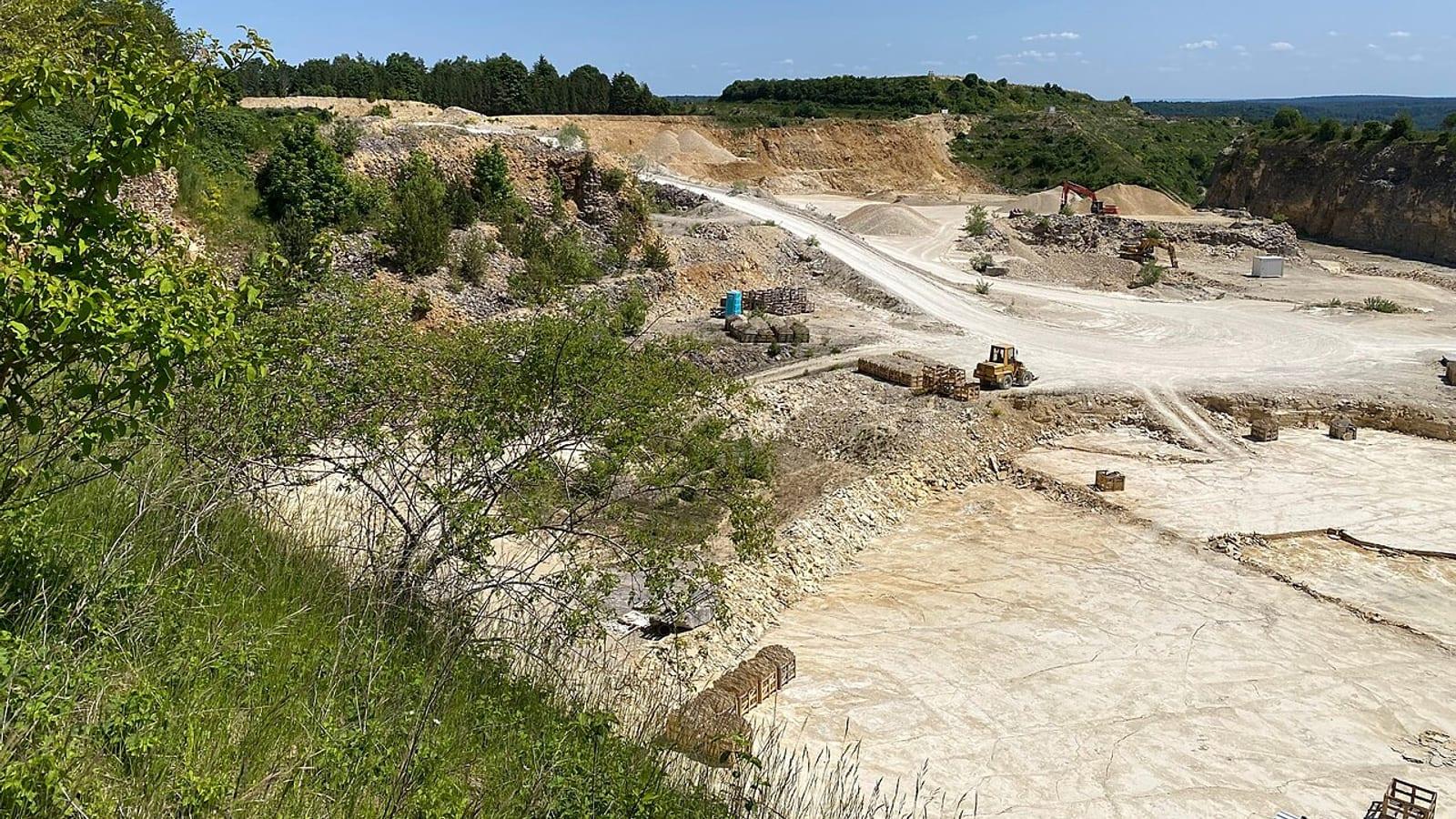 Steinbruch Schernfeld Jurassic Fossil Quarry Fossil Hunting GuideN/A
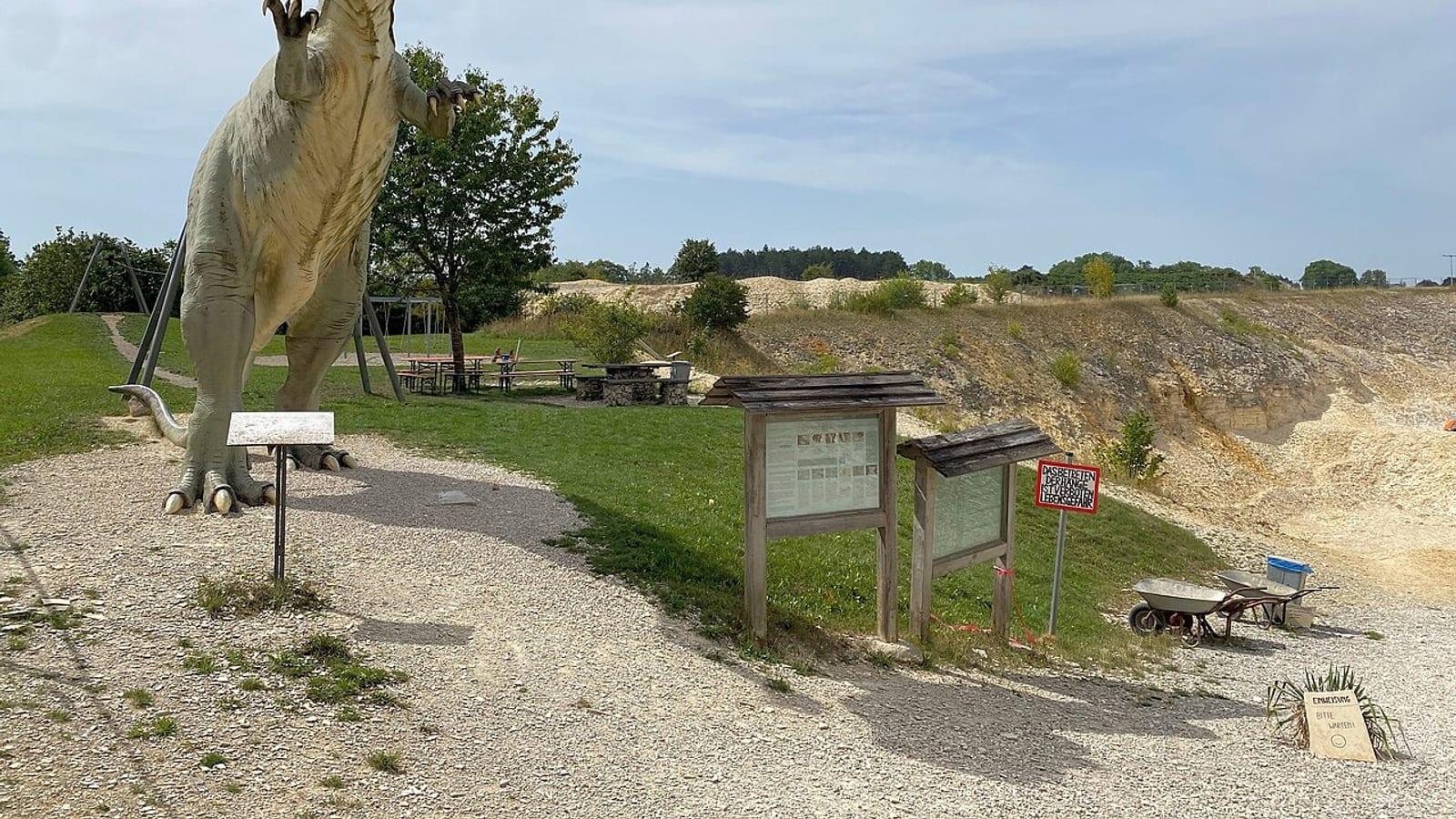 Fossiliensteinbruch Blumenberg Eichstatt Fossil Hunting GuideAmmonites, Fish fossils
 Fossiliensammelstelle Titting Free Fossil Hunting GuideAmmonites, Crinoid fragments