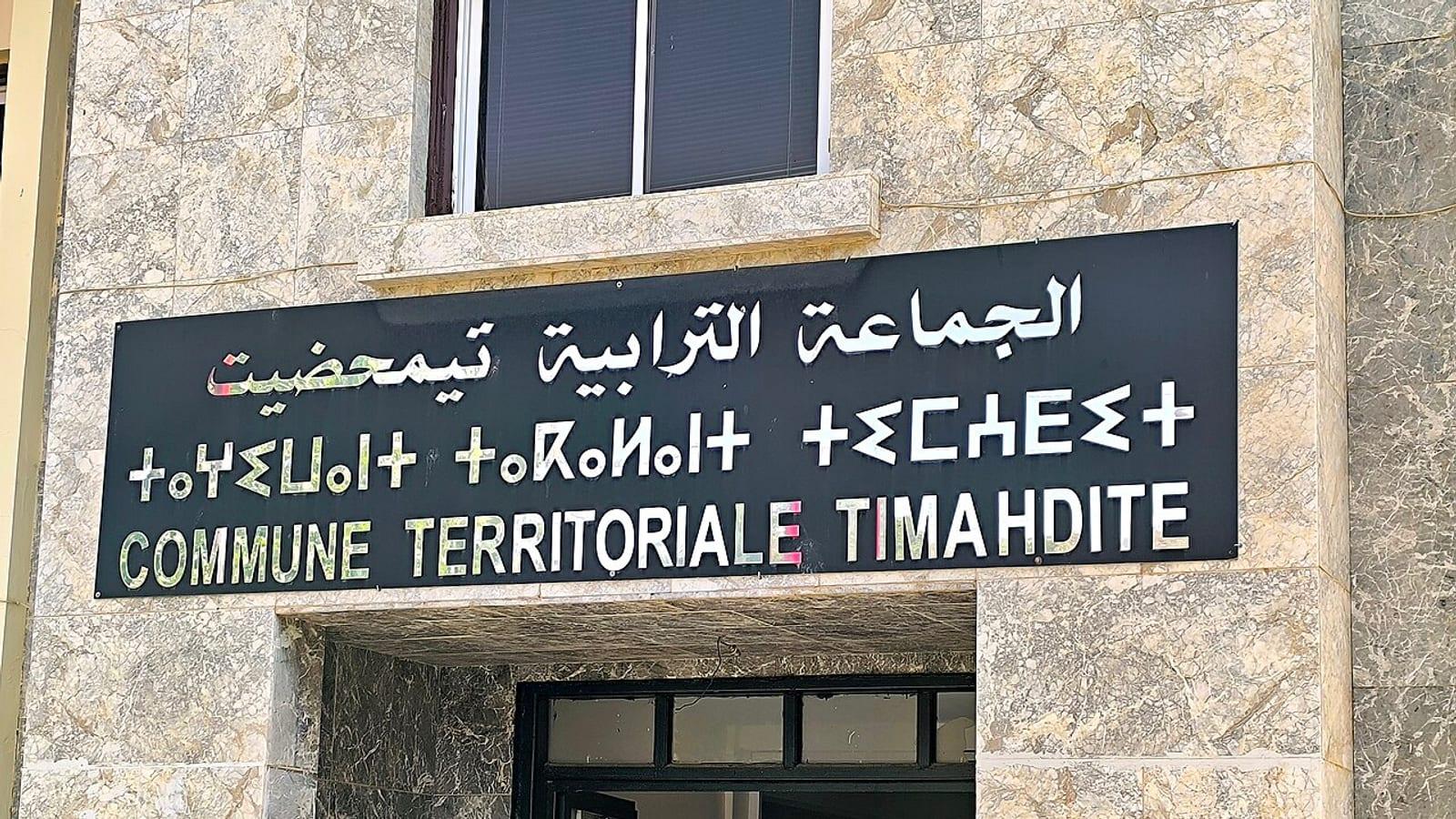
Timahdite Brachiopod Collecting Site Fossil Hunting Guide
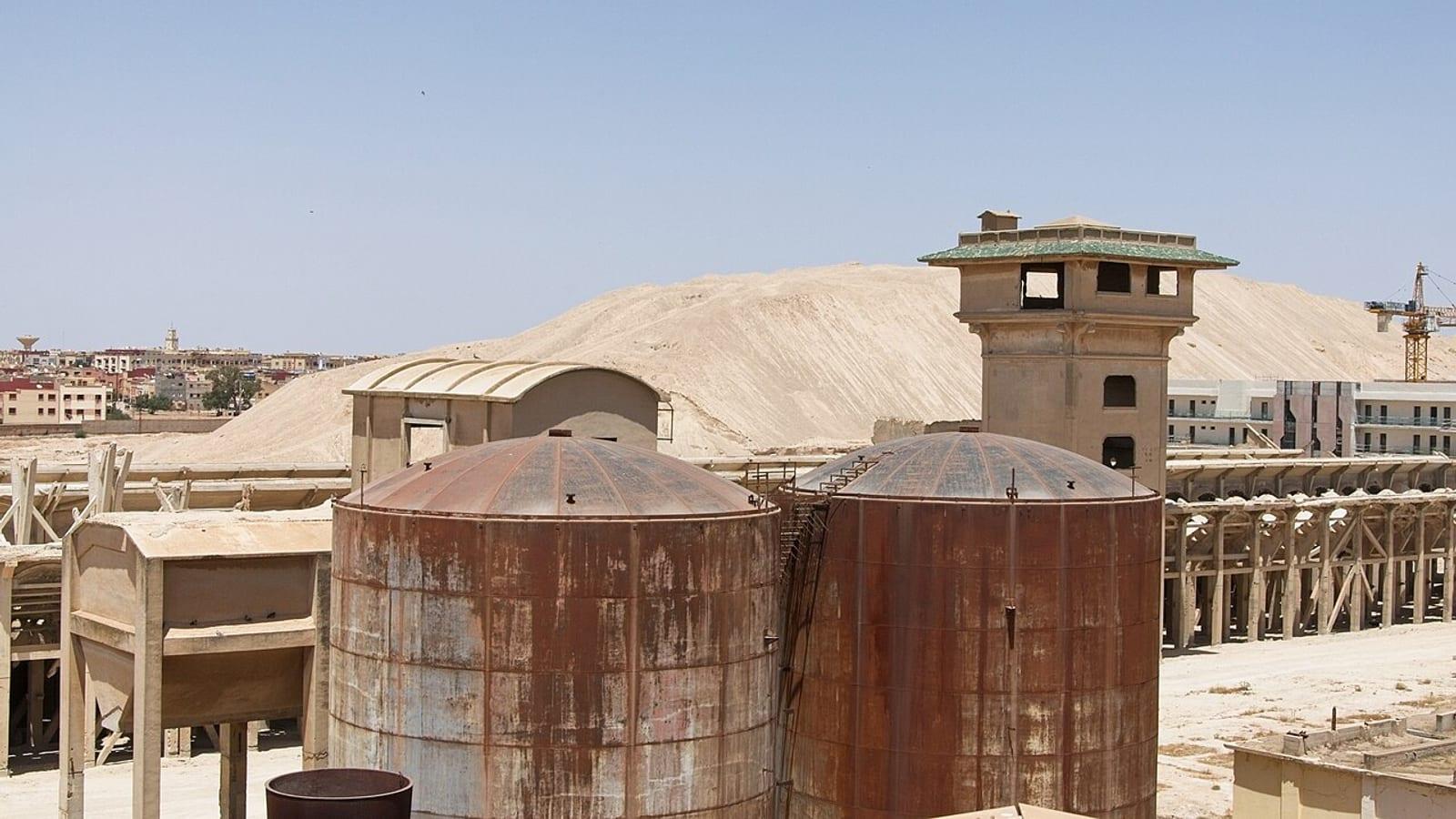
Image: RACHID BAYA (CC0)
The Timahdite brachiopod site in Morocco's Middle Atlas Mountains yields Devonian and Carboniferous spiriferids, crinoids, and corals from highland limestone exposures.
By Edward Chen · Updated 31 July 2026
Introduction
The Timahdite brachiopod collecting site sits in the Middle Atlas Mountains of Morocco, where Devonian and Carboniferous limestone exposures on the plateau and its margins preserve abundant brachiopods, the shelled marine invertebrates that dominated Paleozoic seafloors before being largely replaced by bivalve molluscs. Timahdite is a small market town at an altitude of roughly 1800 meters on the plateau between Azrou and Midelt, and the fossil-bearing limestone outcrops in the surrounding hills differ geologically from the famous Devonian trilobite beds of the Draa Valley: these are cooler-climate, deeper-shelf deposits yielding spiriferid and terebratulid brachiopods, crinoids, and associated invertebrates. For collectors building a comprehensive Moroccan or Paleozoic fossil collection, the brachiopod specimens from the Timahdite area provide specimens that are distinct in both fauna and geological context from the southeastern Moroccan sites.
This guide covers what brachiopod genera occur at the site, the geology of the Middle Atlas Devonian-Carboniferous sequence, how to reach Timahdite from major cities, and what practical arrangements to make for a collecting visit.
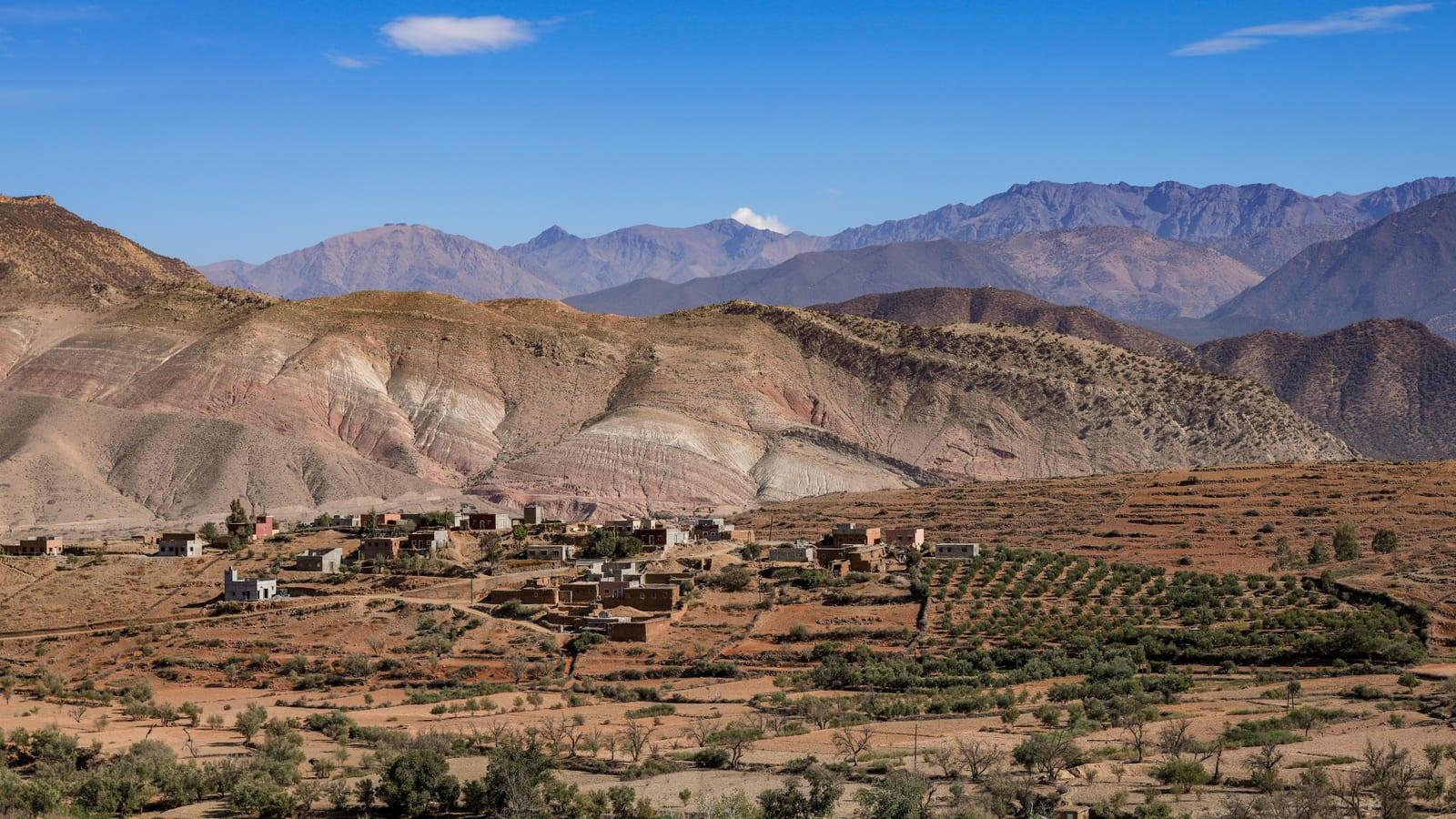
 Photo: RACHID BAYA, CC0, via Wikimedia Commons

Location and Getting There
Location
Timahdite is located on the Middle Atlas Plateau in Ifrane Province, in the Fès-Meknès region of central Morocco, approximately 30 km southeast of Azrou and 70 km northwest of Midelt via the N13 highway. The town sits at an elevation of approximately 1800 meters above sea level. The fossil-bearing outcrops are in the limestone hills and scarps within 10 to 30 km of town. Unlike the flat desert terrain of southeastern Morocco, the Middle Atlas landscape involves forested slopes, seasonal snowfall above 2000 m in winter, and cooler temperatures year-round.
Getting There
From Fez, take the N8 south to Ifrane and Azrou, then the N13 southeast approximately 30 km to Timahdite. The journey from Fez takes approximately 2.5 hours by car. From Meknes, follow the N13 southeast via Azrou, allowing approximately 2 hours. From Midelt, head northwest on the N13 approximately 70 km. The final access to fossil outcrops requires either a 4WD vehicle for off-road tracks or coordination with a local guide who knows the specific limestone exposure locations. Guesthouses in Timahdite and the nearby ski station area can assist with guide referrals. The N13 through town is paved and accessible year-round, though mountain passes above 2000 m may require snow chains in December through February.
What Fossils You'll Find
Spiriferid brachiopods are the dominant fossil at this site. These are recognized by their bilaterally symmetric valves with a straight hinge line and prominent fold and sulcus (a raised ridge on one valve corresponding to a groove on the other). In the Devonian and Carboniferous faunas of the Middle Atlas, several genera are present, including Spirifer and related forms. The shells are typically 2 to 6 cm across and preserved in grey to buff limestone, sometimes protruding from weathered rock faces as natural relief specimens.
 Photo: RealGatba, CC BY-SA 4.0, via Wikimedia Commons

Terebratulid brachiopods, with their more oval, smooth valves, also occur in the sequence. These are less distinctive in appearance than spiriferids but occur in greater abundance in some beds. Distinguishing brachiopods from bivalve molluscs in the field: brachiopod symmetry runs through the midline of each valve (the two valves are mirror images of each other when viewed front-on), while bivalve symmetry runs between the two valves.
Crinoid columnals are common throughout the limestone sections, often appearing as round button-like discs or star-shaped pieces in the matrix. Complete crinoid calyces are rare but occur in locally low-energy depositional pockets. Rugose and tabulate corals appear in the Devonian portion of the sequence, including horn corals and chain corals, preserved in cross-section in limestone exposures. Occasional gastropods and cephalopods add variety to the assemblage.
Geologic History
The Ancient Environment
The limestones producing brachiopods near Timahdite were deposited during the Devonian and early Carboniferous periods, broadly between approximately 390 and 320 million years ago. During the Devonian, the Middle Atlas region formed part of a shallow tropical to subtropical carbonate shelf on the northern margin of Gondwana, part of the same broad marine system that deposited trilobite-bearing limestones further south in the Anti-Atlas. By the early Carboniferous, the region had shifted to a somewhat cooler, deeper-shelf environment as Gondwana drifted toward higher latitudes, resulting in a transition in fauna from coral-reef-associated assemblages to cooler-water brachiopod and crinoid communities.
The Atlas tectonic belt, which was responsible for the folding and elevation of the Middle Atlas during the Mesozoic and Cenozoic, exposed the Paleozoic rocks at the surface. The limestone outcrops around Timahdite represent windows into the deep Paleozoic shelf sediments that underlie the mountain belt.
How Timahdite Became a Brachiopod Collecting Site
The Atlas Mountains were uplifted progressively during the Mesozoic and intensified during the Alpine orogeny in the Cenozoic, exposing Paleozoic sediments along fault scarps and ridge crests. Limestone outcrops in the Timahdite area were identified as fossil-bearing by local collectors and geological survey work in the twentieth century. The site has developed as a collecting locality more recently than the celebrated southeastern Moroccan sites, partly because its highland location makes it less accessible than the desert quarry areas, and partly because brachiopod fossils command lower commercial prices than the spiny trilobites of the Draa Valley.
Visiting and Collecting Information
Access and What to Expect
The Timahdite brachiopod site operates as a tour-only locality where independent access to specific outcrops without local guidance is impractical. Guide-arranged visits typically cost 300 to 500 MAD (30 to 50 USD) per person for a half-day including transport to the outcrops. Collecting from exposed limestone scarps is generally permitted. Take only reasonable quantities of surface material. Unlike the commercial quarry operations of southeastern Morocco, this site is less developed for tourist fossil collecting, which means the experience is more raw and self-directed.
There is no fixed tourist allowance for taking fossils out of Morocco. Article 116 of the 2015 Mining Code (Law 33-13) requires a permit for collecting and trading fossils, minerals, and meteorites, with the procedures set out in a 2019 implementing decree and the framework revised again in 2025. Enforcement is uneven, and small purchases from licensed dealers are commonly carried out without incident, but that is practice rather than an entitlement. Keep a receipt and a written description of each specimen and its origin, and check the current rules with the Moroccan ministry responsible for mines before you travel.
What to Bring
The Middle Atlas climate is cooler than the Saharan sites. Bring a mid-layer fleece or jacket even in summer, as temperatures at 1800 m drop quickly after sunset. Waterproof footwear with ankle support is recommended, as the limestone outcrops can be muddy after rain. A geology hammer, cold chisel, and safety glasses are standard kit. Bring at least 1.5 liters of water. Dirhams in cash are necessary as card payment is not available in the field.
Safety and Practical Tips
The Middle Atlas is a genuine mountain environment. Check weather forecasts before departure from October through March. Snowfall can close high passes with little warning. Tell your guesthouse where you are going and when you expect to return. The limestone scarps around Timahdite involve some vertical exposure. Maintain safe distances from cliff edges and test rock stability before placing weight on it. The area is sparsely populated and mobile phone coverage is patchy in the hills away from the N13 corridor.
Sources
Nearby sites
 Bakrit Starfish Echinoid Site Ifrane Fossil Hunting Guidestarfish and echinoid fossils, Starfish
 Filon 12 Vanadinite Fossil Mine Mibladen Fossil Hunting Guidevanadinite, trilobites
 Ziz Gorge Echinoid Site Errachidia Fossil Hunting GuideMicraster echinoids, irregular echinoids
 Khouribga Phosphate Shark Tooth Site Fossil Hunting GuideShark teeth, Mosasaur teeth