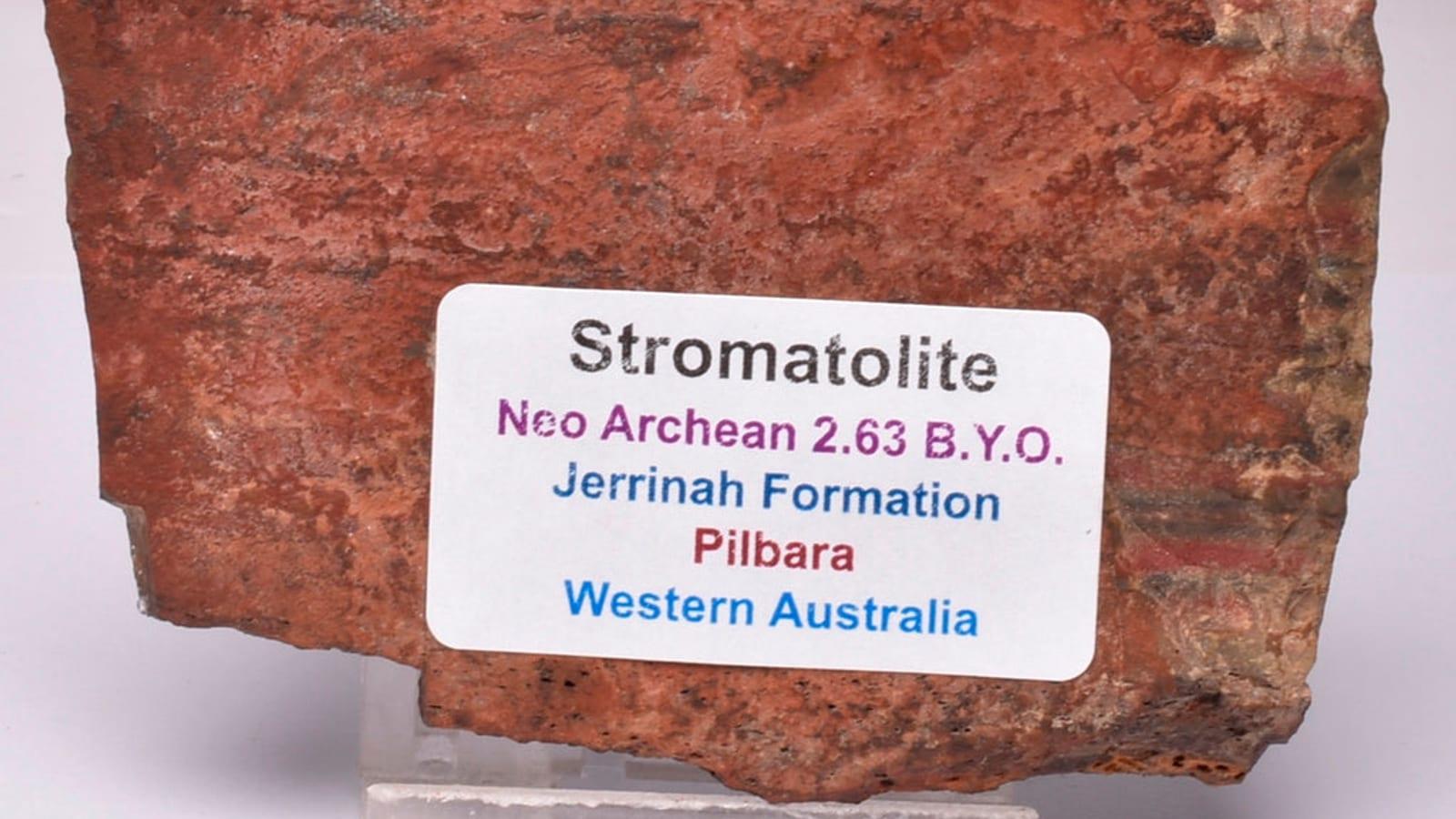
Pilbara Stromatolites Fossil Hunting Guide
Pilbara stromatolites - worlds oldest fossils 3.5 Ga. Trendall egg carton, North Pole hot springs, cyanobacteria, Marble Bar WA.
By Edward Chen · Updated 3 August 2026
Introduction
The Pilbara Stromatolites are among Earth's oldest fossils, dating back almost 3.5 billion years to the Archean Eon. Pilbara stromatolites are dated primarily through radiometric dating of the surrounding rocks, using uranium-lead and isotope studies, to give ages of around 3.43 to 3.48 billion years, consistent with Paleoarchean chronologies.
These ancient microbial structures represent some of the earliest evidence of life on the planet and are central to research on the origin and evolution of life. The stromatolites are dome-shaped layered structures built by communities of cyanobacteria (blue-green algae) that were among the first organisms to perform photosynthesis, gradually transforming Earth's atmosphere by producing oxygen.
 Photo: NASA/METI/AIST/Japan Space Systems, and U.S./Japan ASTER Science Team, Public domain, via Wikimedia Commons
.jpg)
The Pilbara region contains multiple stromatolite sites within iron-rich rock formations that formed before oxygen was abundant in the atmosphere. These stromatolites are unburied, undisturbed, and among the best-preserved ancient crustal rocks on Earth. The structures matter both for understanding early Earth history and as analogues for the kind of fossil that might be found on Mars.
The landscape is remote and extreme. The region is sparsely populated, with red pindan soils and long open views, and a visit needs careful preparation for desert conditions.
Location and Directions
Pilbara stromatolite sites are in remote parts of the Pilbara region in north-western Western Australia. Access typically requires a four-wheel drive and desert driving experience.
There are no visitor facilities at the ancient stromatolite sites, because they are remote and scientifically sensitive. Travellers normally base themselves in Marble Bar or Port Hedland and use four-wheel-drive tour operators familiar with remote outback access. Camping and outback accommodation are available in these regional centres, but organised guided tours are specialist rather than mainstream.
The Pilbara climate is hot and arid year-round, with very high summer temperatures. Winter, roughly May to September, is the recommended field season for cooler weather and lower risk from heat exposure. Monsoonal rains fall in summer and can make remote access difficult and sometimes dangerous.
Other stromatolites are accessible at Shark Bay, around 1,300 kilometres south, and that is the practical option for most visitors. Unlike the ancient Pilbara structures, the stromatolites at Shark Bay's Hamelin Pool Marine Nature Reserve are living, growing today in hypersaline water and viewed from boardwalks. Shark Bay's stromatolites are young and biologically active. The Pilbara's are billions of years old and are studied for deep-time biosignatures.
Hamelin Pool is reached from Shark Bay Road, 27 kilometres from the North West Coastal Highway. The road is sealed apart from a short unsealed two-wheel-drive section to the car park, and it is an easy 750-metre return walk from the car park to the stromatolites. Other stromatolites nearby can be reached by snorkelling with Shark Bay Eco Tours.
 Photo: James St. John, CC BY 2.0, via Wikimedia Commons
_2_(17186345399).jpg)
What Fossils You'll See
Ancient stromatolite formations in open desert landscape. The region also exposes gorges, banded iron formations, and ecosystems found nowhere else. Visiting protected reserves requires permission from the managing authority.
Microbial mats are ecosystems in which different species of bacteria and other microbes live together in communities that depend on each other. In certain conditions those communities trap particles and bind them into stone. When that happens, microbial mats become microbialites, and some microbialites form the taller layered structures called stromatolites.
The shape and texture of a microbial mat depends on exposure and on the depth and movement of water. Between high and low tide, structures have to cope with hours underwater followed by hours in the air. Water movement shapes them further.
Microbial mats have existed for more than 75 percent of Earth's history. Over the last 2 billion years, cyanobacteria in microbial mats changed the course of evolution by putting oxygen into the atmosphere. During the extinction that ended the age of dinosaurs, microbial mats were among the last communities to be affected and the first to move into the niches other species left empty.
Geologic History
The stromatolites are preserved in the Pilbara Craton, some of Earth's oldest exposed rock. They occur in iron-rich chert and sedimentary formations deposited in shallow seas more than 3 billion years ago.
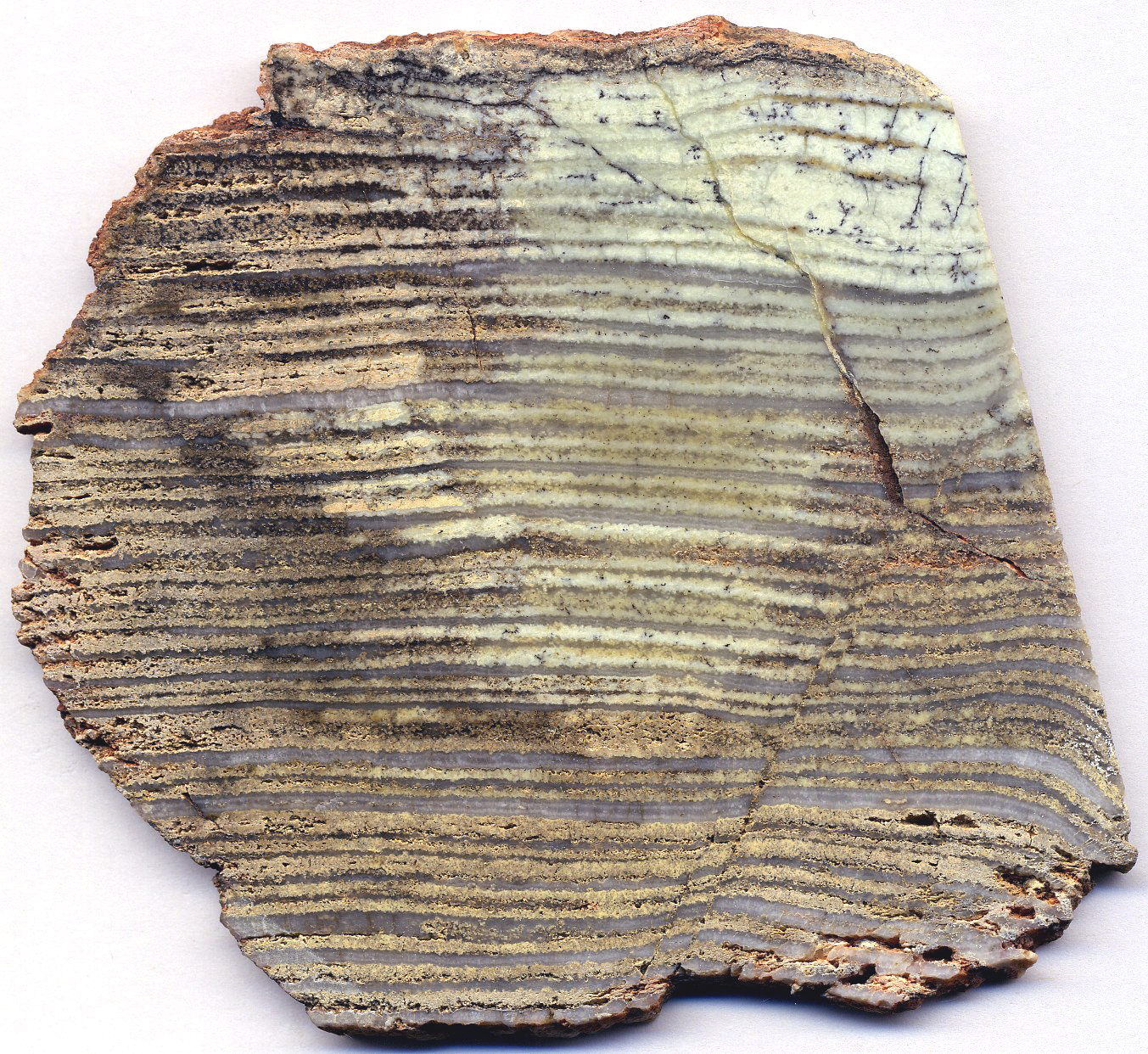 Photo: James St. John, CC BY 2.0, via Wikimedia Commons
_(15177778617).jpg)
The Archean climate was nothing like today's. There was no oxygen in the atmosphere, volcanic activity was intense, and meteorite bombardment was frequent. The cyanobacteria that built these stromatolites began the process of oxygenating the atmosphere.
How the Pilbara Stromatolites Came to Be Protected
Pilbara stromatolites were first recognised as ancient life forms in the 1960s and have been studied continuously since. They remain the subject of active research into the earliest life on Earth and into astrobiology. A. C. Allwood, Malcolm R. Walter, Ian W. Burch, and Balz S. Kamber have published detailed studies of 3.43 billion-year-old stromatolite reefs in the Strelley Pool Chert. NASA and ESA teams have studied Pilbara stromatolites as analogues for astrobiological research relevant to Mars missions.
Collecting Rules and Regulations
No collecting is permitted. The stromatolites are protected for their scientific value. Visitors may observe and photograph them, and access to protected reserves requires permission from the managing authority.
Safety
The Pilbara is remote desert, and the drive is more dangerous than anything at the outcrop.
Access to the ancient stromatolite localities is by unsealed road and generally needs a four-wheel drive and real experience of outback driving. Distances between fuel stops are long, mobile coverage is absent across most of the region, and a breakdown can leave you waiting a long time for anyone to pass. Carry a satellite phone or a personal locator beacon, extra fuel, recovery gear, and far more water than the trip should need. Tell someone your route and your expected return time before you leave the last town, and stay with the vehicle if you break down.
Heat is the other constant. Summer temperatures in the Pilbara regularly exceed 45°C and there is no shade. May to September is the practical field season, and even then the middle of the day is hard going. Start early, drink steadily, and carry at least four litres per person per day plus a reserve in the vehicle.
Monsoonal rain falls in summer and can cut roads without much warning. Creek crossings run fast and deep, and floodwater across an unsealed track is not worth attempting. Check road conditions with Main Roads Western Australia and with the local shire before setting out.
Snakes, including several highly venomous species, are active in the warmer months. Wear boots and long trousers, watch where you step among rocks and spinifex, and carry compression bandages.
Hamelin Pool at Shark Bay is a much simpler proposition. The approach is sealed apart from a short unsealed section to the car park, and the stromatolites are seen from a boardwalk on a 750-metre return walk. Stay on the boardwalk, because the structures there are alive and are damaged by being walked on. The site is exposed and has no shade, so take water and sun protection even for a short visit.
Sources
Nearby sites
 Broome Dinosaur Trackways Gantheaume PointSauropod tracks, Theropod tracks
 Windjana Gorge Geikie Gorge Kimberley Fossil Hunting Guidecorals, stromatoporoids
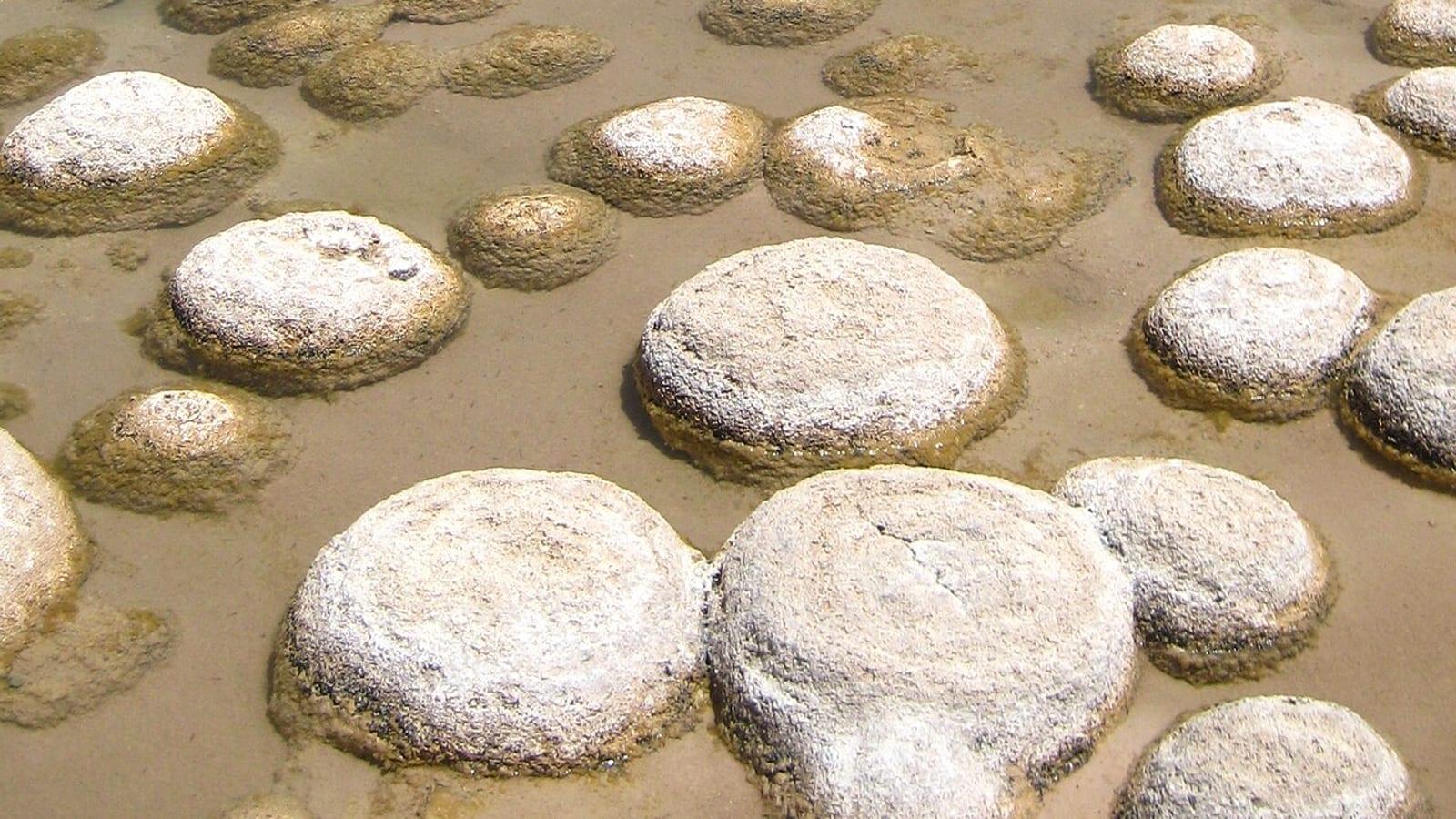 Lake Clifton Thrombolites Yalgorup National Park Fossil Hunting GuideThrombolites
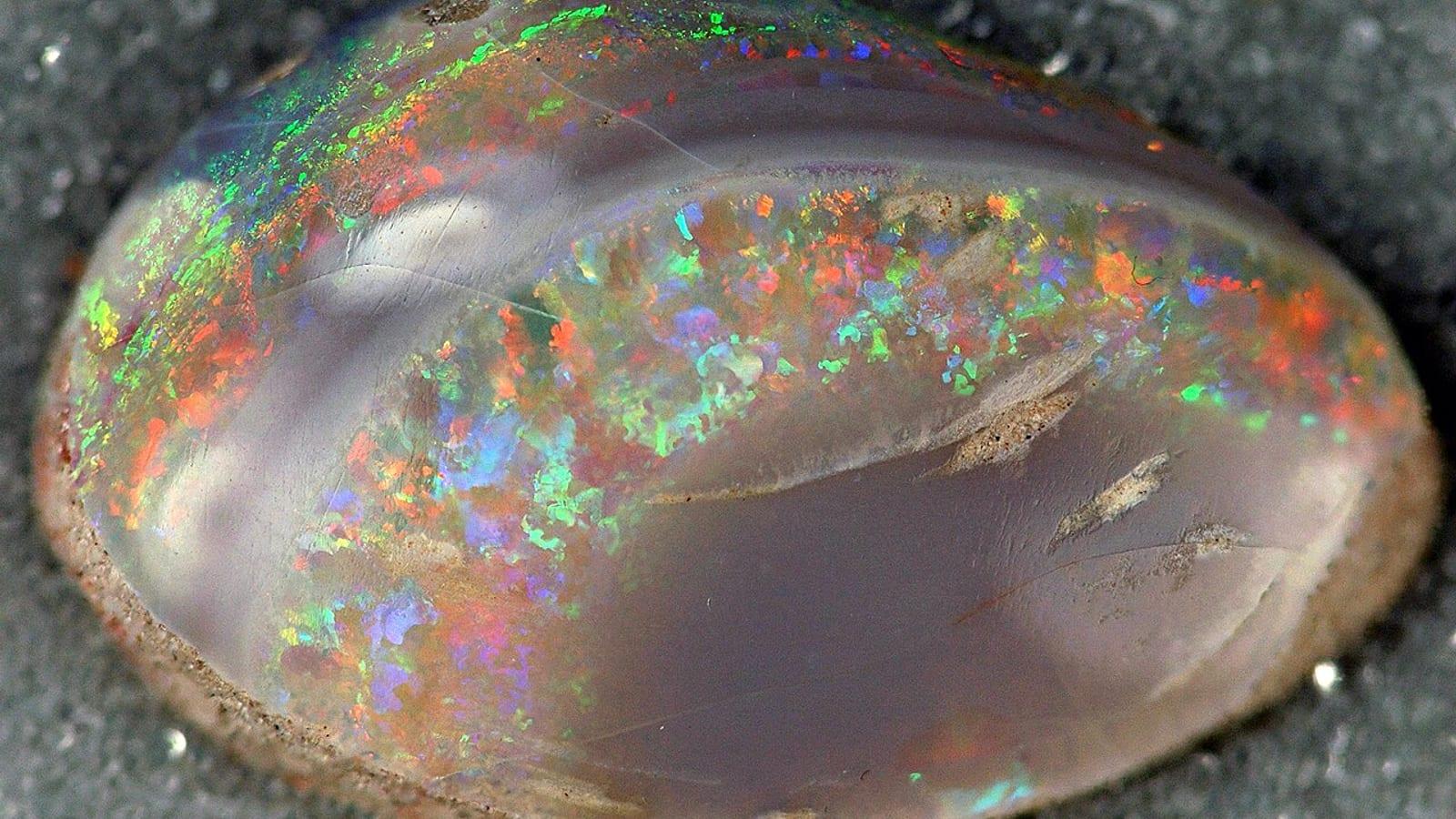 Coober Pedy Opal Fossils Eric Plesiosaur Fossil Hunting GuideBivalves and gastropods, Belemnites