Florida Fossil Hunting Guide
10 Best Fossil Hunting Sites in Florida
Florida sits on top of one of the world's richest Miocene and Pliocene fossil deposits. Phosphate-rich sediments underlie most of the state south of Gainesville, and wave action, river erosion, and mining operations continuously expose vertebrate material that would otherwise remain buried. These seven sites represent the best public access points — from the famous shark-tooth beaches at Venice to the permitted river collecting on the Peace River.
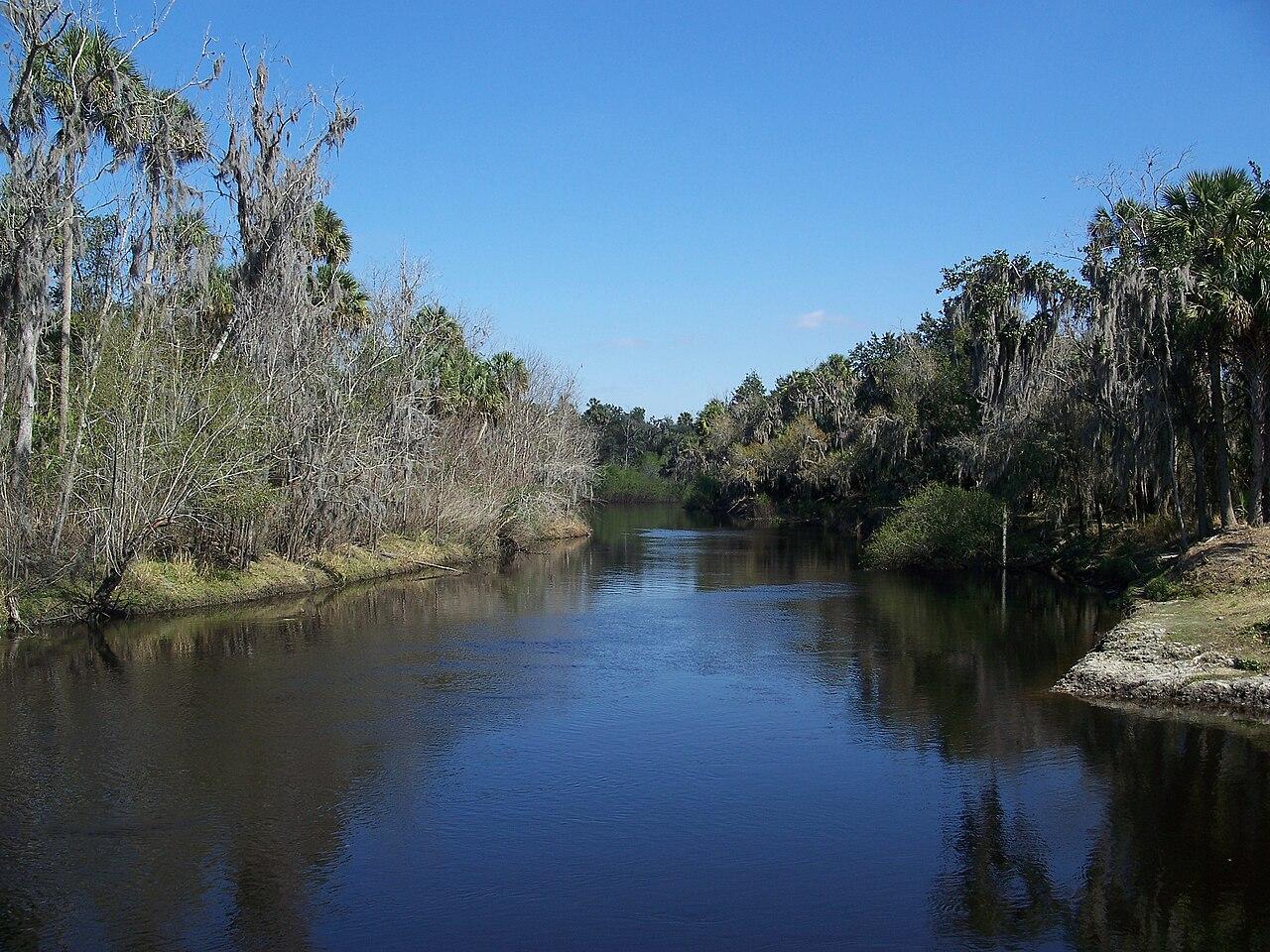
7 fossil sites
Updated 1 August 2026
What to expect in Florida
Florida lacks the dramatic cliffs of the Jurassic Coast or the active quarries of Bavaria, but its sheer fossil density is unmatched for casual beachcombing. The state sits on the Hawthorn Group, a Miocene-age phosphatic formation that extends across the Florida Platform and contains one of the best-preserved Neogene vertebrate faunas anywhere in the world. Shark teeth are the most common find, but patient collectors working the Peace River or the Bone Valley spoil piles encounter whale bones, dugong ribs, mastodon teeth, and giant ground sloth claws.
Most beach foreshore areas in Florida are public land below the mean high-water mark, so no permit is required to search. Tools permitted at beach sites include hand sifters, small shovels, and snorkel gear for offshore foraging. Florida law prohibits the use of mechanical equipment or dredging without a permit, and vertebrate fossils removed from state-owned submerged lands (rivers and offshore areas) are technically regulated under the Florida Division of Historical Resources.
- 1
Caspersen Beach Fossil Hunting Guide
Florida, United States
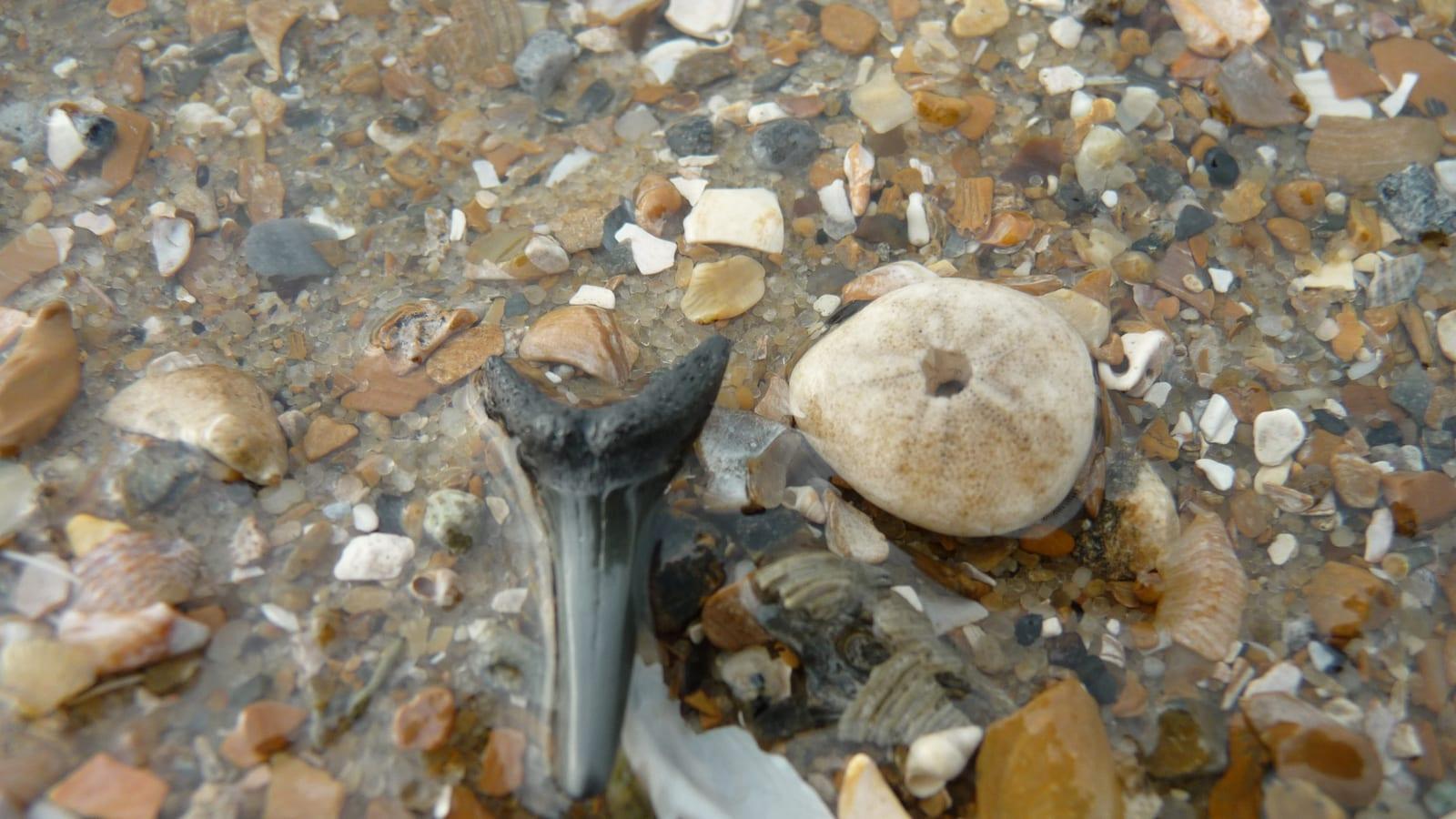
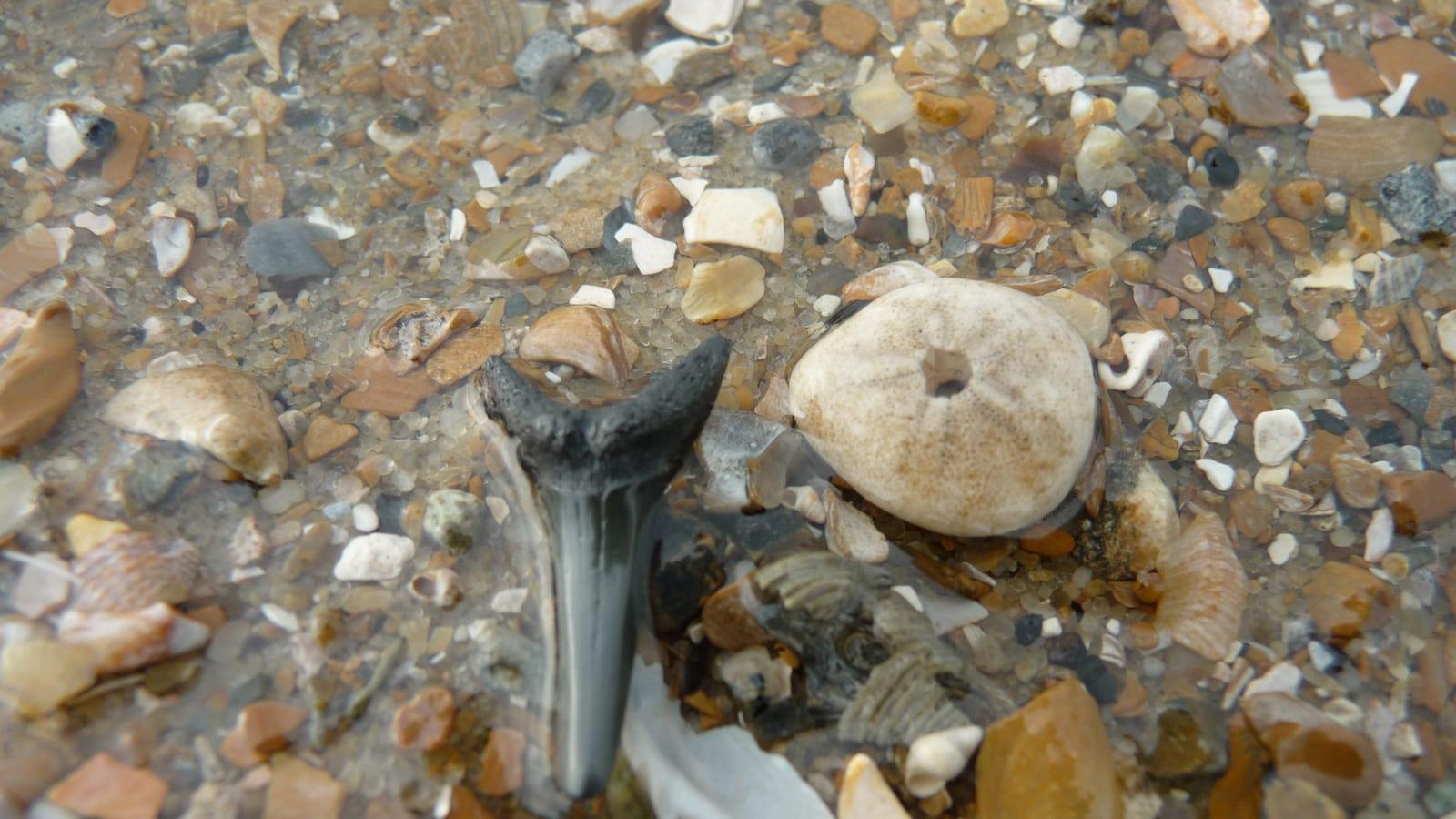
Free collectingShark TeethMollusksCaspersen Beach is the most productive public shark-tooth beach in the United States. The exposed phosphatic sediments are older and less disturbed than the nearby Venice city beach, producing megalodon, great white, and tiger shark teeth in sizes up to 4 inches. Arrive at low tide, work the strand line, and bring a sand sifter.
Read the full guide → - 2
Peace River Fossil Hunting Guide
Florida, United States
Permit requiredShark TeethRay TeethMegalodonThe Peace River drainage system in Hardee and De Soto counties has produced more megalodon teeth, mastodon molars, and giant ground sloth bones than any other site in Florida. Collectors wade the shallow river, sifting gravel bars where Miocene and Pliocene phosphate deposits continuously erode into the current. A freshwater permit is required from the Florida Fish and Wildlife Conservation Commission. The Black Water Fossils YouTube channel documents megalodon and vertebrate finds from Peace River dives — a useful reference for what size and condition of specimens to expect.
Read the full guide → - 3
Bone Valley Fossil Hunting Guide
Florida, United States
Permit requiredShark TeethMegalodonMarine MammalsBone Valley is the informal name for the phosphate-mining belt between Tampa and Fort Myers. The mining spoil piles produce extraordinary concentrations of Miocene vertebrate remains: whale vertebrae, dugong ribs, shark teeth, ray dental plates, and occasional early horse teeth. Legal access requires permission from individual mine operators, but several guided dig days run each year through the Florida Fossil Hunters association. The Florida Paleontological Society also maintains a list of publicly accessible collecting sites and organises field trips across the state for members.
Read the full guide → - 4
Venice Beach Fossil Hunting Guide
Florida, United States
Free collectingShark TeethMegalodonRay TeethVenice Municipal Beach is the easiest entry point for first-time Florida fossil hunters. Shark teeth erode continuously from offshore phosphatic ledges and wash up on the foreshore, particularly after storms and at low tide. The Venice Shark's Tooth Festival each spring is the best time to visit if you want to combine collecting with talks and vendors.
Read the full guide → - 5
Englewood Beach Fossil Hunting Guide
Florida, United States
Free collectingShark TeethRay TeethMollusksEnglewood Beach on Manasota Key receives less foot traffic than Venice but draws from the same offshore phosphate formations. Shark teeth accumulate at the northern end of the beach where a slight current change deposits heavier material. The site is particularly good after northeast winds push material onshore.
Read the full guide → - 6
Casey Key Fossil Hunting Guide
Florida, United States
Free collectingShark TeethRay TeethMollusksCasey Key is a narrow barrier island between Venice and Nokomis with limited public beach access but reliable finds at the public access points. The foreshore here is less picked over than Venice, and finds include juvenile megalodon, sand tiger, and lemon shark teeth alongside the occasional fish vertebra.
Read the full guide → - 7
Fort Clinch State Park Fossil Hunting Guide
Florida, United States
Viewing onlyShark TeethMollusksFort Clinch State Park at the northern end of Amelia Island is a different type of Florida fossil site: Pleistocene shells, coral fragments, and shark teeth erode from the dune formations along the Cumberland Sound shoreline. Access requires a state park entry fee and is limited to the publicly accessible foreshore below the mean high-water mark.
Read the full guide →
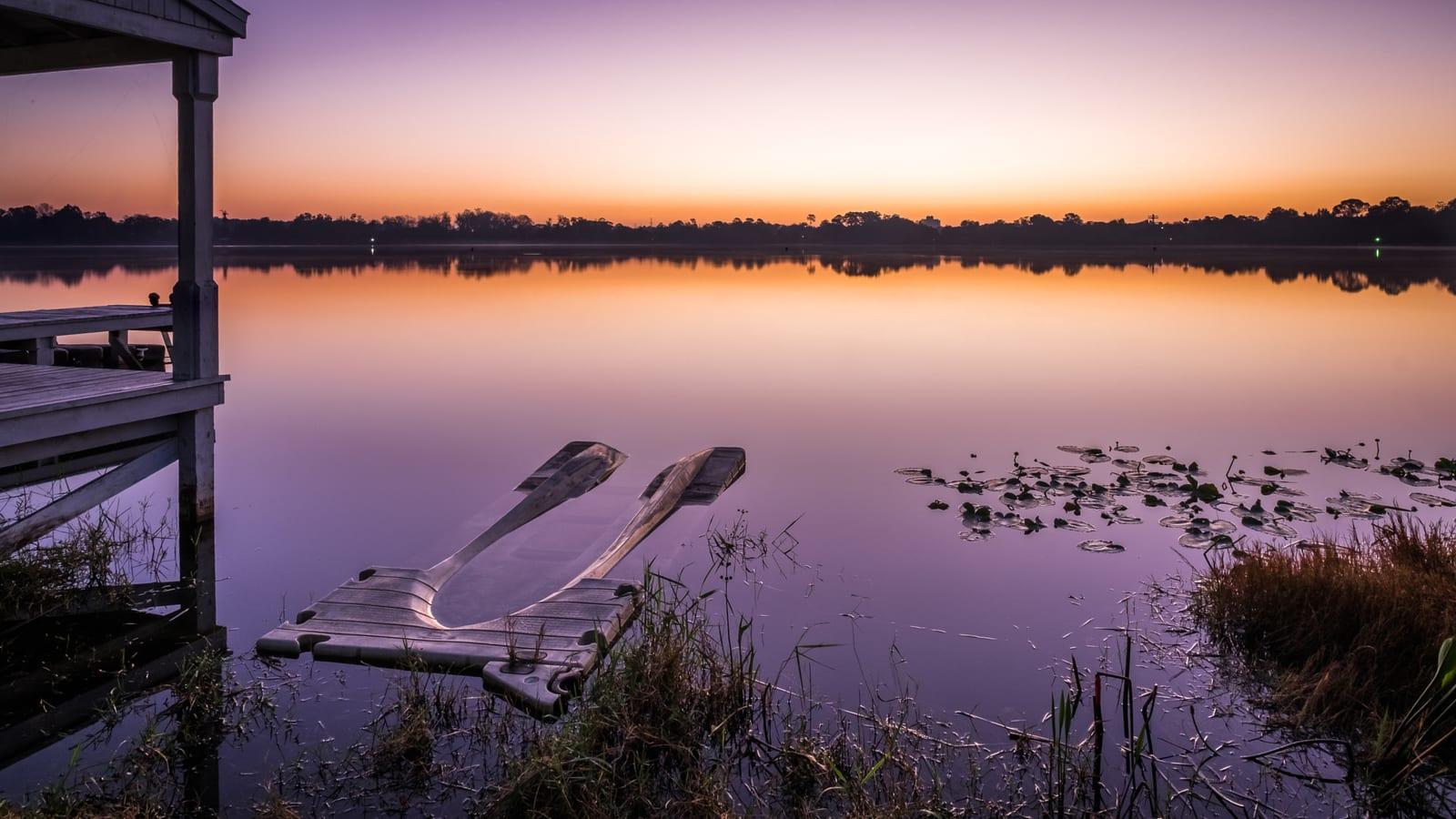
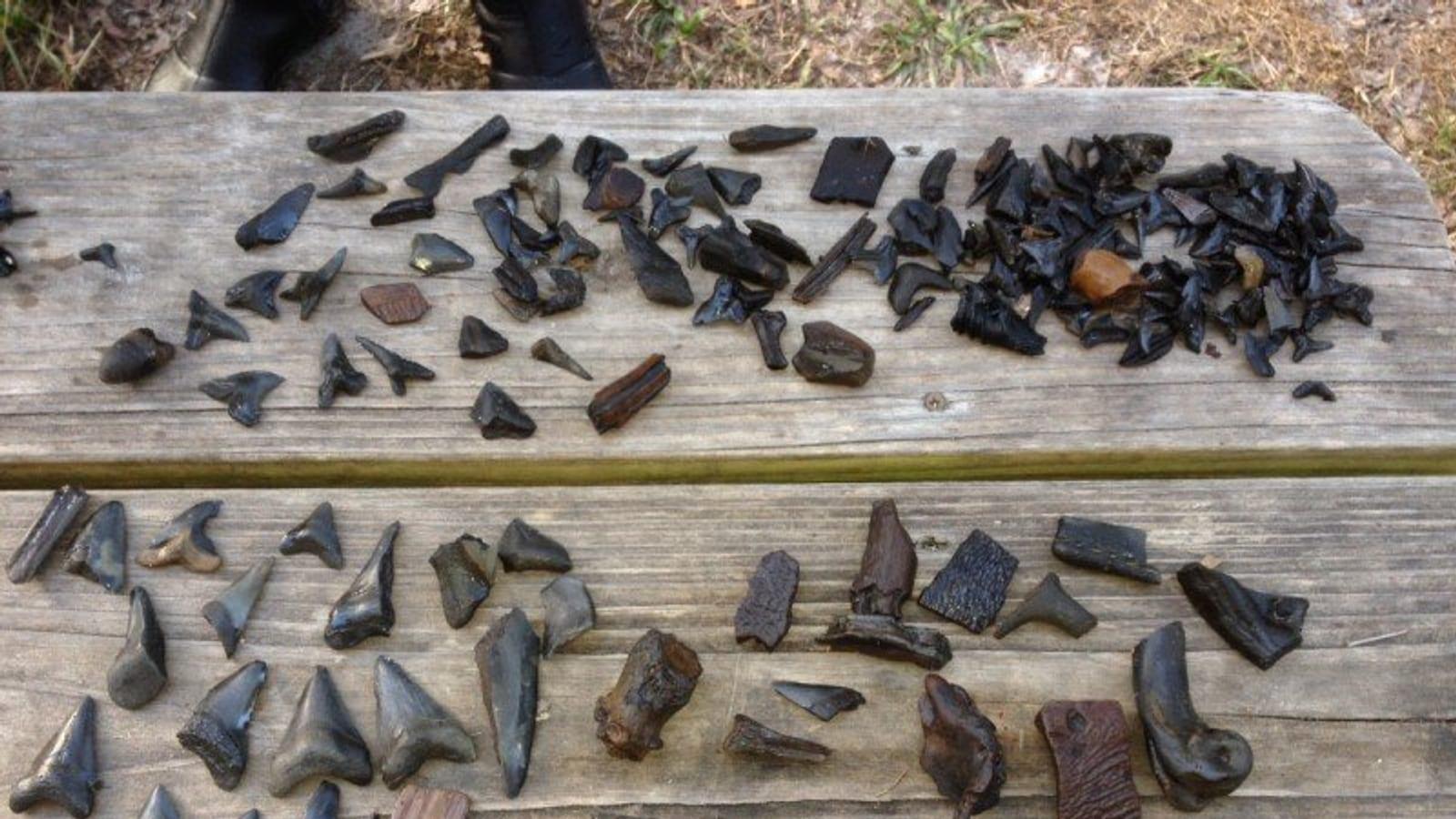
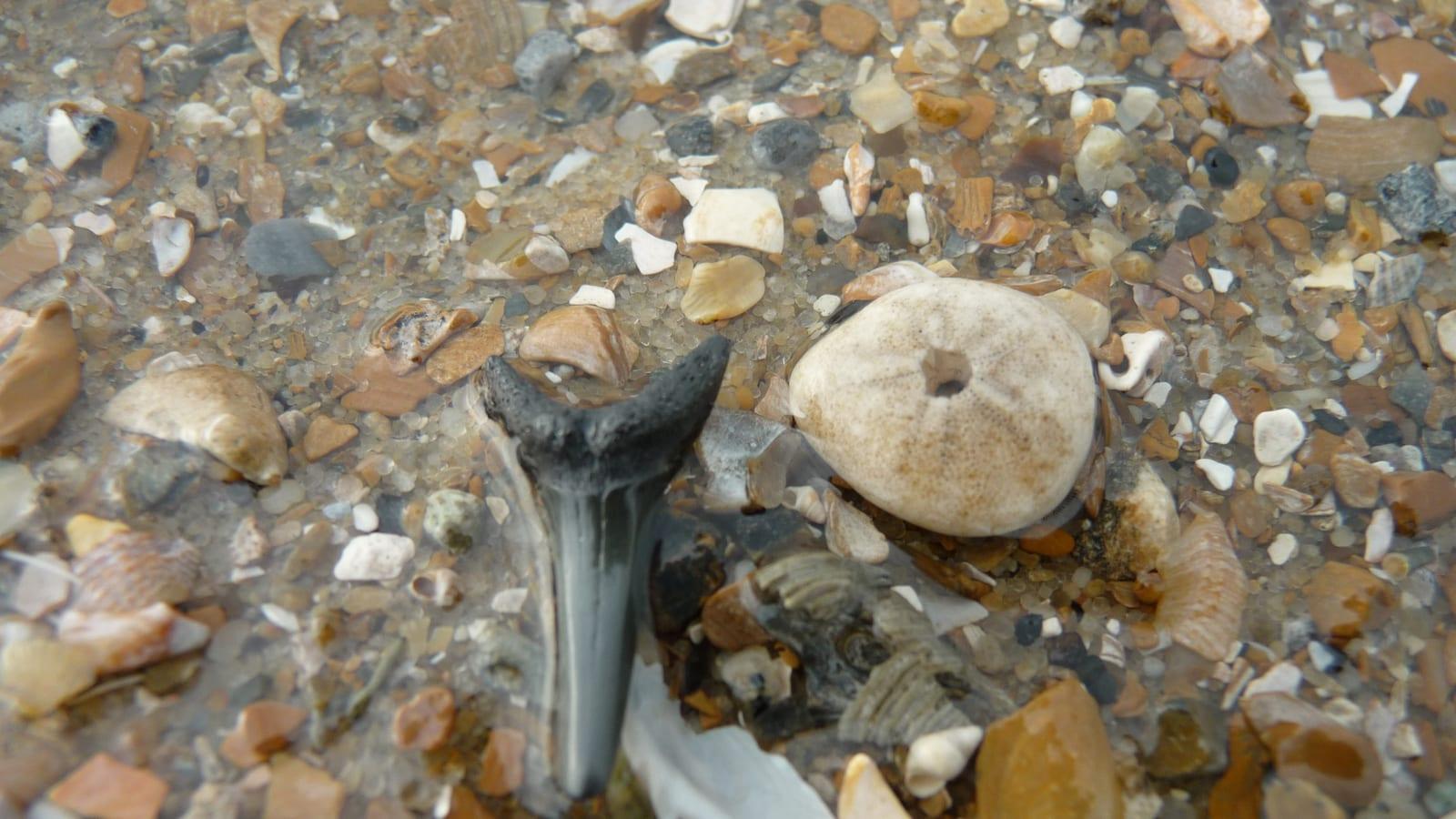
Want every documented location, not just the curated top sites? Browse the full index of Florida fossil sites for the complete list, including locations beyond this guide. This guide is part of our national roundup of the best places to fossil hunt in the United States.
Frequently asked questions
- What fossils can you find in Florida?
- Florida's most abundant fossils are shark teeth, particularly from Miocene and Pliocene species including megalodon, great white, and tiger shark. The Peace River system and Bone Valley also produce whale bones, dugong ribs, mastodon molars, giant ground sloth bones, and early horse teeth from deposits 5 to 20 million years old.
- Is it legal to collect fossils in Florida?
- Surface collection of invertebrate and vertebrate fossils is legal on most Florida beaches and foreshore areas below the mean high-water mark. Collecting from state-owned submerged lands (rivers and offshore) requires a permit from the Florida Division of Historical Resources. Vertebrate fossils removed from river sediments require a Scientific Research Permit in most cases.
- When is the best time to find shark teeth in Florida?
- Low tide is the most productive time regardless of season. After northeast storms, material from offshore phosphate ledges concentrates on the foreshore. The Venice area produces teeth year-round, but autumn and winter storms tend to deliver larger specimens after wave energy disturbs deeper offshore sediments.
- Do I need a permit to collect fossils in Florida?
- No permit is required to collect loose fossils, including shark teeth, from public beach foreshore areas below the mean high-water mark. Collecting from the Peace River and other state-owned waterways requires a Freshwater Aquatic Preserve permit from the Florida Fish and Wildlife Conservation Commission, which is available online for a small fee and covers recreational collection of vertebrate and invertebrate material. Removing vertebrate fossils from state-owned submerged lands for commercial purposes or scientific purposes requires a separate Scientific Research Permit from the Florida Division of Historical Resources. For casual beachcombing at Venice, Caspersen, or Englewood, no paperwork is needed.
- What is the best beach for shark teeth in Florida?
- Caspersen Beach in Venice is the best overall site for shark teeth, particularly for collectors willing to use a sifter and work the water's edge at low tide. The phosphatic sediments here are less disturbed than the Venice Municipal Beach directly to the north, and the finds are larger on average. Venice Municipal Beach is easier to access and better for families or first visits, with a wider strand line and more foot traffic that turns over the surface regularly. Caspersen is the stronger choice if finding a complete megalodon tooth is the goal, while Venice city beach works well for a quick visit or for introducing children to fossil hunting.
- How big can megalodon teeth get at Venice Beach?
- Most megalodon teeth recovered from the Venice area foreshore and nearshore measure between 2 and 4 inches along the slant height. Teeth above 4 inches are uncommon from beach collecting alone and are more likely to come from Peace River gravel bars or offshore diving. A tooth qualifies as megalodon (Otodus megalodon) when it exceeds roughly 2.7 inches and shows the characteristic broad triangular crown with coarse serrations; smaller teeth in the same assemblage may belong to great white, mako, or other Miocene shark species. Finding a complete, unbroken megalodon tooth over 3 inches from the Venice foreshore is a realistic goal over several low-tide visits, but it requires patience and a consistent search pattern along the surf line.
Recommended resources
- Florida Paleontological Society — State paleontological society; maintains site recommendations and organises annual field trips to Florida fossil localities.
- Black Water Fossils — Documents megalodon tooth and vertebrate finds from Peace River dives — practical reference for river collecting conditions and typical specimen quality.
- South Florida Mineralogical Society (SFMS) — Covers fossil and mineral collecting across South Florida; maintains a resources section for members seeking public collecting sites.
- Florida Fossil Hunters — Community for Florida collectors; organises guided dig days at Bone Valley and other permitted sites across the state.