Caspersen Beach Fossil Hunting Guide
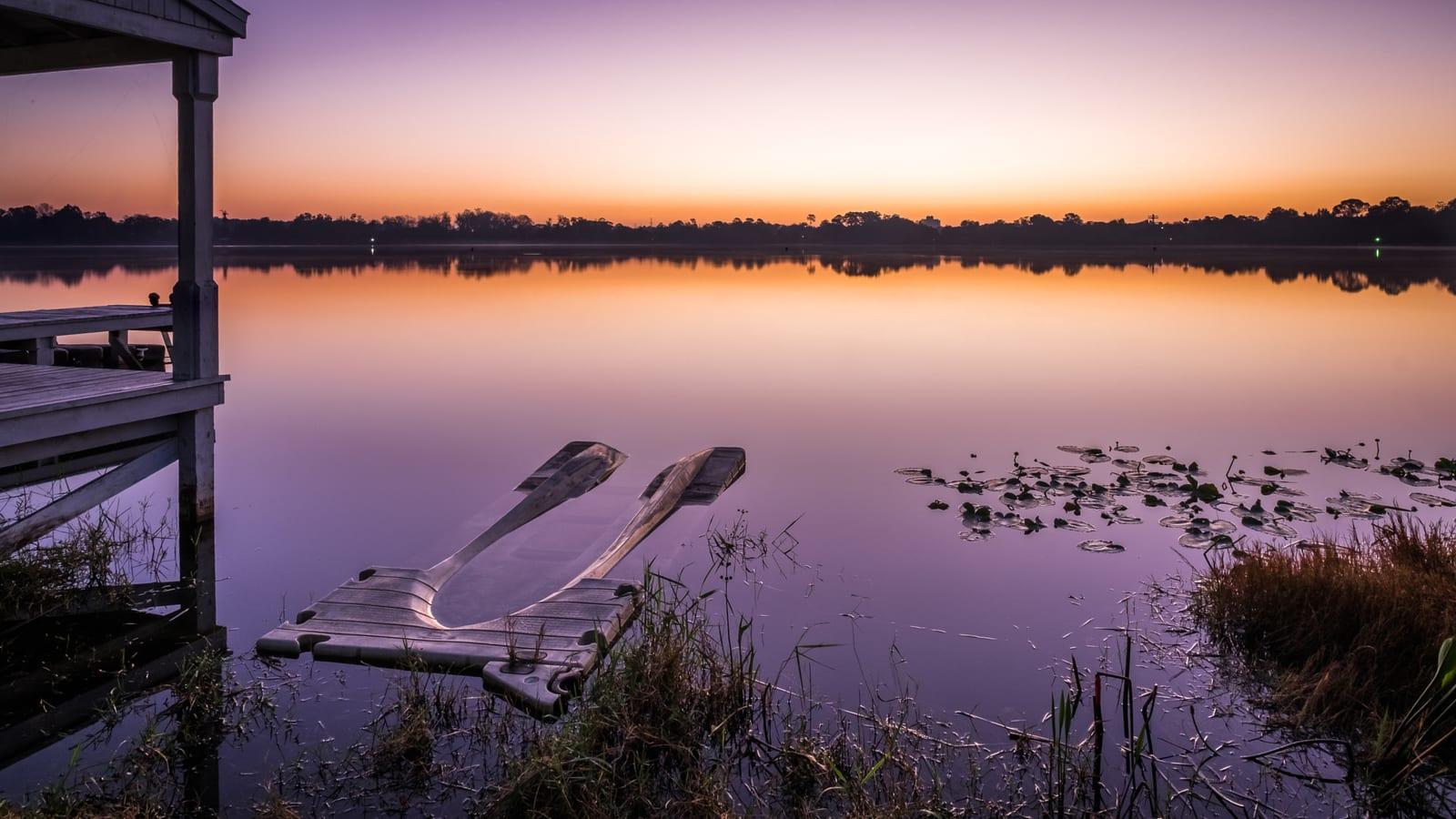
Image: Giuseppe Milo (CC BY 3.0)
Caspersen Beach sits at the south end of Venice on Florida's Gulf coast and is the most consistently productive shark-tooth beach in a town that markets.
By Edward Chen · Updated 1 August 2026
Photo: Smithsonian National Museum of Natural History, CC0, via Smithsonian Open Access
Introduction
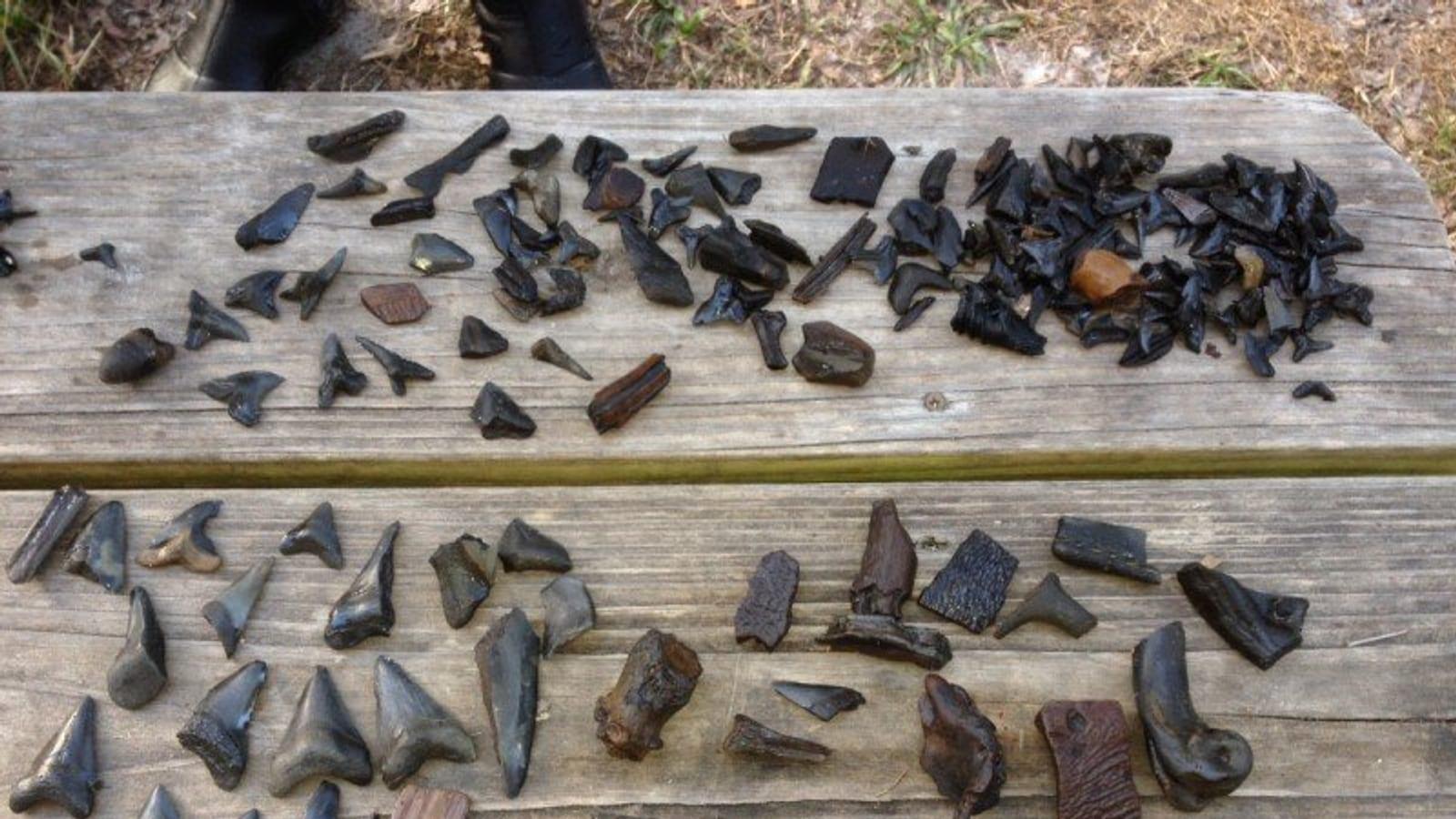
Caspersen Beach sits at the south end of Venice on Florida's Gulf coast and is the most consistently productive shark-tooth beach in a town that markets itself as the Shark Tooth Capital of the World. The teeth come from offshore Miocene and Pliocene phosphate beds eroding out of the seafloor several miles out, where wave action breaks them free and onshore currents scatter them along the Sarasota County shoreline. Caspersen catches more of that flow than the busier beaches to the north because of its position relative to the offshore reefs and because the swash zone here is loaded with coarse shell hash and small black gravel rather than fine quartz sand, which acts as a natural sieve that traps teeth as the waves recede. Most teeth are small, between a quarter inch and an inch, and most are black or dark gray from millions of years in phosphate-rich sediment. What follows sets out where to park and walk in, which part of the swash zone repays the most attention, which species turn up, where offshore the teeth actually come from, and what Florida law allows you to take home.
Location and Directions
Caspersen Beach is a Sarasota County public park on the Gulf side of Venice, on the southern end of the barrier island that holds Venice Beach and Brohard Park.
The county address is 4100 Harbor Drive South, Venice, FL 34285. From Interstate 75, take Exit 193 (River Road) west toward Venice, follow signs for US 41 (Tamiami Trail), then turn south onto Harbor Drive South and follow it past Brohard Beach and the Venice Fishing Pier. Harbor Drive ends at the Caspersen Beach parking area. From downtown Venice, drive south on Harbor Drive for about 2 miles past the pier. The road narrows and the trees close in just before the lot.
Parking is free in the paved lot at the end of Harbor Drive. The lot is small and fills by mid-morning on weekends and during winter snowbird season. An overflow gravel lot sits across the road. Restrooms, an outdoor rinse shower, and picnic pavilions are at the main lot. Boardwalks lead from the lot over the dunes to the beach.
The beach itself runs roughly four miles south from the parking area. The first half mile near the lot sees the most foot traffic and is picked over daily. The better collecting is south of that, where the dune line pushes in close to the water and the shell-hash berm runs continuously. Allow tidal access along the entire stretch since there are no exits between the parking area and the south end at Manasota Key.
Time the tide. The four hours bracketing low water expose the widest swash zone and uncover the heavy gravel that holds the teeth. Storms reload that gravel: a winter cold front or a tropical system drives wave energy onshore, rebuilds the berm, and leaves several unusually good days behind it.
 Photo: Grendelkhan, CC BY-SA 4.0, via Wikimedia Commons
What Fossils You'll Find
 Photo: Diego Delso, CC BY-SA 4.0 via Wikimedia Commons
Shark teeth are the dominant find and the reason people come.
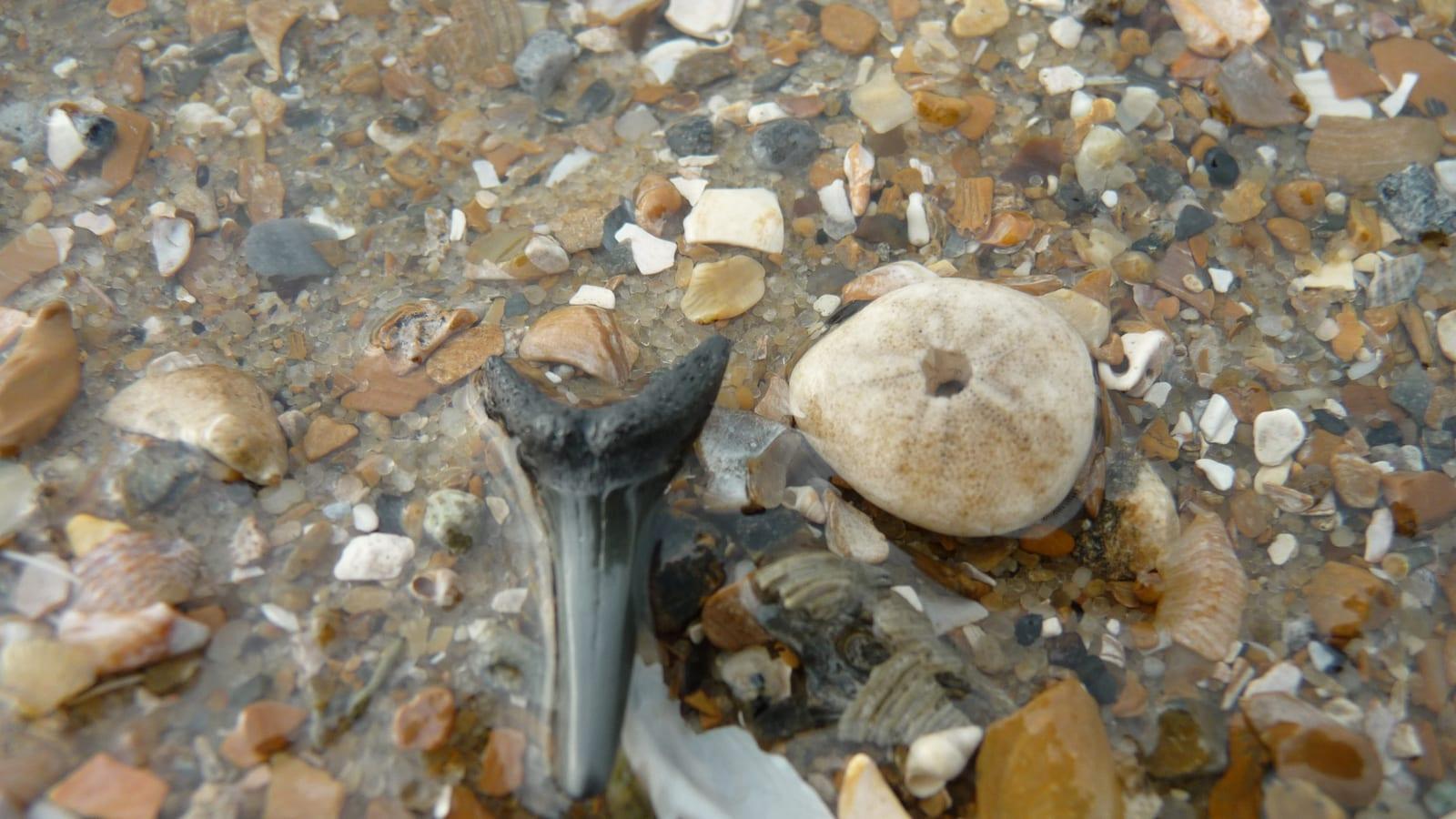
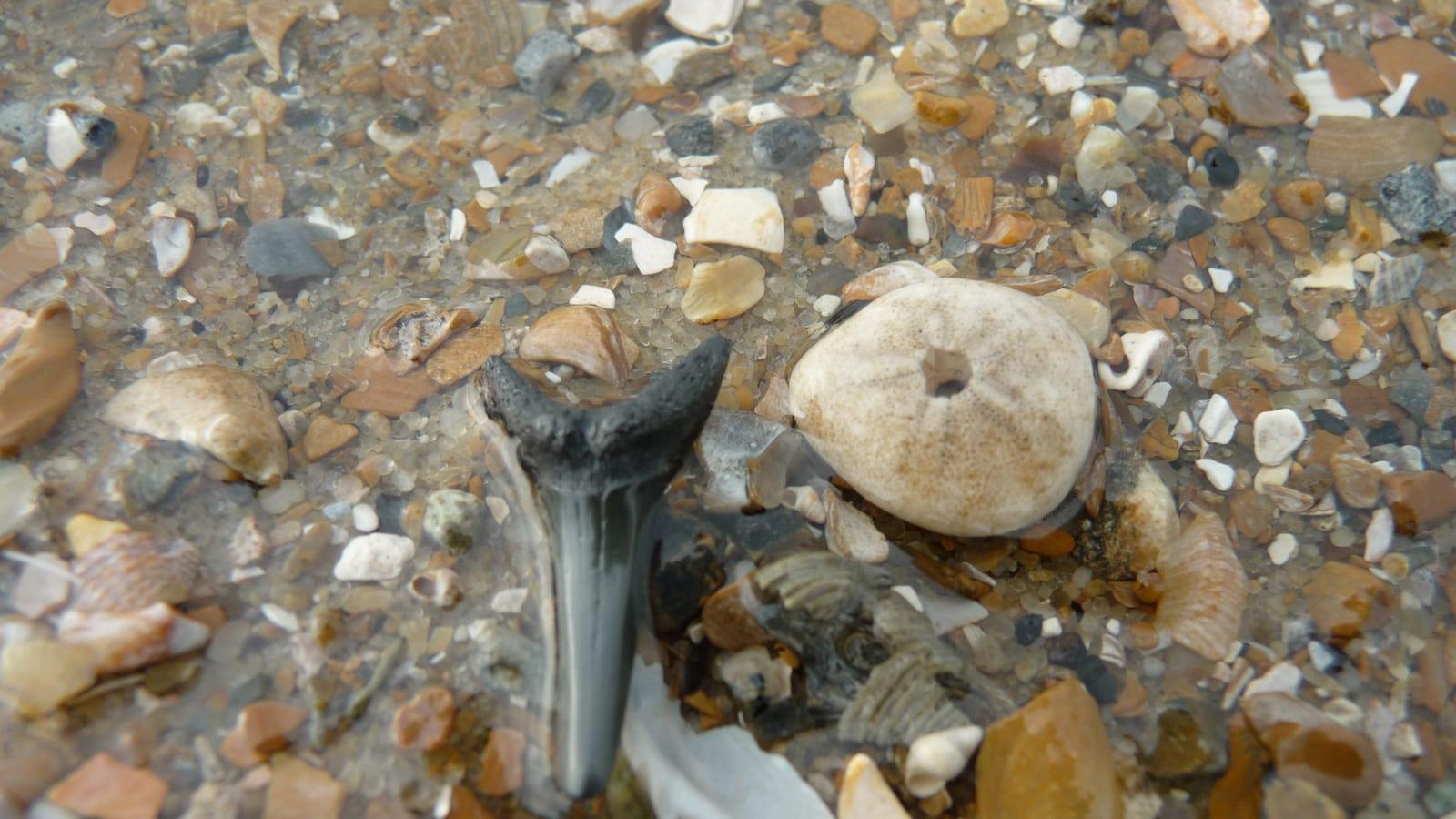
Small modern and fossil teeth in the quarter-inch to one-inch range are the most common: lemon shark, bull shark, tiger shark, sand tiger, mako, and lower-crowned requiem species. These wash in by the hundreds during productive weeks.
Megalodon and chubutensis teeth from Otodus megalodon and its earlier relative Otodus chubutensis are the prize finds. Most Caspersen megalodons are partials, fragments, or worn root sections. Complete teeth over three inches do turn up but are rare and usually require working a productive berm soon after a storm. The serrated edges and triangular outline distinguish them from anything else on the beach.
Ray and skate dental plates, vertebrae, and stingray barbs are scattered through the same gravel layers. Look for low domed teeth with a glossy enamel cap.
Bone fragments of marine mammals (dugong rib sections, dolphin vertebrae) and the occasional Pleistocene terrestrial mammal piece (horse molar, glyptodont scute, deer bone) appear less often. These are reworked from younger Pliocene and Pleistocene units and from the same Hawthorn Group phosphate that yields the shark teeth.
Shell material from the Pleistocene Bermont and Caloosahatchee formations also accumulates on the berm, including large Strombus, Busycon, and pectinid valves. Most modern shell collectors ignore the fossils and most fossil hunters ignore the shells, but both are present together.
A flat scoop sifter on a long handle is the standard local tool. Venice tackle shops and the Caspersen kiosk sell them. You can also collect by hand or with a small mesh bag by working the gravel berm at the back of each retreating wave.
Geologic History
The teeth at Caspersen are not eroding out of the rocks underfoot. They are reworked from offshore source beds and delivered to the beach by waves and longshore currents.
Hawthorn Group, including the Peace River Formation (Middle Miocene to Early Pliocene, roughly 16 to 4 million years). The Hawthorn Group is a shallow-marine to estuarine sequence of phosphatic sands, clays, and dolostones deposited along the southeastern North American shelf during a long interval of high sea level and active phosphate genesis. Its uppermost unit in this part of Florida, the Peace River Formation, is famous for concentrated phosphate gravel beds packed with shark teeth, ray plates, marine-mammal bone, and reworked terrestrial mammal fragments. These beds are mined inland for fertilizer phosphate and are the same source rock that produces the teeth in the Peace River itself, two counties to the east.
Pliocene to Pleistocene shelf sediments (roughly 4 million to 12,000 years). Younger marine sands and shell beds, including the Caloosahatchee and Bermont formations, were deposited over the Hawthorn during repeated sea-level cycles. These add Pliocene and Pleistocene shell material and the occasional land-mammal fossil to the beach mix.
Modern reworking. Sea level rose roughly 120 meters since the Last Glacial Maximum, drowning the Hawthorn outcrops that once stood above sea level inland. Today those phosphate beds sit a few miles offshore and a few feet below the seafloor. Storm waves and shelf currents continually break teeth free and roll them shoreward, where they accumulate in the shell-hash berms of beaches like Caspersen.
How Caspersen Beach Became a Fossil Collecting Site
Caspersen Beach was acquired and developed as a Sarasota County park in the 1970s, primarily for swimming and shoreline recreation. Its reputation as a tooth beach predates the park and grew from local collectors who noticed that the southern Venice beaches consistently produced more teeth than Venice Municipal Beach to the north. The county leaned into that reputation, hosting the annual Venice Shark's Tooth Festival each spring and stocking the beach kiosk with sifters. No quarrying or beach nourishment exposed the teeth here. They are the byproduct of natural offshore erosion, and the supply is renewed by every storm that mobilizes the offshore phosphate gravel.
Collecting Rules and Regulations
Fossil collecting on the beach is allowed for personal, non-commercial use. Sarasota County manages Caspersen Beach as a public park and does not require a permit to pick up shark teeth, shells, or other loose material on the wet sand and tide line.
Practical rules:
- Collect only loose material from the beach surface and the swash zone. Do not dig into the dunes, the back-beach vegetation, or any seagrass beds.
- A flat-handled scoop sifter is permitted and is the standard local tool. Powered sifters and motorized equipment are not permitted on the beach.
- Vertebrate fossils on Florida state lands and state-owned submerged lands (anything found while diving or snorkeling offshore) require a Florida Vertebrate Paleontology Permit from the Florida Museum of Natural History. Surface collecting on the beach itself does not require this permit, but any diving for teeth offshore does.
- Do not climb or undermine the bluffs at the south end of the beach. The dunes are stabilized vegetation and removal accelerates erosion.
- Caspersen is a sea turtle nesting beach from May 1 through October 31. Stay off the dunes, do not disturb marked nests, and use only red-filtered flashlights after dark.
- Dogs are not permitted on Caspersen Beach.
- No fees for parking or beach access. Restrooms close at sunset. The beach itself is open from sunrise to sunset.
Safety
Caspersen is the least developed of the Venice beaches, which is what makes it productive and also what shapes its risks. Lifeguard coverage is limited compared with the beaches further north, so you are more on your own here.
Rip currents and surf. The Gulf here is usually mild but not always, and the southern stretches of the beach are unguarded. If you are wading to sift, stay shallow, and if you are pulled out, swim parallel to the shore rather than against the current.
Shuffle, do not step. Stingrays bury themselves in shin-deep water, which is precisely the depth you will be sifting in. Push your feet forward along the bottom instead of lifting and placing them, so a buried ray feels you coming and moves off. Footwear is not optional either. The shell hash cuts, and the larger teeth are sharp enough to do the same.
No shade, and glare off the water. Nothing along this stretch blocks the sun, and the light reflecting back off wet sand catches people out. Bring more water than you expect to drink, and cover up properly. An early low tide solves two problems at once, because it is both the coolest part of the day and the most productive.
Caspersen is left unmanicured, and that shows underfoot. Expect more storm debris and rougher going than at Venice Beach a mile north, so closed shoes make sense. Summer thunderstorms build fast here, so keep an eye on the sky. Stay off the dune line, which is protected and is what holds this shore in place during a storm. Children should be supervised in the water without exception.
Sources
- Sarasota County Parks, Recreation and Natural Resources, "Caspersen Beach." https://www.scgov.net/government/parks-recreation-and-natural-resources
- Florida Geological Survey, "Hawthorn Group and Peace River Formation." https://floridadep.gov/fgs
- Florida Museum of Natural History, "Florida Vertebrate Paleontology Permit." https://www.floridamuseum.ufl.edu/vertpaleo/
- Visit Sarasota, "Venice Shark Tooth Capital." https://www.visitsarasota.com
- FossilGuy, "Venice, Florida Shark Teeth." https://www.fossilguy.com/sites/venice/

%2C%20Zuber%2C%20Florida%2C%20Estados%20Unidos%2C%202021-01-19%2C%20DD%20105-144%20FS.jpg)