Venice Beach Fossil Hunting Guide
Venice, Florida calls itself the shark tooth capital of the world, and the claim is earned. Fossil teeth erode from offshore Neogene deposits and wash onto the town's beaches continuously. Free, no permit for shark teeth, and productive for complete beginners.
By Edward Chen · Updated 27 July 2026
Introduction
Venice sits on the Gulf coast of Florida in Sarasota County, and it has built a reputation on a single fossil. Shark teeth wash up on its beaches in such numbers that the town markets itself as the shark tooth capital of the world, holds an annual festival for it, and sells the sifting scoops in its shops.
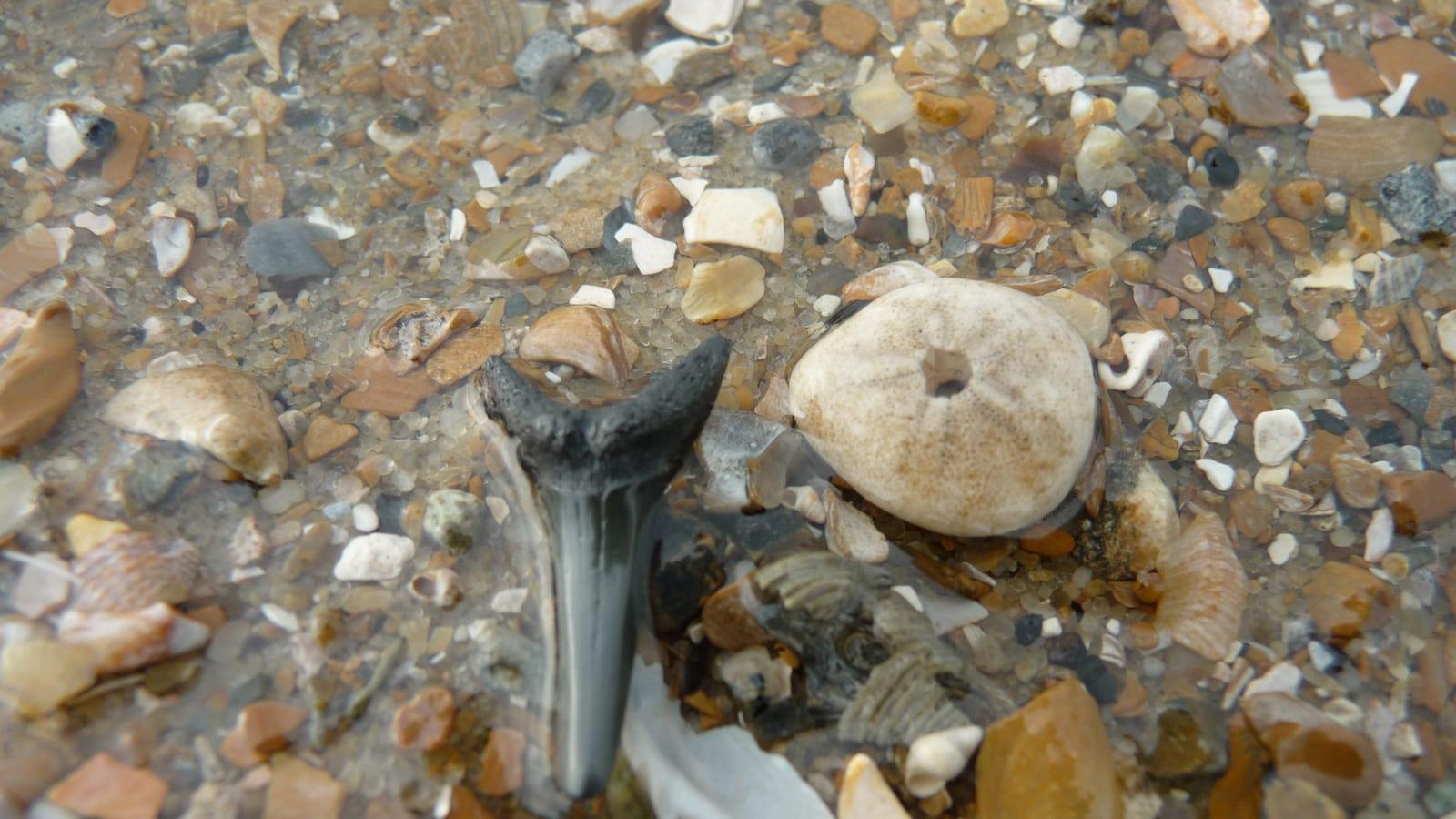
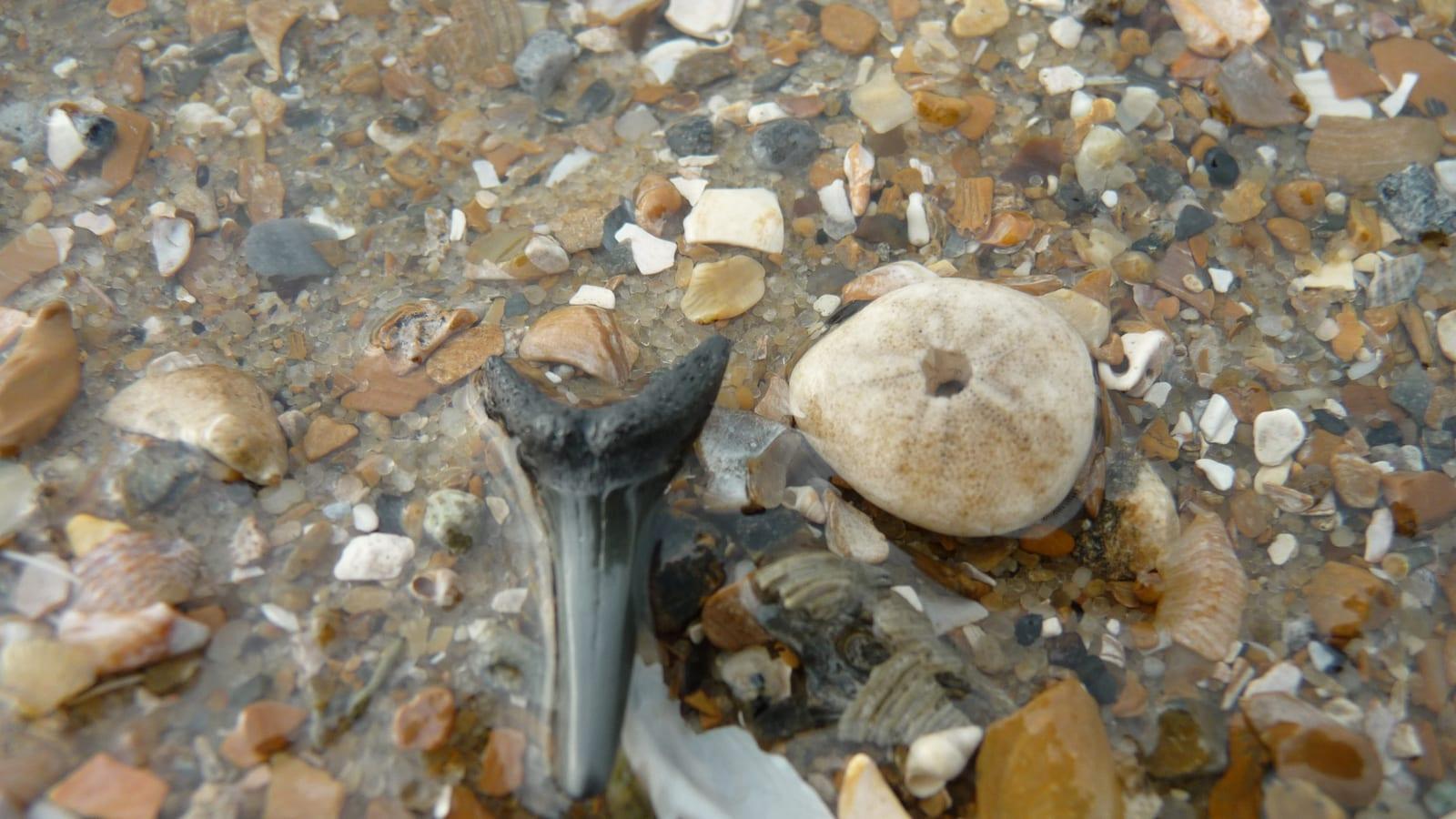
The reputation holds up. This is one of the few fossil localities where a complete beginner with no equipment and no knowledge will find something on a first visit, usually within twenty minutes. The teeth are small, dark, and glossy, they lie in the shell hash along the waterline, and once your eye adjusts you stop being able to miss them.
What draws them here is offshore geology rather than anything on the beach itself. Neogene marine deposits lie beneath the sea floor a short distance out, and the Gulf steadily erodes them and delivers the durable contents ashore.
Location and Directions
Venice is on the Gulf coast south of Sarasota, near 27.098 degrees north, 82.454 degrees west, reached from US-41 or Interstate 75.
Three access points matter, and they are not equally good.
Caspersen Beach, at the southern end, is the most productive and the one experienced collectors head for. It is less groomed than the beaches further north, its substrate is coarser and shellier, and it runs for roughly four miles, so you can walk away from other people. There is a free car park.
Venice Beach proper, near the fishing pier and the jetty, is busier and more developed but still produces, particularly near the inlet where currents concentrate material.
Brohard Park sits between the two and is a reasonable middle option.
All are free to access with public parking. Nothing is required in the way of equipment, though a long-handled sifting scoop, sold locally as a Venice snow shovel, makes the shallows workable and can be rented or bought in town.
What Fossils You'll Find
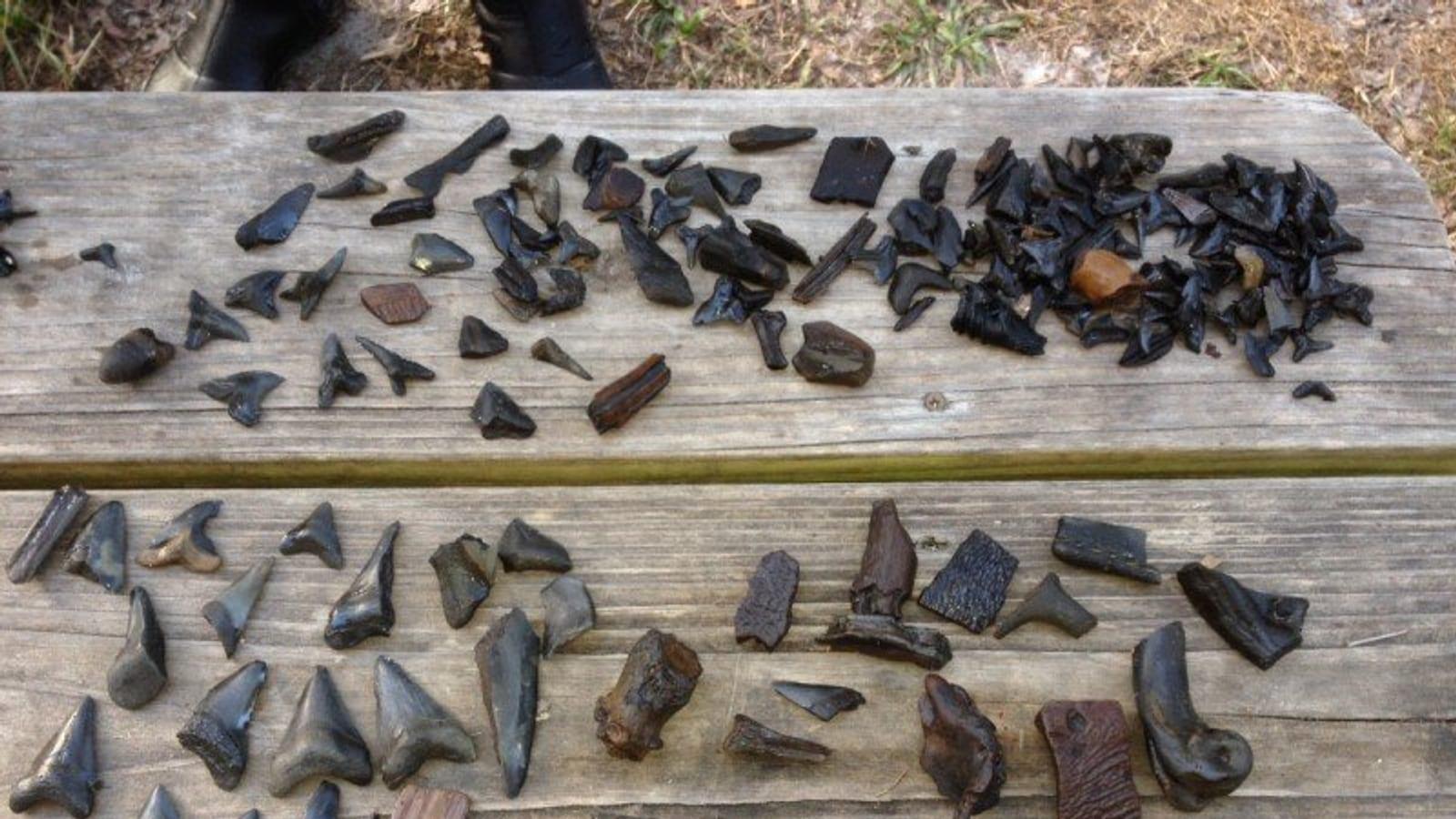
Fossil shark teeth are the overwhelming majority of finds. They are dark, ranging from black through grey to brown, glossy, and triangular, standing out against pale sand and white shell. Tiger, lemon, bull, and sand tiger teeth are among the common species, and most are between a quarter of an inch and an inch long.
Megalodon teeth are the ones people ask about. They are found in this area, and the largest are substantial, but almost all of the big ones come from divers working offshore rather than from beach walkers. A realistic beach hunt produces small teeth in quantity and, occasionally, something over an inch. Treat anything larger as a genuine surprise rather than the expectation.
Ray dental plates turn up regularly and are easy to walk past, being flat and pebble-like with a ridged grinding surface. Fossil and modern shells fill the shell hash, and fragments of bone and other vertebrate material appear in sifted residue.
Three things make the difference between a slow hunt and a good one. Work at low tide, when more beach is exposed and the productive wet sand is walkable. Go after a storm, since rough water stirs the offshore sediment and delivers a fresh crop. And work the shell banks rather than clean sand, because waves have already sorted the heavy material together there. Many people wade shin-deep and scoop with a sifter, letting the water wash out the sand.
Geologic History
The teeth eroded from Neogene marine sediments that lie offshore and beneath the coastal plain, principally the phosphate-bearing beds of the Hawthorn Group and the Peace River Formation within it, laid down between roughly 12 and 2.5 million years ago.
Florida then was a shallow, exceptionally productive sea. Upwelling brought nutrient-laden water onto the shelf, which supported very large populations of fish and the sharks that hunted them. Sharks shed teeth continuously, replacing them in rolling rows throughout life, and a single animal produces thousands. Since a shark's skeleton is cartilage and rarely fossilises, those teeth are effectively the entire record, which is why they are so abundant and why almost nothing else of the animal turns up.
The teeth survive because they are hard, mineral-dense, and phosphatic, so they resist the tumbling that destroys shell. Longshore currents and wave action rework the offshore deposits and drive the heaviest grains shoreward, and the beach receives a continuously renewed supply. That renewal is why a beach walked over by thousands of people every week has not been exhausted.
Collecting Rules and Regulations
Shark teeth need no permit. Florida specifically exempts fossil shark teeth from its permit system. Collecting on the beach is free, there is no quantity limit, and what you find is yours.
Other vertebrate fossils do need one. Collecting vertebrate fossil material from state land in Florida requires a Florida Fossil Permit from the Florida Museum of Natural History, which costs a few dollars a year. If you turn up bone rather than teeth, that rule applies.
Stay off the dunes. Coastal dunes are protected, they protect the shoreline during storms, and digging into them is prohibited. The fossils are in the beach and the shallows, not the dunes.
Follow local beach rules. Sarasota County and the City of Venice set the terms on parking, dogs, glass, and drones. Sifting scoops are fine on the public beaches.
Diving offshore for larger teeth is a different activity with its own considerations, and the boat charters running out of Venice are the sensible route into it rather than freelancing.
Safety
The Gulf here is usually mild, and the hazards are the ordinary ones of a Florida beach rather than anything site-specific. Stingrays rest in the sand in shallow water, which matters because shark tooth hunting means shuffling around in exactly that depth. Use the stingray shuffle, sliding your feet rather than stepping down, and wear something on your feet. Broken shell is sharp, and so are some of the larger teeth.
Currents run hard through Venice Inlet near the jetty on both the ebb and the flood. That is why the area concentrates material and also why you should not swim or wade deep there.
Florida sun is severe and reflects off both water and pale sand, so carry water, use sun protection, and take the early low-tide window seriously, since it is both the best collecting and the coolest part of the day. Watch the sky in summer, when afternoon thunderstorms build fast and an open beach is a bad place to be in lightning. Supervise children in the water at all times.
Sources
https://www.floridamuseum.ufl.edu/florida-fossil-permit/ https://www.fossilguy.com/sites/venice/index.htm https://www.visitsarasota.com/article/guide-venices-shark-tooth-capital-world https://www.venicegov.com/
Frequently asked questions
- Do you need a permit to collect shark teeth at Venice Beach?
- No. Florida exempts fossil shark teeth from its permit requirement. Collecting is free and you keep what you find. Other vertebrate fossils do require a state permit.
- Which Venice beach is best for shark teeth?
- Caspersen Beach is generally the most productive, because its substrate is coarser and shellier than the groomed sand further north. Venice Beach proper and Brohard Park also produce.
- Can you find megalodon teeth at Venice Beach?
- They are found, but rarely from the beach itself. Most large megalodon teeth from this area come from diving offshore. A beach hunt realistically produces teeth under an inch.