Fort Clinch State Park Fossil Hunting Guide
Image: Wawrow (CC BY-SA 4.0)
Fort Clinch State Park occupies the northern tip of Amelia Island in northeast Florida, where the Atlantic meets the mouth of the St.
By Edward Chen · Updated 30 July 2026
Introduction
Fort Clinch State Park occupies the northern tip of Amelia Island in northeast Florida, where the Atlantic meets the mouth of the St. Marys River and the Georgia state line. The park is best known for its preserved 19th-century brick fort and Civil War reenactments, but the three miles of beach inside the park boundary are also a productive surface-collecting site for shark teeth and reworked Pleistocene fossils. The teeth here are smaller and less concentrated than at the Gulf-coast Venice beaches, but the beach is far less crowded and the variety of material can be broader because the Atlantic shelf off northeast Florida exposes Miocene to Pleistocene marine sediments that include occasional bone fragments from Ice Age land mammals washed in from drowned coastal floodplains. This guide covers how to enter the park, where on the beach to focus, what to expect to recover, the geology behind the finds, and the rules that govern collecting inside a Florida state park.
Location and Directions
Fort Clinch State Park is at 2601 Atlantic Avenue, Fernandina Beach, FL 32034, on the northern tip of Amelia Island.
From Interstate 95, take Exit 373 onto Florida State Road A1A and follow A1A east through Yulee and across the bridge onto Amelia Island. Continue south briefly into Fernandina Beach, then turn left (north) onto Atlantic Avenue. The park entrance is at the end of Atlantic Avenue, marked by the ranger station and entrance gate. The drive from I-95 takes about 25 minutes.
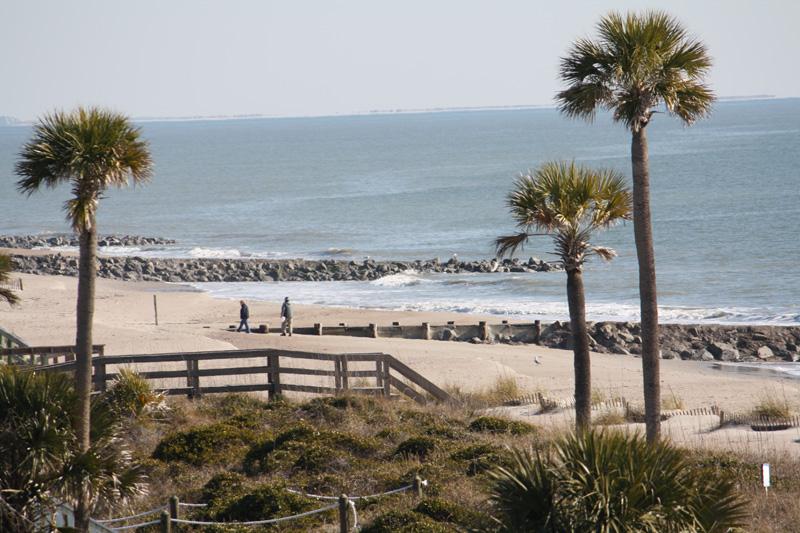
After paying the entrance fee at the gate, the main park road runs roughly three miles through maritime forest to the fort, the campgrounds, and the Atlantic beach. Two beach parking areas serve fossil hunters: the day-use Atlantic Beach lot near the fort, and the smaller lot at the north end of the main beach. Both have restrooms, rinse showers, and boardwalks over the dunes.
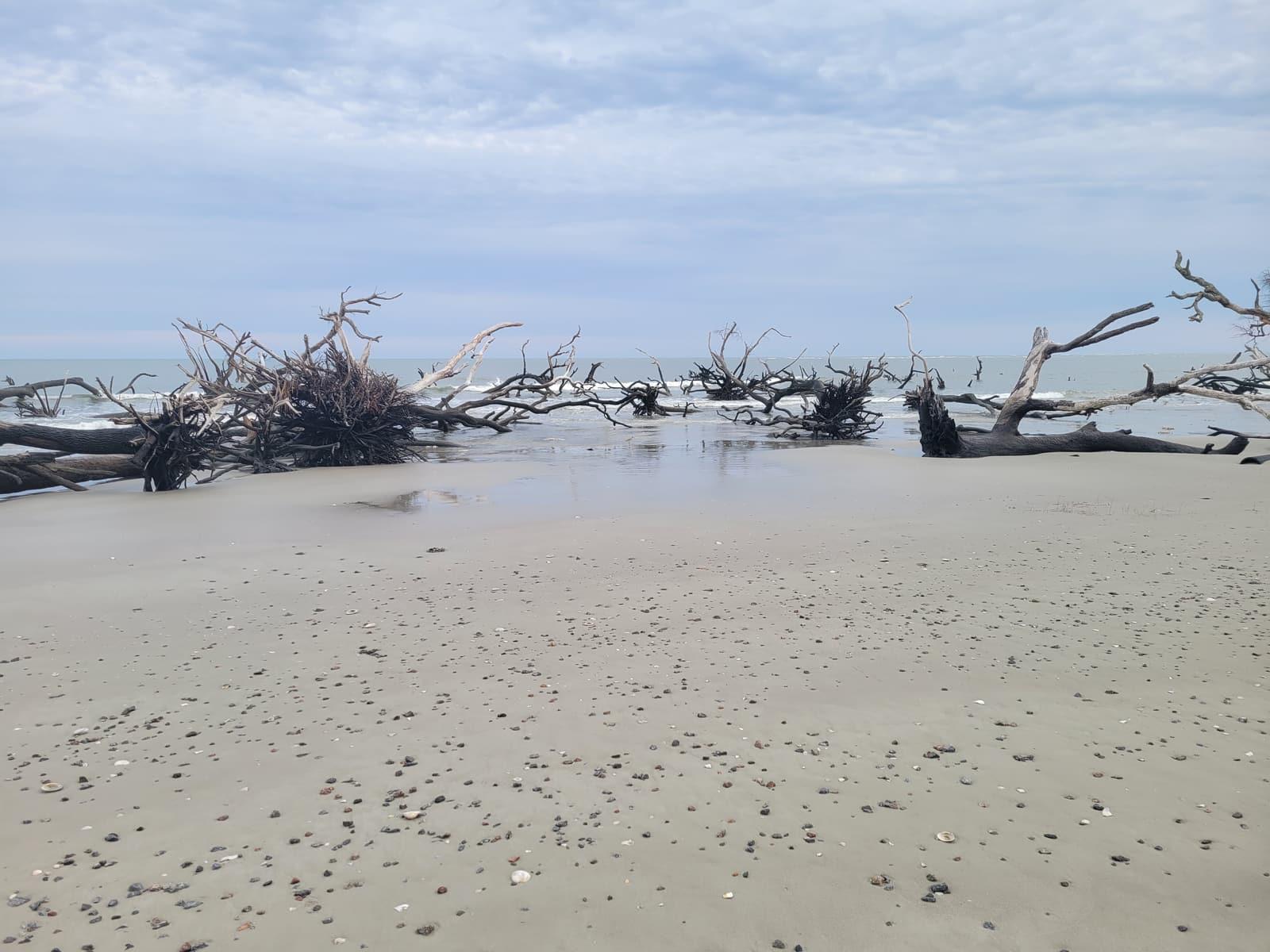
The most productive stretch for shark teeth is the north end of the beach, near the jetty at the mouth of the St. Marys River. Tidal currents accelerate around the jetty and concentrate dense material in the wrack line. Walk north from the Atlantic Beach lot along the high-tide line. The jetty is visible in the distance and the walk is roughly a mile each way over hard-packed sand at low tide.
Tide and weather windows matter. The two hours on either side of low tide give you the widest swash zone and the most exposure of the heavier gravel layer where teeth concentrate. After northeasters and tropical systems push waves onshore from the open Atlantic, the wrack line is recharged with shell hash and the chance of finding teeth and bone fragments rises noticeably for several days.
What Fossils You'll Find
Shark teeth are the most consistent find, but quantities are lower than at Caspersen or Venice and individual teeth tend to be smaller.
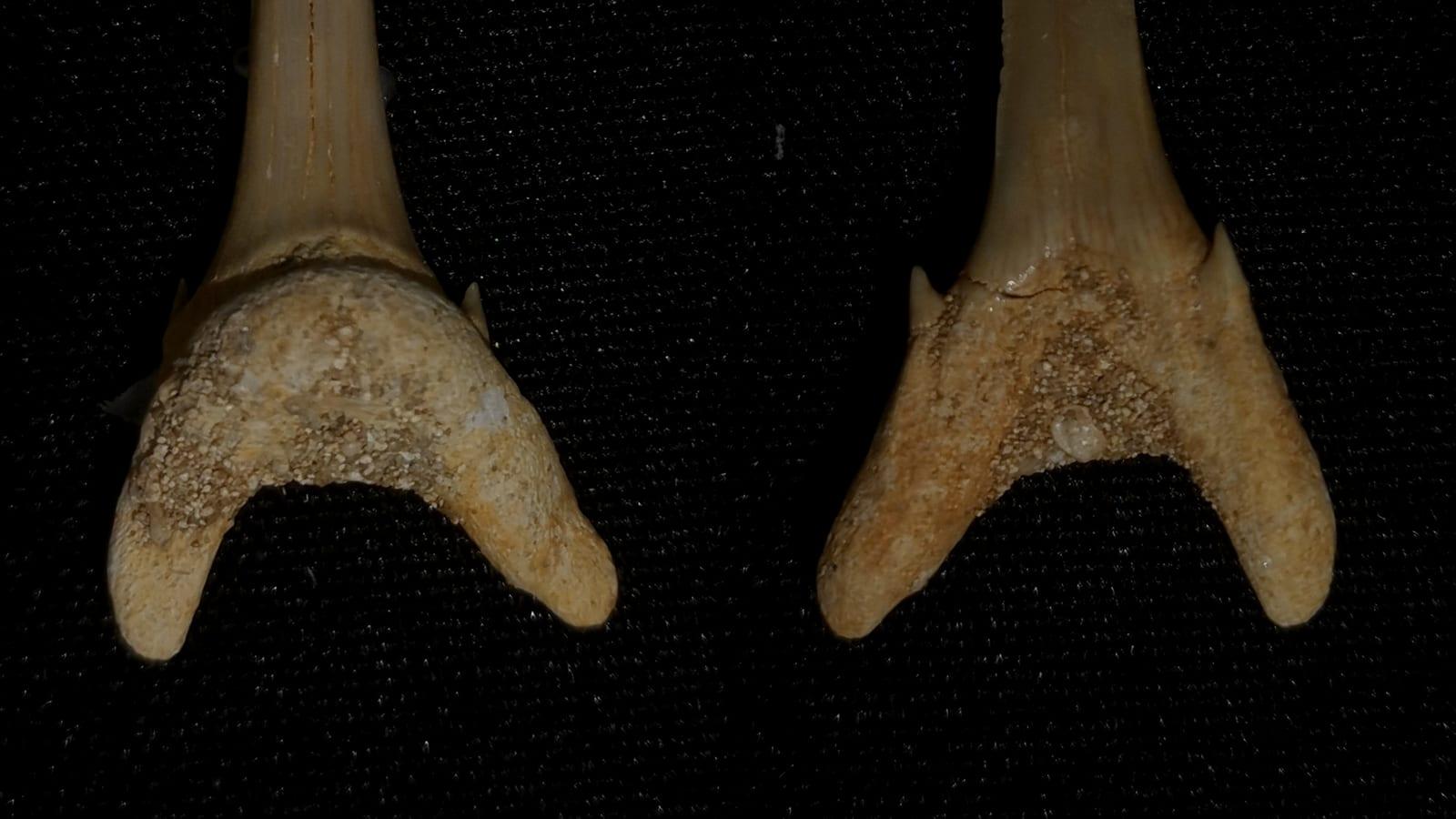
Small modern and recent-fossil shark teeth in the quarter-inch to three-quarter-inch range dominate. Sand tiger, lemon, bull, blacktip, and requiem teeth are the most common species. Most are dark gray to black from phosphate staining. Some recent teeth are tan or off-white.
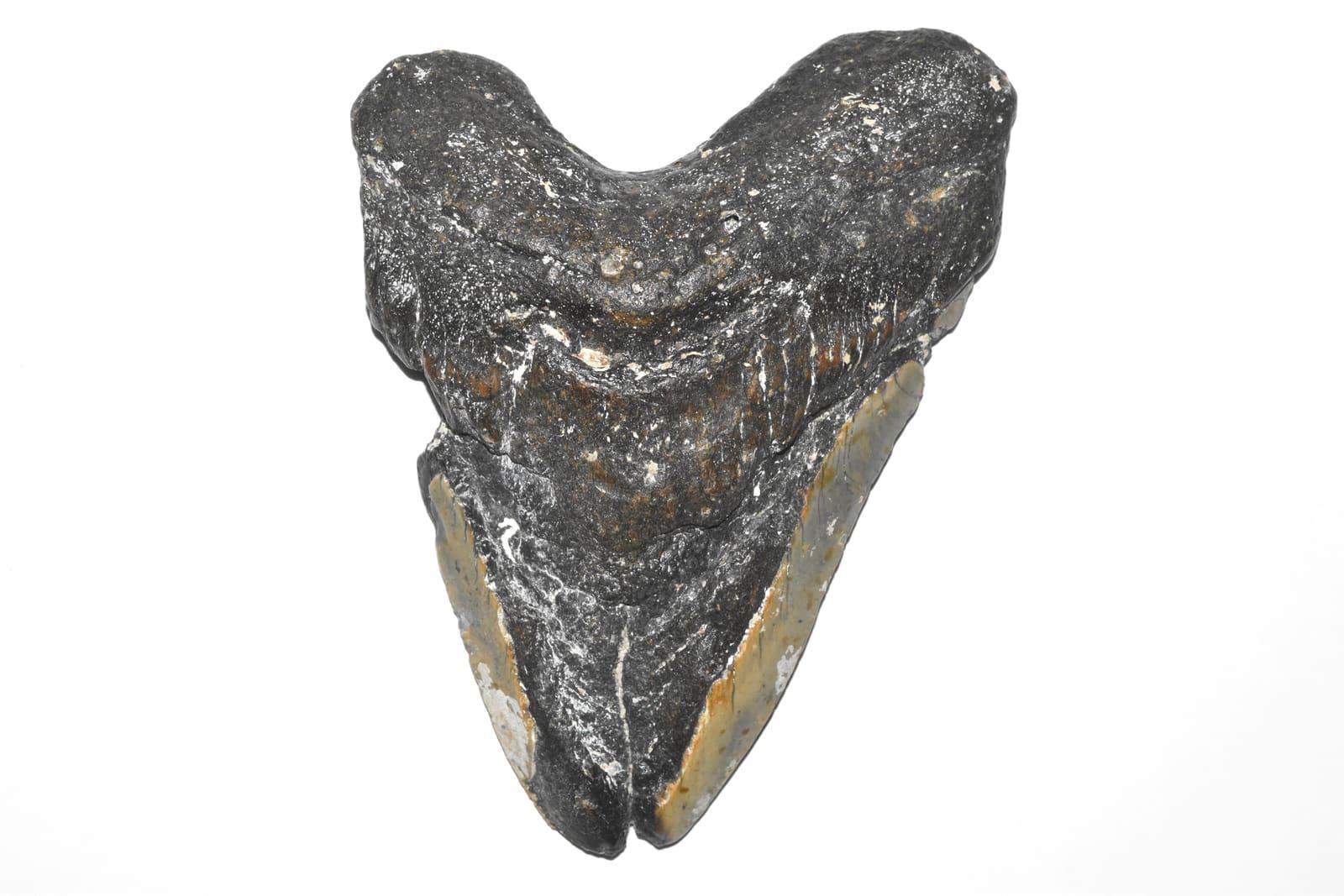
Larger teeth from mako, broken megalodon fragments, and the occasional whole Otodus chubutensis turn up rarely, almost always after major storm events. Whole megalodon teeth at Fort Clinch are uncommon enough that finding one is a memorable event rather than a routine outcome.
Ray and skate dental plates and stingray barbs appear in the same lag deposits as the shark teeth. Look for low-crowned, glossy enamel buttons.
Pleistocene mammal fragments are rarer here than the marine material but do occur, including pieces of horse and bison teeth, glyptodont osteoderms, and bone shafts. These reworked terrestrial fossils originate from drowned coastal floodplains that were exposed during glacial low-stands and now lie offshore.
Shell material from modern and Pleistocene mollusks fills the wrack line: arks, scallops, whelks, oysters, and the calcified casts known locally as "fairy stones."
The standard local tool is a flat scoop sifter or a fine mesh hand sifter. Most experienced collectors at Fort Clinch work the wrack line by eye and use a sifter only on the densest gravel concentrations near the north jetty.
Geologic History
Fort Clinch's beach fossils, like those on the Gulf coast, are reworked from offshore source beds rather than eroded from the bedrock under the dunes.
Pliocene and Pleistocene Atlantic shelf sediments (roughly 5 million to 12,000 years). The continental shelf off northeast Florida and Georgia exposes a stack of marine sands, shell beds, and phosphatic gravels deposited during repeated late Cenozoic sea-level cycles. These units include the Bear Bluff, Raysor, and Waccamaw formations to the north and unnamed offshore equivalents to the south. They host shark and ray teeth, marine-mammal bone, and shells.
Hawthorn Group at depth (Miocene, roughly 23 to 5 million years). The phosphatic Hawthorn Group, source of the megalodon and large-mako teeth in the Florida system, sits beneath the younger units along this part of the coast. Where it is locally exposed by submarine erosion, its teeth and bone fragments enter the shelf sediment supply.
Pleistocene coastal-plain deposits. During glacial low-stands, sea level dropped more than 100 meters, and what is now the inner Atlantic shelf was a coastal plain inhabited by horses, bison, mammoths, glyptodonts, and ground sloths. Their bones and teeth were buried in river floodplains and estuarine channels that were later drowned as sea level rose. Storms now rework these submerged deposits.
Holocene barrier-island building. Amelia Island itself is a Holocene barrier built from sand reworked by waves and longshore drift over the past several thousand years. The island holds no in-place fossils. Everything you find on the beach has been delivered by the modern coastal system from older offshore sources.
How Fort Clinch Became a Fossil Collecting Site
Fort Clinch was acquired by the State of Florida in 1935 and became one of the original eight Civilian Conservation Corps state parks. The fort itself, completed in the 1860s, is the centerpiece of the park's interpretation. The beach has been used informally for shell and tooth collecting by Amelia Island residents for as long as anyone can remember. There has never been any quarrying or excavation here aimed at exposing fossils. Everything on the beach arrives by natural longshore transport from offshore source beds, and the supply is renewed by storms and seasonal wave action. The park's role is custodial: Florida State Parks staff manage the dunes and beach access while allowing visitors to surface-collect within the legal limits.
Collecting Rules and Regulations
Surface collecting of loose shark teeth, ray plates, and shell material from the beach is allowed for personal, non-commercial use. Florida State Parks rules permit visitors to take small quantities of loose material from the wet sand and wrack line. Digging into the dunes, the beach face, or any backshore deposit is prohibited.
Practical rules:
- Collect only loose surface material in the swash zone and along the wrack line. Do not dig with shovels, augers, or any motorized equipment.
- Florida vertebrate fossil rules require a Florida Vertebrate Paleontology Permit from the Florida Museum of Natural History to collect vertebrate fossils on state-owned submerged lands and from in-place state-land deposits. Picking up loose teeth from the beach surface does not require the permit. Any diving or excavation for vertebrate material does.
- The fort itself, the brickwork, and the historic structures are protected. Do not collect bricks, metal, glass, or any historical artifact. Anything pre-1900 is a state archaeological resource.
- Stay off the dunes and the dune vegetation. Use the boardwalks for beach access.
- Fort Clinch is a sea turtle nesting beach from May 1 through October 31. Stay clear of marked nests, do not flash white lights toward the water, and remove all gear at sunset.
- Park entrance fee is required. Current rates are posted at floridastateparks.org and at the gate. Camping and the fort tour have separate fees.
- Park hours are 8:00 a.m. to sunset year-round.
Safety
Fort Clinch sits where the Atlantic meets the mouth of the St. Marys River, and that river mouth is the reason for the site's material and its main hazard.
The inlet currents are strong and dangerous. The St. Marys entrance moves a great deal of water on both the ebb and the flood, and the area near the jetty is not a place to swim or wade deep. Work the beach and the shallows well away from the channel, and never enter the water near the jetty rocks.
The jetty rocks are slippery and unstable. Granite blocks covered in weed and barnacle shift and have gaps between them that break ankles. Do not climb out along the jetty, particularly with a rising tide or a swell running.
Use the stingray shuffle in the shallows, and wear footwear, since broken shell and barnacle cut badly.
Sun and heat are the everyday risk. The beach is open, north Florida summers are hot and humid, and reflected light burns quickly. Carry water, use sun protection, and work the early low tide.
Watch for jellyfish in the warmer months and for biting insects, particularly near the marsh and the wooded trails, where ticks and chiggers are also present.
The park charges admission and keeps set hours, so check before travelling. Fossils and shells here are within a state park, so treat the site as viewing and photography rather than collecting, and leave the historic fort structures alone entirely.
Sources
- Florida State Parks, "Fort Clinch State Park." https://www.floridastateparks.org/parks-and-trails/fort-clinch-state-park
- Florida Museum of Natural History, "Florida Vertebrate Paleontology Permit." https://www.floridamuseum.ufl.edu/vertpaleo/
- Florida Geological Survey, "Cenozoic Stratigraphy of Florida." https://floridadep.gov/fgs
- Amelia Island Convention and Visitors Bureau. https://www.ameliaisland.com
- FossilGuy, "Northeast Florida Atlantic Coast Fossil Sites." https://www.fossilguy.com