Casey Key Fossil Hunting Guide
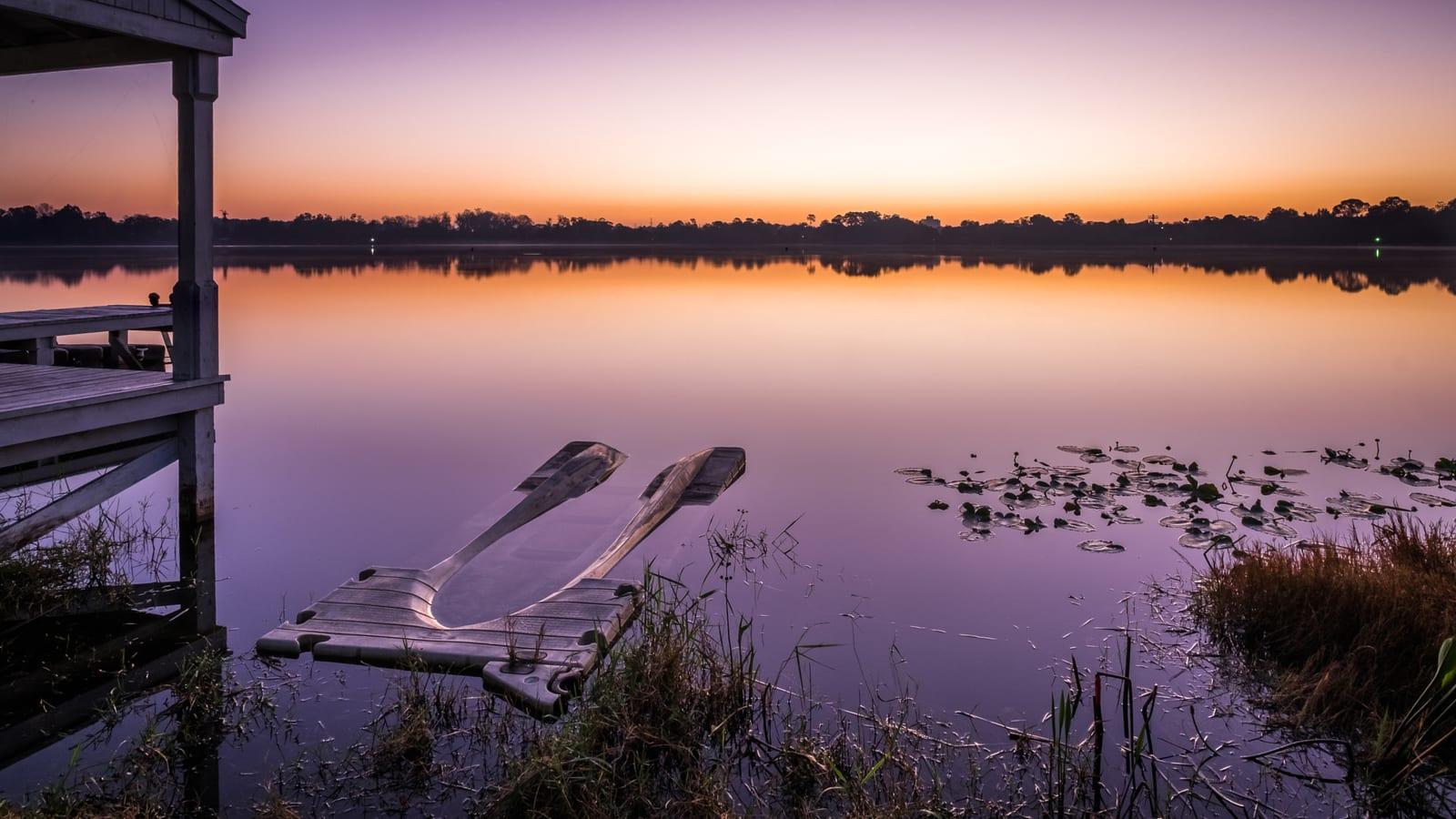
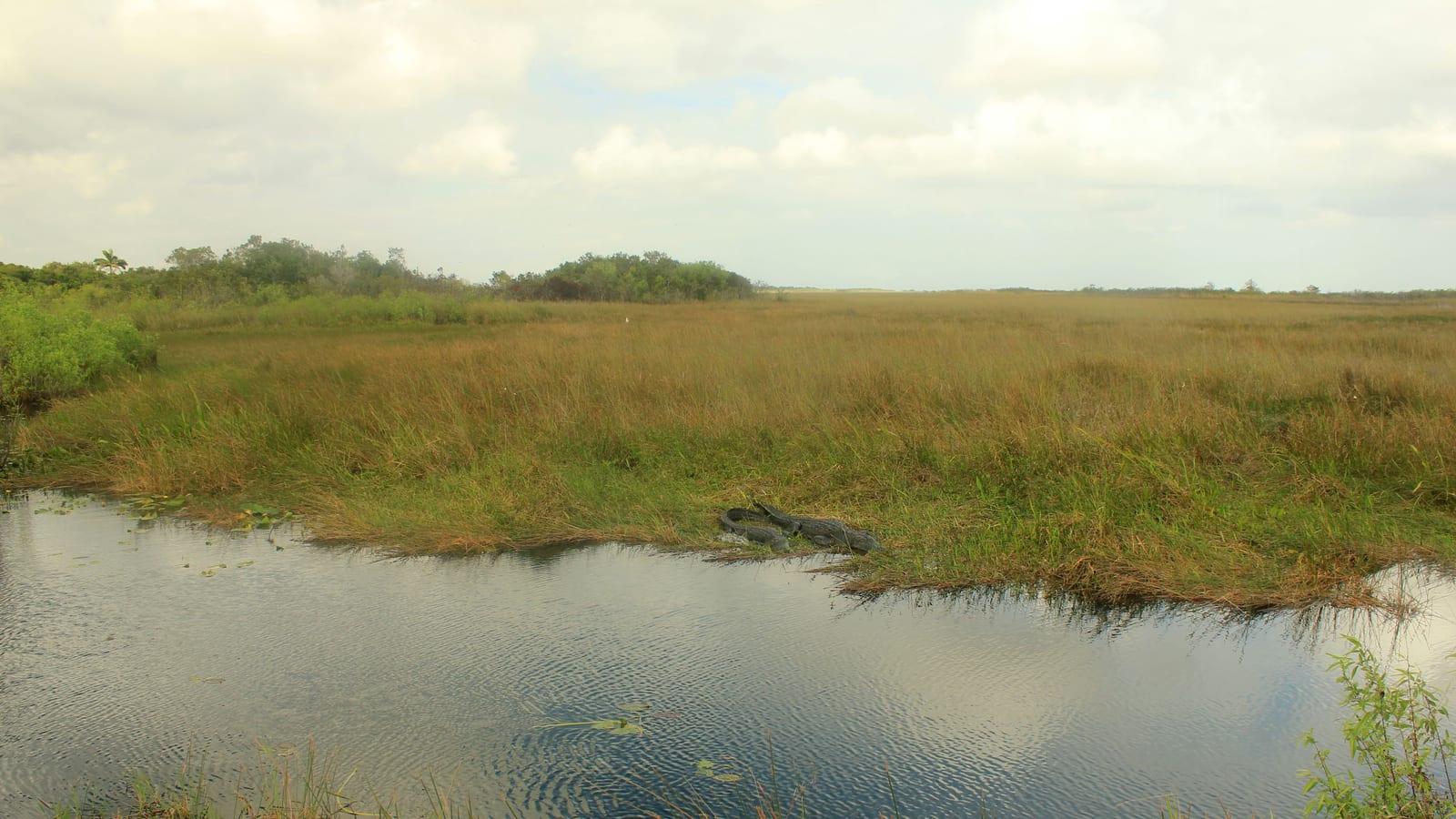
Image: Nyttend (Public domain)
Casey Key is a barrier island at Nokomis, just north of Venice on Florida's Gulf coast, where fossil shark teeth wash ashore along the same stretch of coast that made Venice famous. Public access is limited to two points, which keeps it quieter than the Venice beaches. Free, no permit for shark teeth.
By Edward Chen · Updated 26 July 2026
Introduction
Casey Key is a long, narrow barrier island off Nokomis in Sarasota County, on the Gulf coast of Florida immediately north of Venice. It sits on the same stretch of coast that earned Venice its reputation as a shark-tooth beach, and the teeth wash ashore here for the same reason, but Casey Key sees a fraction of the visitors.
That is largely a matter of access. Most of the key is private residential property, and there are only two public entry points, so the crowds concentrate near them and thin out quickly as you walk. The fossils themselves are shark and ray teeth eroded out of Neogene deposits offshore, rolled in by the surf and concentrated in the shell hash along the tideline. No permit is needed to collect them, and the technique is simple enough that children pick it up in minutes.
Location and Directions
Casey Key lies at Nokomis, near 27.150 degrees north, 82.481 degrees west, reached from US-41 across the bridge at Blackburn Point or from the Albee Road bridge further south.
Public access is the thing to plan around. Nokomis Beach and North Jetty Park, at the southern tip of the key facing Venice Inlet, are the two public access points, and both have parking, restrooms, and showers. Everything between them is private, so park at one of the two and walk from there.
The southern end near the jetty is the busiest, and it is also where the inlet currents concentrate material. Walking north from the access points takes you to quieter sand within a few minutes. There is no fee to collect, and no permit is required for shark teeth.
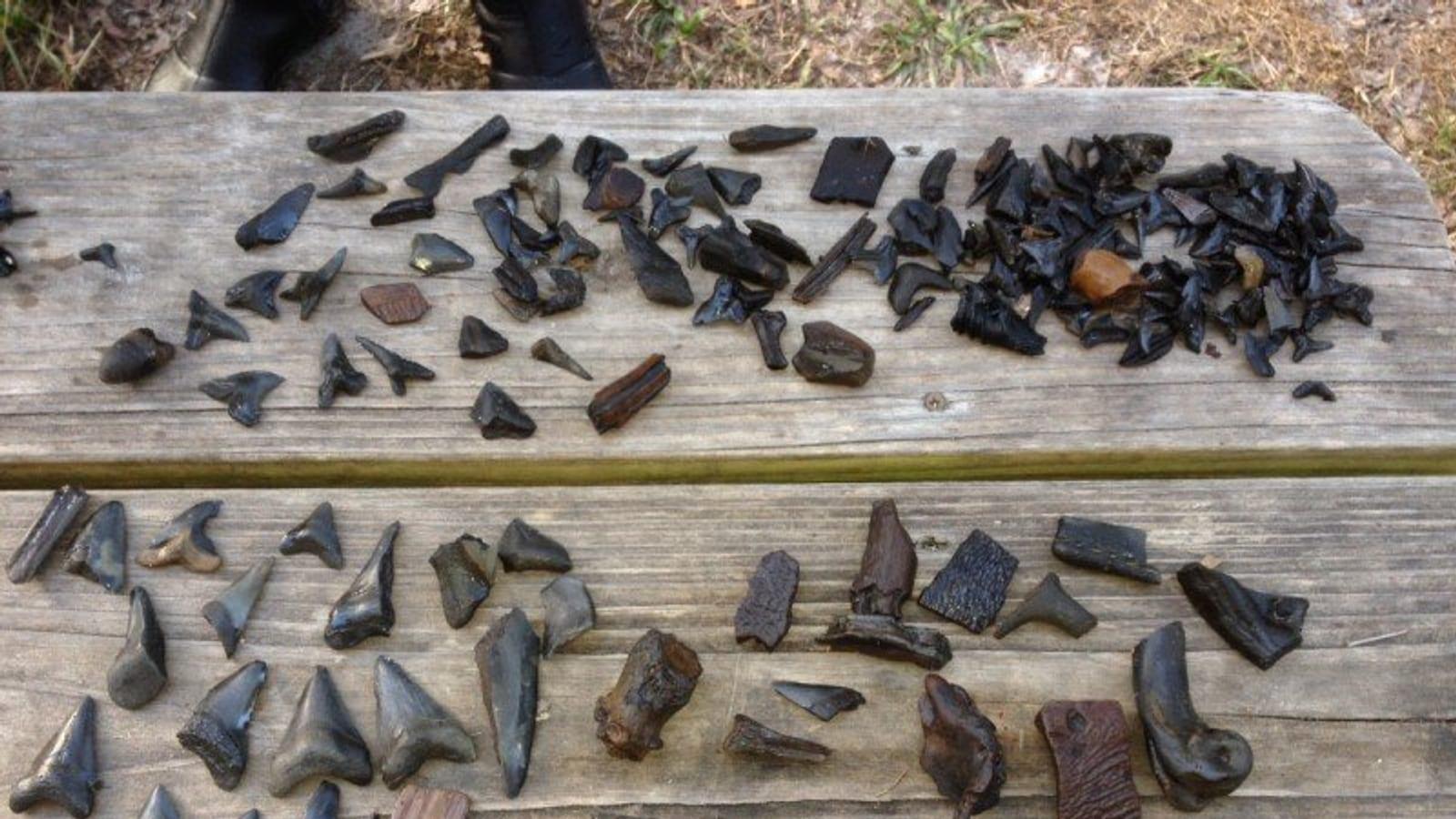
Photo: Smithsonian National Museum of Natural History, CC0, via Smithsonian Open Access
What Fossils You'll Find
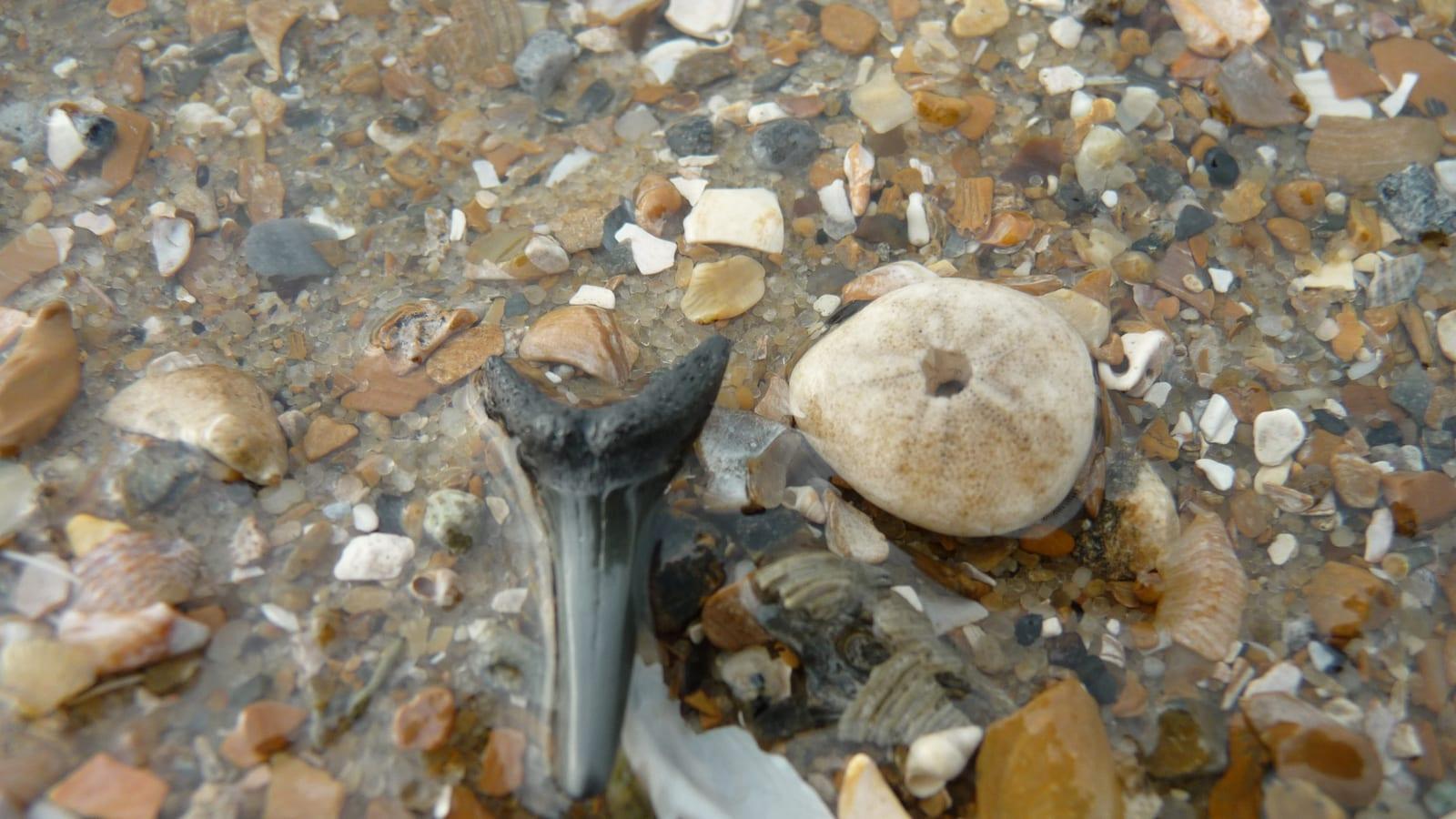
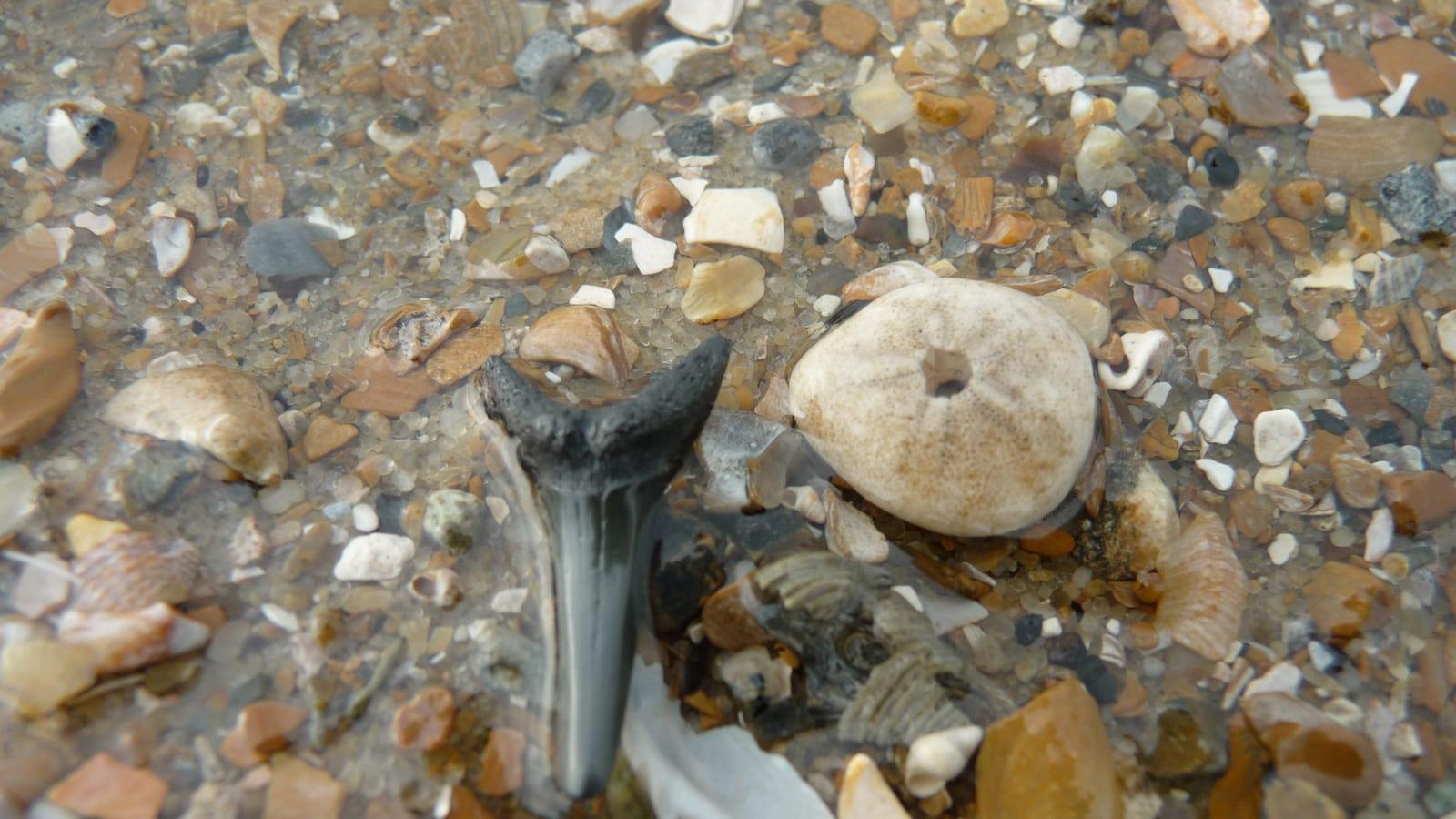
Ray teeth and dental plates occur in the same material and are easy to overlook, being flat and pebble-like. Shells are abundant, some of them fossil and some modern, and a scatter of other marine vertebrate fragments turns up in the sifted residue.
The method that works is the local one. Look along the wet sand at the water's edge and in the shell banks just offshore, where wave action has already sorted the heavy material together. Many people work in shin-deep water with a long-handled sifting basket, the tool sold locally as a Venice snow shovel, scooping shell hash and shaking out the sand. Others simply walk the tideline and pick teeth out by eye, which is slower but needs no equipment.
Timing matters as much as technique. Low tide in the early morning, roughly between six and nine, is the productive window, both because more beach is exposed and because you get to it before anyone else. Storms are the other variable worth watching. Rough weather churns the offshore sediment and delivers a fresh crop onto the beach, so the days after a blow are consistently better than a calm week.
Geologic History
The teeth on Casey Key did not form here. They eroded out of Neogene marine sediments that lie offshore and beneath the coastal plain, principally the phosphatic beds of the Hawthorn Group and the Peace River Formation within it, laid down between roughly 12 and 2.5 million years ago when this part of Florida was a shallow, productive sea.
Those seas supported very large populations of sharks, and sharks shed teeth continuously through life, replacing them in rolling rows. A single animal produces thousands over a lifetime, which is why teeth are the common fossil and skeletal material is not. Shark skeletons are cartilage and rarely survive, so the teeth, hardened with enamel-like tissue and mineral, are effectively all that is left.
Wave action and longshore currents rework those deposits and drive the heavier grains, teeth included, up onto the modern beach. That is why the supply renews. The barrier island itself is geologically young and mobile, a ridge of sand shifted by storms and currents, sitting on top of much older material that keeps feeding the beach.
Collecting Rules and Regulations
Collecting fossil shark teeth on Florida beaches is free and needs no permit. Florida specifically exempts shark teeth from the state fossil permit system, and what you find on the beach is yours to keep.
The exemption is narrow, though, and worth understanding. Other vertebrate fossils are not exempt. Collecting vertebrate fossil material from state lands in Florida requires a fossil permit from the Florida Museum of Natural History, which costs a few dollars a year. If you turn up bone rather than teeth, that rule applies.
The practical constraint here is land ownership rather than paleontology. Most of Casey Key is private residential frontage, and the beach in front of private property should be treated accordingly. Stay in the public access areas and the wet sand, and do not cross private lots to reach the water. Sarasota County beach regulations apply at both access points, including rules on dogs and glass containers.
Do not dig into the dunes. Coastal dunes are protected, they hold the island together during storms, and there are no fossils in them worth the damage.
Safety
The Gulf here is usually gentle, but it is still open water. The main hazard is the pass at the southern end of the key, where tidal current runs hard through Venice Inlet on both the ebb and the flood. That current is exactly why the jetty area concentrates material, and it is also why you should not swim or wade deep there. Work the shallows and stay out of the channel.
Rays rest in the sand in shallow water. The standard precaution is the stingray shuffle, sliding your feet along the bottom rather than stepping down, which gives them warning to move. Wear something on your feet, since broken shell is sharp and so are some of the larger teeth.
Florida sun on open sand is severe and reflects off both the water and the pale beach. Carry water, use sun protection, and take the early-morning window seriously, since it is both the best collecting and the coolest part of the day. Watch the sky in summer, when afternoon thunderstorms build quickly and an open beach is no place to be in lightning. Supervise children in the water at all times.
Sources
https://www.floridamuseum.ufl.edu/florida-fossil-permit/ https://www.fossilguy.com/sites/venice/index.htm https://www.visitsarasota.com/article/guide-venices-shark-tooth-capital-world https://www.scgov.net/government/parks-recreation-and-natural-resources
Frequently asked questions
- Do you need a permit to collect shark teeth at Casey Key?
- No. Florida exempts fossil shark teeth from its permit requirement, so beach collecting is free and you keep what you find. A permit is needed only for other vertebrate fossils.
- Where can you park at Casey Key?
- Public access is limited to Nokomis Beach and North Jetty Park. Most of the key is private residential, so those two are the practical starting points.
- When is the best time to hunt shark teeth at Casey Key?
- Early morning at low tide, and after storms. Rough weather stirs the offshore sediment and throws a fresh crop of teeth onto the beach.