Bone Valley Fossil Hunting Guide
Bone Valley is the phosphate district of central Florida, a region rather than a single site, whose Miocene and Pleistocene deposits produce shark teeth, marine vertebrates, and Ice Age land mammals. The active mines are closed to the public. Collecting happens on the region's public rivers and beaches.
By Edward Chen · Updated 30 July 2026
Introduction
Bone Valley is not one locality. It is a mining district covering parts of Polk, Hardee, Hillsborough, and Manatee Counties in central Florida, and it takes its name from exactly what it sounds like. The phosphate ore mined here is so full of fossil bone that the two came out of the ground together, and the district has supplied museums with Florida's Miocene and Pleistocene vertebrate record for well over a century.
The important practical point for a visitor is that you cannot collect in Bone Valley itself. The mines are private, active industrial operations, and they are closed to the public. What the district does is supply the material that turns up where the public can legally collect it, principally the Peace River, which cuts straight through the deposits, and the Gulf beaches to the west. This guide explains what the deposits are, why they matter, and where the collecting actually happens.
Location and Directions
The district centres on Polk County, near 27.546 degrees north, 81.811 degrees west, inland and east of Tampa. Mulberry and Bartow are the towns most associated with it, and the landscape between them is a patchwork of active pits, reclaimed land, and clay settling ponds.
There is no fossil site to drive to. For public collecting, go instead to:
The Peace River, which drains the district and concentrates its fossils in gravel bars. Access is at bridges, boat ramps, and canoe liveries around Zolfo Springs, Gardner, Brownville, and Arcadia. This is the main event for anyone wanting Bone Valley material.
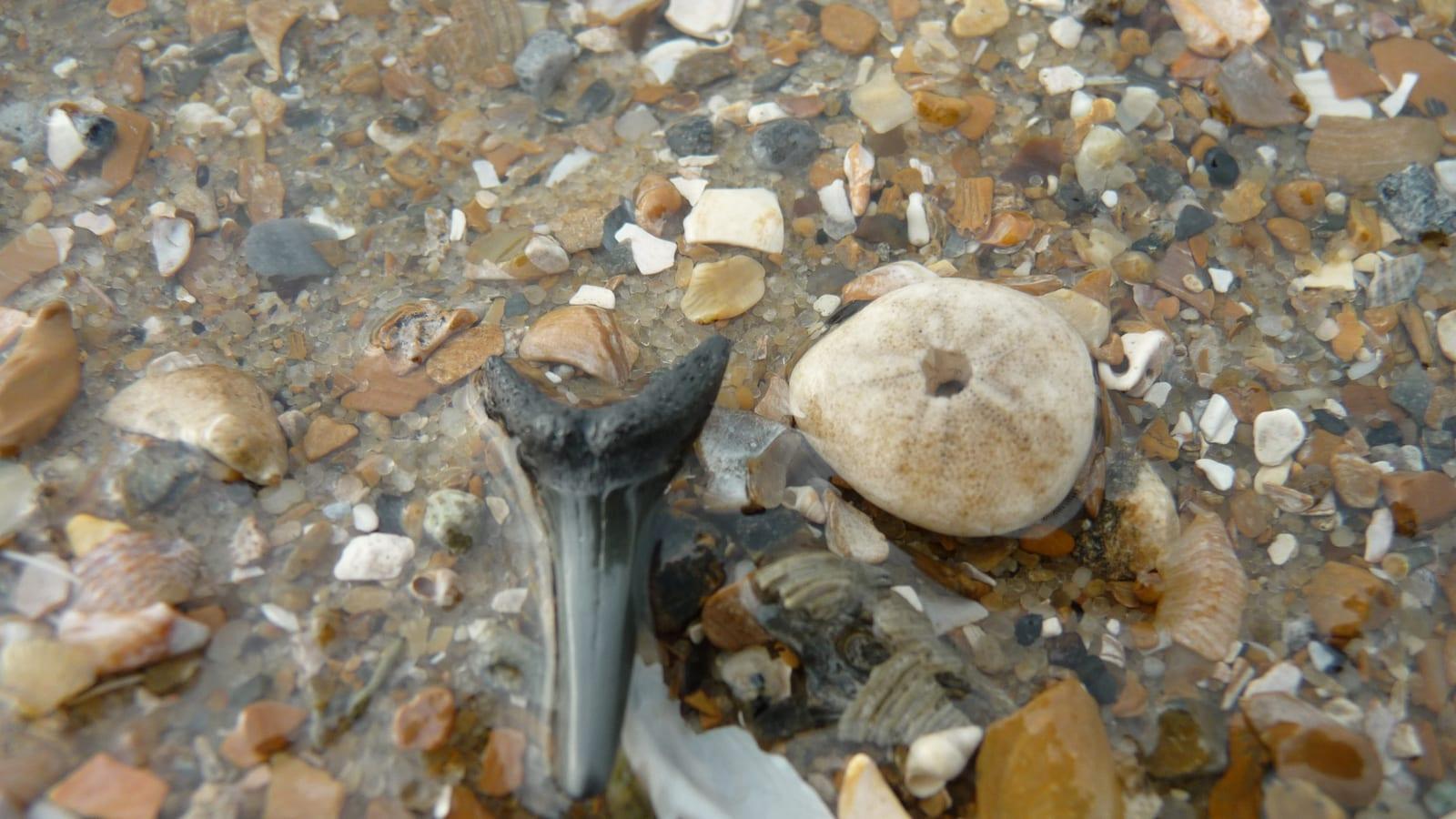
The Gulf beaches around Venice, Casey Key, Manasota Key, and Caspersen Beach, where shark teeth eroded from equivalent offshore deposits wash ashore.
For the science rather than the collecting, the Florida Museum of Natural History in Gainesville holds the major Bone Valley collections and displays them.
What Fossils You'll Find
The district's output spans two very different worlds, and both end up in the same sediment.
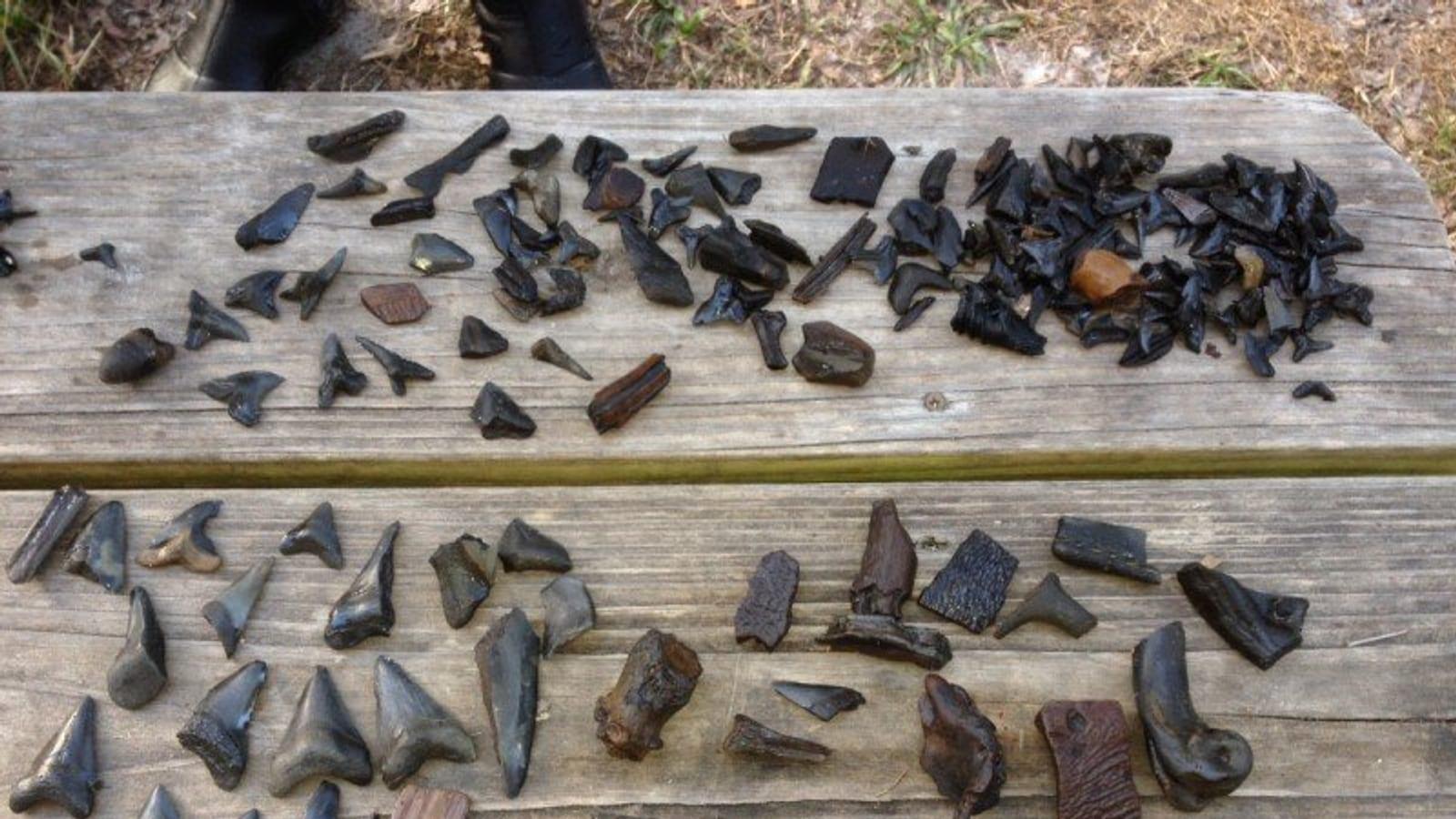
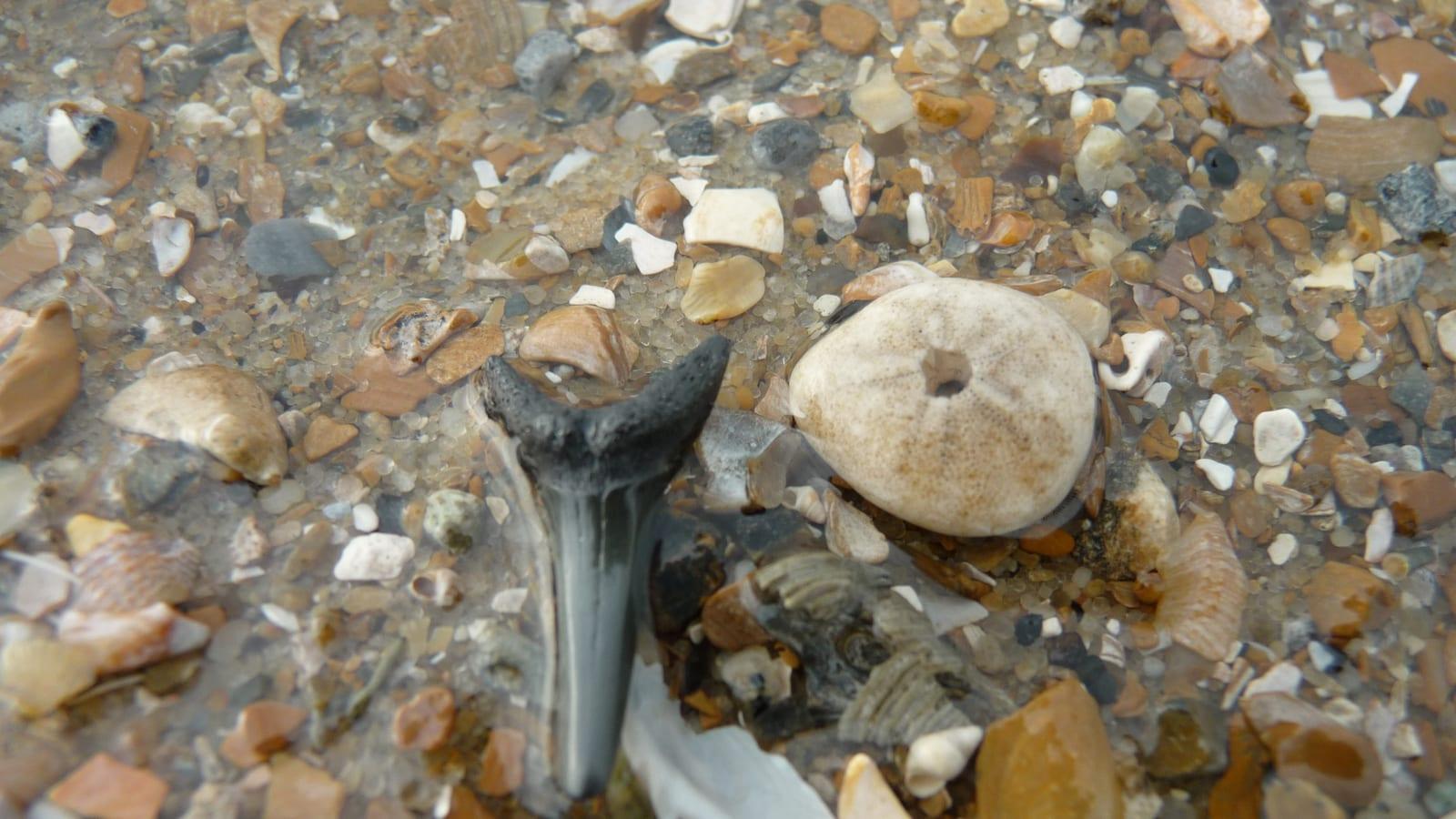
The marine component is Miocene and Pliocene. Shark teeth are abundant and diverse, and among them are those of Otodus megalodon, since these waters served as a nursery for the species. Ray dental plates, bony fish remains, and marine mammal material such as dugong ribs and whale bone are all regular.
The terrestrial component is largely Pleistocene. Mammoth and mastodon teeth and bone, horse, camel, giant sloth, glyptodont and tapir material, and predators including sabre-toothed cats, have all come from the district. Bone Valley is one of the more important sources of Ice Age vertebrate material in the eastern United States, and specimens from here underpin a good deal of what is known about Florida's fauna through that interval.
For a visitor working the Peace River, the practical expectation is shark teeth in quantity, ray plates, and fragmentary bone, with better vertebrate material as the reward for persistence.
 Photo: RealGatba, CC0, via Wikimedia Commons
Geologic History
The Bone Valley Member of the Peace River Formation was laid down from roughly 12 million years ago in a shallow sea over what is now central Florida. Upwelling brought nutrient-laden water onto the shelf, the sea became highly productive, and two things followed. Large populations of sharks and marine mammals lived and died above the sea floor, and phosphate accumulated in the sediment through the chemistry that productive upwelling zones drive.
That phosphate is why the district is mined, and the bone is why it is named. The two are physically mixed, and industrial extraction of one has always turned up the other.
Sea level then fell, the sea floor became a Pleistocene savanna, and land mammals lived and died on top of the older marine beds. Rivers and sinkholes mixed the two, so a single deposit can hold a Miocene shark tooth and a Pleistocene horse tooth. Nothing collected loose here can be dated from its position, which is why context recorded at the time of collection matters to researchers and why the state permit asks for significant finds to be reported.
Collecting Rules and Regulations
The mines are closed. This is not negotiable. Active phosphate operations are private industrial property with heavy machinery, unstable spoil, and deep water. Entering is trespassing and it is dangerous. Reclaimed mine land is likewise private or restricted unless posted otherwise. Do not go looking for a way in.
Vertebrate fossils on state land require a permit. The Florida Fossil Permit is issued by the Florida Museum of Natural History and costs about five dollars a year. It covers vertebrate fossil collecting on state-owned land, including the beds of navigable rivers such as the Peace. It carries a condition to report scientifically significant finds.
Shark teeth and invertebrates are exempt from the permit requirement.
Private land needs the owner's permission, in writing if you can get it. Much of the district and many river banks are privately held.
Collect from public rivers and beaches, and treat any offer of access to mine land with suspicion.
Safety
The safety picture in Bone Valley has two parts, and the first is simply to stay out of the mines. Phosphate pits have steep unconsolidated walls that fail without warning, deep water with no exit, and clay settling ponds whose surface can look solid and is not. People have died in them. No fossil justifies the risk.
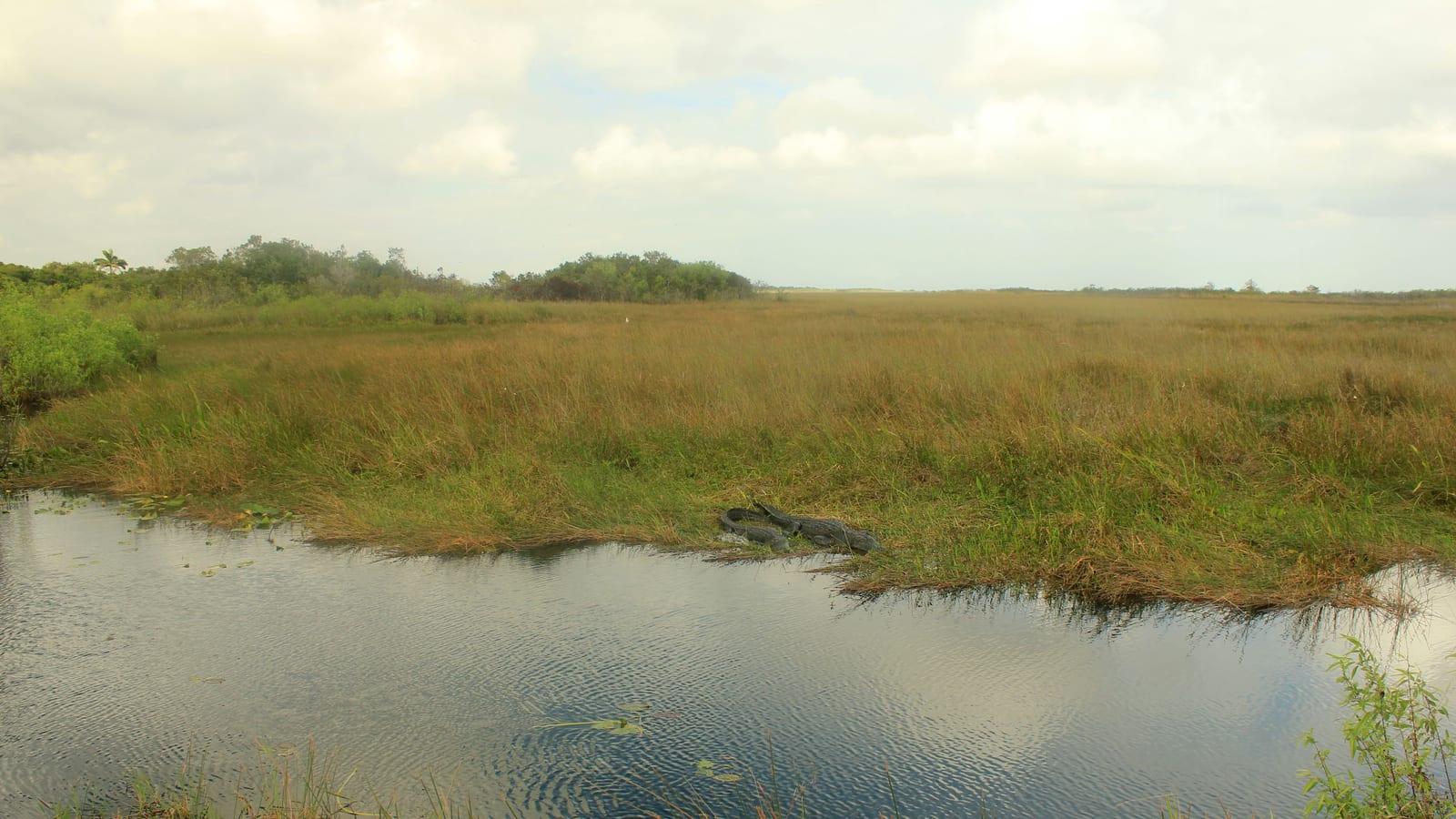
Where the public actually collects, the hazards are river hazards. On the Peace River, alligators are present throughout, so avoid dawn and dusk, keep dogs out of the water, and never work a quiet stretch alone. Water moccasins occur along banks and in overhanging branches. Current runs stronger than it looks after rain, the bottom drops away at bends, and submerged snags are common, so wear closed footwear and wade rather than swim.
Central Florida heat and sun are severe, and much of the collecting is in open water or on open beach with no shade. Carry more water than you expect to need, use sun protection, and take repellent for mosquitoes and biting flies. Summer afternoons bring fast-building thunderstorms with frequent lightning, which is a good reason to hunt early and be off the water by mid-afternoon.
Sources
https://www.floridamuseum.ufl.edu/florida-fossil-permit/ https://www.floridamuseum.ufl.edu/vertpaleo/ https://www.fossilguy.com/sites/peace-river/index.htm https://floridadep.gov/fgs
Frequently asked questions
- Can you collect fossils in the Bone Valley phosphate mines?
- No. The mines are private industrial sites, closed to the public, and genuinely dangerous. Public collecting in the region happens on the Peace River and the Gulf beaches instead.
- Do you need a permit to collect in Bone Valley?
- For vertebrate fossils on state land, yes. The Florida Fossil Permit from the Florida Museum of Natural History costs about five dollars a year. Shark teeth and invertebrates are exempt.
- What is Bone Valley?
- A phosphate mining district covering parts of Polk, Hardee, Hillsborough, and Manatee Counties in central Florida, named for the quantity of fossil bone found in its phosphate deposits.