Peace River Fossil Hunting Guide
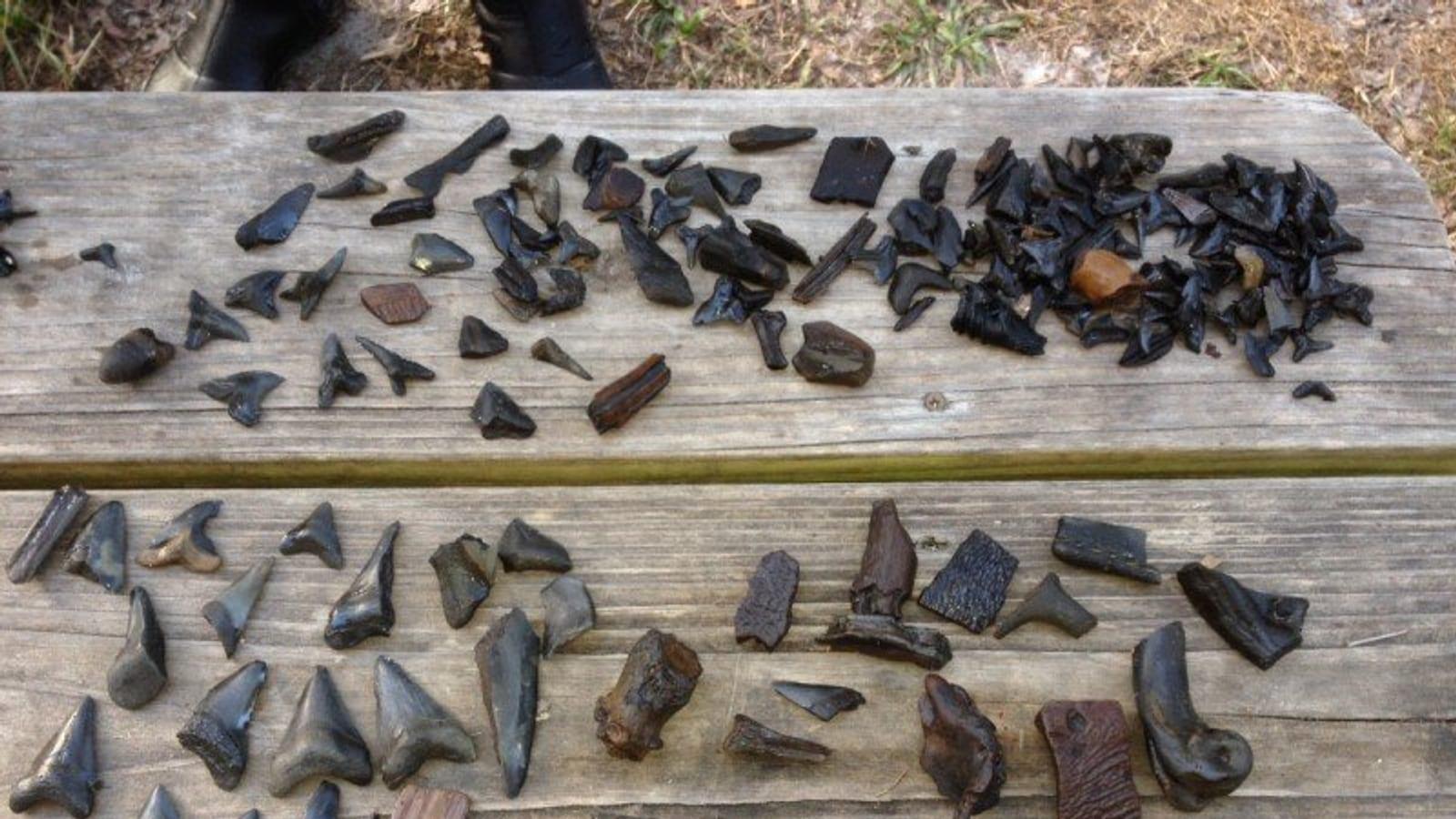
The Peace River cuts through Florida's Bone Valley phosphate district, and its gravel bars yield fossil shark teeth, megalodon teeth, ray plates, and Ice Age mammal bone. Collecting is by sifting gravel at low water. Shark teeth are free to keep, and other vertebrate fossils need a state permit.
By Edward Chen · Updated 26 July 2026
Introduction
The Peace River runs south through Hardee and DeSoto Counties in central Florida, cutting down into the Bone Valley phosphate district on its way to Charlotte Harbor. In doing so it slices through some of the most productive fossil-bearing sediment in North America and spills the contents into its own bed.
This is a sifting hunt rather than a hammering one. Fossils weather out of the banks and the river bottom, wash downstream, and collect in the gravel bars where the current slows. You stand in shallow water with a screen, dig gravel into it, and shake. What comes back is a mixture of Miocene marine material and Ice Age land mammal bone, sometimes in the same scoop, because the river has reworked deposits of very different ages into one deposit.
Location and Directions
The Peace River is a corridor rather than a single site, near 27.421 degrees north, 81.854 degrees west at its central reach. Productive water runs for many miles, and access is by public bridges, boat ramps, and canoe liveries rather than a park gate.
Common put-in points include Zolfo Springs, Gardner, Brownville, and Arcadia. A canoe or kayak is close to essential, both because the good gravel bars are away from road access and because floating between them beats walking the bank. Several outfitters along the river run guided fossil trips and rent boats and screens, which is the sensible way to do a first visit.
Bring the gear. A sifting screen, a small shovel or trowel, sturdy footwear you can stand in water with, and containers for finds. There is no admission and no gate, but you will need a Florida Fossil Permit before you keep any vertebrate material.
What Fossils You'll Find
The river's output falls into two broad groups, marine and terrestrial, mixed together.
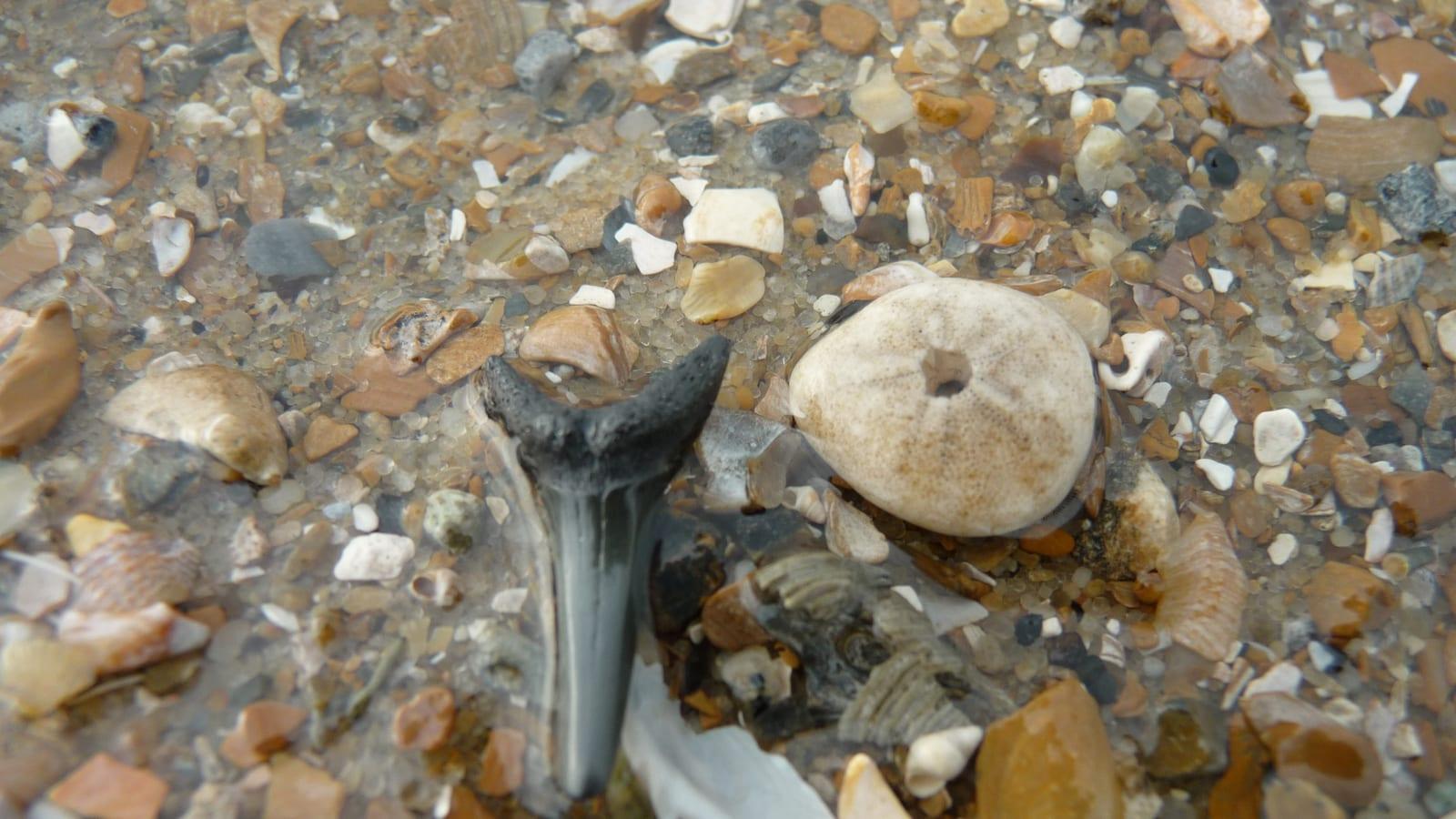
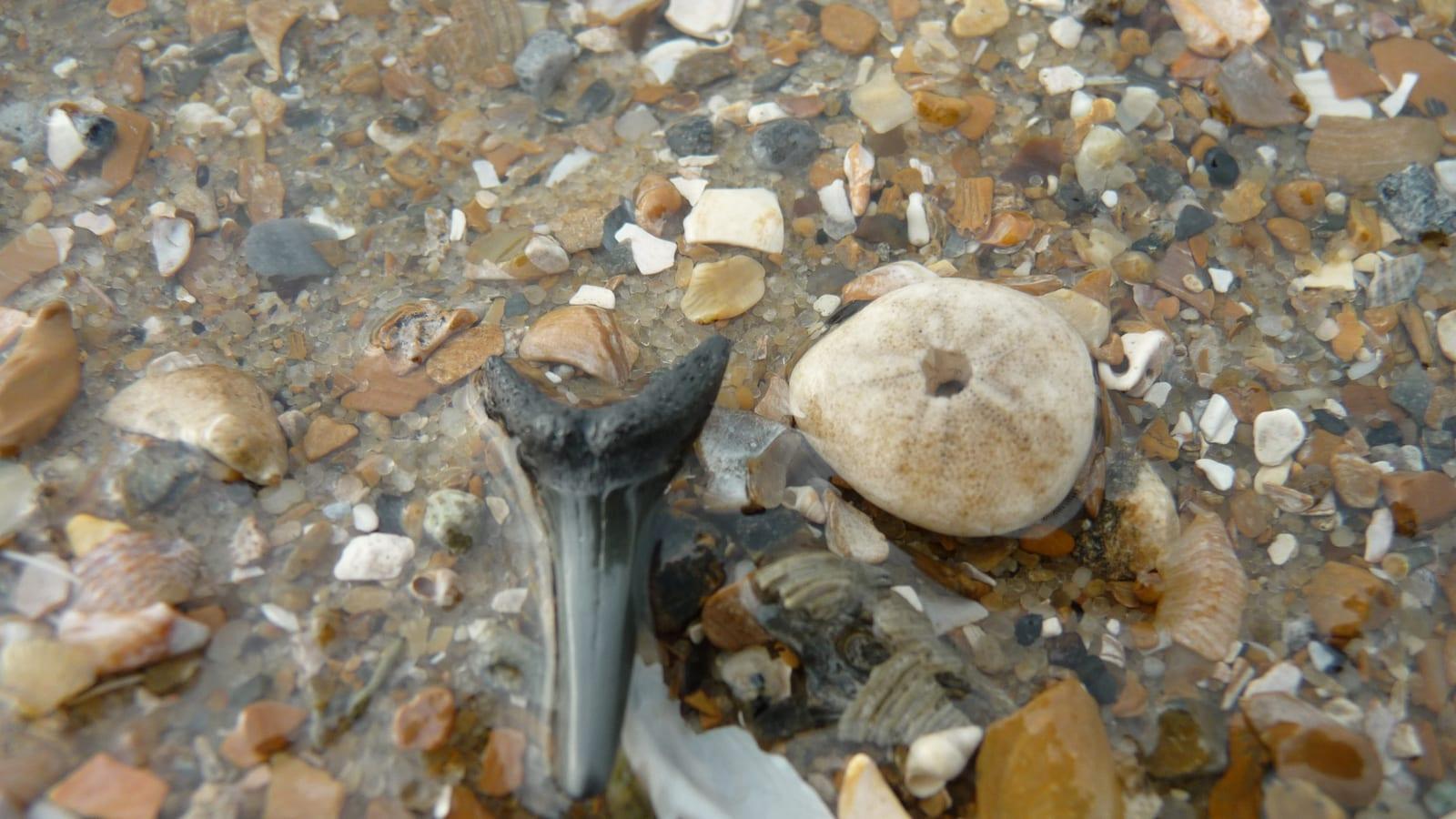
Shark teeth are the common find and the reason most people come. Many species occur, and among them are the teeth of Otodus megalodon. The Peace River area was a megalodon nursery during the Miocene, which is why the quantity and quality of teeth here exceed most other deposits. Large complete specimens are still uncommon, and anything over four inches is a serious find.
Ray dental plates are abundant and often mistaken for pebbles until you spot the ridged grinding surface. Marine mammal material, including dugong rib and whale bone, is regular.
The Ice Age component is what makes the river unusual. Mammoth and mastodon teeth and bone fragments, horse teeth, camel, giant sloth, glyptodont scute, and sabre-toothed cat material have all come out of these gravels. Most of it arrives as fragments rather than whole bones, and a complete tooth is a good day.
Timing is the single biggest factor. Work the river at low water, roughly November through May. In the wet season the bars are submerged, the current is strong, and the hunt is off. After rain and during falling water, freshly eroded material concentrates in the bars, and that is the moment to be there.
Geologic History
The fossils come from the Bone Valley Member of the Peace River Formation, part of the Hawthorn Group, deposited from roughly 12 million years ago onwards when this part of Florida was a shallow sea laden with phosphate. Upwelling nutrient-laden water made it extraordinarily productive, supporting the shark populations whose teeth now fill the gravel, and the same chemistry concentrated the phosphate that later made the district a mining region.
Sea level fell and the sea floor became dry land. Through the Pleistocene, Florida was a savanna roamed by mammoths, mastodons, horses, camels, giant sloths, and the predators that hunted them. Their remains accumulated in the same general area, sitting above or cut into the older marine beds.
The Peace River then did the sorting. Flowing across both, it eroded marine and terrestrial deposits alike and redeposited the durable pieces together in its channel gravels. That is why a single screen can hold a Miocene shark tooth and a Pleistocene horse tooth separated by millions of years, and why nothing found loose in the river can be dated by its position in the gravel.
Collecting Rules and Regulations
The permit rule is the one to get right, because most of what the Peace River produces falls under it.
Vertebrate fossils require a Florida Fossil Permit. The permit is issued by the Florida Museum of Natural History, costs about five dollars for a year, and covers collecting vertebrate fossils from state-owned land, which includes the beds of navigable rivers. Mammoth teeth, bone, and marine mammal material all need it.
Shark teeth are exempt. Fossil shark teeth may be collected without a permit, as may invertebrates.
Report significant finds. The permit carries a condition that scientifically significant specimens are reported to the Florida Museum. A complete or unusual specimen belongs in that category.
Respect land ownership. The river bed below the ordinary high water line on navigable stretches is state land, but the banks are very often private. Access from public ramps and bridges, and do not cross or dig into private banks.
Do not tunnel into the banks anywhere. Undercutting accelerates erosion, it is dangerous, and the productive material is in the bars rather than the bank face.
Safety
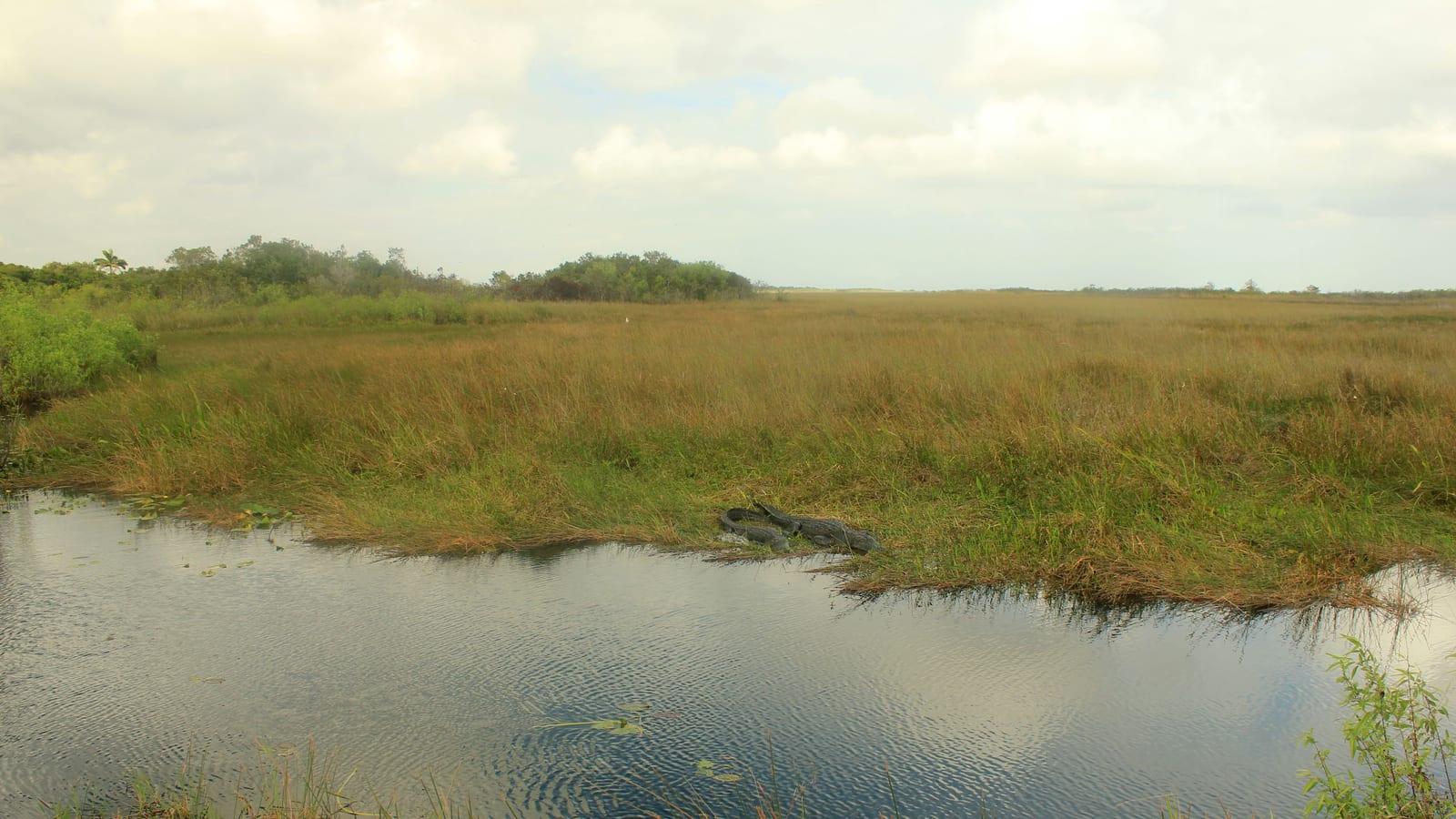
This is a wild Florida river, and the wildlife is the first thing to take seriously. Alligators are present throughout the Peace River. Do not hunt at dawn or dusk when they are most active, never work alone in a quiet stretch, keep dogs out of the water entirely, and leave the area if an alligator shows interest rather than curiosity. Water moccasins occur along the banks and on overhanging branches, so look before you put a hand anywhere.
The water itself carries risk. Current is stronger than it looks after rain, the bottom drops off without warning at the outside of bends, and submerged limbs and snags are everywhere. Wear closed footwear, wade rather than swim, and do not work the river alone. Water levels can rise quickly upstream of you after heavy rain even if the sky is clear where you are.
Heat, sun, and insects round it out. Carry more water than you think you need, use sun protection, and take insect repellent for the mosquitoes and biting flies. Cell coverage is patchy along much of the river, so tell someone your put-in point, your take-out point, and when you expect to be back.
Sources
https://www.floridamuseum.ufl.edu/florida-fossil-permit/ https://www.fossilguy.com/sites/peace-river/index.htm https://www.fossilguy.com/sites/peace-river/peace-river-fossils.htm https://myfwc.com/recreation/
Frequently asked questions
- Do you need a permit to hunt fossils in the Peace River?
- Yes for vertebrate fossils, which is most of what the river produces. The Florida Fossil Permit from the Florida Museum of Natural History costs about five dollars a year. Shark teeth are exempt and need no permit.
- When is the best time to hunt the Peace River?
- Low water, roughly November through May. High summer water makes the gravel bars inaccessible and the current unsafe to work in.
- Can you find megalodon teeth in the Peace River?
- Yes. The area was a megalodon nursery in the Miocene, and the river is one of the more reliable places in the world to find their teeth, though large complete ones remain uncommon.