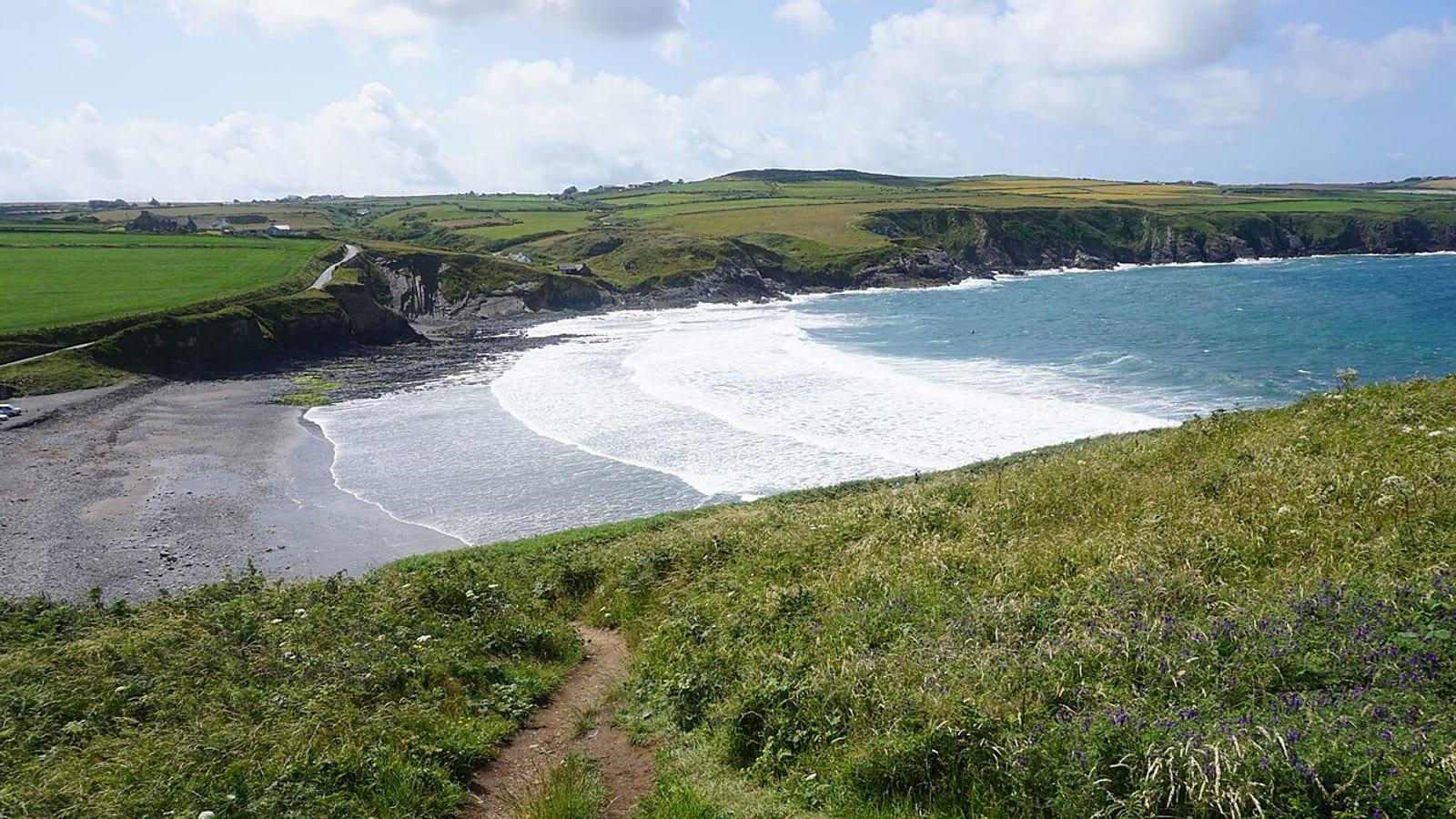
Abereiddy Bay Fossil Hunting Guide
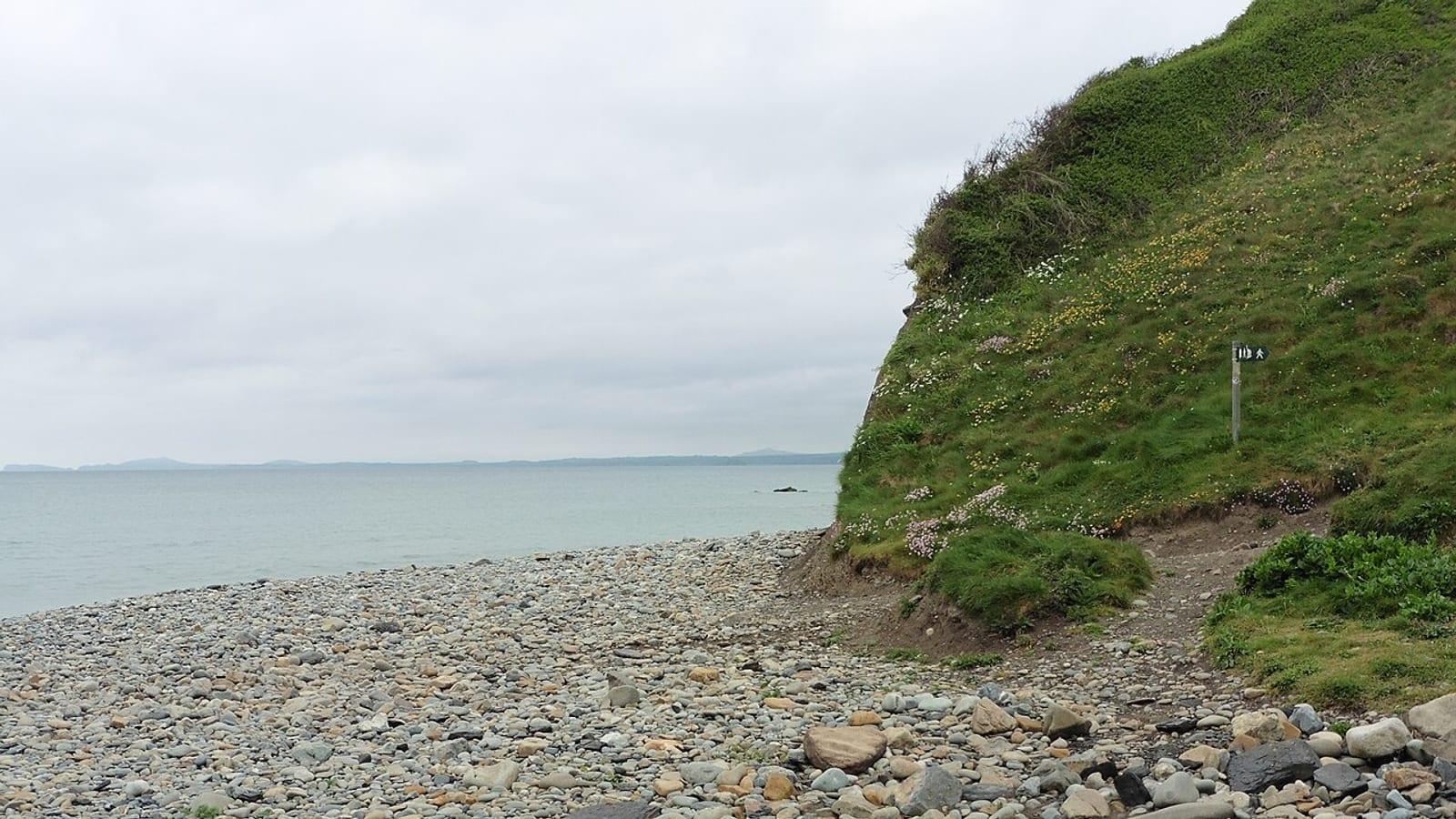
Image: Bill Boaden via Wikimedia Commons (CC BY-SA 2.0)
Abereiddy Bay in Pembrokeshire exposes Ordovician black shales packed with graptolites, widely regarded as the best place in Britain to find these colonial fossils.
By Edward Chen · Updated 1 August 2026
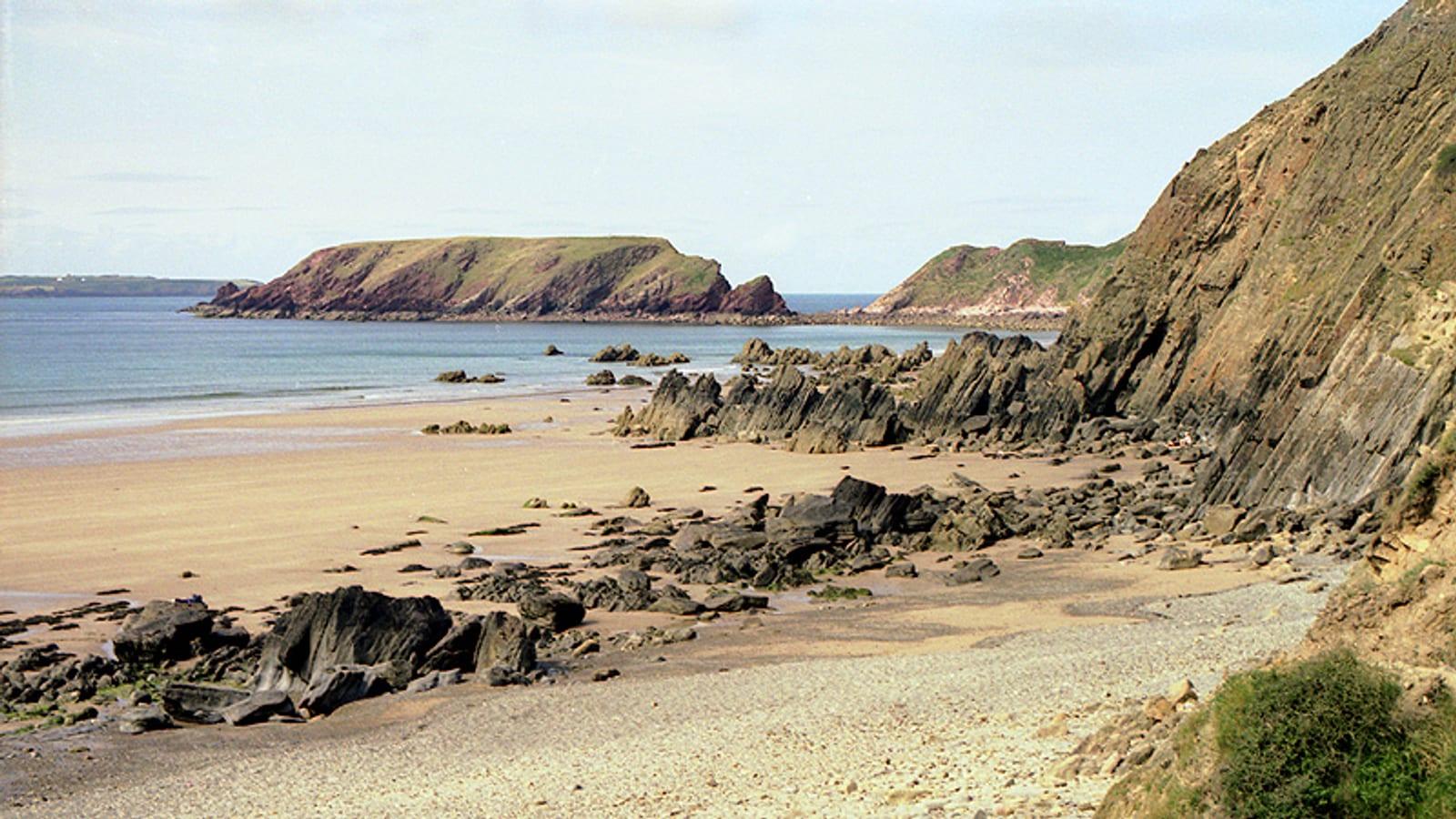
 Photo: Ian Medcalf, CC BY-SA 2.0 via Wikimedia Commons
Introduction
Abereiddy Bay on the Pembrokeshire coast is widely regarded as the best place in Britain to find graptolites, and it is outstanding for seeing them in situ as well. The black shales exposed on the foreshore and in loose blocks on the beach date to the Middle Ordovician period, roughly 470 to 464 million years ago, when this part of Wales lay on the edge of the small continent Avalonia, separated from the main mass of Gondwana by the opening Rheic Ocean. The graptolites preserved here were planktonic colonial organisms that drifted across ancient seas in vast numbers. Their flat, two-dimensional preservation in the dark shale gives them the pencil-mark appearance that gave them their name, from the Greek for 'written stone'. The site is an SSSI, but the rules here work in your favour: hammering the bedrock is prohibited, but loose blocks continually erode from the cliffs onto the beach and foreshore, and these can be picked up and examined without any tools at all. Many contain better specimens than the bedrock itself. This guide covers where to go, what to look for, and how to make the most of a visit.
Abereiddy is located about 2.5 kilometres from St Davids, Britain's smallest city. The beach itself is distinctive: the dark sand and shingle are composed of crushed black slate from former quarrying, giving the bay its unusual colouring. The flooded slate quarry immediately north of the beach, known as the Blue Lagoon, is a popular open-water swimming and cliff-diving site and adds visual interest to the visit.
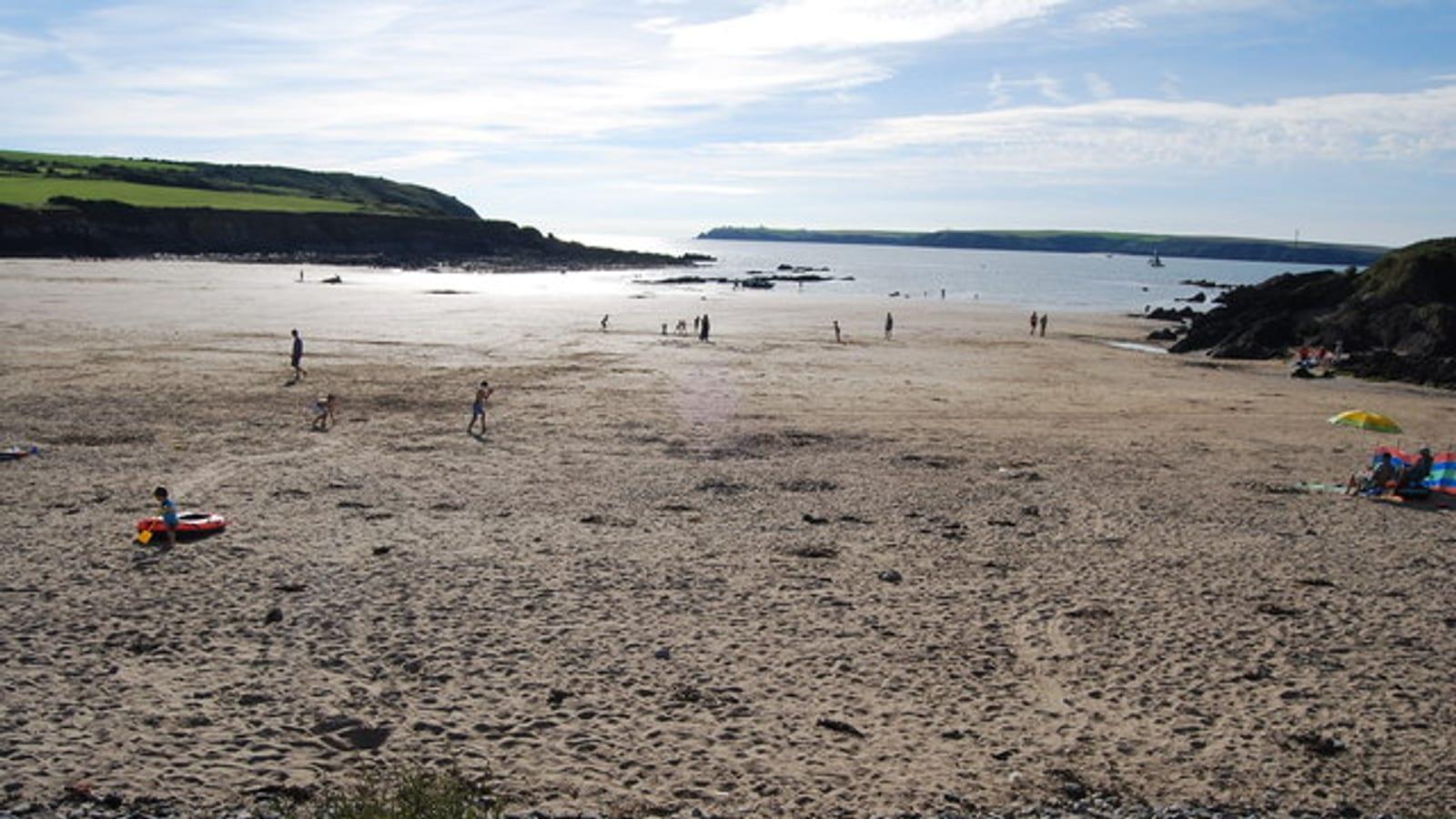
 Photo: Bill Boaden, CC BY-SA 2.0, via Wikimedia Commons
Location and Directions
Address
Abereiddy Bay, near St Davids, Pembrokeshire SA62 6DT, Wales. The site is managed by the National Trust and lies within the Pembrokeshire Coast National Park.
Directions and Parking
From St Davids, take the B4583 north for approximately 2.5 kilometres, then turn left onto the minor road signposted to Abereiddy. Follow the road to the car park at the top of the hill above the bay. The car park is small and can fill quickly in summer. Arrive early in the morning during peak season. A seasonal charge may apply. Check current rates from the National Trust. From the car park, walk down the path to the beach. The descent takes about five minutes on a clear path. The fossiliferous black shales are visible immediately on the foreshore and in loose blocks across the beach. The Blue Lagoon is accessed by a short path from the northern end of the beach. Public transport to Abereiddy is limited. The nearest regular bus service runs to St Davids, from which Abereiddy is a 2.5 kilometre walk or cycle ride.
What Fossils You'll Find
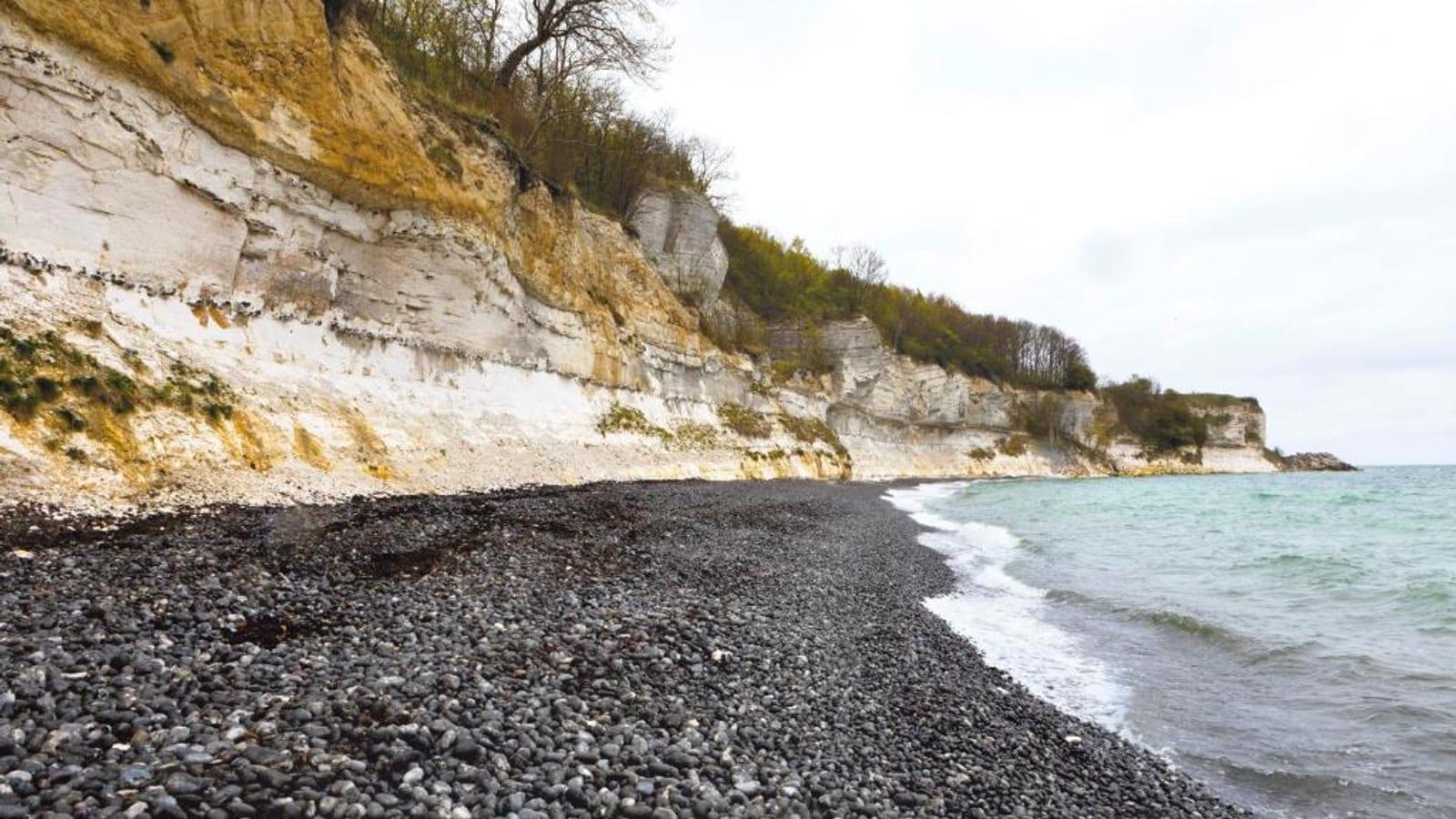
 Photo: Walter Baxter, CC BY-SA 2.0 via Wikimedia Commons
Graptolites are the defining fossil of Abereiddy Bay. The most common species is Didymograptus murchisoni, known as the tuning-fork graptolite from its distinctive shape: two stipes (branches) hanging downward from a short connecting stem, each with a jagged inner edge resembling saw teeth and a smooth outer edge. Individual specimens are typically 20 to 50 mm long and are preserved as flat, often slightly iridescent markings on the cleavage faces of the black shale. They occur in dense concentrations in some beds, crammed into the rock surface at all angles. Where currents aligned them during life or settling, they sometimes all point in the same direction.
 Photo: Goldman, D; Leslie, S. A.; Liang, Y.; and Bergström, S. M., CC BY 4.0, via Wikimedia Commons
To find them, look at the flat surfaces of loose black shale blocks on the beach rather than trying to split rock. The best specimens are on natural cleavage faces that have already been exposed by weathering. Hold the rock at an angle to the light: the iridescence of fresh graptolite preservation is most visible when the light catches the surface obliquely. Fresh material erodes from the cliffs regularly, and specimens closer to the cliff base tend to be better preserved than those that have been rolling around in the surf for a long season.
The graptolites here serve as zone fossils: Didymograptus murchisoni is the index fossil for the Llanvirn series of the Ordovician, the name coined in 1881 by local surgeon Henry Hicks after a nearby farm. Identical graptolite assemblages have been identified in rocks of the same age in the Meuse valley in Belgium, confirming that these two areas were geographically close 460 million years ago, both part of the Avalonian continental margin.
Other fossils at Abereiddy are less common. Trilobite fragments occur in the shales. The large-eyed pelagic species Pricyclopyge has been recorded from Ordovician shales in the broader region. Modern relatives of graptolites, the pterobranchs, are deep-water colonial animals. The fossils here represent their free-floating Palaeozoic counterparts.
Note that graptolites are also embedded in the black shale forming the car park surface at Abereiddy. This is worth examining before even reaching the beach.
"Look out for tiny fossils, known as graptolites, on the beach.". Pembrokeshire Coast National Park
Geologic History
The Ancient Environment
The black shales at Abereiddy were deposited during the Middle Ordovician period, in the Llanvirn stage, approximately 470 to 464 million years ago. At this time, the area that is now Pembrokeshire was part of the continent Avalonia, which included southern Britain, Belgium, and parts of northern Germany. Avalonia was drifting northward away from the supercontinent Gondwana, separated by the opening Rheic Ocean. The climate was warm, and the shallow to moderate-depth sea covering Avalonia supported abundant planktonic life.
Graptolites were colonial organisms that lived in the water column, drifting with ocean currents and feeding on microscopic algae and other tiny organisms. When they died, their organic skeletons sank to the seafloor and were preserved in the low-oxygen bottom sediments of the Abereiddy Bay area. The deep-water, low-oxygen conditions prevented scavenging and decay, allowing the delicate colonial structures to be preserved as flat films on the shale surfaces. The black colour of the rock results from the organic carbon content of these ancient seafloor sediments.
The Abereiddy Formation (also referred to in some older literature as part of the Llanvirn Group) consists of fine-grained black mudstones and shales interbedded with unfossiliferous volcanic rocks. An asymmetrical syncline, the Llanrian Syncline, has folded the strata, so the beds are inclined rather than horizontal. This is most visible in the sloping bedrock exposures on the foreshore where graptolites can be seen in their original rock context.
How Abereiddy Bay Became a Fossil Collecting Site
Quarrying for slate at Abereiddy ended in 1901. The quarry was subsequently breached by the sea, creating the Blue Lagoon. The cliffs surrounding the bay are formed from the same Ordovician black shales and are subject to continuous marine erosion. Blocks of fossil-bearing shale regularly fall from the cliff faces onto the beach and foreshore. Because the shale is fissile (it splits naturally along bedding planes), erosion produces flat, clean surfaces that expose the graptolite fossils without any need for tools. This constant natural delivery of fresh material to the foreshore is what makes Abereiddy so productive for collectors. The National Trust manages the site within the Pembrokeshire Coast National Park.
Collecting Rules and Regulations
Is Fossil Collecting Allowed?
Abereiddy Bay is a designated Site of Special Scientific Interest (SSSI) within the Pembrokeshire Coast National Park. The SSSI designation prohibits hammering the bedrock, cliff faces, or in-situ shale exposures. However, loose blocks already on the beach and foreshore can be picked up and taken away for personal, non-commercial use. This is the standard foreshore collecting position under UK law. Because the shale splits naturally on cleavage planes without the need for hammering, the vast majority of productive collecting at Abereiddy requires no tools whatsoever. The foreshore and beach are freely accessible. No permit or fee is required to collect from loose material. Commercial collecting is not permitted without a licence from Natural Resources Wales.
Recommended Tools
No hammer is necessary or permitted on the bedrock. Bring a hand lens to examine graptolites in detail. The iridescent preservation is best appreciated at 10x magnification. A flat-bladed implement such as a wooden spatula or old kitchen knife can help split loose shale blocks along natural cleavage planes to expose fresh surfaces. Bring sealable bags or flat containers to transport shale slabs without breaking them. The beach is pebbly and uneven. Sensible footwear is appropriate though not as critical as at rockier sites.
Safety
The cliffs around Abereiddy Bay are subject to erosion and occasional falls. Stay away from the cliff base. The Blue Lagoon at the northern end of the bay is a popular swimming and cliff-jumping site, but the water is deep and cold regardless of weather conditions. Swimming carries real risk, particularly for anyone not used to open-water conditions. The beach is relatively sheltered but the Pembrokeshire coast is exposed to Atlantic swell. Check wave forecasts before visiting in autumn and winter. The car park path is steep and can be slippery when wet.