West Angle Bay Fossil Hunting Guide
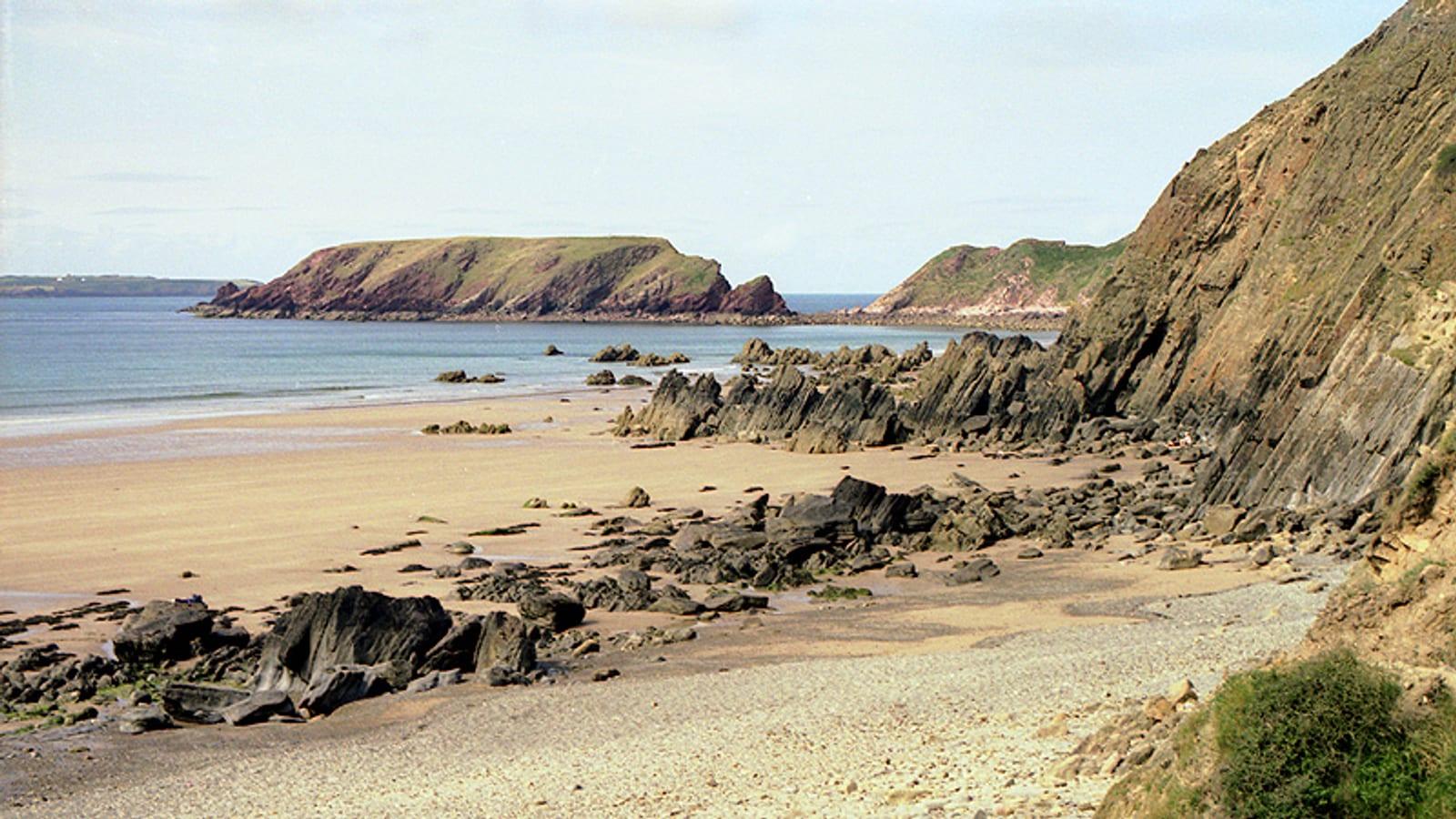
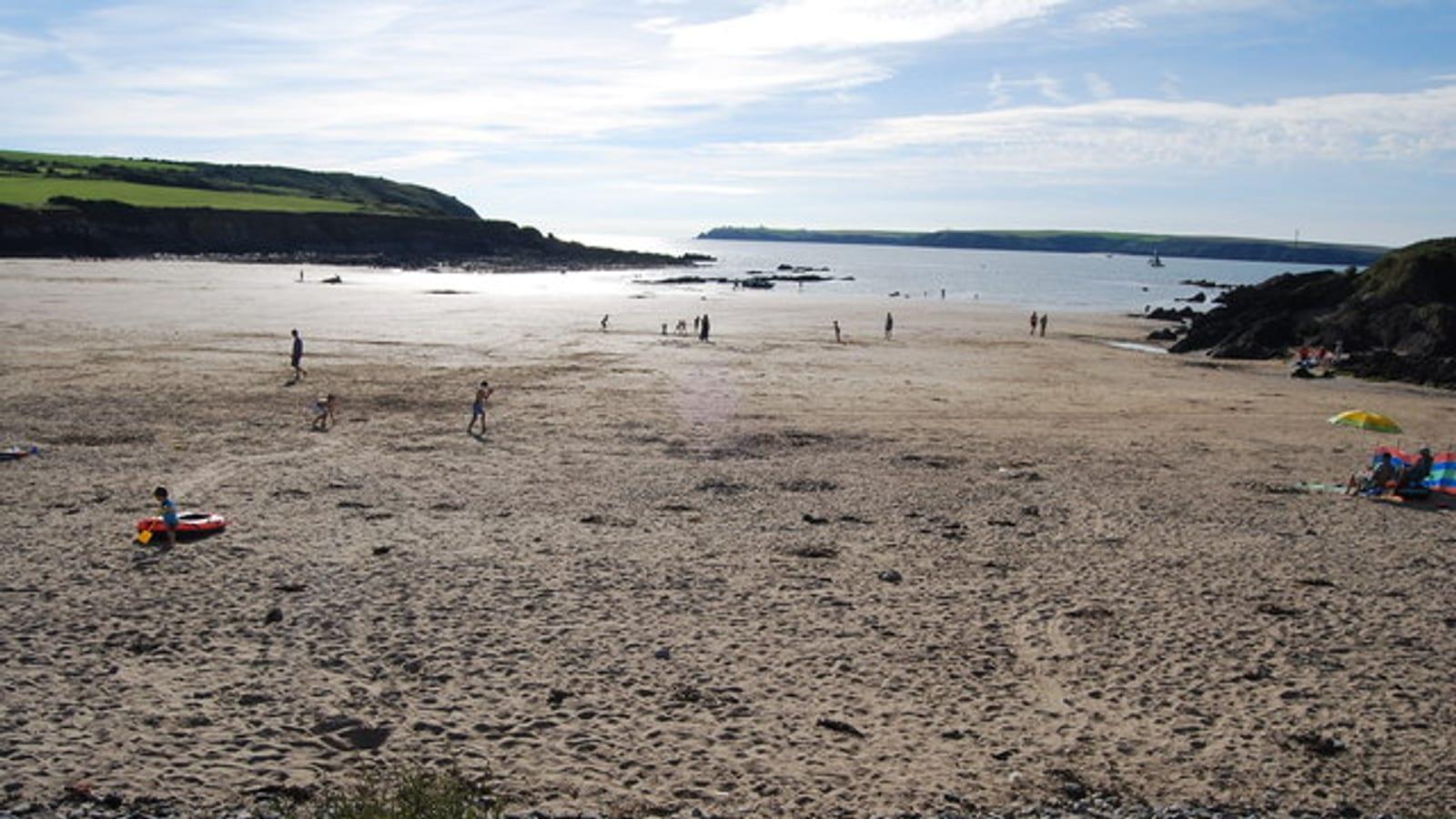
Image: N Chadwick (CC BY-SA 2.0)
West Angle Bay in Pembrokeshire exposes Carboniferous Limestone with crinoid ossicles, rugose corals, and brachiopods from a 350-million-year-old tropical reef community.
By Edward Chen · Updated 30 July 2026
Introduction
West Angle Bay occupies a sheltered cove at the western tip of the Angle Peninsula in Pembrokeshire, where the foreshore exposes two distinct geological systems in close proximity: Devonian Old Red Sandstone and Carboniferous Limestone. The Carboniferous Limestone here, deposited roughly 350 to 340 million years ago, preserves the remains of a warm tropical reef community that once covered the seafloor at this location. Crinoid ossicles pack the limestone surfaces in such density that rock surfaces appear almost entirely composed of them. Bryozoa, corals both solitary and colonial, and brachiopods complete the picture of a high-diversity shallow marine ecosystem from a time when Wales lay close to the equator and the climate was comparable to the modern Caribbean. This is a productive, freely accessible site within the Pembrokeshire Coast National Park, suitable for families and straightforward to find. This guide covers the site layout, what the Carboniferous sequence yields, and how to collect within the SSSI rules.
The contact between the Devonian and Carboniferous rocks at West Angle Bay is visible in the low cliffs and foreshore, making the site useful for understanding a major marine transgression as well as for collecting.
 Photo: N Chadwick, CC BY-SA 2.0, via Wikimedia Commons
Location and Directions
Address
West Angle Bay, near Angle, Pembrokeshire SA71 5AX, Wales.
Directions and Parking
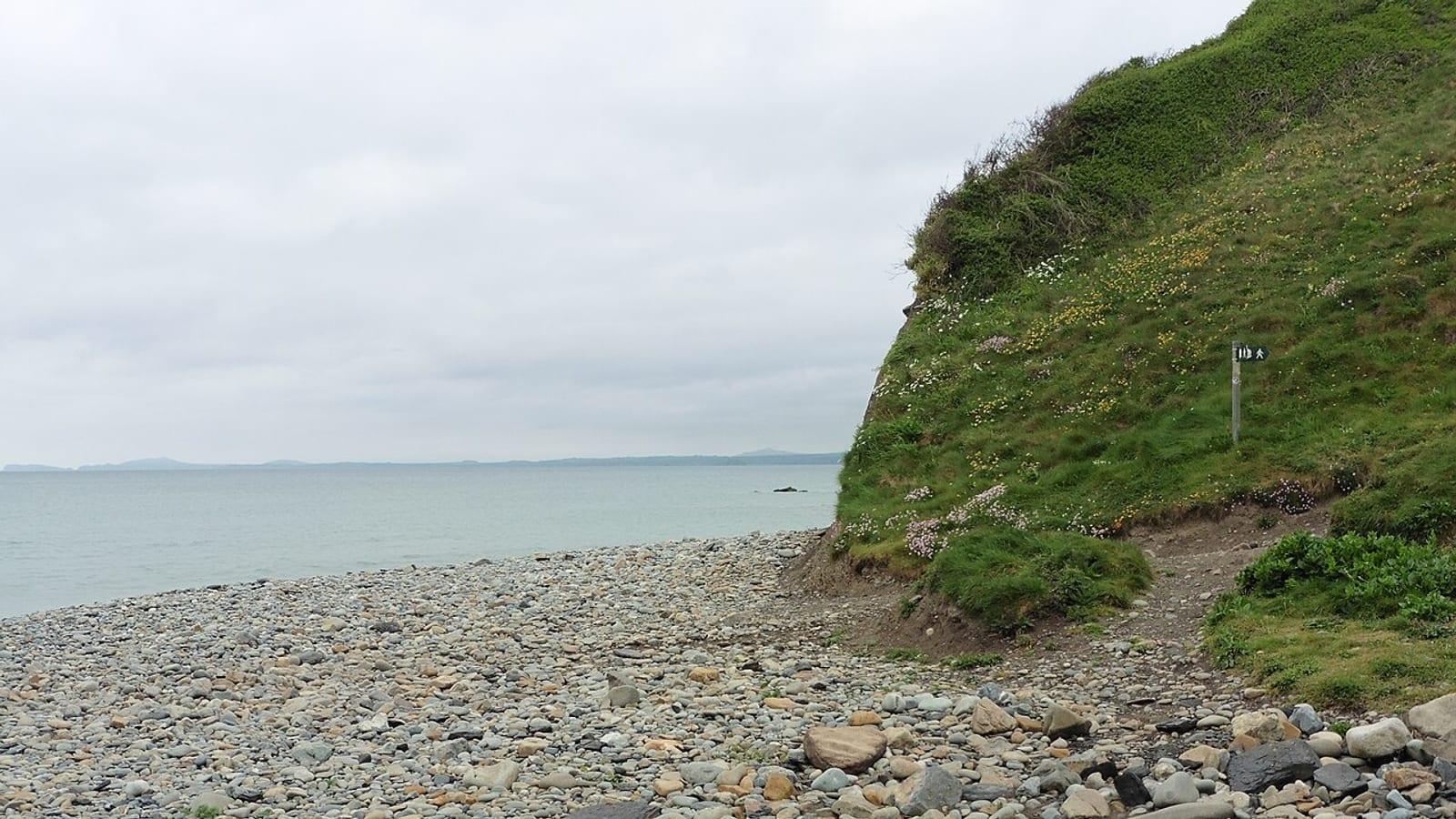
From Pembroke, take the B4320 west through Pembroke Dock, then follow signs for Angle village. The road passes through the village and continues west to West Angle Bay. A small car park sits directly above the beach. Seasonal charges may apply, so carry cash or check current payment methods before visiting. The path from the car park to the beach is short and gently sloped, making the site accessible to most visitors. From the beach, the fossiliferous Carboniferous Limestone is immediately visible in the low cliffs and foreshore rocks on the northern side of the bay. The contact between the red Devonian sandstone and the overlying limestone is visible in the cliff face to the south, where the colour change from red to grey marks the boundary between geological periods. The Pembrokeshire Coast Path passes above the bay and provides access from either direction along the coast. The nearest facilities are in Angle village, which has a pub and limited shops. Pembroke, about 8 kilometres to the east, has full facilities including supermarkets and fuel.
What Fossils You'll Find
Bryozoa are common on the same surfaces as crinoids. These colonial filter-feeding organisms built mesh-like or branching structures in the Carboniferous sea. Their preserved networks are visible in cross section and on weathered limestone surfaces. Corals occur both as solitary rugose forms, often called horn corals from their conical shape, and as smaller colonial species in the limestone. Solitary corals are found as loose specimens on the foreshore and as cross sections exposed in limestone ledges. Each solitary coral shows a distinctive pattern of internal septa (radial dividing walls) in cross section, which helps identify them.
Brachiopods are present throughout the Carboniferous Limestone here. Their ribbed shells are visible in weathered limestone surfaces and occasionally as loose specimens. They are less immediately striking than the corals or crinoid beds but add to the diversity of the fauna on display.
The Devonian Old Red Sandstone below the Carboniferous contact is largely unfossiliferous at West Angle Bay, though occasional fish scales have been recorded from equivalent Devonian deposits elsewhere in Pembrokeshire.
Geologic History
The Ancient Environment
The geology at West Angle Bay spans two distinct ancient environments separated by a significant boundary. The Old Red Sandstone (Devonian, approximately 380 to 360 million years ago) represents terrestrial to marginal marine deposits: red sandstones and conglomerates formed in rivers, floodplains, and coastal environments in a hot, seasonally arid climate. The red colour results from iron oxides formed under oxidising conditions during weathering and transport. At this time, South Wales lay in tropical latitudes south of the equator.
The Carboniferous Limestone above (approximately 359 to 340 million years ago) records a dramatic change: the land was flooded by a warm, clear, shallow tropical sea. Britain had moved northward and now lay close to the equator. The sea was warm, well-oxygenated, and teemed with marine life: crinoids formed dense gardens across the seafloor, corals built small reef structures, brachiopods filtered the water column, and bryozoa colonised every available surface. The limestone formed by the accumulation of calcareous skeletal material and the chemical precipitation of calcium carbonate in the warm water. The contact between the red Devonian sandstone and the grey Carboniferous limestone in the cliff face at West Angle Bay represents a major marine transgression, a global rise in sea level that drowned the Devonian terrestrial landscape.
How West Angle Bay Became a Fossil Collecting Site
The Carboniferous Limestone at West Angle Bay is harder and more resistant than the surrounding softer rocks, and it forms a prominent wave-cut platform and low cliff on the northern side of the bay. Marine erosion has cut through the limestone, exposing the fossil-rich rock surfaces in cross section and plan view. The foreshore platform is scoured by wave action, removing the finest material and leaving the harder limestone beds with their fossil content visible at the surface. Loose blocks and fragments accumulate in the intertidal zone and on the beach, adding to the collecting potential. A classic syncline structure in the wave-cut platform demonstrates the folding these rocks have undergone since deposition.
Collecting Rules and Regulations
Is Fossil Collecting Allowed?
West Angle Bay is within the Pembrokeshire Coast National Park and the foreshore and beach form part of a designated Site of Special Scientific Interest (SSSI). You are permitted to collect loose fossils from the beach and foreshore for personal, non-commercial use without a permit. This covers loose crinoid ossicles, coral fragments, and brachiopod shells found on the beach surface or in loose blocks. You must not hammer the in-situ bedrock, limestone platform, or cliff faces under SSSI regulations. Many of the most educational features at West Angle Bay, including the coral and crinoid bed exposures in the platform and the Devonian-Carboniferous contact, are in-situ and must not be disturbed. Commercial fossil collecting is not permitted without a licence from Natural Resources Wales.
Recommended Tools
No hammer is needed for productive collecting here. A hand lens helps with coral identification. The internal septa of rugose corals are best appreciated at magnification. Bring sealable bags for specimens and sensible footwear for the foreshore. The limestone platform can be slippery when wet.
Safety
The foreshore at West Angle Bay is accessible at all states of the tide, though the extent of the rocky platform exposed increases significantly at low water. The limestone ledges are uneven and can be slippery in places. Take care when crossing them. The cliffs at the northern end of the bay are low but overhang in places. Do not stand beneath them. West Angle Bay is directly on Milford Haven waterway, and shipping traffic passes offshore. There is no bathing risk from shipping, but the currents beyond the bay can be strong. The bay itself is sheltered and suitable for families. The Pembrokeshire Coast Path above the bay is maintained and clearly signed.