Antlers Formation Fossil Guide
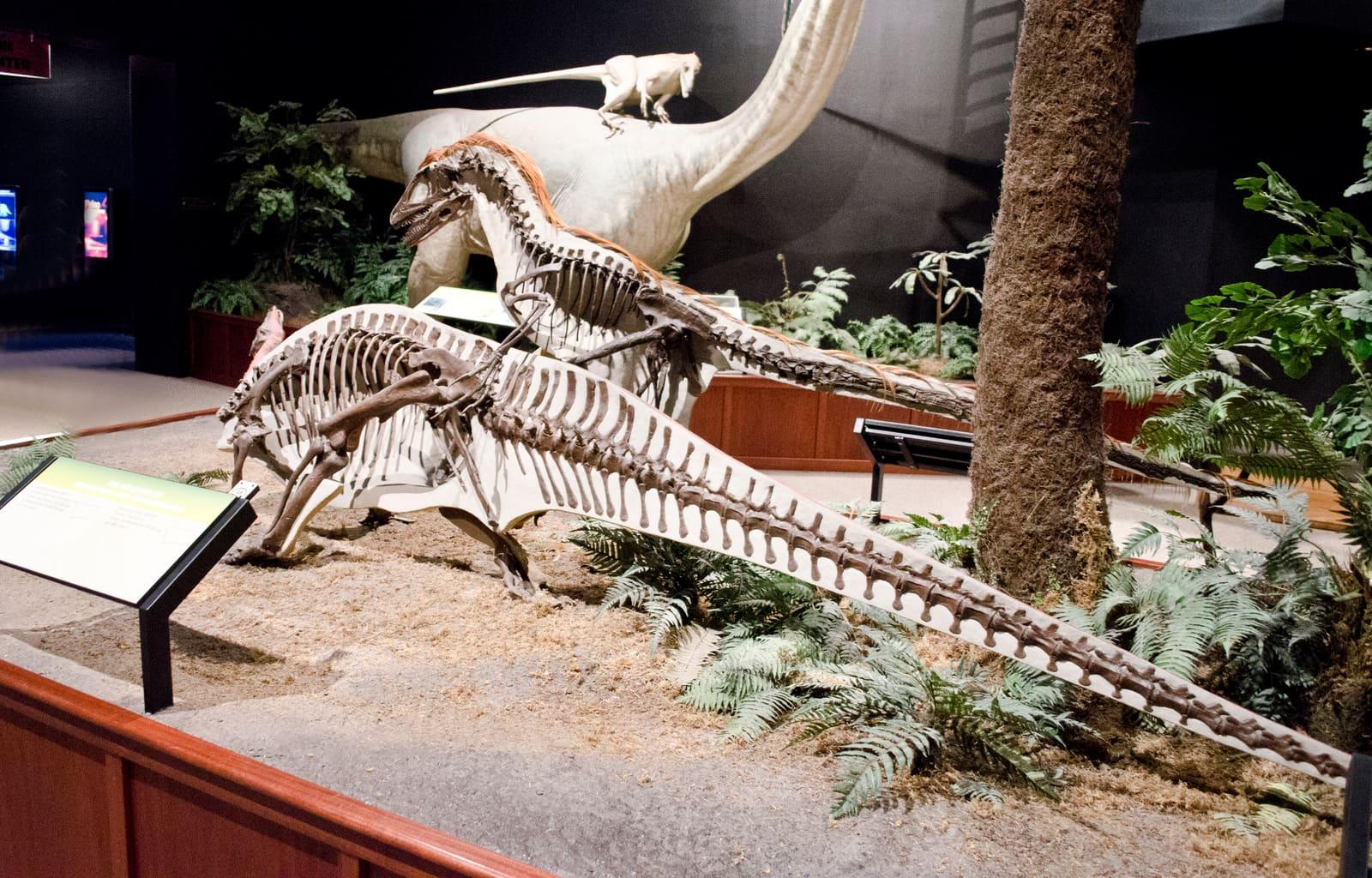
Image: Tim Evanson (CC BY-SA 2.0)
The Early Cretaceous Antlers Formation of southern Oklahoma is the rock that produced Deinonychus, Tenontosaurus, and the giant sauropod Sauroposeidon, recording a tropical floodplain of about 110 million years ago. Its dinosaur fossils are protected scientific finds curated at the Sam Noble Museum, so the formation is best explored through museums and with landowner permission.
By Edward Chen · Published 22 June 2026
Introduction
The Antlers Formation of southern Oklahoma is one of the most important Early Cretaceous dinosaur-bearing rock units in North America. It is the formation that yielded Deinonychus, the sickle-clawed predator whose study reshaped how scientists think about dinosaurs, as well as the plant-eating Tenontosaurus and the colossal sauropod Sauroposeidon proteles, one of the tallest dinosaurs ever found. These animals lived around 110 million years ago on a warm, forested coastal plain that drained toward a shallow inland sea.
The formation stretches from Arkansas across southern Oklahoma into northeastern Texas, and its Oklahoma exposures, in counties such as Atoka and Pushmataha, are where many of these landmark fossils were collected. Because dinosaur bones are protected vertebrate fossils and most outcrops lie on private land, the Antlers Formation is best appreciated through museum collections and, for hands-on study, only with proper permission and permits rather than casual digging.
Location and Directions
The Antlers Formation crops out across a broad belt of southern Oklahoma, including the area around the town of Antlers in Pushmataha County and around Atoka in Atoka County, roughly near 34.38°N, 96.13°W. There is no single public fossil park. The formation is exposed in stream banks, road cuts, and pastures spread across several counties, almost all of it private property.
The most reliable way to encounter Antlers Formation fossils is at the Sam Noble Oklahoma Museum of Natural History in Norman, which holds and displays specimens collected from the formation, including its famous dinosaurs. Anyone wishing to visit specific outcrops must identify the landowner and obtain permission first. Do not enter fenced or posted land, and never stop to dig on a road cut where it is unsafe or prohibited.
What Fossils You'll Find
The Antlers Formation preserves a rich Early Cretaceous dinosaur fauna. The standouts are Deinonychus antirrhopus, a wolf-sized dromaeosaur with an enlarged sickle claw on each foot. Tenontosaurus, a medium-sized plant-eating ornithopod, is the most common dinosaur in the formation. Sauroposeidon proteles is an enormous brachiosaur-like sauropod known from gigantic neck vertebrae. The large carnivore Acrocanthosaurus atokensis, named for Atoka County, also roamed this landscape, along with other sauropods. A noted quarry in the formation produced several partial Tenontosaurus skeletons together with Deinonychus teeth and bones.
Beyond dinosaurs, the floodplain and deltaic sediments preserve fossil wood, freshwater and brackish invertebrates, and remains of other reptiles. For visitors, the meaningful fossils are the mounted and curated dinosaur specimens in the museum. The bones in the field are scientific resources, not collectibles.
Geologic History
The Antlers Formation was deposited during the Early Cretaceous, in the Aptian to Albian stages roughly 113 to 105 million years ago. Its silty mudstones and sandstones accumulated on a large floodplain crossed by rivers and dotted with deltas and lagoons, a tropical to subtropical landscape that has been compared to modern Louisiana. The plain sloped southward and drained into the shallow sea that periodically advanced across the continent's interior.
Dinosaurs and other animals living on this floodplain were buried in river and delta sediments, which hardened into the sandstones and mudstones now exposed at the surface. The formation shares many of its dinosaur genera with the Trinity Group of neighboring Texas, helping geologists correlate the beds and pin down their age. Erosion of the southern Oklahoma landscape continues to expose fresh fossil-bearing rock in stream cuts and pastures.
Collecting Rules and Regulations
Casual collecting of dinosaur fossils is not permitted. Vertebrate fossils, including all dinosaur bone and teeth, are protected on public land and may be collected only by qualified researchers under permit, and the scientifically significant material here is curated by museums. Nearly all Antlers Formation outcrops are on private property, so you must have the landowner's explicit permission even to walk the ground, and any serious collecting should be done in coordination with an institution such as the Sam Noble Museum or the Oklahoma Geological Survey. If you find exposed bone, photograph it, note the location, and report it rather than digging. Removing vertebrate fossils can destroy irreplaceable scientific information and may be illegal. Treat the formation as a place to learn and report finds, not to harvest specimens.
Safety
Fieldwork in southern Oklahoma means hot, humid summers, so carry plenty of water and sun protection and watch for heat exhaustion. Outcrops in stream banks and road cuts can be steep, muddy, and unstable, so keep clear of overhanging faces and loose slopes. Watch for venomous snakes, including copperheads and rattlesnakes, as well as ticks, chiggers, and poison ivy in the brush. Streams can rise quickly after rain, so avoid creek beds in wet weather. Always get permission before entering private land, and never park or work where road traffic makes it dangerous.
Sources
https://ngmdb.usgs.gov/Geolex/Units/Antlers_6491.html https://www.usgs.gov/publications/geohydrology-antlers-aquifer-cretaceous-southeastern-oklahoma https://samnoblemuseum.ou.edu/permanent-exhibits/hall-of-ancient-life/