Centralia Anthracite Plant Fossils Hunting Guide
Image: SRob092 (CC0)
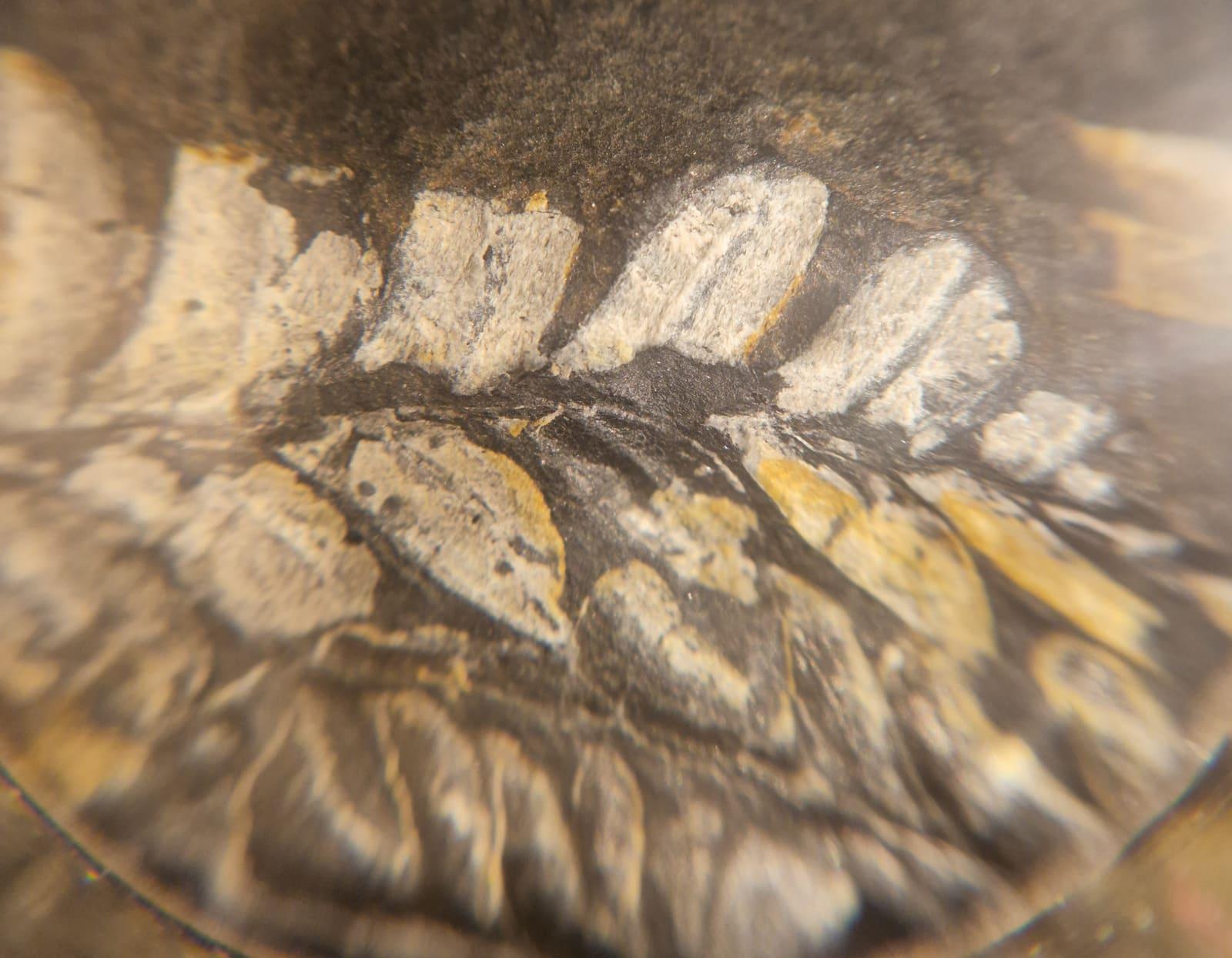
The strip-mine spoil east of Centralia, Pennsylvania exposes dark-gray shale of the Pennsylvanian Llewellyn Formation packed with Carboniferous plant fossils. Ferns, seed-fern fronds, Calamites stems, and Lepidodendron bark impressions split out of the shale with a hammer. The shale is the same unit that produces the white-coated ferns at nearby St. Clair.
By Edward Chen · Updated 1 August 2026
Introduction
The shale spoil east of Centralia preserves plant fossils from the Pennsylvanian Subperiod, roughly 315 to 300 million years ago, when this part of Pennsylvania sat near the equator under coal-forming swamp forests. The host rock is the Llewellyn Formation, a repetitive sequence of sandstone, siltstone, shale, conglomerate, and anthracite coal. Almost 100 fossil species have been recorded from the Llewellyn, and nearly all of them are plants. Splitting the dark-gray shale produces fern fronds, seed-fern leaflets, the segmented stems of horsetails, and the diamond-patterned bark of scale trees.
Centralia itself is the near-abandoned borough sitting above a coal-seam fire that has burned underground since 1962. The plant fossils come from the surrounding strip-mine ground, not from the town, so a visit combines fossil collecting with one of the stranger landscapes in the eastern United States.
Location and Directions
Centralia is in Columbia County, in the southern anthracite coal field of eastern Pennsylvania. The collecting ground is the broad strip-mine exposure on the northern flank of a former mine just east of the borough, reached along PA Route 61. Approximate coordinates are 40.804°N, 76.341°W.
From Interstate 81, take the exits toward Ashland or Mount Carmel and follow PA Route 61 to Centralia. The exposed shale banks sit beside the road and along the old haul roads of the reclaimed strip pit. Park well off the roadway on stable ground and walk to the gray shale benches. The famous fern locality at St. Clair, which produces ferns with a white pyrophyllite coating, lies about 15 miles southeast and works the same Llewellyn shale.
What Fossils You'll Find
The Llewellyn shale near Centralia carries stems and branches of Carboniferous plants, with leaves turning up less often but still regularly. Look for the fronds of seed ferns such as Alethopteris, which has long blade-like leaflets that widen at the base and a distinct mid-rib vein, and Neuropteris, with rounded leaflets attached at a single point. True ferns and the foliage genus Pecopteris show up as delicate pinnate fronds.
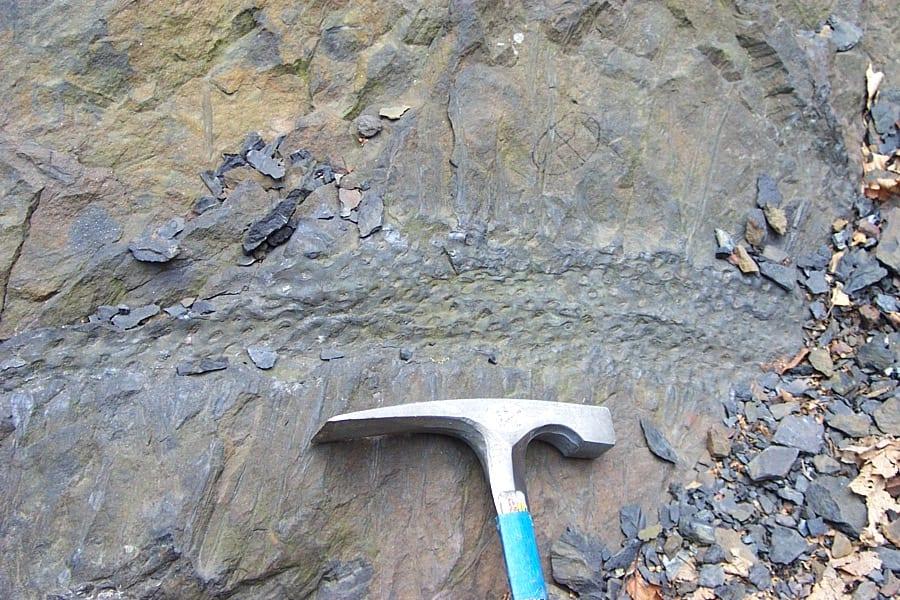
Beyond the fern-like foliage, the shale yields the jointed stems of Calamites, a tree-sized relative of modern horsetails, and the bark impressions of Lepidodendron and Sigillaria, the giant lycopod scale trees, recognisable by their regular pattern of leaf scars. Most specimens are dark carbon films on gray shale. At St. Clair the same plants carry the white pyrophyllite coating that makes those ferns recognisable worldwide.
 Photo: James St. John, CC BY 2.0, via Wikimedia Commons
Geologic History
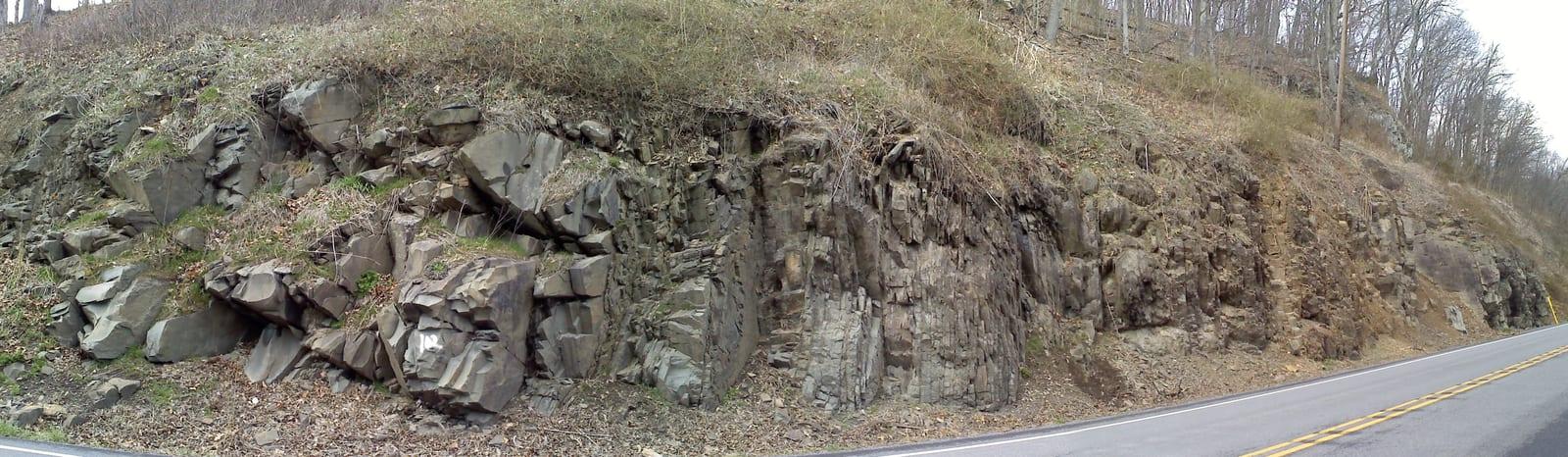
During the Pennsylvanian Subperiod the region lay in a low coastal lowland crossed by rivers and dotted with peat swamps. Repeated cycles of swamp growth, flooding, and burial produced the alternating coal, shale, and sandstone beds of the Llewellyn Formation. The peat layers were later compressed and heated into anthracite, the hard, high-carbon coal that built the mining towns of this field. The plant material that did not turn to coal was preserved as compressions in the shale partings between the coal seams. Folding during the Alleghanian mountain-building event tilted and faulted these beds, which is why the shale now stands in steep exposed banks that split cleanly along bedding planes.
Collecting Rules and Regulations
The shale benches around Centralia are reclaimed strip-mine ground, and collectors have worked them for decades for personal, non-commercial specimens. There is no organised park or admission, and the plant fossils are common surface material rather than protected vertebrate remains. Land ownership across the old mine workings is mixed, so check signage and avoid any posted or actively worked ground. Do not enter fenced areas, mine openings, or anywhere marked as closed. Collect only loose float and what you split from the surface shale, and take a reasonable amount for personal study rather than commercial quantities.
Safety
The ground underneath and around Centralia includes an active underground coal fire. Stay on stable, established surfaces, keep away from any vents, smoking ground, cracks, or warm soil, and never approach or enter old mine openings. The strip-mine highwalls can be unstable, so do not collect directly beneath steep banks or loose overhangs. Wear safety glasses when hammering shale, since the rock splits into sharp flakes. Bring sturdy boots, water, and a hammer with a chisel or screwdriver to wedge the bedding planes apart. Work slowly with the wedge to avoid scratching the fossil surfaces.
Sources
https://en.wikipedia.org/wiki/Llewellyn_Formation https://www.floridagardener.com/fossil-plant-hunting-near-centralia-pennsylvania/ https://maps.dcnr.pa.gov/publications/Default.aspx?id=260 https://www.fossilguy.com/trips/stclair_oct2010/stclair_oct2010.htm
_(Llewellyn_Formation,_MIddle_Pennsylavnian;_Bear_Valley_Strip_Mine,_Northumberland_County,_Pennsylvania,_USA)_1.jpg)