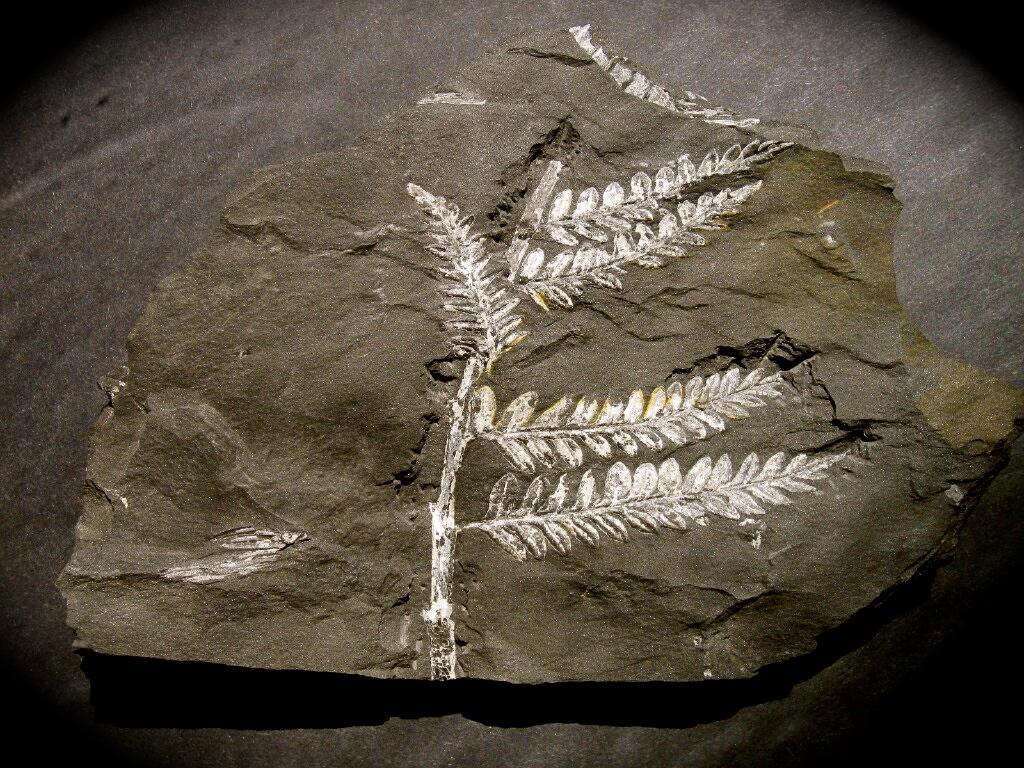
St. Clair Fern Fossils Hunting Guide
Image: en:User:Jmpenzone (Public domain)
The St. Clair fossil locality in Schuylkill County, Pennsylvania, produces some of the world's most distinctive Carboniferous plant fossils, white pyrophyllite ferns preserved on black Llewellyn Formation shale. Visitors cannot collect freely; the historic dump on Burma Road is now closed to walk-in access and is open only to school and club groups with prior permission from Reading Anthracite.
By Edward Chen · Updated 1 August 2026
Introduction
The St. Clair fossil locality in Schuylkill County, Pennsylvania, is one of the most aesthetically striking plant-fossil sites in the world. It is famous for ferns and related Carboniferous plants preserved as bright white pyrophyllite traces on jet-black Llewellyn Formation shale, a contrast so distinctive that St. Clair specimens are immediately recognisable in any museum or private collection. The site sits on the perimeter of the Western Middle Anthracite Field on Burma Road just outside the borough of St. Clair, on land owned by the Reading Anthracite Company. The historic walk-in dump that produced most of the specimens in circulation is no longer open to general public collecting. Access is now restricted to permitted school groups and organised paleontology clubs that have obtained advance permission from Reading Anthracite. Independent visitors should not enter the property.
This guide covers the geology, the distinctive mode of preservation, what species turn up, and the current access situation.
 Photo: James St. John, CC BY 2.0, via Wikimedia Commons
Location and Directions
The St. Clair fossil locality is on Burma Road on the western edge of the borough of St. Clair, in Schuylkill County, Pennsylvania, about 5 miles north of Pottsville and roughly 90 miles northwest of Philadelphia. The reference coordinates above (40.7211°N, 76.1875°W) place a visitor near the historic dump and its access road. The actual property line and current open-collection area, if any, depend on Reading Anthracite's posted boundaries.
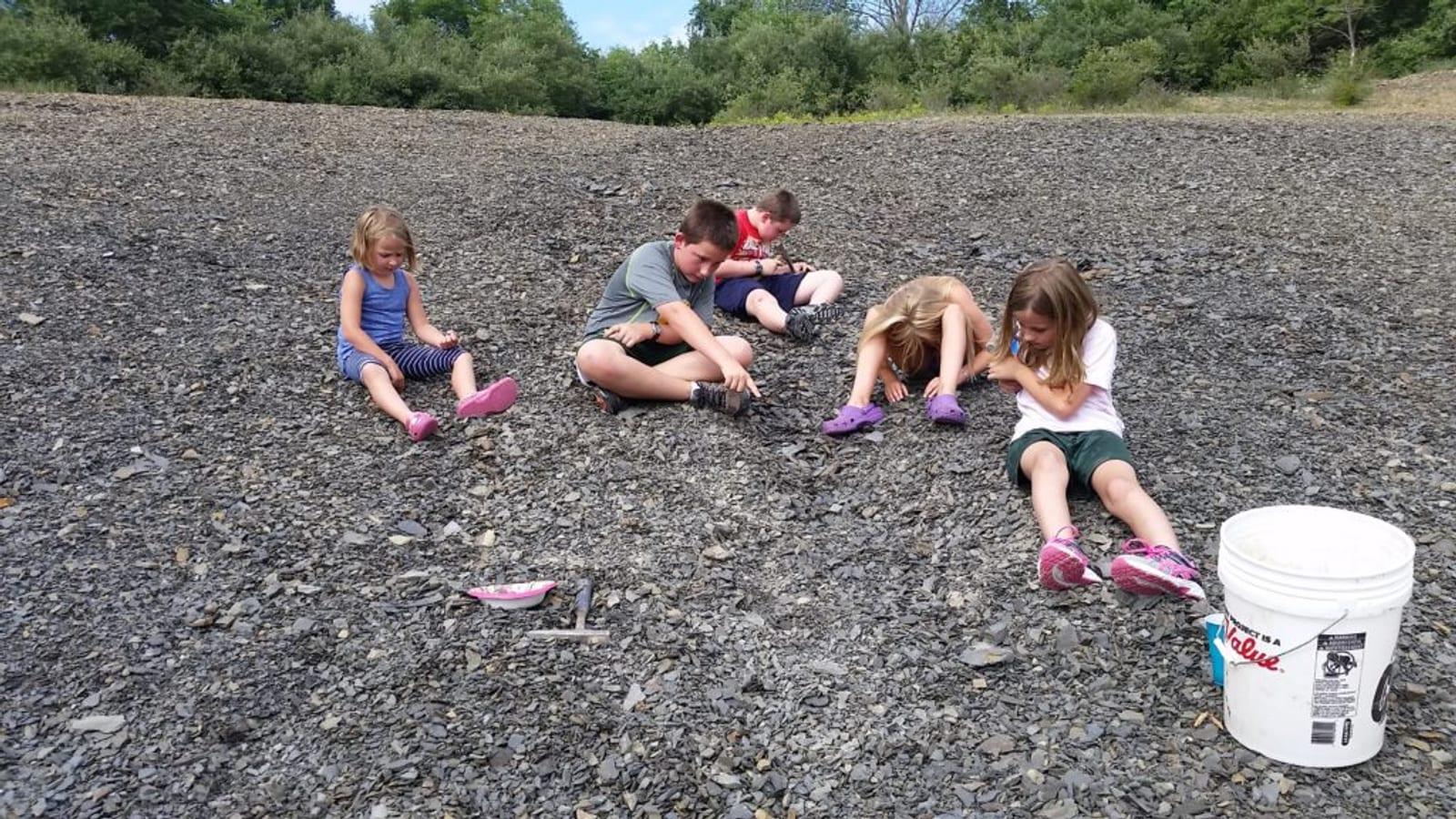
The classic dump exposure was originally a coal-stripping overburden pile from anthracite operations in the early-to-mid 20th century. Generations of amateur collectors split shale slabs at the dump and carried away the now-famous white-on-black ferns. Around 2010 the pile became unstable and Reading Anthracite restricted public access in stages. The present arrangement is that the company permits organised groups with insurance, signed waivers, and prior written approval to visit on scheduled days only.
 Photo: Shuvaev, CC BY-SA 4.0, via Wikimedia Commons
What Fossils You'll Find
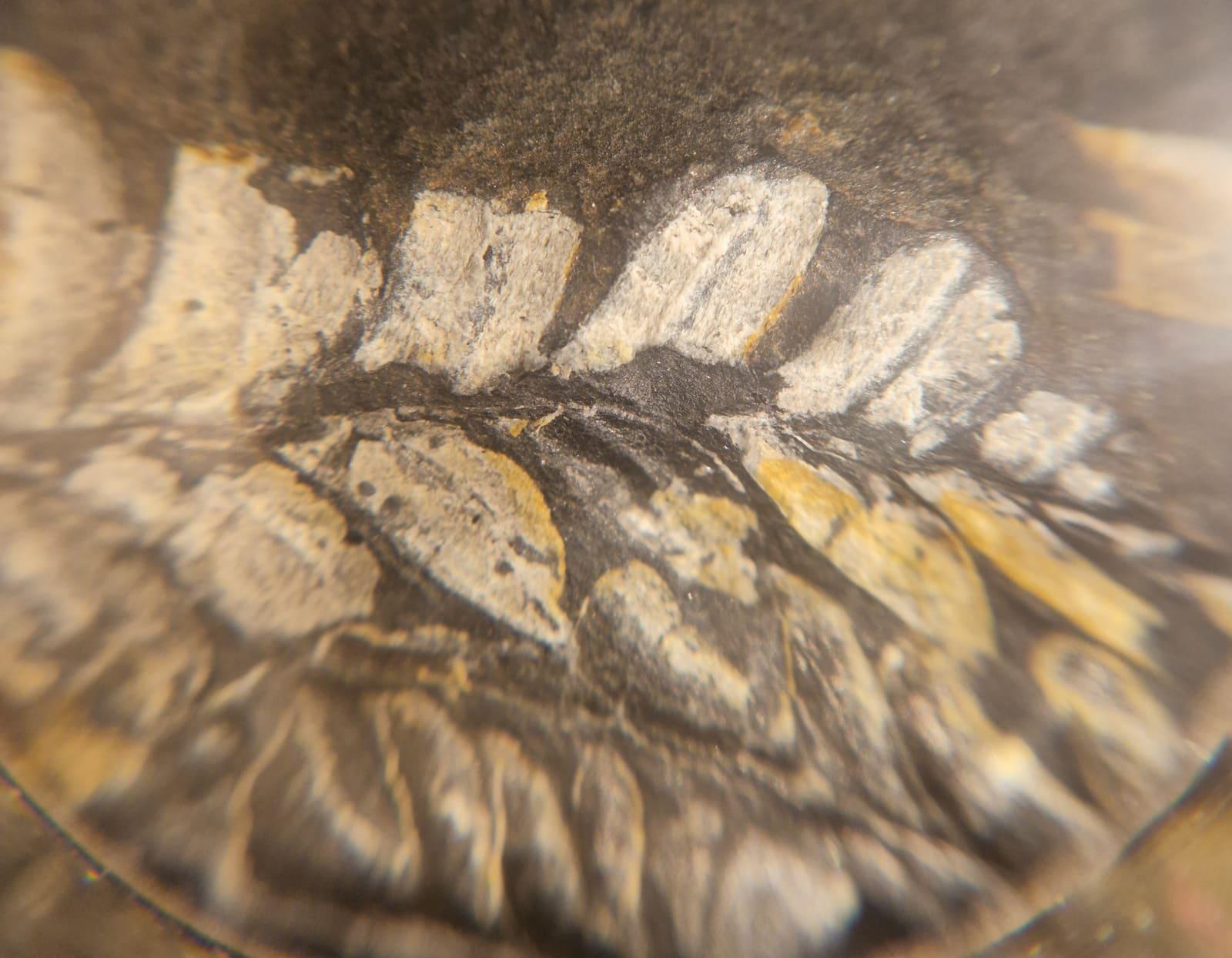
The fossils at St. Clair are Pennsylvanian (Late Carboniferous), roughly 310 to 300 million years old, and were preserved in the Llewellyn Formation, the coal-bearing succession of the Western Middle Anthracite Field. The plants died and fell into a swampy, oxygen-poor, cool, low-pressure environment that produced the dense organic peat that eventually became Pennsylvania's anthracite seams. In the shales above the coals, the plant tissues were first pyritised (replaced by iron sulfide). As the sediments were buried and then later metamorphosed during the Alleghenian orogeny, the pyrite weathered or was replaced through subsequent fluid-rock interactions by pyrophyllite, an aluminum-silicate sheet mineral that is white in hand specimen. The result is a striking white silhouette of the original frond against the black shale matrix. Kaolinite and residual pyrite also appear in some specimens.
The most abundant plant genera at St. Clair are the seed ferns and true ferns of the Westphalian coal swamps: Alethopteris, Neuropteris, and Pecopteris are the headline finds, and complete fronds 10 to 30 centimetres long are not unusual on well-prepared slabs. The horsetail-like Sphenophyllum and Asterophyllites also occur, as do Calamites stems and lycopod (Lepidodendron, Sigillaria) bark fragments. Plant cones (Lepidostrobus) and seeds (Trigonocarpus) are occasionally found. Insects and other animal fossils are absent or vanishingly rare. Mineralogically the locality is one of the type areas for pyrophyllite preservation of plants, an unusual mode of fossilisation studied by mineralogists and paleobotanists alike.
"The Llewellyn formation contains unique fossils. white ferns preserved on black shale." Tucson Gem & Mineral Society, "World-Famous St. Clair Fern Fossils"
 Photo: Dsdugan, CC0, via Wikimedia Commons
Geologic History
During the Pennsylvanian, the region that is now eastern Pennsylvania lay near the equator on the western margin of the closing Iapetus-Rheic ocean system. The collision of Gondwana with Laurussia was driving the Alleghenian orogeny and uplifting the ancestral Appalachian mountains immediately to the east. The mountain front shed sediment westward into a wide, low-lying foreland basin filled with broad coastal swamps in which the immense Carboniferous coal floras grew. The Llewellyn Formation records the upper part of that coal-swamp succession in the anthracite belt. Further west the same beds become the bituminous coal succession of the Pittsburgh region.
After deposition the entire succession was buried under several kilometres of younger sediment and then folded and metamorphosed during the Alleghenian orogeny. The metamorphism is what turned the original peat into anthracite (the highest-rank coal) and is also what created the warmer, fluid-rich conditions in which the pyrite that initially replaced the plant tissues was itself altered to pyrophyllite. The combination of preserved organic detail, exceptional contrast, and unusual mineralogy is what makes St. Clair specimens scientifically and aesthetically important.
How St. Clair became a fossil collecting site
Anthracite mining at St. Clair dates from the 19th century, but the famous fern dump is a 20th-century artefact: it is the overburden pile from later strip-mining operations that exposed the shales above the coal seams. Amateur collectors, mineralogists, and paleobotanists have visited the dump since at least the 1950s. The site was the subject of repeated scientific publications on its unusual preservation mode and on the Westphalian flora of the anthracite region. The transition to restricted access in recent years reflects safety concerns at the unstable dump pile and the property owner's liability situation, not any depletion of the fossil resource.
Collecting Rules & Regulations
Is Fossil Collecting Allowed?
Restricted. The historic Burma Road dump is closed to general public access. Visits are permitted only for organised school groups and paleontology clubs that have obtained advance written permission from Reading Anthracite Company.
Key Points:
- Do not enter the property without prior written permission from Reading Anthracite.
- Permitted visits are typically arranged through paleontology clubs, university classes, or museum education groups.
- Reading Anthracite typically requires signed liability waivers and proof of insurance.
- Hand tools only, small splitting hammer and chisel. No power equipment.
- The shale is fissile. Carry slabs out flat to preserve the fronds.
Safety
The reason this site closed to the public is a safety reason, and it has not gone away.
The Burma Road dump is an unconsolidated overburden pile that became unstable around 2010. Loose shale on a steep spoil slope slides without warning, and a pile that looks settled can move under your weight. That instability, and the liability attached to it, is why Reading Anthracite restricted access. Do not go and judge it for yourself. Entering without written permission is trespass on an active mining company's land, and there is nobody there to find you if the pile moves.
On a permitted visit the group leader sets the working area, and you stay inside it. Work from the base of a pile rather than partway up it, and do not undercut a slope to reach fresh shale.
Splitting shale throws sharp fragments, and the Llewellyn shale breaks into thin, glass-edged flakes. Wear eye protection and gloves. Hard hats are usual on organised visits and are worth having whether or not the organiser supplies them.
The white plant traces are pyrophyllite, and residual pyrite is present in many specimens. Pyrite-bearing shale oxidises in storage, producing acid that destroys the specimen and can damage whatever it is stored beside. Wash your hands before eating, and keep new material dry and separate until you know how it behaves.
Anthracite country holds many older workings beyond the permitted ground, including subsidence hollows and unfenced openings. Stay on the ground you were given.
_(Llewellyn_Formation,_MIddle_Pennsylavnian;_Bear_Valley_Strip_Mine,_Northumberland_County,_Pennsylvania,_USA)_2.jpg)

