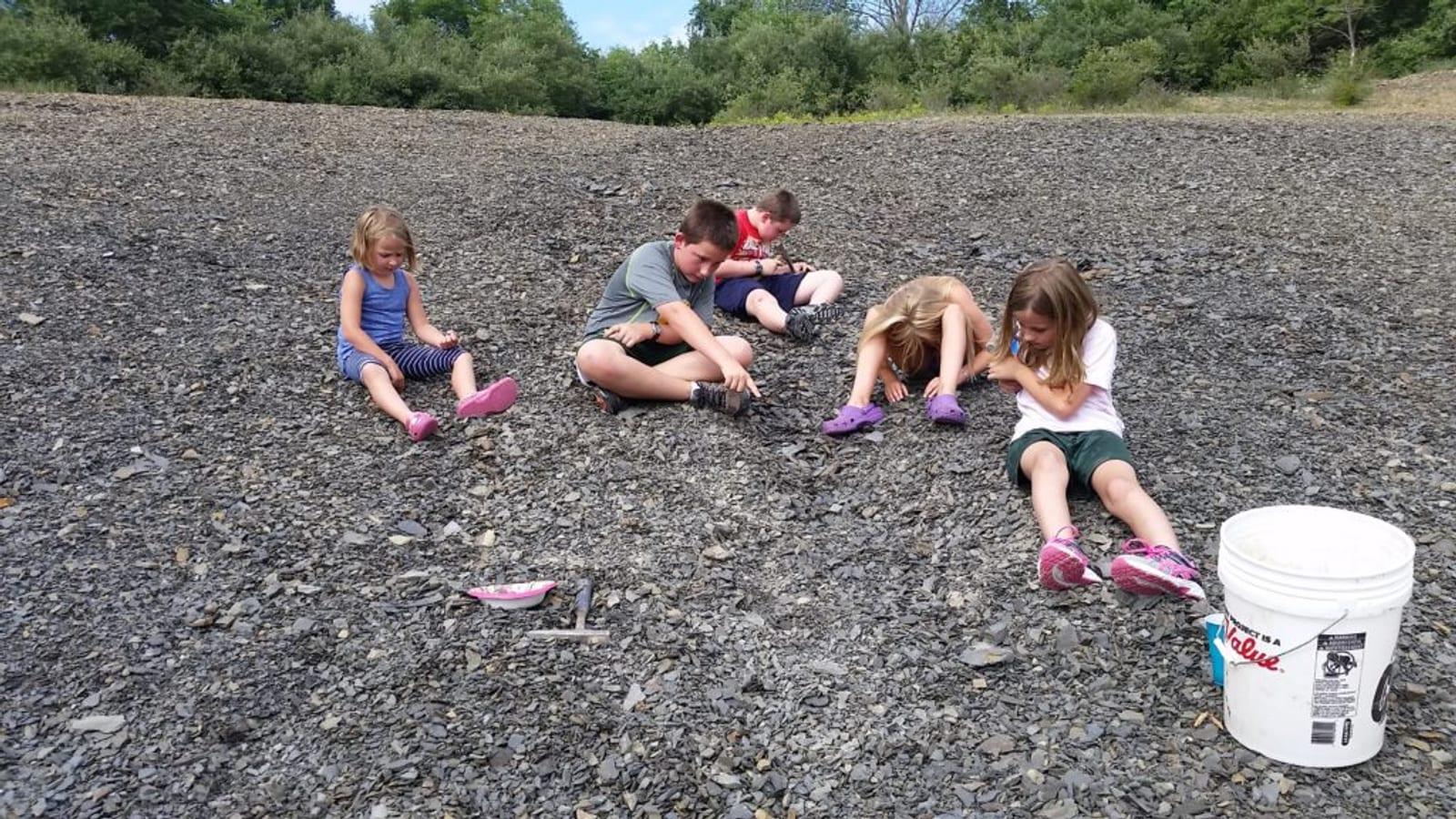
Montour Preserve Fossil Pit Fossil Hunting Guide
Image: Nicholas A. Tonelli (CC BY 2.0)
The fossil pit at the PPL Montour Environmental Preserve near Danville, Pennsylvania keeps about an acre of Middle Devonian Mahantango Formation shale open for public digging. Pelecypods, brachiopods, trilobites, and corals come out of it. Free, open dawn to dark year-round, and tools are allowed.
By Edward Chen · Updated 1 August 2026
Introduction
The fossil pit sits within the PPL Montour Environmental Preserve, a nature area in rural Montour County near Danville in central Pennsylvania, dedicated in 1972. The preserve as a whole is built around Lake Chillisquaque and its trails and bird hides, and the fossil pit is a distinct feature within it: roughly one acre of Middle Devonian shale left deliberately open for the public to dig.
That combination is rarer than it sounds. Most places where you can legally collect are either beaches, roadcuts, or spoil piles that someone else is finished with. Here the exposure exists because the preserve chose to keep it open, admission is free, the gate is open from dawn to dark every day of the year, and you may keep what you find. Tools are not merely tolerated, they are recommended.
Location and Directions
The fossil pit is at 160 Sportsmans Road, Danville, near 41.111 degrees north, 76.639 degrees west. Danville sits on the Susquehanna just off Interstate 80, and the preserve is signed locally from the surrounding roads.
Park at the fossil pit's own area on Sportsmans Road rather than at the main preserve entrance, since the pit is a separate stop. The digging ground is the exposed shale face and the loose spoil at its base, and it is a short walk from the parking area.
Come equipped. The preserve suggests a small geologist's hammer, safety goggles, a soft brush for cleaning finds, a bag or bucket, and newspaper to wrap specimens so they survive the journey home. There are no facilities at the pit itself, so bring water.
One rule catches people out: dogs and other pets are not allowed anywhere at the Montour Preserve, the fossil pit included. Plan around it rather than arriving with a dog in the car.
What Fossils You'll Find
The Mahantango Formation here is a soft grey shale that splits readily along its bedding, and the fauna is a full Middle Devonian sea-floor community rather than one or two dominant species.
Pelecypods, the bivalves, are the most commonly found group, taking in oyster-like, mussel-like, and clam-like forms. Brachiopods are abundant alongside them, and the two are easy to confuse until you learn that brachiopod shells are symmetrical across the valve while bivalve shells are mirror images of each other.
Bryozoans occur as delicate branching and encrusting fragments, crinoids as disarticulated stem sections and columnals, and corals as small solitary forms. Gastropods turn up as coiled shells and internal moulds. Cephalopods are less common and appear as straight or curved shell sections.
Trilobites are the find people hope for. They occur here, but as at most Devonian sites, complete specimens are uncommon and fragments of head or tail shield are the usual result.
The method is to split the shale rather than break it. Look for the bedding planes, work along them with the hammer or by hand, and check both faces as each piece opens. Weathered material at the base of the face is often easier going than fresh shale and has already been part-prepared by frost and rain.
Photo: Smithsonian National Museum of Natural History, CC0, via Smithsonian Open Access
Geologic History
The Mahantango Formation was deposited in the Middle Devonian, roughly 390 to 385 million years ago, when a shallow sea covered much of what is now Pennsylvania. To the east, the Acadian mountain belt was rising, and rivers draining it carried mud and silt west into that sea, where it settled over the animals living on the bottom.
That mud is the reason for the preservation. Fine sediment buries shells gently and excludes oxygen, so the material at Montour is not a jumble of surf-worn fragments but a sea floor recorded broadly where it lay. The formation is part of the Hamilton Group, a sequence known across Pennsylvania and New York for exactly this quality of Devonian fossil preservation.
Later mountain building folded these beds, and erosion since has exposed the Mahantango across a wide belt of central Pennsylvania. The pit itself is an artificial cut kept open and periodically refreshed, which is what stops it being picked clean and grassed over.
Collecting Rules and Regulations
Collecting is allowed, free, and generous by the standards of public fossil sites.
Keep what you find. There is no size limit published and no permit to arrange.
Tools are permitted and encouraged. A small geologist's hammer, chisel, and safety goggles are the recommended kit. This is a real difference from Caesar Creek in Ohio or Fossil Park in Sylvania, where tools are banned outright.
No pets. Dogs and other animals are not allowed at the preserve.
Collect within the pit. The fossil pit is the collecting area. The wider preserve is a nature reserve with trails, a lake, and wildlife habitat, and it is not a collecting ground.
The preserve publishes its own site rules and may adjust them, so check montourpreserve.org before a long drive, particularly if you are bringing a group.
Safety
Shale is the hazard here, in two ways. It breaks with edges sharp enough to cut, so gloves are worth wearing and long trousers are sensible, and hammering it sends chips flying, which is exactly why the preserve names safety goggles in its recommended kit. Wear them, and keep other people out of the arc of your swing.
The pit face and the spoil below it are loose and uneven. Wear boots with a firm sole and good grip, watch your footing on the slope, and do not undercut the face or work directly beneath anyone above you. Loose material comes down without warning when it has been disturbed.
The site is open with little shade, so carry water and sun protection in summer. Central Pennsylvania winters make the shale slick and the ground hard, though frost is also what breaks the rock apart and refreshes the surface, so a cold-weather visit after a thaw can be productive. Supervise children closely, since the combination of hammers, goggles, and a loose slope needs an eye on it. Ticks are present in the surrounding grass and woodland in the warmer months.
Sources
https://montourpreserve.org/fossil-pit/ https://www.fossilguy.com/sites/mahantango/index.htm https://uncoveringpa.com/montour-preserve-fossil-pit https://www.dcnr.pa.gov/Geology/
Frequently asked questions
- Is the Montour Preserve Fossil Pit free?
- Yes. Admission is free, the pit is open dawn to dark year-round, and visitors keep whatever they find.
- Can you use tools at the Montour Preserve Fossil Pit?
- Yes. Unlike several public fossil sites, the preserve encourages visitors to bring a small geologist's hammer, safety goggles, and a soft brush.
- Are dogs allowed at Montour Preserve?
- No. Dogs and other pets are not permitted anywhere at the Montour Preserve, including the fossil pit.
Nearby sites
 Centralia Anthracite Plant Fossils Hunting GuideFerns, Seed fern fronds
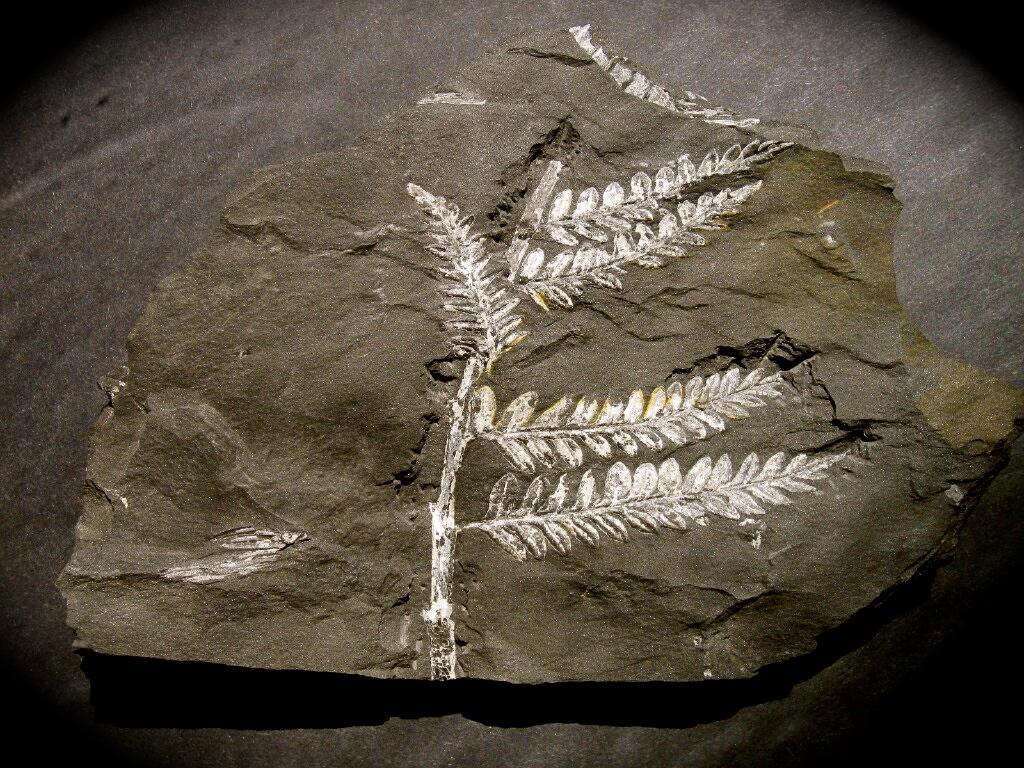 St. Clair Fern Fossils Hunting GuideFossil ferns (Alethopteris), Fossil ferns (Neuropteris)
 Mahantango Creek (Snyder County) Fossil Hunting GuideBrachiopods, Trilobites
 Big Brook Preserve Fossil Hunting GuideShark Teeth, Belemnites