Connecticut Valley Dinosaur Trackways Fossil Guide
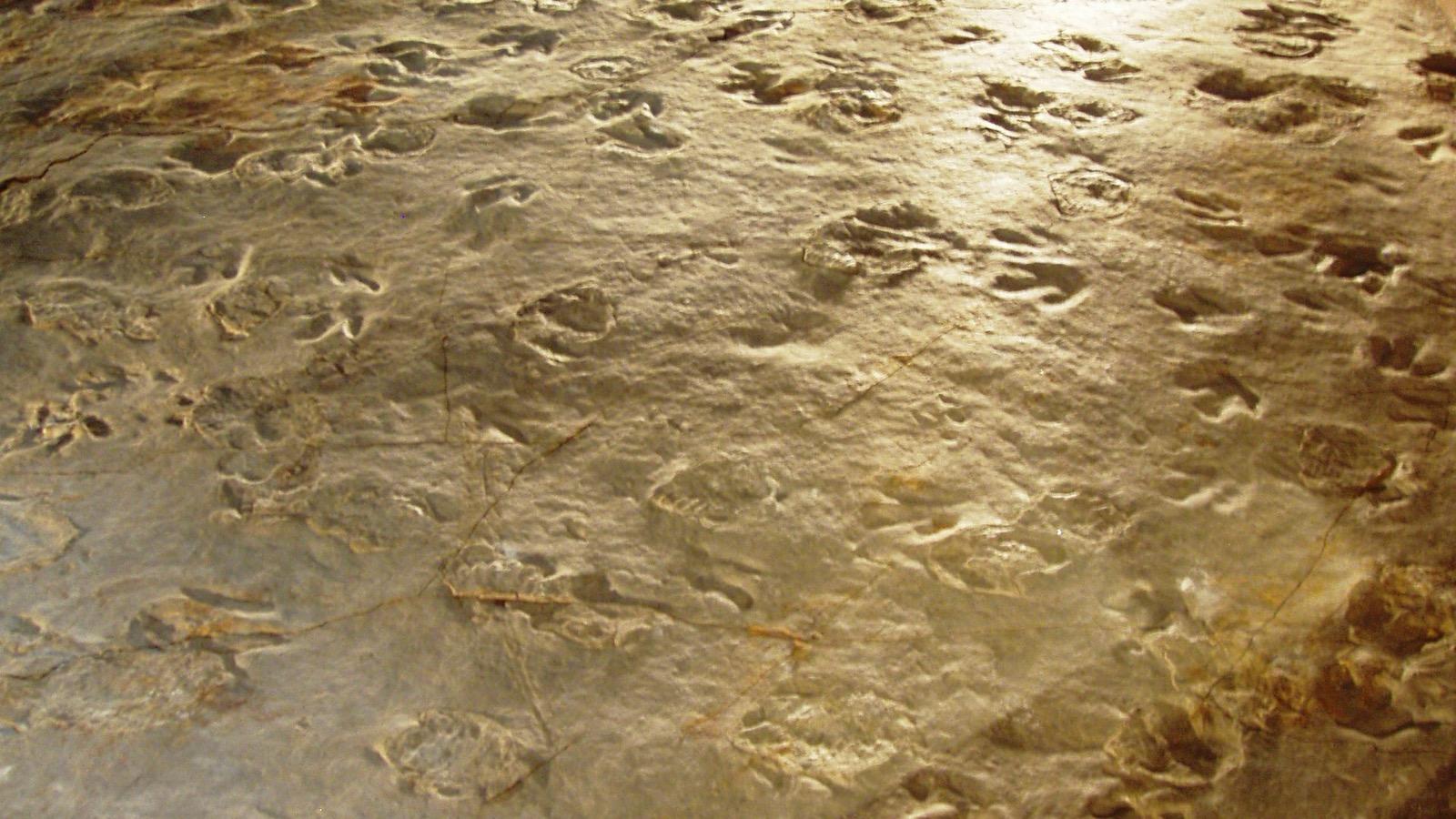
Image: Smokeybjb (CC BY-SA 3.0)
The Connecticut River Valley around Holyoke, South Hadley, and Mount Tom in western Massachusetts holds some of the most famous dinosaur footprints in the world, made in Early Jurassic mudflats and first described scientifically in the 1830s. The Trustees' Dinosaur Footprints Reservation in Holyoke preserves hundreds of three-toed tracks for public viewing. Collecting is not allowed.
By Edward Chen · Updated 31 July 2026
Introduction
The Connecticut River Valley of western Massachusetts is one of the birthplaces of dinosaur science. In the early 1800s, farmers turning over slabs of reddish sandstone here kept finding rows of giant three-toed footprints, and the Amherst geologist Edward Hitchcock spent decades cataloging them, making the valley an internationally famous source of fossil trackways. The footprints were pressed into the mud of Early Jurassic lakeshores and floodplains, then preserved as the mud hardened into rock, recording dinosaurs walking across the landscape some 200 million years ago.
The best place to see them today is the Dinosaur Footprints Reservation in Holyoke, an eight-acre site owned by The Trustees of Reservations right beside the Connecticut River near Mount Tom. Hundreds of tracks, made by as many as four kinds of two-legged dinosaur, cover the tilted sandstone slabs. The nearby town of South Hadley is where the very first North American dinosaur tracks were noticed, by a farm boy named Pliny Moody in 1802. These are trace fossils to look at, not to collect.
Location and Directions
The Dinosaur Footprints Reservation sits along Route 5 (Northampton Street) in Holyoke, near 42.26°N, 72.61°W, on the west bank of the Connecticut River at the foot of the Mount Tom range. A small turnout off Route 5 marks the entrance, and a short trail leads to the main track-bearing slab beside the road. The reservation is generally open to the public seasonally, from spring through late autumn, dawn to dusk. Check The Trustees' website for current hours and any access changes before visiting.
The main exposed surface is a tilted sheet of sandstone roughly 150 feet long and 60 feet wide carrying well over a hundred footprints. South Hadley, a few miles away across the river, is the historic first-discovery area. The privately run Nash Dinosaur Track Site in South Hadley is a separate place where visitors can see tracks. Wear sturdy shoes, bring water, and visit when the rock is dry, since low-angle morning or evening light makes the prints far easier to see.
What Fossils You'll Find
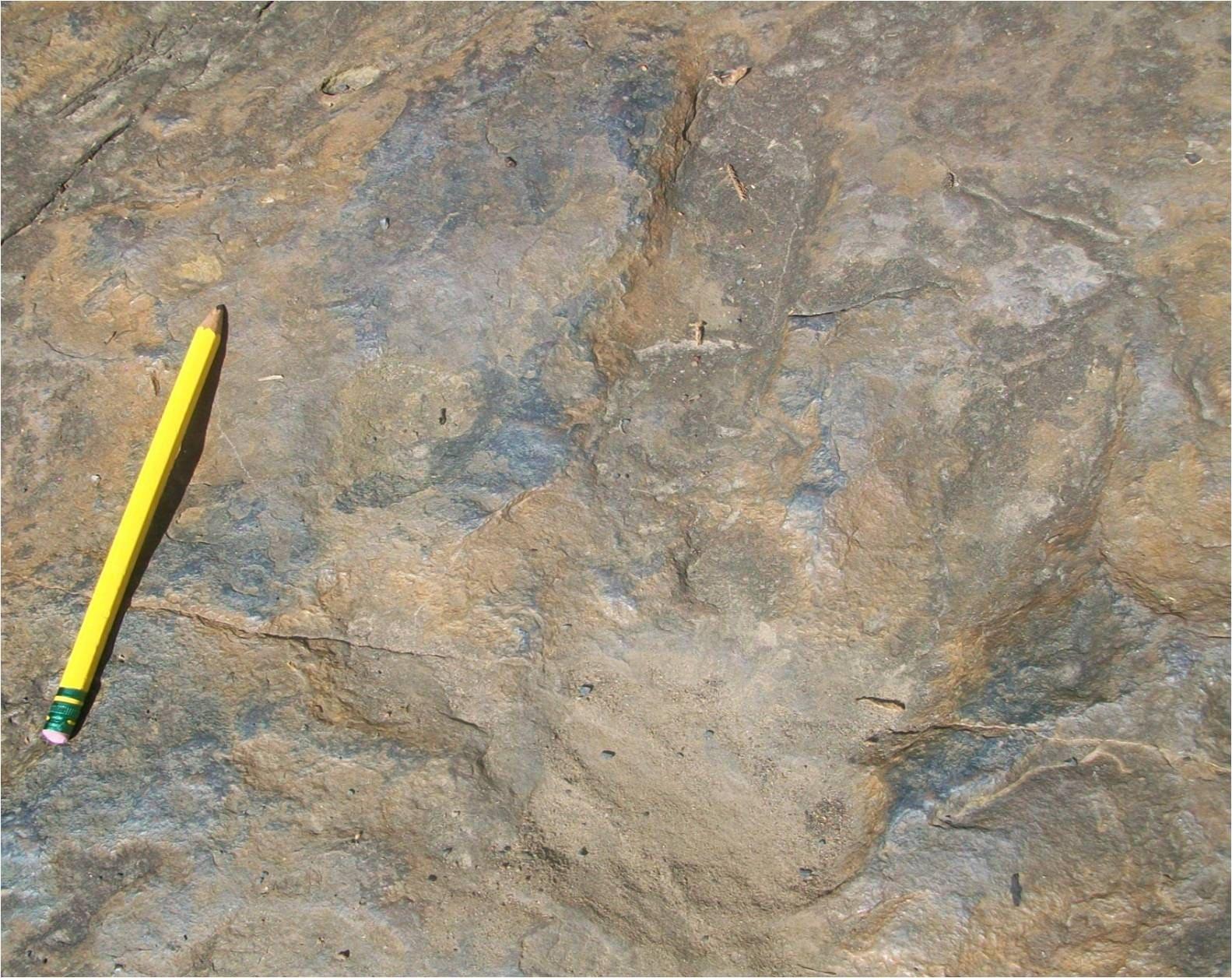
The fossils here are trace fossils, the footprints and trackways of dinosaurs and other animals, rather than bones. The most prominent are large three-toed prints named Eubrontes, attributed to a big meat-eating dinosaur roughly twenty feet long. Eubrontes giganteus is the state fossil of neighbouring Connecticut. Massachusetts adopted dinosaur tracks generally as its state fossil in 1980. Smaller three-toed prints called Grallator and Anchisauripus record smaller bipedal dinosaurs, and the Holyoke surface alone preserves well over a hundred individual prints ranging from a few inches to more than a foot in length.
Alongside the footprints, the Jurassic lake sediments here can preserve ripple marks, mud cracks, raindrop impressions, and trackways of smaller animals, all of which add up to a snapshot of an ancient shoreline. These features are part of the protected rock surface and are meant to be observed and photographed in place.
 Photo: victorgrigas, CC BY-SA 3.0, via Wikimedia Commons
Geologic History
In the Early Jurassic, around 200 to 190 million years ago, the Connecticut Valley was a long rift basin formed as the supercontinent Pangaea began to pull apart and the Atlantic Ocean started to open. The basin filled with river and lake sediments, the red sandstones and mudstones now grouped in the Newark Supergroup, including the Portland Formation and related rocks. The climate swung between wet and dry, and dinosaurs walking across soft lakeside mud left footprints that were then buried by fresh sediment and gradually turned to stone.
Later mountain-building and the tilting of the rift basin set these beds at an angle, and erosion, river cutting, and quarrying have since exposed the track-bearing layers at the surface. Edward Hitchcock's mid-19th-century work on the valley's "stony bird tracks," collected long before dinosaurs were widely understood, helped establish the scientific study of fossil footprints, and the valley remains a touchstone locality for Early Jurassic trackways.
Collecting Rules and Regulations
Collecting is not allowed at the Dinosaur Footprints Reservation. The site is a protected reservation owned by The Trustees of Reservations, and the footprints are an irreplaceable scientific and public resource. Do not chalk, scrape, hammer, cast, or remove any part of the rock. Walk gently on the surfaces, follow posted signs and any staff instructions, and keep groups from crowding or damaging the prints. The footprints are best enjoyed by viewing and photographing them in place. Visitors who want to own a dinosaur track can buy authentic specimens from the privately operated Nash Dinosaur Track Site in South Hadley rather than removing anything from the public reservation. Collecting on other land in the valley requires the landowner's permission.
Safety
The main track slab sits close to Route 5, so watch for traffic when parking and walking near the road. The reservation drops toward the Connecticut River, and the riverbank and rock ledges can be steep and slippery, so keep children close and stay on the marked paths. The sandstone surfaces are slick when wet, so step carefully. In the warmer months bring water and sun protection, watch for poison ivy and ticks in the surrounding brush, and check the seasonal hours so you are not caught at the site after it closes.
Sources
https://en.wikipedia.org/wiki/Dinosaur_Footprints_Reservation https://en.wikipedia.org/wiki/Connecticut_River_Valley_trackways https://thetrustees.org/place/dinosaur-footprints/ https://www.atlasobscura.com/places/dinosaur-footprints-holyoke