East Mersea Fossil Hunting Guide
Discover shark teeth, mammal teeth, mollusc shells at East Mersea in East Mersea, Essex. Complete guide with directions and geology.
By Edward Chen · Updated 27 July 2026
Introduction
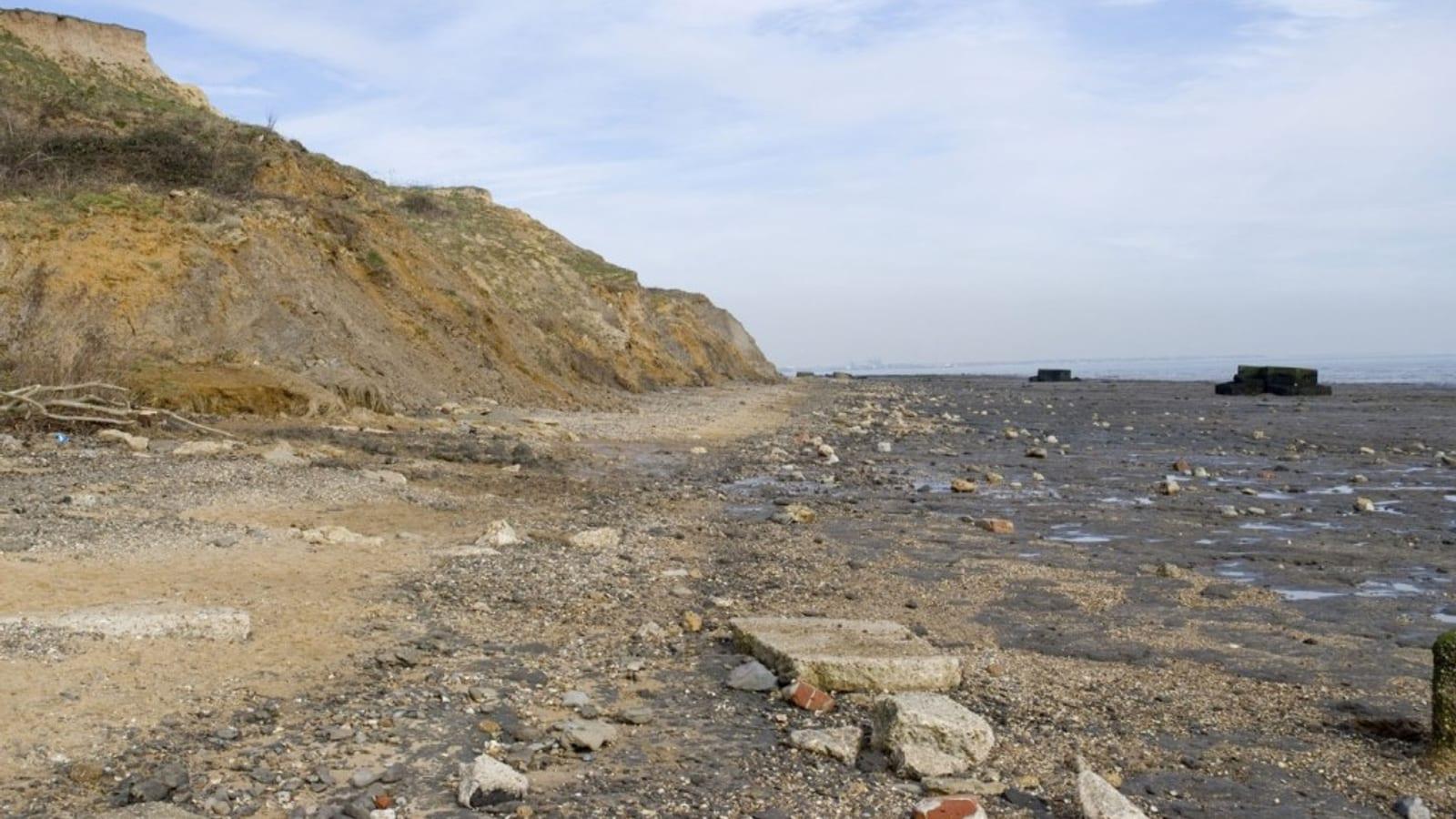
East Mersea lies on the south-east shore of Mersea Island, about nine miles from Colchester and reached by a causeway that floods at high tide. The foreshore exposes London Clay of early Eocene age, and the low cliffs at Cudmore Grove Country Park expose Pleistocene gravels laid down by the combined Thames and Medway river around 300,000 years ago.
Shark teeth are the usual London Clay find here, though the site is not among the better ones for them. The Pleistocene deposits are what East Mersea is known for, producing teeth and bone of beaver, wolf, bear, and a range of rodents, bats, and other small mammals. Most material is recovered by sieving, either on site or at home.
Collecting is from loose foreshore material. The mud flats are the main hazard and are covered in the safety section below.
Location and Directions
East Mersea is located at East Mersea foreshore on Mersea Island, near Colchester, Essex CO5. The site is just nine miles south east of Colchester, across a causeway that is at times covered by the sea.
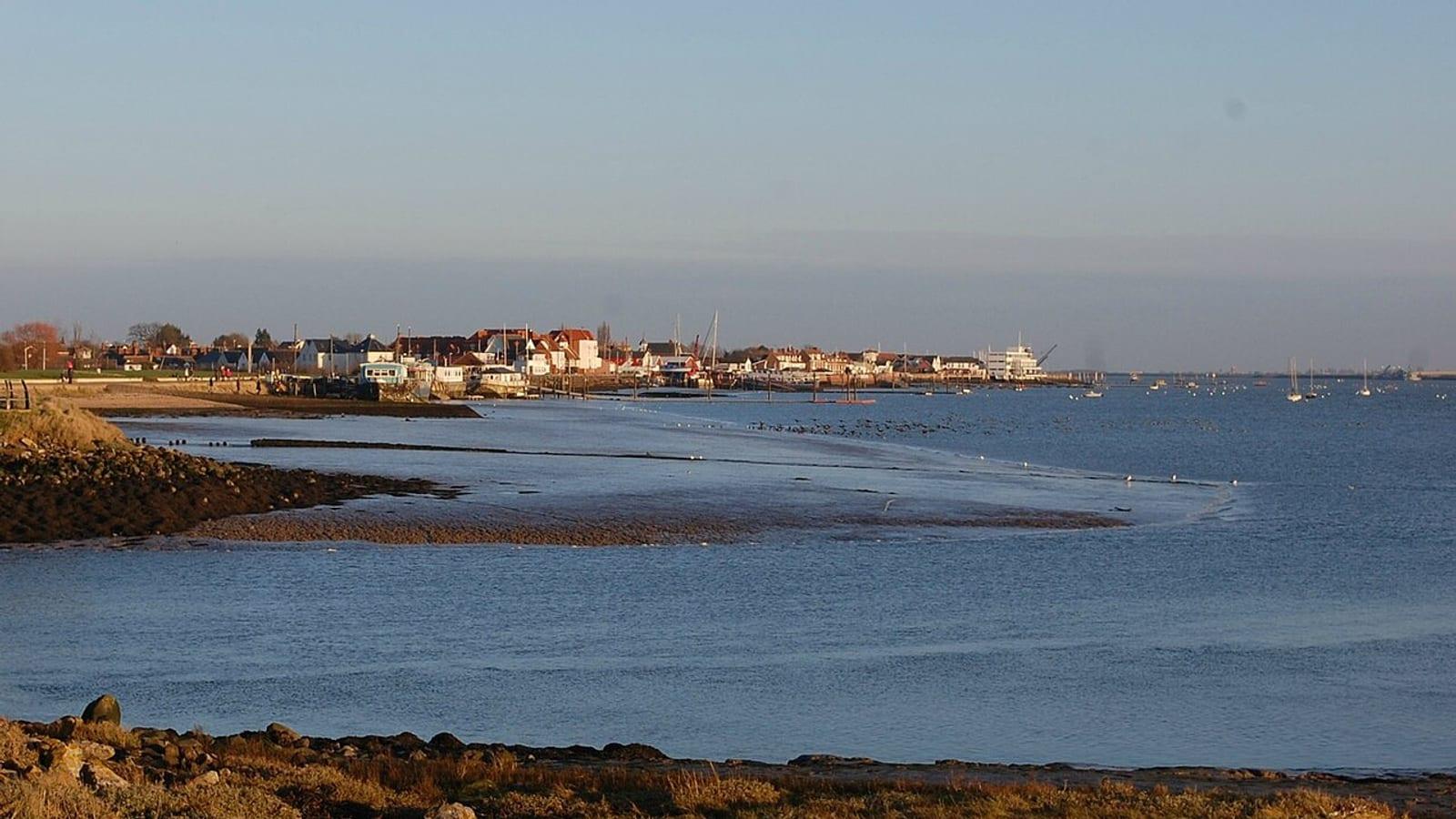
Mersea Island is not that well signposted and the only practical way of getting there is through the middle of Colchester. Once on the island, head east, following the road until you reach a bend with the sign for Cudmore Grove Country Park posted. Take this road and it will lead to a large car park. From here, walk to the foreshore and head southwest (to the right).
Twice a day, the high tide threatens to cut the island off from the mainland. It’s important to check the time of the high tide so you do not get caught on the causeway.
 Photo: Mr James D, CC BY-SA 2.0, via Wikimedia Commons
What Fossils You’ll Find
As with all London Clay sites, the most common finds are sharks’ teeth, although the site is not particularly good in this respect. The Pleistocene deposits are rich in small mammals. Bones of beaver, wolf, bear and a large number of small animals such as rodents, bats, birds, frogs, toads and fish, provide us with a comprehensive picture of the wildlife in eastern Essex 300,000 years ago. Freshwater molluscs are also common from these deposits.
Geological Formations
The foreshore at East Mersea has extensive deposits of London Clay (Eocene, approximately 50 million years ago), forming the ‘Mersea Flats’. The cliffs at Cudmore Grove Country Park provide exposures of gravels laid down by the Thames-Medway River during a glacial period 300,000 years ago. Also exposed on the foreshore are deposits from the Ipswichian interglacial (approximately 120,000-125,000 years old), known as the ‘hippo site’ due to the presence of hippopotamus bones.
Geologic History
London Clay (Eocene, ~50 Million Years Ago)
The London Clay Formation is a marine geological formation of Ypresian (early Eocene Epoch, approximately 54-50 million years ago) age which crops out in the southeast of England. The fossils from the lower Eocene rocks indicate a moderately warm climate, the tropical or subtropical flora. Though sea levels changed during the deposition of the clay, the habitat was generally a lush forest, perhaps like in Indonesia or East Africa today, bordering a warm, shallow ocean.
Thames-Medway Gravels (Middle Pleistocene, ~300,000 Years Ago)
Erosion by the sea in recent decades has created excellent coastal exposures in the 5 to 6m high cliffs, which can be seen as layers of sand and gravel, laid down by the combined Thames-Medway River 300,000 years ago. A large channel-like depression in the London Clay, at the base of the cliffs and exposed on the foreshore, is a former river channel associated with the Thames-Medway River and contains layers of gravel, silt and clay. The Cudmore Grove site has produced the most extensive small-vertebrate fauna from the British Pleistocene.
Ipswichian Interglacial (Last Interglacial, ~120,000-125,000 Years Ago)
The Last Interglacial began about 130,000 years ago at the end of the Penultimate Glacial Period, and ended about 115,000 years ago at the beginning of the Last Glacial Period. It corresponds to Marine Isotope Stage 5e. In Britain, the Last Interglacial is known as the Ipswichian. The deposits at East Mersea expose the only unequivocal last interglacial (Ipswichian) deposits (dated at around 125,000 years BP) yet recognized in the Thames catchment downstream from London.
The Last Interglacial was one of the warmest periods of the last 800,000 years, with temperatures comparable to and at times warmer (by up to 2 degrees Celsius on average) than the contemporary Holocene interglacial. It is thought that the period was on average 2-3 degrees centigrade warmer than today, with sea levels up to 20 ft higher. The greatest and the warmest interglacial stage during the whole of the Ice Age was the Ipswichian, about 120,000 years ago. This period was warmer than the present day with monkeys, elephants and lions in southern England.
The foreshore at East Mersea is currently one of the best sites of Ipswichian age in Britain. Here there are highly fossiliferous sediments called ‘hippo gravels’, so called because the hippopotamus was unusually abundant in the region at this time, but curiously absent during almost all of the other interglacial stages.
Penultimate Glacial Period (Marine Isotope Stage 6, ~194,000-135,000 Years Ago)
The Penultimate Glacial Period (PGP) lasted from approximately 194,000 - 135,000 years ago.
Site History
Researchers speaking at the British Association Festival of Science in York in 2007 said that fossil evidence suggests that Macaque monkeys lived in London, notably Essex. The range of the monkeys extended as far north as Norfolk 0.75 million years ago. East Mersea is identified as one of the coastal fossil locations in Essex, along with Wrabness, Harwich, Walton-on-the-Naze, Maylandsea, Steeple bay and Burnham on Crouch. All of the sites listed have fossils dating from 52-55 million years ago from the London Clay.
The cliffs at Cudmore Grove Country Park provide superb exposures of gravels laid down by the Thames-Medway River during a glacial period 300,000 years ago. Organic sediments at beach level sometimes yield fossils, including mammal bones, that indicate that they were deposited during an interglacial period. Cudmore Grove is also known as the ‘hippo site’ due to the presence of hippopotamus bones.
Cudmore Grove Country Park is designated as a Special Site of Scientific Interest (SSSI), a Ramsar site, National Nature Reserve and Special Protection Area.
Collecting Rules and Regulations
Common sense when collecting at all locations should be used and prior knowledge of tide times is essential. At East Mersea, the main danger is the mud flats. Take extra care when looking for fossils on the foreshore, as some areas are extremely muddy and it is easy to become stuck. Generally, you can see the hard, safe areas, as the clay is well exposed, but there are sometimes areas of soft mud.
These deposits form a channel near to Cudmore Grove Country Park on the foreshore and, if you sieve samples, you can find several rodent species.
Stay away from the cliffs themselves to avoid further erosion and try not to disturb the wildlife who lives there.
Safety
East Mersea is a low, muddy Essex foreshore rather than a cliff coast, and the hazards reflect that. They are less dramatic than a rockfall site and no less capable of causing trouble.
The mud is the main problem. London Clay foreshore is soft, deep, and sticky, and it pulls boots off and traps feet. Stay on firmer ground, avoid the softest stretches near the low-water mark, and do not walk out alone across the flats.
The tide comes in fast and flat. On a shallow shore like this the water advances quickly across a wide area and can cut off a stretch of foreshore before you notice. Check a tide table, work the ebb, and keep your route back clear. Mersea Island itself is reached by the Strood, a causeway that floods on high spring tides, so check crossing times or you will be stuck on or off the island for a couple of hours.
Keep off the low cliffs. They are weak, undercut, and slump readily, particularly after rain. Work the loose material on the beach instead, which is where the fossils are anyway.
Wear boots you can wash off, since you will end up caked. Bring water and windproof layers, because the Essex coast is exposed and colder than the inland forecast suggests. Note that parts of the coast here are protected for birds, so observe any seasonal restrictions and keep dogs under control.
Sources
- UK Fossils Network - East Mersea
- Visit Mersea Island - Fossil Finds
- Essex Wildlife Trust - Finding Fossils
- GeoEssex - Sites
- Explore Essex - Cudmore Grove
- Wikipedia - Last Interglacial, Marine Isotope Stage 5, Penultimate Glacial Period, London Clay
- ScienceDirect - Ipswichian Interglacial, Marine Isotope Stages
- GeoGuide - Cudmore Grove, East Mersea Restaurant Site and Hippopotamus Site
- Accessed December 17, 2025
Nearby sites

Sources & further reading
On this page
- Introduction
- Location and Directions
- What Fossils You’ll Find
- Geological Formations
- Geologic History
- London Clay (Eocene, ~50 Million Years Ago)
- Thames-Medway Gravels (Middle Pleistocene, ~300,000 Years Ago)
- Ipswichian Interglacial (Last Interglacial, ~120,000-125,000 Years Ago)
- Penultimate Glacial Period (Marine Isotope Stage 6, ~194,000-135,000 Years Ago)
- Site History
- Collecting Rules and Regulations
- Safety
- Sources