Beer Head Fossil Hunting Guide
Image: Raymond Cubberley (CC BY-SA 2.0)
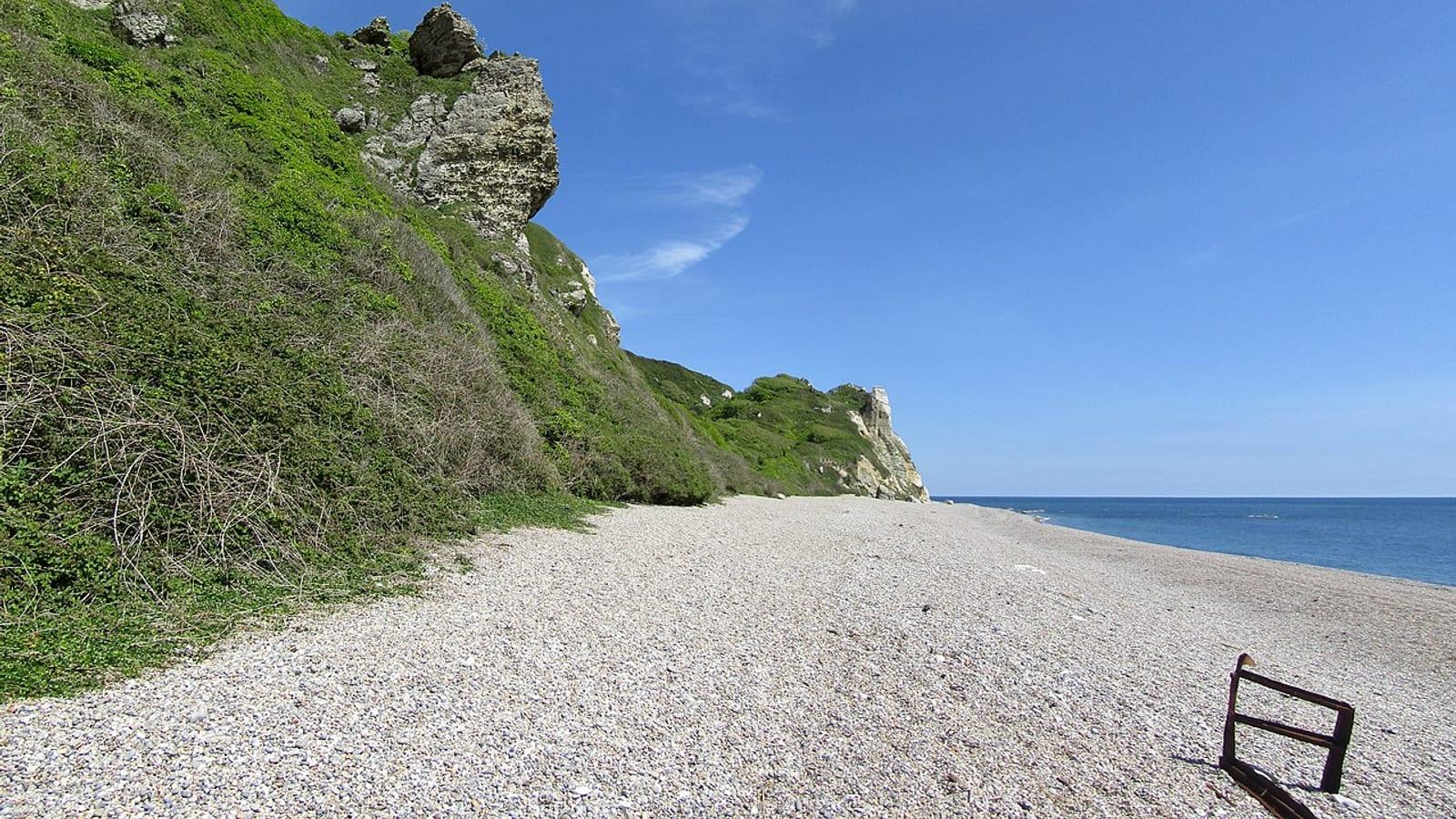
Beer Head is the easternmost chalk headland on the Devon coast and the only chalk exposure on the entire **Jurassic Coast World Heritage Site**.
By Edward Chen · Updated 2 August 2026
 Photo: John M, CC BY-SA 2.0 via Wikimedia Commons
Introduction
Beer Head is the easternmost chalk headland on the Devon coast and the only chalk exposure on the entire Jurassic Coast World Heritage Site. The cliffs here are Cretaceous, not Jurassic, and they sit in striking contrast to the red Triassic sandstones to the west and the pale grey Jurassic mudstones around Lyme Regis. Two main fossiliferous units crop out: the Upper Greensand at the cliff base, and the white Chalk Group above. The fossils that come down to the foreshore include sea urchins, ammonites, bivalves, brachiopods, sponges, and occasional shark teeth, with most of the productive material weathering out of fallen blocks rather than from the cliffs themselves. The site is collected at low tide, after storms, and from foreshore debris only. The cliffs are unstable and active rockfall is the main hazard. This guide covers how to reach Beer Head, what the Greensand and Chalk each produce, the geology that sets the headland apart from the rest of the Jurassic Coast, and the rules that govern collecting in a UNESCO World Heritage area.
Location and Directions
Beer Head sits between the villages of Beer and Branscombe in East Devon, England, about 30 kilometres east of Exeter and 8 kilometres west of Lyme Regis.
By car, leave the A3052 between Sidmouth and Lyme Regis and follow signs into Beer. Park in the Beer central car park (EX12 3EQ) in the village. This is the closest paid public lot and is a short walk from both the village beach and the South West Coast Path. Public transport from Exeter is by Stagecoach bus 9A to Beer, with the bus stop a few minutes from the car park.
From the village, walk west along the seafront and pick up the South West Coast Path signs. The path climbs steeply onto the cliff top and follows the headland west towards Branscombe Mouth. Beer Head itself is the high point on the route, roughly 1 kilometre west of the village. The cliff-top walk gives the best views and the safest viewing of the chalk. Foreshore access for collecting is via the path down to Beer beach in the village or via the longer descent at Branscombe Mouth to the west.
You collect on the foreshore beneath the cliffs, working only the loose blocks and shingle. You should plan around the tide: aim to be on the foreshore in the two hours either side of low water and be off it well before the tide returns. Tide tables for Lyme Regis or Seaton are appropriate references. After heavy rain or storms, fresh material comes down and collecting improves. After a long dry spell, the foreshore is picked over and quiet.
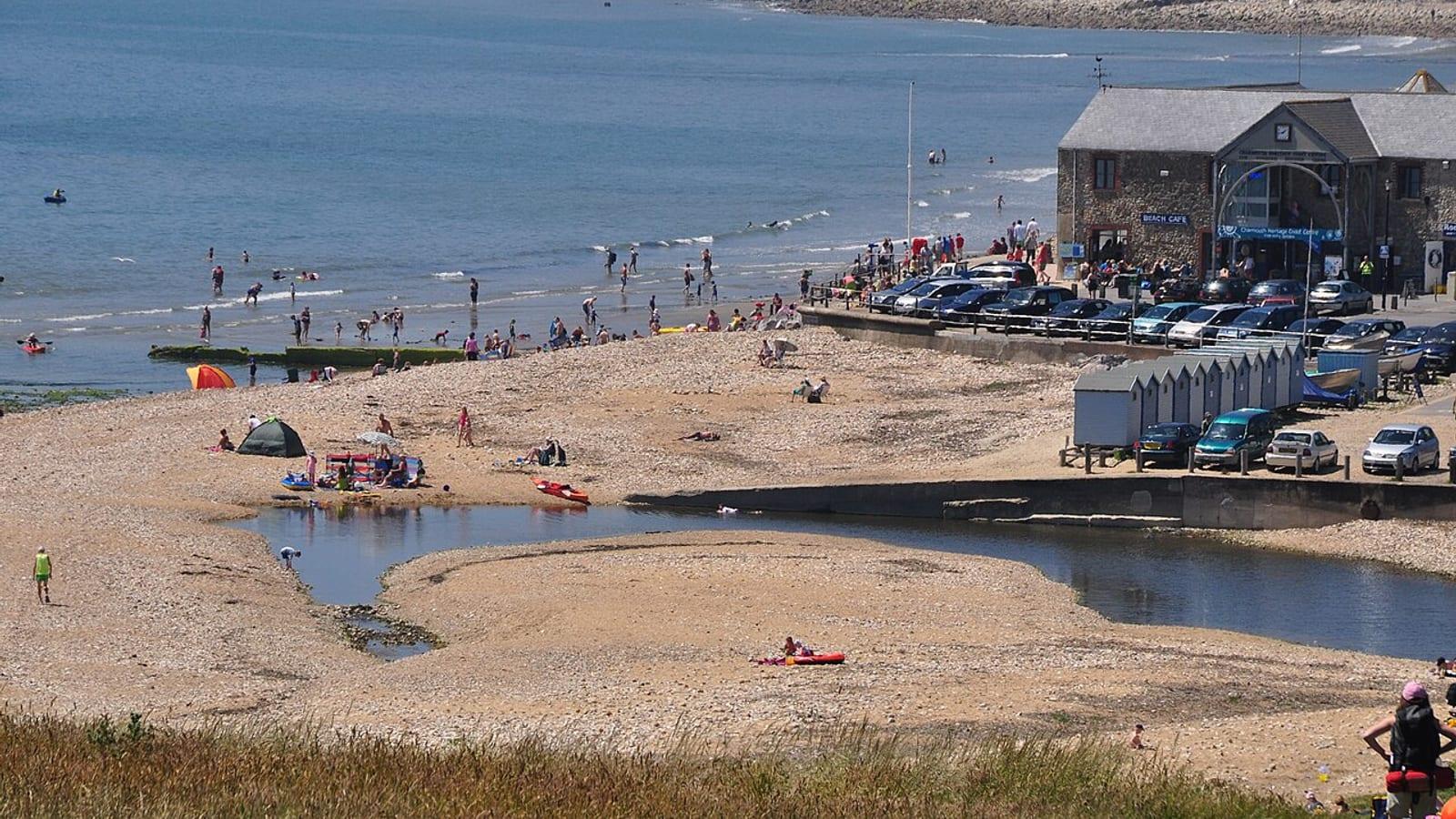
The headland has no facilities. The villages of Beer and Branscombe both have cafes, restrooms, and small shops. Mobile coverage on the cliff top is generally good. On the foreshore it can drop out under the cliffs.
 Photo: Eugene Birchall, CC BY-SA 2.0, via Wikimedia Commons
What Fossils You'll Find
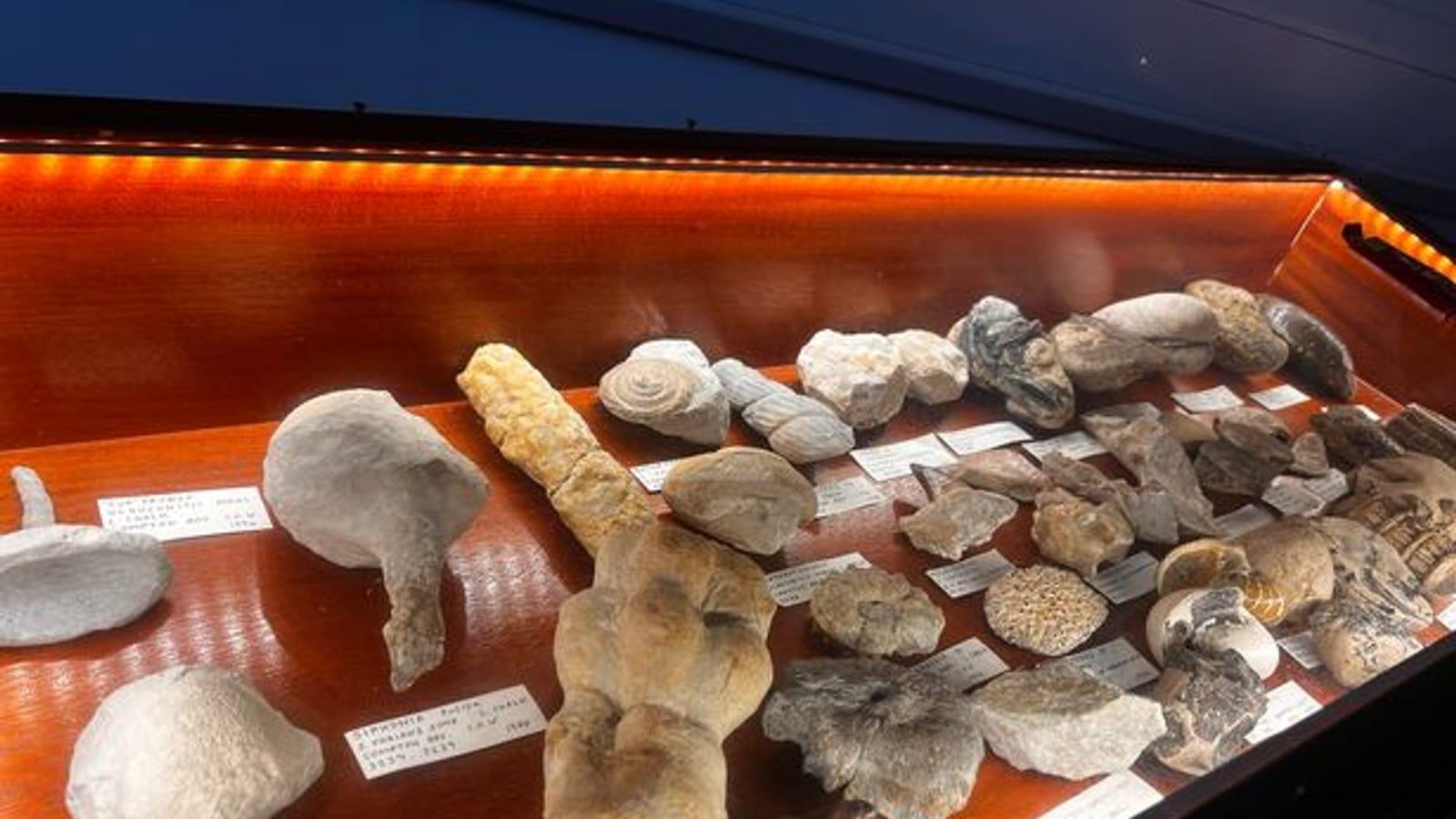
 Photo: Mark Ireland ( https://www.flickr.com/people/mark_i_geo/ ), CC BY 2.0 via Wikimedia Commons
The fauna comes from two distinct units, and the fossils look quite different depending on which you are working.
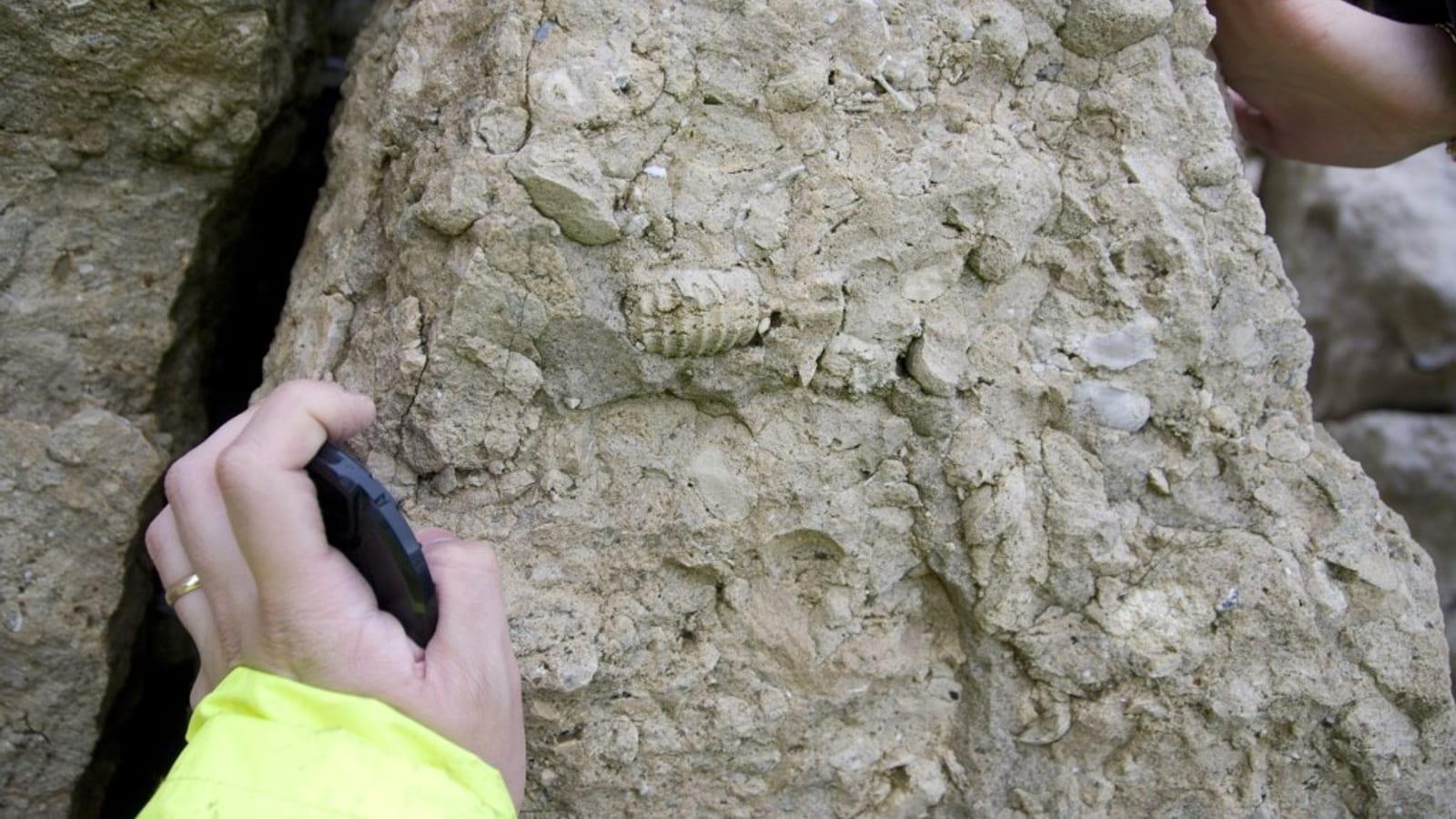
- Echinoids (sea urchins). The flagship find. Hemiaster, Holaster, Echinocorys, and Conulus all occur in the Chalk and weather out as smooth, pale, often complete tests. The Beer Stone layer (a fine, pale, workable chalk historically used for building) is particularly rich.
- Ammonites. Cretaceous ammonites occur in both the Upper Greensand and the basal Chalk. Common genera include Schloenbachia and Mantelliceras in the Cenomanian, with Acanthoceras higher up. Most are fragmentary. Complete specimens are rare and worth reporting.
- Bivalves. Inoceramid bivalve flakes are abundant in the Chalk, and you will find broken Inoceramus shell scattered in the foreshore shingle. Oysters and other small bivalves occur in the Greensand.
- Brachiopods. Small terebratulid and rhynchonellid brachiopods, often as complete shells, occur throughout the Chalk and Greensand.
- Sponges. Distinctive in the basal Chalk and at the Greensand-Chalk junction. Look for vase-shaped or branching pale moulds in chalk pebbles.
- Shark teeth. Small lamniform teeth (e.g. Cretolamna, Squalicorax) turn up occasionally in the foreshore lag. Patience is required.
- Flint moulds. Black and grey flint nodules in the Chalk often contain echinoid, sponge, or bivalve moulds in their cores. Broken flints on the beach are worth checking.
Most productive collecting is on the shingle and rock platform after storms, in fallen blocks rather than in the cliff face. The Beer Stone has been quarried inland for centuries and was used for parts of Exeter Cathedral, but the in-situ stone is not collected directly.
Geologic History
Beer Head exposes the upper part of the Cretaceous succession of east Devon, specifically the Upper Greensand Formation (late Albian to Cenomanian) overlain by the White Chalk Subgroup of the Chalk Group (Cenomanian to Turonian, about 100 to 90 million years ago).
The Upper Greensand at the base records a transgressing sea spreading across what had been an emergent or shallow-marine landscape. The unit is a glauconitic, slightly cherty sandstone with abundant burrows and well-preserved invertebrate fossils. Glauconite, the green mineral that gives the formation its colour, formed in slightly reducing conditions on a slowly accumulating shelf. Above the Greensand, a thin Cenomanian Basement Bed marks the start of full Chalk deposition.
The overlying Chalk Group is the same broad unit you see at Dover, Beachy Head, and across the chalk downlands of southern England. At Beer, the lower part of the chalk includes the locally distinctive Beer Stone, a fine-grained, pale, workable chalk that hardens on exposure and was quarried inland for masonry. Chalk deposition required a clean, warm, mid-latitude shelf sea with very little terrigenous sediment input. Coccolithophore algae produced microscopic calcite plates that rained down to the seafloor. Bottom-dwelling brachiopods, bryozoans, sponges, sea urchins, and bivalves thrived in well-oxygenated water at depths of perhaps 100 to 200 metres. Belemnites and ammonites swam above.
After the Cretaceous, this part of southwest England was uplifted and tilted. The Chalk that once covered Devon was largely stripped away to the west, which is why the formation only just clings on at Beer. To the west you walk back into the Triassic and Jurassic. To the east the Chalk thickens steadily into Dorset and Hampshire. Modern marine erosion of the headland continually exposes new material on the foreshore.
How Beer Head Became a Fossil Collecting Site
Quarrying came first, fossil collecting later. The Beer Quarry Caves inland from the village were worked from at least Roman times for the Beer Stone and continued in some form into the 20th century. Stone from Beer was used in Exeter Cathedral, the Tower of London, and many local parish churches, and the quarry workings exposed the chalk-and-greensand succession to the early geologists who began describing it in the 19th century.
Modern collecting at Beer Head developed alongside the wider growth of fossil tourism on the Devon and Dorset coast, particularly after the 2001 UNESCO designation of the Jurassic Coast World Heritage Site, which formalised the conservation framework for the entire 95-mile coastline from Orcombe Point to Studland Bay. Beer Head is the easternmost Cretaceous element of that World Heritage area, and the Jurassic Coast Trust and local museums (notably the Devonshire Museum in Exeter and Lyme Regis Museum) coordinate with collectors and run public outreach. Erosion does the actual fossil-extraction work. Visitors are advised to collect only loose, fallen material from the foreshore, which is also the policy on the rest of the World Heritage coast.
Collecting Rules and Regulations
Beer Head is open to the public on the foreshore and along the South West Coast Path, but it sits within the Jurassic Coast World Heritage Site and the West Dorset and East Devon Coast Code of Conduct applies.
- Collect only from loose foreshore material: fallen blocks, shingle, and shoreline lag. Do not hammer, dig, or chisel the cliff face. The cliffs are unstable and direct extraction is the activity the rules are written against.
- Stay well clear of the cliff base. Rockfalls are frequent, especially after rain, freeze-thaw cycles, and winter storms. Watch overhead, and never sit or rest at the cliff toe.
- Plan around the tide. Aim for the two hours either side of low water and check tide tables for Lyme Regis or Seaton before you go. The foreshore at the headland is cut off at high tide.
- Significant finds, especially articulated vertebrate material, large or complete ammonites, and unusual specimens, should be reported to a local museum or to the Jurassic Coast Trust. The standard system for the World Heritage coast is to report, photograph, and where appropriate let museum staff record the find before it is removed.
- Personal-collection quantities are accepted. Commercial collecting on this coast is regulated and not appropriate without explicit arrangement with the local landowner and the Trust.
- Wear sturdy footwear with good grip. The foreshore mixes wet chalk, sharp flint, and slick seaweed.
- Dogs are allowed on Beer beach with seasonal restrictions. Check current East Devon District Council rules for the summer holiday period.
- There is no parking at the headland itself. Use the village car parks and walk in.
Safety
Beer Head is a chalk headland on an actively failing coast, and the two hazards here, the cliffs and the tide, both have a history of catching people out along this stretch of Devon.
Chalk cliffs fail suddenly and without warning. This coastline is subject to regular rockfalls and large landslips, and the ground around Beer Head has moved substantially within living memory. Do not walk directly beneath the cliffs, do not shelter under an overhang, and do not climb. Keep a distance from the base that a falling block would not reach. The risk rises sharply after heavy rain and during freeze-thaw conditions, which is exactly when fresh material appears at the bottom.
Time the tide and know your exit. The foreshore below the headland can be cut off by a rising tide, leaving you trapped between water and an unstable cliff with no way up. Check a tide table before you go down, work the falling tide, and identify your escape route before you start looking at rock.
The beach is steep shingle in places, which is tiring and turns ankles, and the chalk ledges are slippery with weed. Wear boots with a firm sole and good grip.
Do not attempt to reach exposures by scrambling around headlands as the tide turns. Carry a phone but do not rely on it, and tell someone where you are going. Note that this is a World Heritage coast, and the collecting code asks you to work loose material on the beach rather than the cliff.
Sources
- Jurassic Coast Trust. "Beer Head and the Cretaceous of East Devon." https://jurassiccoast.org/
- British Geological Survey. "Geology of the Sidmouth area" sheet and memoir.
- UK Fossils Network. "Beer Head and Branscombe." https://ukfossils.co.uk/
- Mortimore, R.N., Wood, C.J., and Gallois, R.W. British Upper Cretaceous Stratigraphy. Joint Nature Conservation Committee, 2001 (standard reference for the Chalk Group of England).
- South West Coast Path Association. "Beer to Branscombe section." https://www.southwestcoastpath.org.uk/