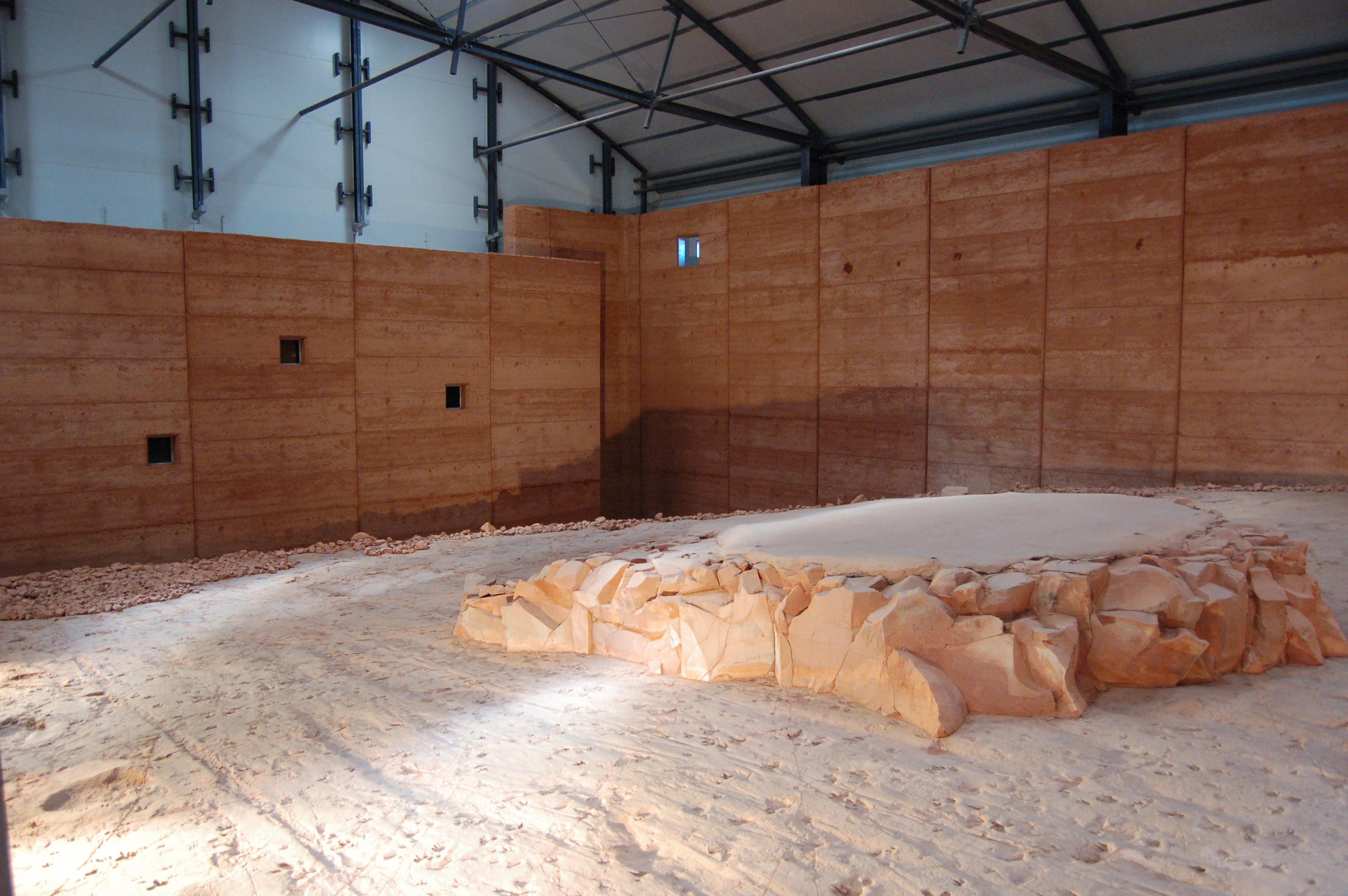
Lark Quarry Dinosaur Trackways Fossil Hunting Guide
Image: me_whynot (Public domain)
Lark Quarry Conservation Park near Winton, Queensland, preserves more than 3,300 mid-Cretaceous dinosaur footprints on a single bedding plane in the Winton Formation. Access to the trackway slab is by guided tour only. The wider conservation park has free self-guided walks.
By Edward Chen · Updated 2 August 2026
Introduction
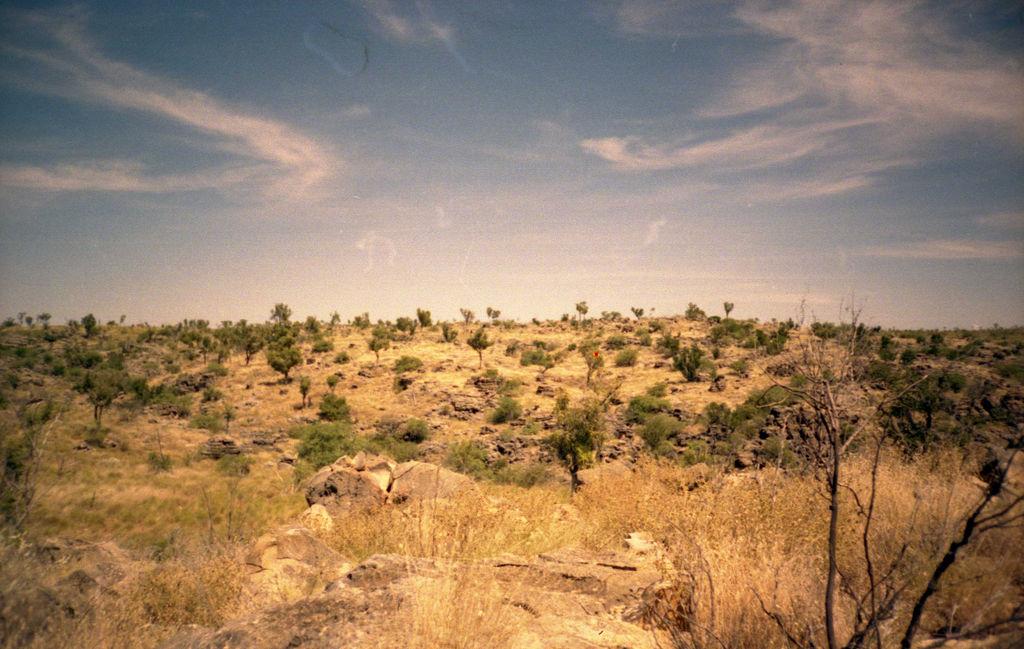
Lark Quarry Conservation Park lies on the gibber plain of central western Queensland, about 110 kilometres southwest of the small outback town of Winton. The protected area takes its name from the 210-square-metre trackway slab discovered at the site in 1962 by local stockman Glen Seymour and excavated through the 1970s under Mary Wade and Tony Thulborn of the Queensland Museum. The Lark Quarry slab is a single bedding plane in the upper Winton Formation, deposited in a fluvial-lacustrine setting during the mid-Cretaceous about 95 million years ago. The slab contains more than 3,300 individual dinosaur footprints made by at least 150 small theropod and ornithopod dinosaurs as they crossed a wet floodplain surface alongside a much larger theropod. Long interpreted as a "dinosaur stampede" caused by predator attack, more recent analysis published by Anthony Romilio and Steve Salisbury has reinterpreted the slab as a multi-day river-crossing record, with the trackmakers wading across a shallow channel at different times. The trackway slab is enclosed inside the Dinosaur Stampede Conservation Building, a climate-controlled shelter built in 2002 over the original quarry. The wider conservation park covers about 460 hectares and has free self-guided walks. Access to the slab itself is by guided tour only, run by the Australian Age of Dinosaurs Museum of Natural History under a Queensland Parks and Wildlife Service concession. Collecting is prohibited. This guide covers how to plan a visit, what the tour shows, the Cretaceous geology, and the rules that apply.
Location and Directions
Winton sits in remote central western Queensland, about 175 kilometres northwest of Longreach and about 1,400 kilometres west-northwest of Brisbane. The closest commercial airport is Longreach, with secondary daily service into Winton itself. Most visitors drive in from Longreach (2 hours), Charters Towers (8 hours), or Mount Isa (5 hours).
The Lark Quarry Conservation Park is at GPS 23.0167 degrees south, 142.4128 degrees east, at the end of Lark Quarry Road. The drive from Winton takes about two hours, of which the last 65 kilometres are on unsealed gravel road. A standard 2WD passenger car can reach the site in dry weather. A high-clearance 4WD is recommended after rain.
The conservation park has two self-guided walking tracks. The Spinifex Walk (about 700 metres round trip) loops past gibber plain habitat. The Stampede Walk (about 2 kilometres round trip) climbs the jump-up scarp behind the shelter to viewpoints over the wider plain. Both walks are free and open year round.
The Dinosaur Stampede Conservation Building is open daily from 8:30 a.m. to 5 p.m., April through September, and Monday through Saturday during October through March. Guided tours of the trackway slab run hourly between 9:30 a.m. and 3 p.m. The standard adult tour fare at the time of writing is AUD 35, with AUD 21 for children. A Winton Dinosaur Capital VIP Pass at AUD 100 (adults) covers Lark Quarry along with other regional dinosaur attractions including the Australian Age of Dinosaurs Museum and the Waltzing Matilda Centre.
Winton has standard outback-budget hotels and motels, restaurants, fuel, and a regional museum. The Australian Age of Dinosaurs Museum on the Jump-Up plateau outside Winton is the principal regional research and display facility and a strong combined stop with Lark Quarry.
 Photo: Me whynot, CC BY-SA 3.0, via Wikimedia Commons

What Fossils You'll Find
You will not collect at Lark Quarry. What you can do is take a guided tour into the climate-controlled shelter, walk on the elevated boardwalk around the trackway slab, and see more than 3,300 in-place footprints on a single bedding plane. Identifications below follow the published Lark Quarry literature and the Queensland Parks and Wildlife Service interpretation.
- Large theropod footprints. A single set of large three-toed prints, 56 centimetres long, runs through the slab. The trackmaker was originally interpreted as a 6 to 8 metre carnivorous theropod (possibly an early relative of allosaurids), though more recent work suggests the prints may have been made by a large ornithopod walking quadrupedally.
- Small theropod and ornithopod prints. Approximately 3,000 small three-toed prints, 6 to 25 centimetres long, run across the slab in multiple directions. These were made by at least 130 to 150 small dinosaurs.
- Crocodyliform tracks. Several quadrupedal tracks at the slab edge have been interpreted as crocodyliform.
- Plant impressions. Limited compression material in the surrounding mudstone preserves fern and gymnosperm leaves.
The Lark Quarry Visitor Information Centre at the conservation building includes a touch model of a typical print, a scale outline of the large theropod, and panels explaining the river-crossing interpretation.
Geologic History
The Lark Quarry slab sits in the upper Winton Formation, a continental fluvial and lacustrine succession deposited across the Eromanga basin in central Queensland during the late Albian through Cenomanian stages of the mid-Cretaceous. Recent U-Pb radiometric ages and palynological correlation place the slab at approximately 95 million years ago.
The Eromanga basin during the mid-Cretaceous was a low-lying floodplain on the eastern side of the Great Artesian Basin, fed by rivers draining from the rising Tasmanide highlands to the east. Following the regression of the Eromanga Sea earlier in the Albian, the area was a wide alluvial plain crossed by meandering rivers, with shallow lakes, swamps, and small distributary channels.
The Lark Quarry slab represents a single damp mud surface on a small ephemeral channel margin. Detailed sedimentological work by Romilio and Salisbury indicates that the channel held water at different depths at different times, with the small dinosaurs swimming or wading across the channel and the large theropod walking through afterward. The original "stampede" interpretation by Thulborn and Wade in 1981 has been reassessed in light of this new sedimentological evidence.
Surrounding mudstone and fine sandstone of the upper Winton Formation preserve plant compressions, freshwater bivalves, and rare vertebrate remains.
After Cretaceous deposition, the Winton Formation was buried under thin Cenozoic continental cover, then exhumed during late Cenozoic Australian uplift. Modern erosion has exposed the slab on a low bedrock platform in the gibber plain.
 Photo: Me whynot, CC BY-SA 3.0, via Wikimedia Commons

How Lark Quarry Became a Fossil Site
Glen Seymour, a stockman on Wynberg Station southwest of Winton, noticed unusual three-toed marks on a sandstone slab during a 1962 cattle muster. He brought the find to the Queensland Museum, but it received only limited attention until Mary Wade and Tony Thulborn began detailed mapping at the site in 1976. The Wade-Thulborn excavation between 1976 and 1979 exposed the full 210-square-metre slab and produced the first full published interpretation in 1981.
The slab was designated a Queensland Conservation Park in 1996. A first protective shelter was built over the slab in 1985 to slow weathering. The current Dinosaur Stampede Conservation Building, a climate-controlled structure, was opened in 2002 by then-Queensland Premier Peter Beattie.
In 2015, the Australian Age of Dinosaurs Museum of Natural History assumed operation of the site under a Queensland Parks and Wildlife Service concession. AAOD has run the guided tours and museum interpretation since 2016. Active reinterpretation of the slab has continued under Romilio and Salisbury at the University of Queensland.
Collecting Rules and Regulations
Collecting is prohibited. Lark Quarry Conservation Park is administered by the Queensland Parks and Wildlife Service. Removing fossils, rocks, plants, or any material from the conservation park is an offence under the Queensland Nature Conservation Act 1992 and the Australian Environment Protection and Biodiversity Conservation Act 1999.
Practical rules:
- Access to the trackway slab is by guided tour only. The shelter is locked between tours.
- Walking on the slab itself is not permitted. The boardwalk is the only viewing area.
- Photography for personal use is welcomed inside the shelter (no flash to protect the slab surface).
- The two outdoor walking tracks are free of charge and open during daylight hours.
- Drones are not permitted in the conservation park.
- Pets are not allowed in the conservation park.
- Research collection is restricted to permitted teams working under Queensland Parks authorisation.
Safety
Central western Queensland reaches 40 degrees Celsius and higher in summer (December through March). Summer rains can be heavy and can close the unsealed access road for days at a time. The recommended visiting window is April through September, with daytime temperatures around 22 to 30 degrees Celsius and dry conditions.
Sun exposure is intense year round. Carry at least 4 litres of water per person on every visit, sun cover, and a wide-brimmed hat. There is no water available on the outdoor walking tracks.
The unsealed road from Winton has dips and creek crossings that can flood quickly during summer storms. Check road conditions with the Winton Visitor Information Centre before driving.
Snakes including the eastern brown snake and the king brown snake occur in the gibber plain. Stay on the marked walking tracks and wear closed boots.
The site is remote. Cell phone coverage is absent at Lark Quarry. Carry a satellite communication device for emergencies and tell someone your route before leaving Winton.
Sources
- Queensland Department of Environment, "About, Lark Quarry Conservation Park." https://parks.qld.gov.au/parks/lark-quarry/about
- Dinosaur Stampede National Monument (Australian Age of Dinosaurs). https://www.dinosaurtrackways.com.au/
- Wikipedia, "Lark Quarry Dinosaur Trackways." https://en.wikipedia.org/wiki/Lark_Quarry_Dinosaur_Trackways
- Thulborn, R.A. and Wade, M., 1984. "Dinosaur trackways in the Winton Formation (mid-Cretaceous) of Queensland." Memoirs of the Queensland Museum, 21.
- Romilio, A., Tucker, R.T., and Salisbury, S.W., 2013. "Reevaluation of the Lark Quarry dinosaur tracksite (late Albian-Cenomanian Winton Formation, central-western Queensland, Australia)." Cretaceous Research, 41.
Nearby sites
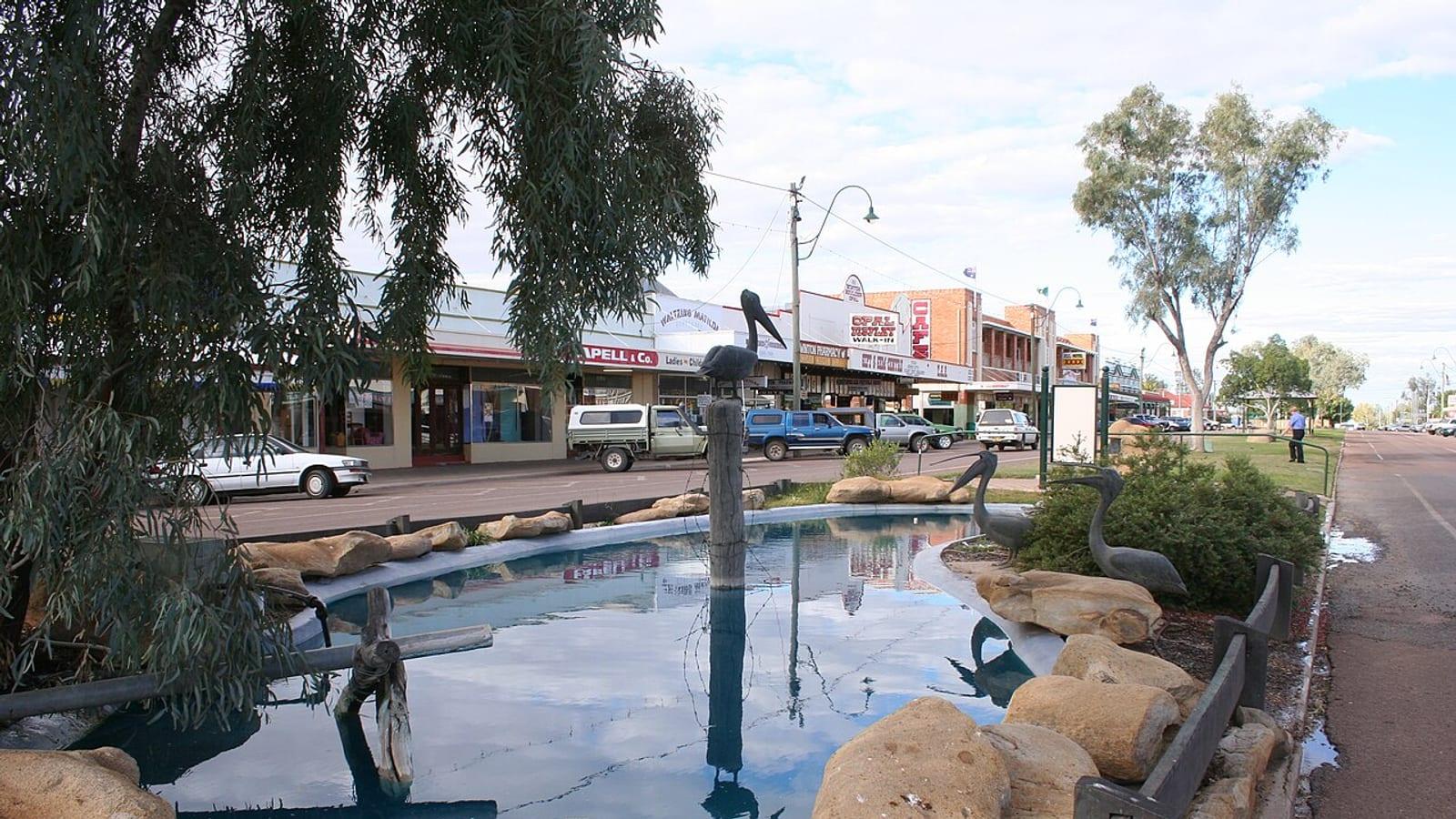 Australian Age of Dinosaurs Museum Winton Fossil Hunting GuideAustralian Age of Dinosaurs Museum, Diamantinasaurus matildae
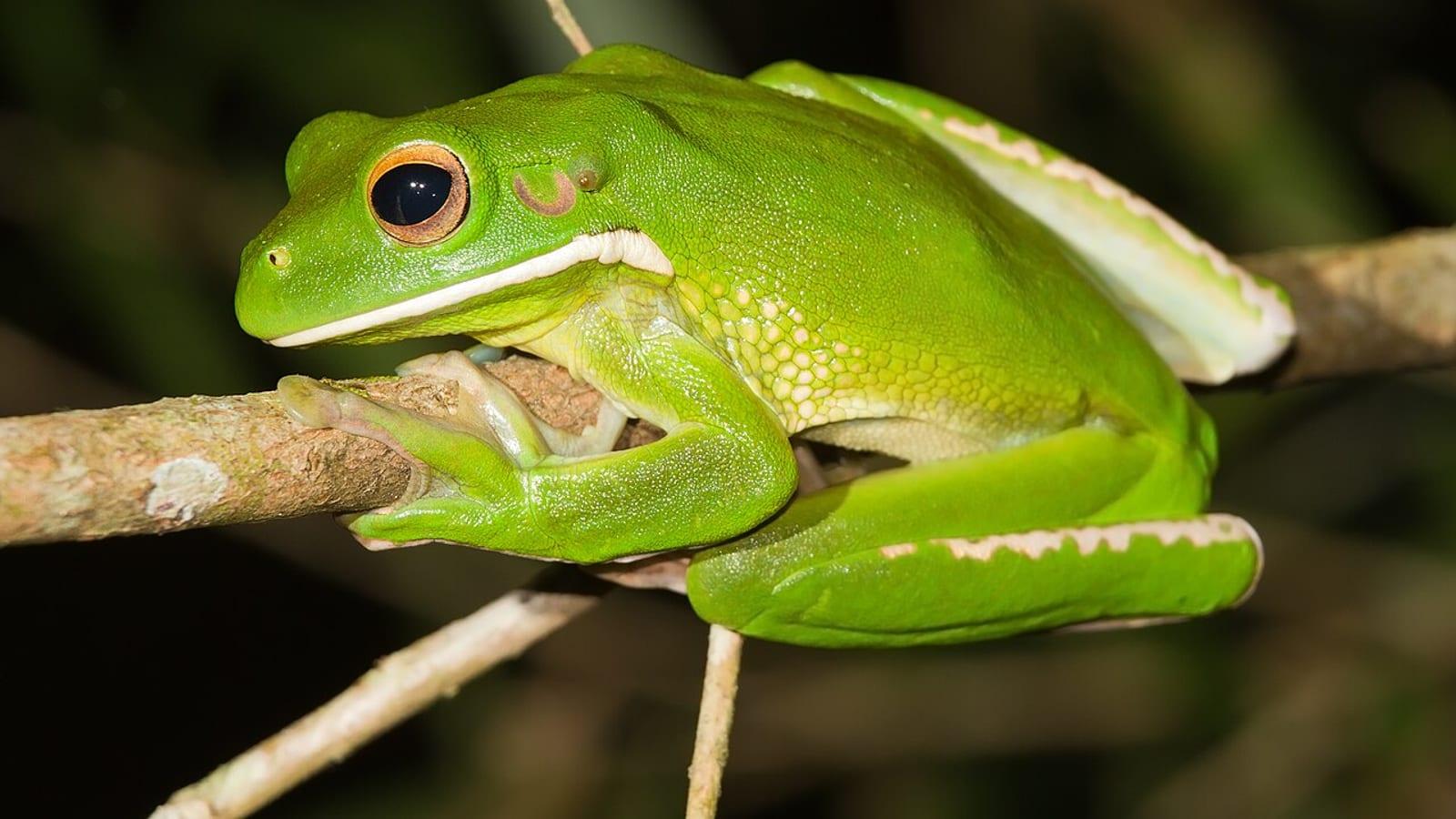 Kronosaurus Korner Queensland Fossil Museum Fossil Hunting GuideEromanga Sea, Kronosaurus queenslandicus
 Porcupine Gorge National Park Fossils Fossil Hunting GuideGlossopteris, Glossopteris leaves
 Riversleigh World Heritage Area Fossil Hunting GuideMarsupial lions (Wakaleo, Priscileo), Carnivorous kangaroos (Ekaltadeta)