Riversleigh World Heritage Area Fossil Hunting Guide
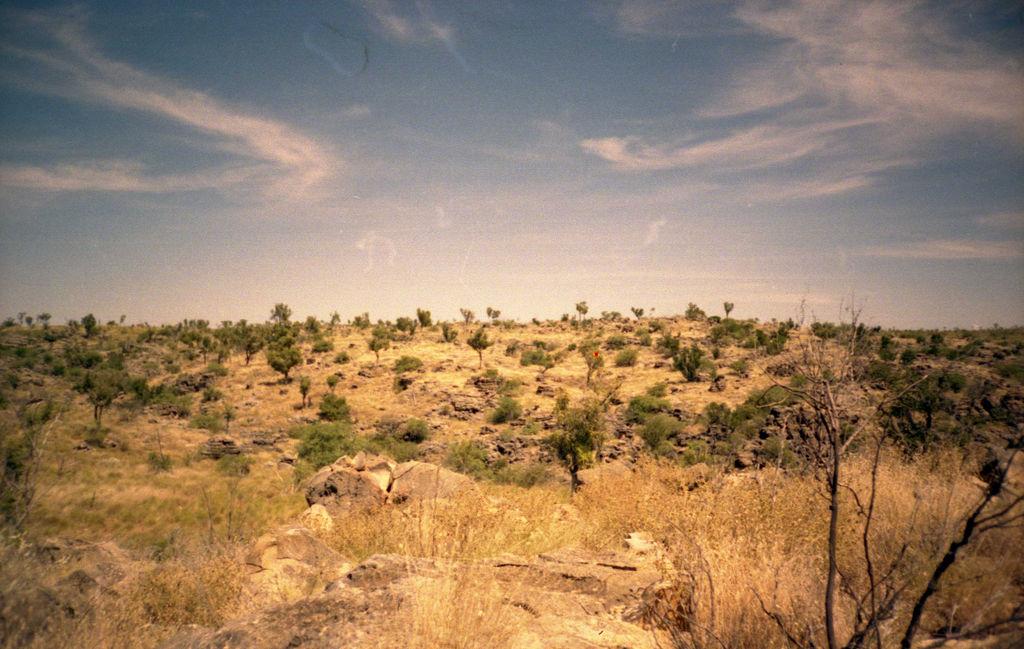
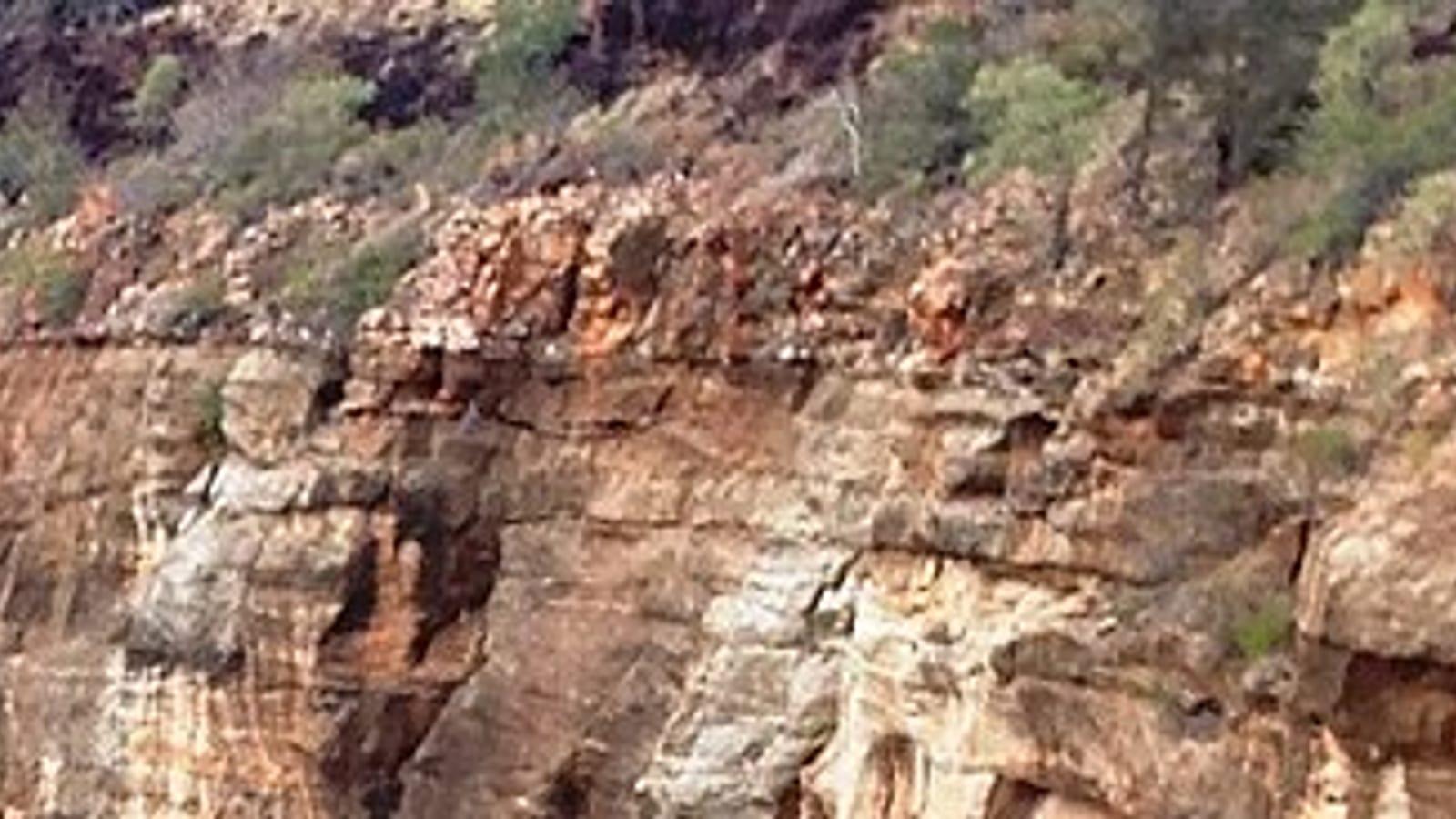
Image: Huygens (CC BY-SA 2.0)
Riversleigh World Heritage Area in north-west Queensland preserves a freshwater limestone sequence inside Boodjamulla National Park that records 25 million years of Oligocene to Miocene Australian mammal evolution. The D Site self-guided trail is the only public access point.
By Edward Chen · Updated 1 August 2026
Introduction
Riversleigh is a 100-square-kilometre fossil-bearing limestone landscape on the upper Gregory River in north-west Queensland, inside Boodjamulla (Lawn Hill) National Park. The site was inscribed on the UNESCO World Heritage list in 1994, together with the Naracoorte caves in South Australia, as the Australian Fossil Mammal Sites. Riversleigh preserves a stacked sequence of freshwater carbonate cave and pond deposits formed between roughly 25 and 12 million years ago, recording the Oligocene to Miocene radiation of Australia's marsupials and monotremes. More than 300 individual fossil localities have been documented across the property. Many sites preserve articulated skeletons of carnivorous kangaroos, marsupial lions, toothed platypuses, and giant flightless birds, together with bats, frogs, snakes, and crocodiles. The full World Heritage Area is closed to casual visitors. The D Site interpretive trail, on the southern edge of Boodjamulla National Park, is the only part of the property where the public can walk to in-place fossil exposures. The Riversleigh Fossil Centre in Mount Isa, about 200 kilometres east, provides the indoor display companion. Collecting is prohibited. This guide covers how to reach the D Site trail, what is visible there, the karst geology, and the access rules.
Location and Directions
Riversleigh lies in remote north-west Queensland, about 250 kilometres south-west of Burketown and about 200 kilometres north-west of Mount Isa. The country is hot, dry savanna with permanent waterholes along the Gregory River system.
The D Site trail sits at the southern boundary of Boodjamulla (Lawn Hill) National Park, on the Riversleigh Road. GPS for the D Site car park is 19.0567 degrees south, 138.6700 degrees east. The drive from Mount Isa takes about three and a half hours, the last 130 kilometres on unsealed road.
A high-clearance four-wheel drive vehicle is strongly recommended. The unsealed sections include river crossings that can be impassable after wet-season rain. The Department of Environment recommends visiting only between May and October. Check the Queensland Parks and Forests page for current road status before driving out.
From the D Site car park, a short, mostly level 600-metre track loops to four in-place limestone outcrops with bones visible in the rock face. Interpretive signs identify the main species and explain how the fossils formed. The full loop takes about 30 to 45 minutes.
The Riversleigh Fossil Centre in Mount Isa, at 19 Marian Street, holds the public exhibition collection and runs guided tours by paleontologists during the cooler months. The centre is part of Outback at Isa. Admission applies and the centre is open daily.
There is no fee for entering the D Site trail. Camping is available at Boodjamulla National Park's Adels Grove area, about 50 kilometres north. There is no camping at Riversleigh itself.
What Fossils You'll Find
You will not collect at Riversleigh. What you can do is see vertebrate fossils still embedded in karst limestone along the D Site trail, with attribution and reconstruction art on the panels at each stop. Identifications follow the Australian Museum Riversleigh species list and published work by Mike Archer, Sue Hand, and Henk Godthelp.
- Wakaleo and Priscileo. Two genera of marsupial lions (thylacoleonids) recorded across multiple sites. Material on the D Site walk includes a mandible exposed in cave fill limestone.
- Ekaltadeta ima. A carnivorous kangaroo with a long, blade-like premolar, described from Riversleigh material.
- Obdurodon dicksoni. A toothed platypus described from a near-complete skull, one of the most-cited Riversleigh specimens. The species lived in the Miocene and confirms a long history of dental loss in the modern platypus lineage.
- Nimbadon lavarackorum. A small diprotodontid known from a mass-mortality cave site at Riversleigh, with more than 26 articulated skeletons recovered to date.
- Bats. The Riversleigh sites preserve more than a dozen Miocene bat species, the largest tropical bat fauna outside of Eocene Messel.
- Bullockornis relatives and other flightless birds. Limb material from giant mihirung birds.
- Crocodiles, pythons, frogs, and turtles. The same karst pools that trapped mammals also captured a wide range of small vertebrates, preserved by rapid carbonate precipitation.
The Riversleigh Fossil Centre in Mount Isa holds the prepared mounted specimens and the active research preparation lab.
Geologic History
The Riversleigh limestones are freshwater carbonate rocks deposited in karst caves, springs, and pools on a flat carbonate platform during the late Oligocene and Miocene, between roughly 25 and 12 million years ago. The limestones overlie much older Cambrian carbonates that form the regional plateau. Through the Cenozoic, dissolution and re-precipitation of carbonate in the local water table built up freshwater limestone in solution voids, springs, and ponded depressions.
Animals that drank or fell into these water bodies were entombed in carbonate ooze, sealed under fresh sediment, and re-mineralised over time. The Australian Museum Riversleigh team has identified at least four major depositional phases within the limestones, from the early Oligocene Faunal Zone A through the middle Miocene Faunal Zone C and D, each with a distinct community structure.
The interval covered by Riversleigh records a shift from humid lowland rainforest in the early Miocene to drier eucalypt woodland by the middle to late Miocene. This change is reflected in the fossil mammal assemblages, with rainforest specialists like Nimbadon giving way to open-country forms in younger beds.
Modern erosion by the Gregory and O'Shanassy rivers has cut through the limestone plateau and exposed the fossil-bearing horizons in cliff sections and on hill flanks across the World Heritage property.
How Riversleigh Became a Fossil Site
R.E. Tedford of the Australian Museum identified a fossil-bearing horizon at the Carl Creek Limestone in 1963 and recovered the first mammal specimens from the region. Systematic excavation began in 1976 under Mike Archer and colleagues at the University of New South Wales, who established the long-running Riversleigh Project. The project has documented more than 300 individual fossil sites across the property and described several dozen new genera.
In 1994, the Australian Government and the State of Queensland nominated Riversleigh, together with Naracoorte, for inscription on the UNESCO World Heritage list under natural criteria (viii) and (ix). The nomination was accepted in December 1994. Boodjamulla National Park, established in 1985, now contains most of the World Heritage Area, and the Queensland Parks and Wildlife Service manages public access at D Site.
Collecting Rules and Regulations
Collecting is prohibited. Riversleigh World Heritage Area sits inside Boodjamulla National Park and on adjacent Queensland Crown land. Removing fossils, rocks, or any material from the park is an offence under the Queensland Nature Conservation Act 1992 and the Australian Environment Protection and Biodiversity Conservation Act 1999.
Practical rules:
- Public access to the World Heritage Area is restricted to the D Site interpretive trail. The remaining 95 percent of the property is closed.
- Stay on the marked trail at D Site. Climbing on the fossil-bearing limestone outcrops is not allowed.
- Photography for personal use is welcomed throughout the trail.
- There is no entry fee for the D Site trail. The Mount Isa Fossil Centre charges separately.
- Drones are not permitted in Boodjamulla National Park.
- Pets are not allowed in the national park.
- Research collection is restricted to permitted teams under the Queensland Parks and Wildlife Service permitting framework.
Safety
Riversleigh sits in remote tropical savanna. Mobile phone coverage is absent across most of the access road and at the D Site. Carry a satellite communication device, a paper map, and tell someone your itinerary before leaving Mount Isa.
Daytime temperatures from October through March regularly exceed 38 degrees Celsius. The dry season from May through September is the recommended visiting window. Even in the cool dry months, carry at least 4 litres of water per person.
Saltwater crocodiles occur in the Gregory River downstream of the World Heritage Area, and freshwater crocodiles are common throughout the river system inside the park. Stay away from river edges and do not swim in unposted areas. Snakes, including taipans, are present across the savanna.
The unsealed access road has several river and creek crossings. Floodwaters rise quickly during wet-season storms. The road is closed during much of November to April most years.
Sources
- Queensland Department of Environment, "Australian Fossil Mammal Site - Riversleigh Section, World Heritage Area." https://environment.qld.gov.au/management/world-heritage-areas/current/riversleigh
- UNESCO World Heritage Centre, "Australian Fossil Mammal Sites (Riversleigh / Naracoorte)." https://whc.unesco.org/en/list/698/
- Australian Museum, "Riversleigh." https://australian.museum/learn/australia-over-time/fossils/sites/riversleigh/
- Archer, M., Hand, S.J., and Godthelp, H., 1994. "Riversleigh: The Story of Animals in Ancient Rainforests of Inland Australia." Reed Books.
- Riversleigh Fossil Discovery Centre, Outback at Isa. https://www.outbackatisa.com.au/experiences/riversleigh-fossil-discovery-centre/
Nearby sites
 Australian Age of Dinosaurs Museum Winton Fossil Hunting GuideAustralian Age of Dinosaurs Museum, Diamantinasaurus matildae
 Kronosaurus Korner Queensland Fossil Museum Fossil Hunting GuideEromanga Sea, Kronosaurus queenslandicus
 Lark Quarry Dinosaur Trackways Fossil Hunting GuideTheropod footprints, Small ornithopod prints
 Porcupine Gorge National Park Fossils Fossil Hunting GuideGlossopteris, Glossopteris leaves