Oakes Quarry Park Fossil Hunting Guide
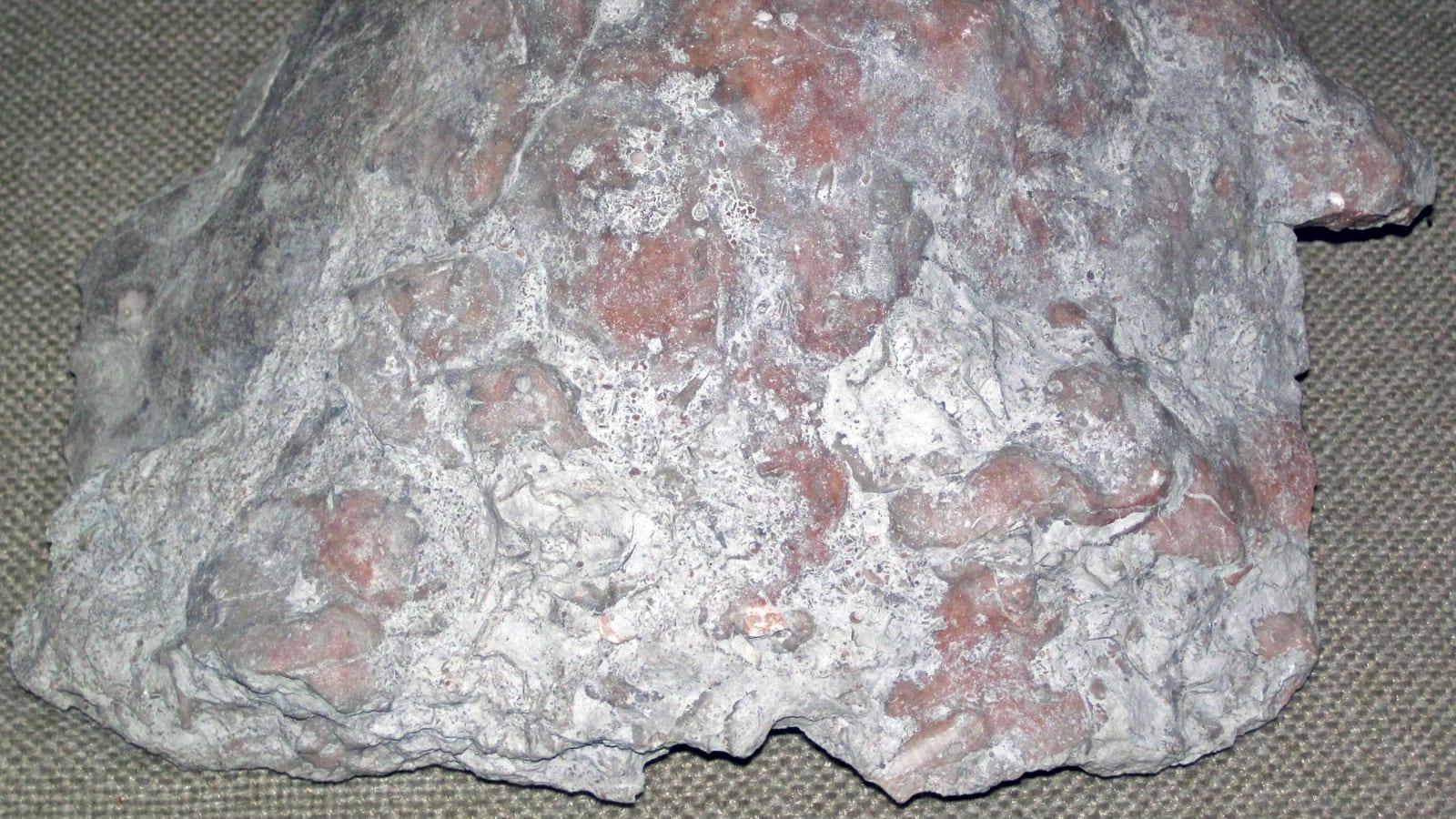
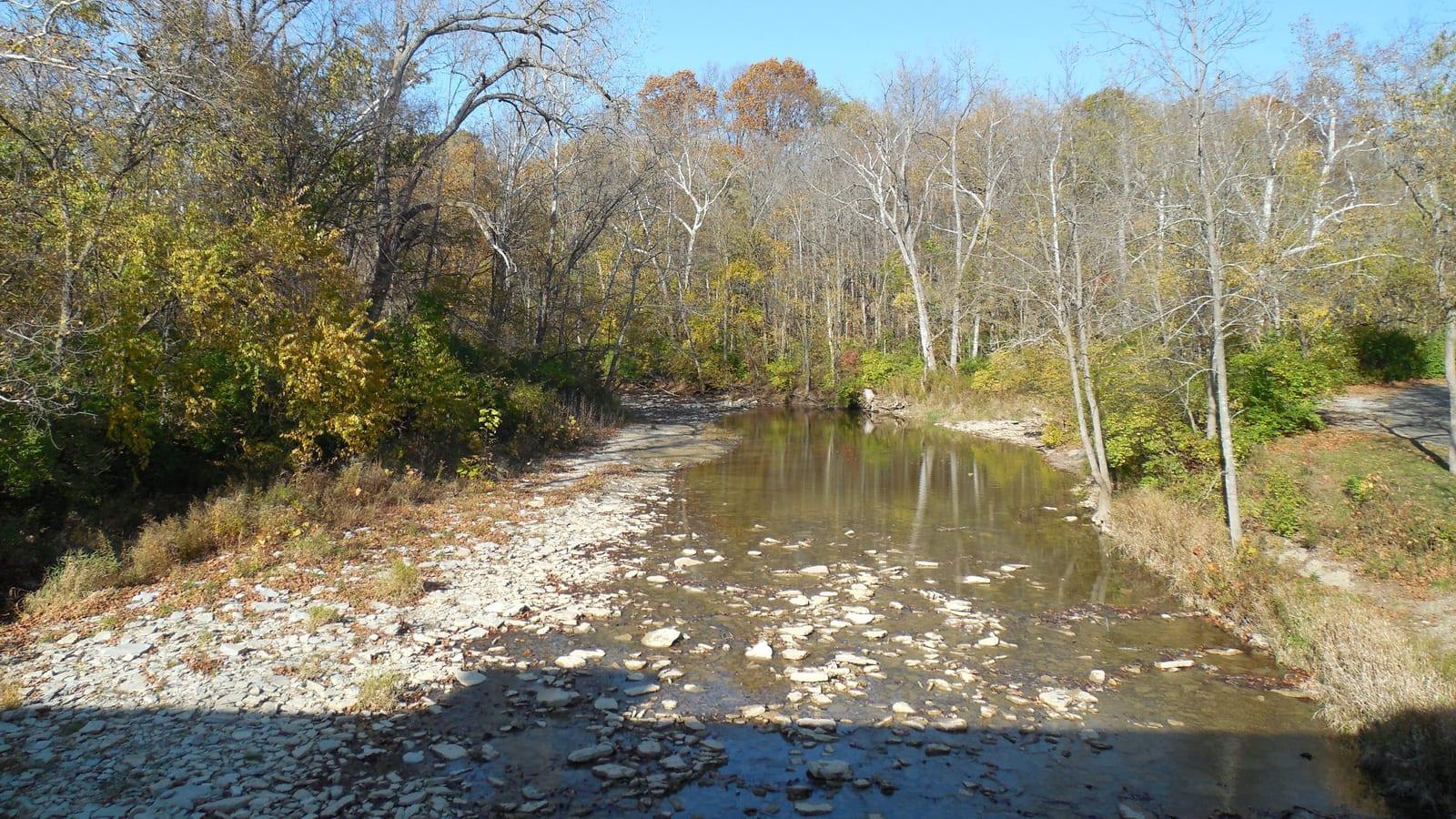
Image: James St. John (CC BY 2.0)
Oakes Quarry Park in Fairborn, Ohio is a 190-acre former limestone quarry where the Early Silurian Brassfield Formation is exposed across the old workings, including two preserved reef structures. Crinoidal limestone and reef fossils are visible along the trails. Collecting is limited to a signed pile.
By Edward Chen · Updated 3 August 2026
Introduction
Oakes Quarry Park is a 190-acre City of Fairborn park in Greene County, between Dayton and Xenia, built on a limestone quarry that worked until the 1990s. Quarrying stripped the soil and younger cover off a wide area of Early Silurian rock, and what it left behind is an unusually complete window into a sea floor of about 440 million years ago.
The rock is the Brassfield Formation, and the park's particular distinction is its reefs. Two reef structures are preserved in the old workings, and much of the surrounding stone is an encrinite, rock made almost entirely of broken crinoid debris. Researchers at Ohio State have described the Silurian crinoid material here as the best in the United States. This is primarily a place to walk and look. Collecting is allowed, but only from one designated pile.
Location and Directions
Oakes Quarry Park is at 1267 East Xenia Drive, Fairborn, near 39.815 degrees north, 83.995 degrees west. Fairborn sits east of Dayton and is easily reached from Interstate 675, with the park on the south-eastern side of town.
There is a parking area and trailhead at the entrance. From there a two-mile perimeter trail loops the site, with a separate horse trail, and paths cross the open quarry floor where the limestone beds lie bare. The park has good interpretive signage along the route, laid out as a self-guided tour of the quarry's geology, so the walk explains itself as you go.
The park is free and open to the public. Facilities are minimal, so bring water. Fairborn has services within a few minutes' drive.
What Fossils You'll Find
The Brassfield Formation here records a shallow tropical sea with reefs growing on its floor, and the fossils reflect that setting.
Crinoids dominate. Much of the rock is an encrinite, a limestone composed overwhelmingly of crinoid debris, and a hand specimen will show thecal plates, individual columnals, and pluricolumnals, the short stacked stem sections that hold together after death. Whole crowns are rare, as they are almost everywhere, but the sheer volume of crinoid material is what makes the site notable.
Corals and stromatoporoids built the reef structures and appear as rounded and layered masses within them. Brachiopods are common in the beds between and around the reefs, and bryozoans occur as branching and encrusting fragments.
The best of the geology is in the reef exposures themselves, where you can see the structure of the reef in cross-section rather than as isolated specimens. Those are preserved features and should be looked at rather than worked. The loose float scattered along the trails is where you can see individual fossils close up without disturbing anything.
 Photo: James St. John, CC BY 2.0, via Wikimedia Commons
Geologic History
The Brassfield Formation was deposited during the Llandovery, the earliest part of the Silurian, roughly 443 to 433 million years ago, shortly after the mass extinction that closed the Ordovician. This part of North America lay in warm tropical water south of the equator, and reef-building organisms re-established themselves on the shallow sea floor as conditions recovered.
Crinoids flourished in that setting in enormous numbers. When they died their skeletons broke into their component plates and columnals, and currents swept and concentrated the debris into thick beds. That is what an encrinite is, and it is the reason a piece of Oakes Quarry limestone can be almost entirely fossil.
The reason the rock is at the surface is the Cincinnati Arch, the broad upward flexure of the crust that raised Ordovician and Silurian strata across southwestern Ohio and stripped younger cover off the crest. The reason it is so cleanly exposed is industrial. Quarrying removed the overburden across 190 acres, and when the operation ceased the City of Fairborn took the ground on and developed it as a geological and educational park rather than filling it in.
Collecting Rules and Regulations
This is mostly a viewing site, and the rule that matters is narrow and specific.
Collect only from the designated pile. The park sets aside a pile of material, marked with a sign, from which visitors may take fossils and keep them. That pile is the collecting ground.
Leave the reefs and the quarry faces alone. The preserved reef structures and the exposed beds are the reason the park exists. They are not to be hammered, prised, or dug.
Stay on the trails and off the faces. The quarry walls are not for climbing.
Because this is a municipal park rather than a state or federal site, the terms can be adjusted locally. Check the current signage on arrival, and if the designated pile is not obvious, contact Fairborn Parks and Recreation before collecting anything.
Safety
The old quarry floor is open, flat in places and broken in others, and the loose limestone shifts underfoot. Wear boots with a firm sole and good grip, and watch your footing on the rubble and on the bare bedding surfaces, which can be slick when wet.
Keep well back from the base of the quarry walls and do not climb them. They are cut faces in layered limestone, blocks work loose along the bedding, and there is no reason to be under them.
The site is exposed with very little shade across the quarry floor, and pale limestone reflects a lot of light and heat. Carry water and sun protection in summer. Standing water collects in parts of an old quarry after rain, so expect wet ground and, in warm weather, mosquitoes. The park is shared with horse riders on the bridle trail, so give horses room and space when you meet them.
Sources
https://www.fairbornoh.gov/ https://beavercreekwetlands.org/location/oakes-quarry-park/ https://woostergeologists.scotblogs.wooster.edu/2015/05/22/woosters-fossils-of-the-week-a-silurian-encrinite-from-southwestern-ohio/ https://ohiodnr.gov/discover-and-learn/safety-conservation/about-odnr/geologic-survey/rocks-fossils-identification/fossil-collecting-in-ohio
Frequently asked questions
- Can you collect fossils at Oakes Quarry Park?
- Only from the pile marked with a sign for that purpose. Fossils taken from the designated pile may be kept. The reef exposures and quarry faces are preserved and are not collecting ground.
- What formation is exposed at Oakes Quarry Park?
- The Brassfield Formation, of Early Silurian (Llandovery) age, roughly 443 to 433 million years old. Much of the rock is an encrinite, made almost entirely of crinoid fragments.
- Is Oakes Quarry Park free to visit?
- Yes. It is a 190-acre City of Fairborn park with free access, a two-mile perimeter hiking trail, a horse trail, and interpretive signs through the old quarry.
_(Brassfield_Formation,_Lower_Silurian;_Fairborn,_Ohio,_USA)_(40451965174).jpg)