Caesar Creek State Park Fossil Hunting Guide
Image: James St. John (CC BY 2.0)
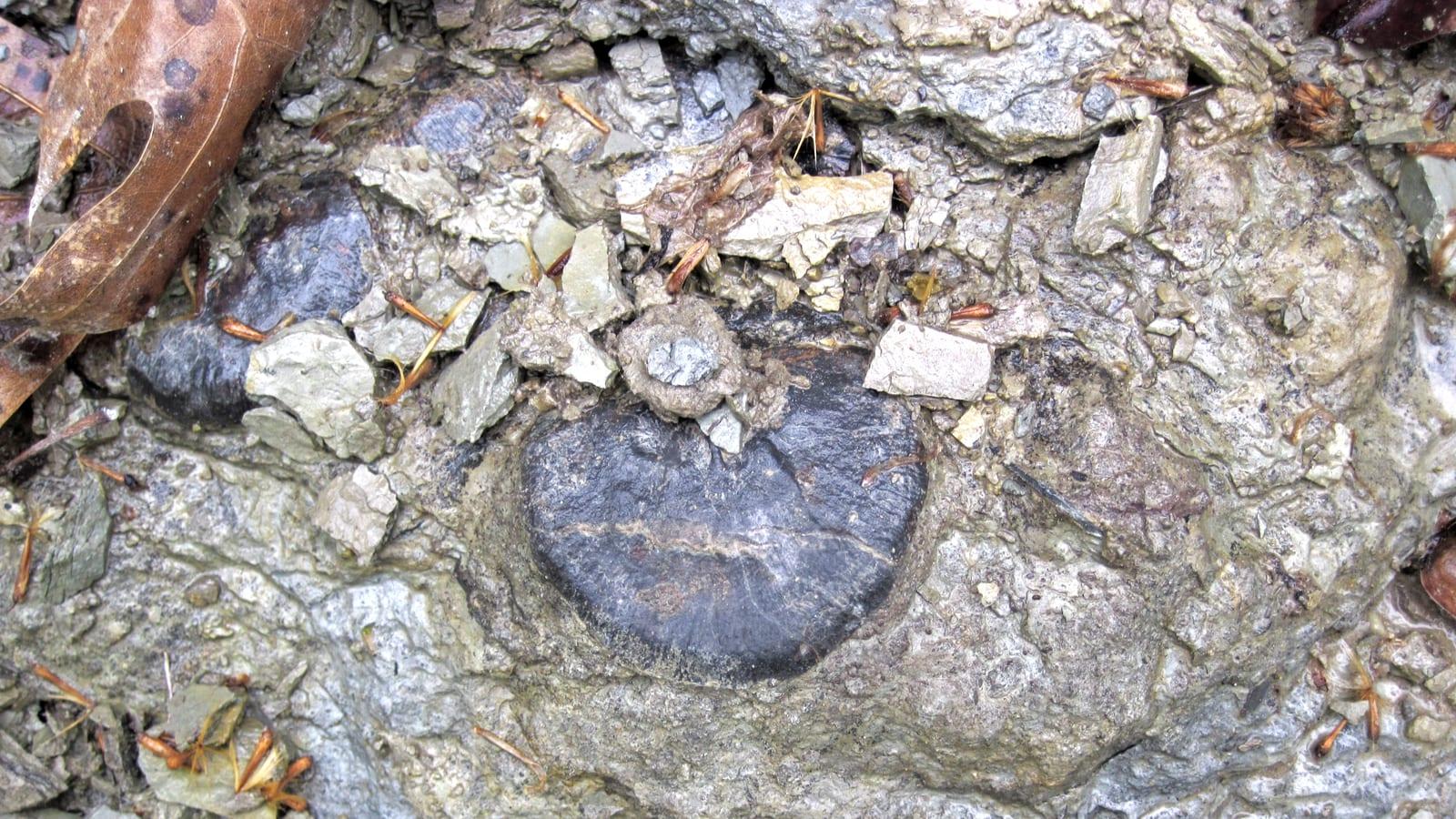
The emergency spillway at Caesar Creek Lake in Ohio cuts through Upper Ordovician limestone and mudstone and is one of the best-known collecting sites in the Cincinnati region. A free permit from the visitor center lets you keep palm-sized invertebrate fossils. No tools are allowed.
By Edward Chen · Updated 26 July 2026
Introduction
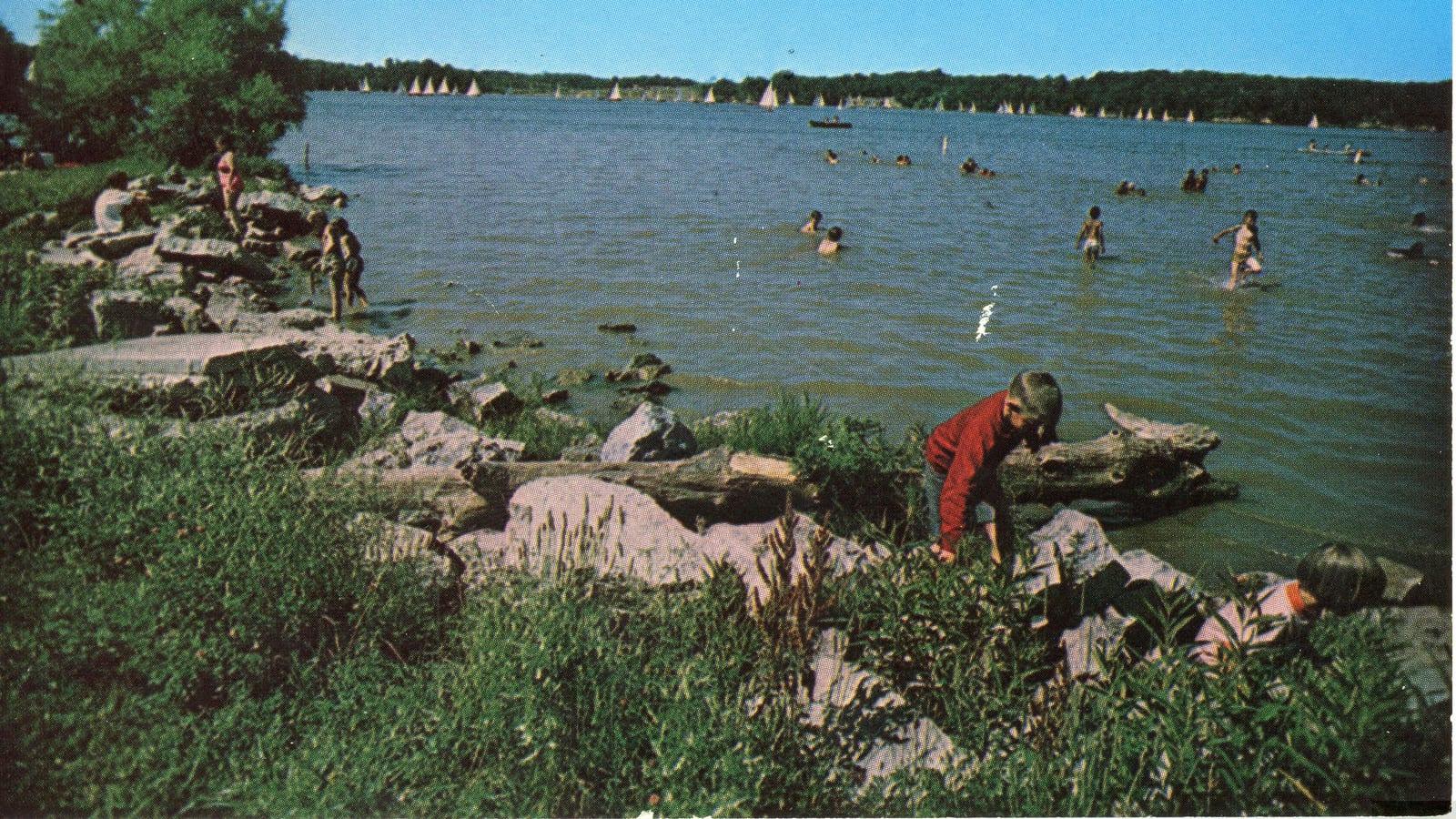
Caesar Creek Lake sits in Warren County in southwestern Ohio, about forty miles northeast of Cincinnati. Its emergency spillway is a wide artificial channel cut down through flat-lying Upper Ordovician limestone and mudstone, and the rock in the channel floor and walls is crowded with the shells of animals that lived in a tropical sea roughly 449 to 445 million years ago.
The spillway is one of the best-known collecting localities in the Cincinnati region, and unusually for a site on federal land, the public is allowed to take fossils home. The US Army Corps of Engineers issues a free permit at the visitor center, and the terms are strict but simple. Collect loose material by hand, take nothing bigger than your palm, and leave your tools in the car. This guide covers how to get the permit, what the rock contains, when to visit, and the rules and hazards that apply.
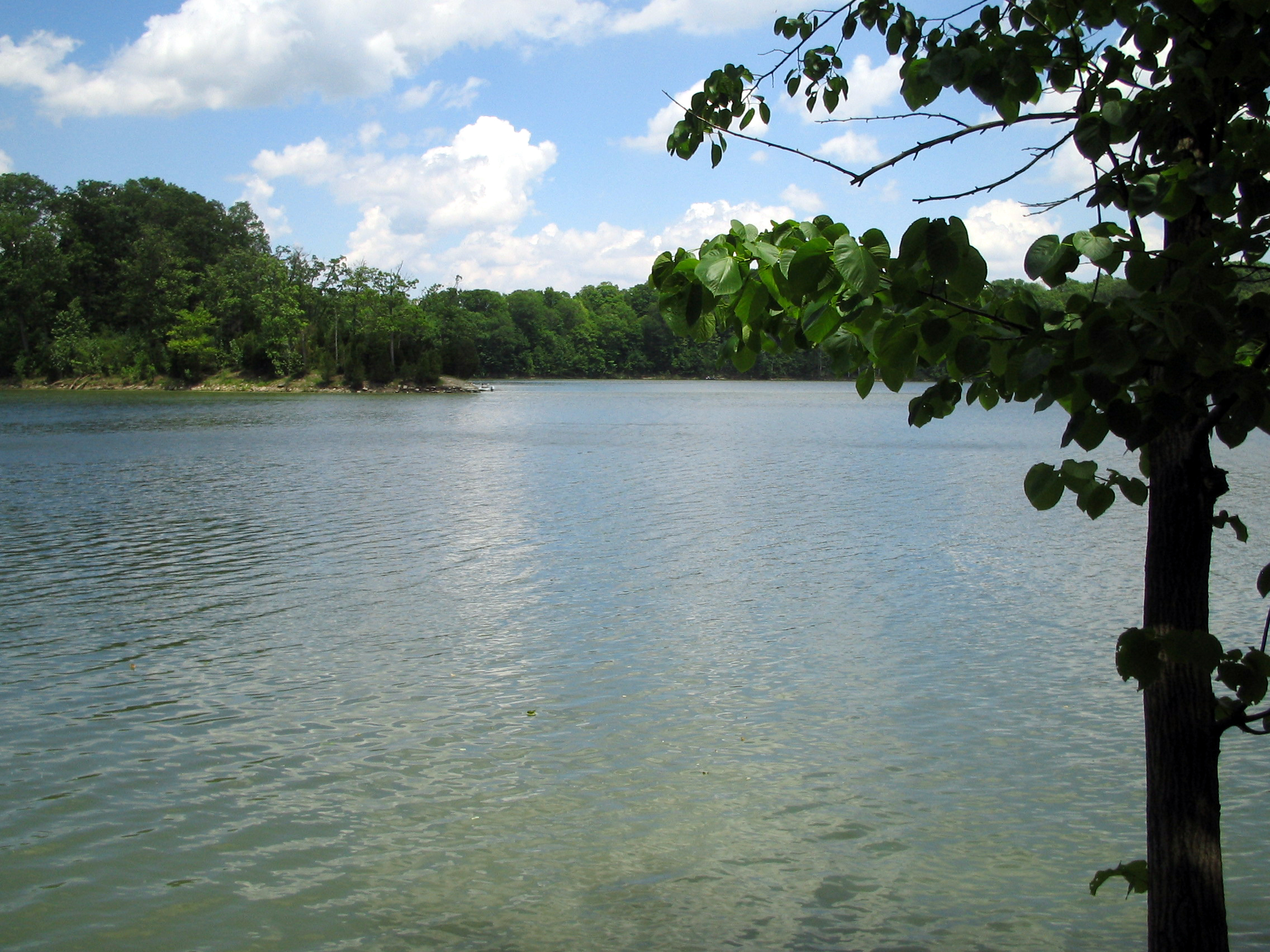 Photo: Kfasimpaur, Public domain, via Wikimedia Commons
Location and Directions
The Caesar Creek Lake Visitor Center is at 4020 North Clarksville Road, Waynesville, near 39.519 degrees north, 84.024 degrees west. Waynesville is the nearest town for food and fuel, and the lake is an easy drive from Interstate 71.
Make the visitor center your first stop, because the permit is issued there and you need it in hand before you pick anything up. Staff will explain the boundaries and the rules when they hand it over. The center keeps its own hours, so check before setting out, particularly on weekdays outside the summer season.
The collecting ground is the lake's emergency spillway, a short drive south of the visitor center. Park in the spillway lot and walk down into the channel. The productive material is the loose rubble on the channel floor and the weathered surfaces along the sides, not the standing rock faces, which are off limits to climb.
What Fossils You'll Find
The spillway rock is a shallow-marine assemblage, and it is dense. On a good day the limestone slabs underfoot are more shell than matrix.
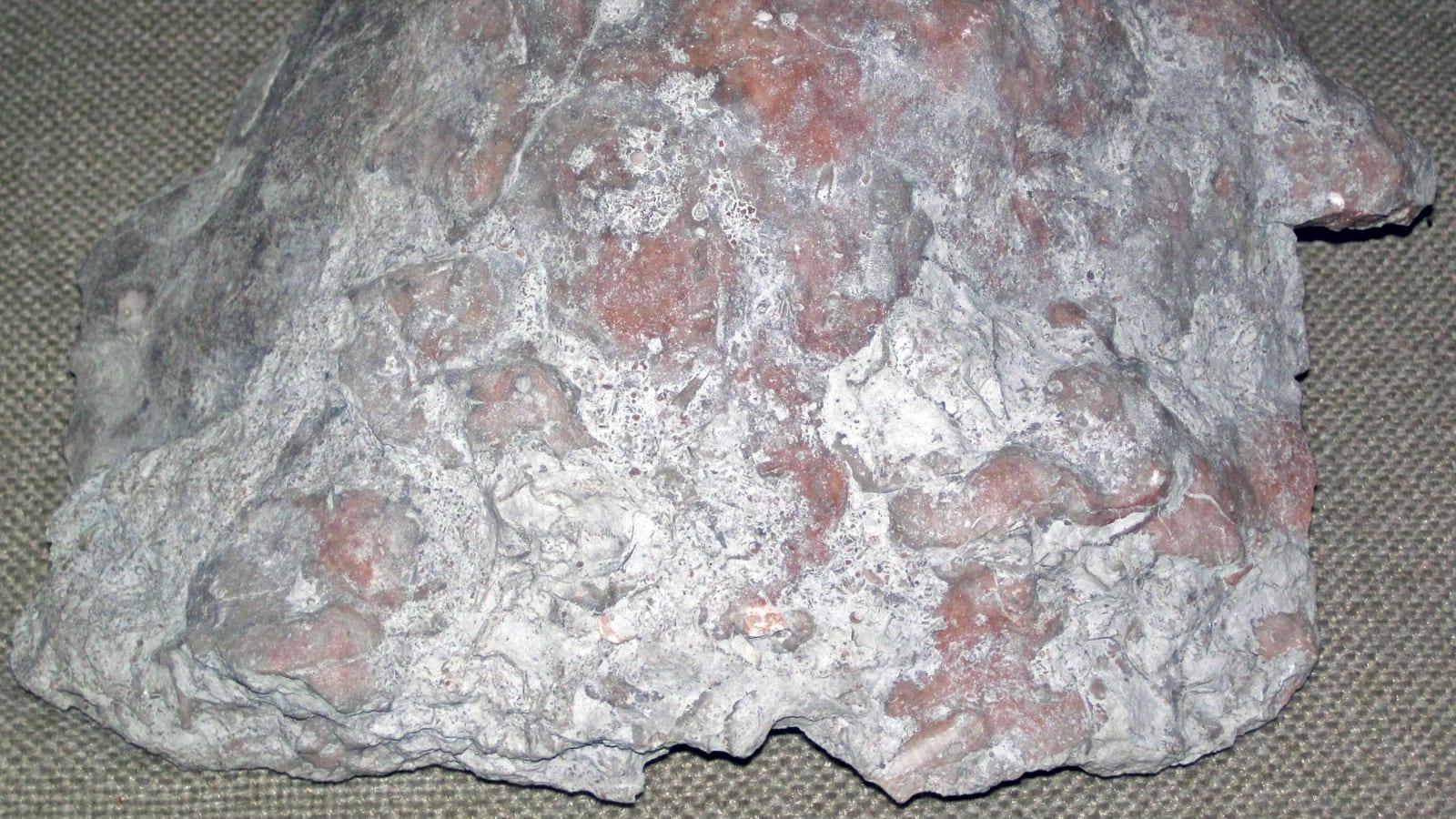
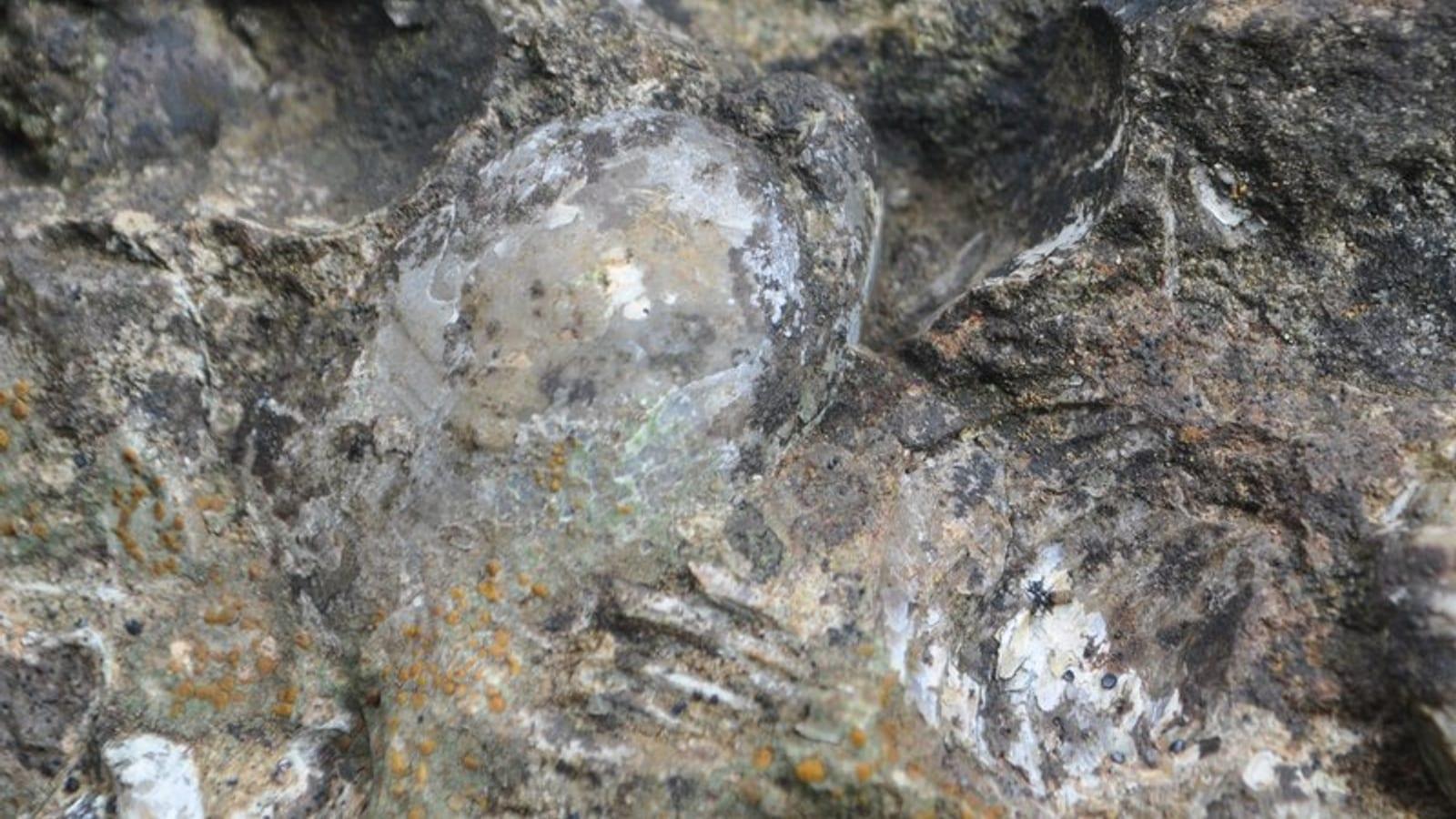
Brachiopods are the most abundant find, and Cincinnetina is one of the genera you will meet repeatedly. Bryozoans run a close second, appearing as twig-like branching fragments and as flat encrusting sheets on other shells. Crinoid remains are usually disarticulated, showing up as short stem sections and loose circular columnals rather than whole heads.
Horn corals occur as small solitary cones. Gastropods and cephalopods turn up less often, the latter as straight or gently curved shell sections. Trilobites are the prize, and Isotelus, Ohio's state fossil, is the one collectors hope for. Complete specimens are uncommon, and many trilobite finds here are small or enrolled, which makes an enrolled individual easy to mistake for a brachiopod until you look closely at the segmentation.
One absence is worth noting. Jawless fish already existed in the Late Ordovician, but no fish fossils have been recorded from this exposure, which reflects the particular sea-floor conditions these beds preserve.
Timing matters more here than at most sites. The winter freeze and thaw cycle breaks up the rock and frees a fresh crop of fossils, so early spring is the best time to visit. By mid to late summer the accessible surface has usually been worked over, and it stays that way until the next freeze.
Geologic History
The spillway cuts through three named Upper Ordovician units, the Waynesville, Liberty, and Whitewater Formations, which sit one above the other in the channel walls. Together they record a warm, shallow tropical sea that covered this part of North America, alternating between quiet mud and shelly carbonate as sea level and storm energy shifted.
The reason these old rocks are at the surface here at all is the Cincinnati Arch, a broad upward flexure of the crust that raised Ordovician strata across southwestern Ohio, southeastern Indiana, and northern Kentucky while younger cover was stripped away. That is why the whole Cincinnati region is known for rock of this age.
The exposure itself is recent and entirely artificial. The Army Corps of Engineers completed the Caesar Creek dam in 1978 for flood control, and excavating the emergency spillway cut a fresh channel through the fossil-bearing beds. The result is a large, clean, continuously weathering section that would otherwise be buried under soil and forest.
Collecting Rules and Regulations
Collecting is permitted, it is free, and it runs entirely on the Army Corps permit issued at the visitor center. The rules attached to that permit are specific, and rangers do enforce them.
No tools. Hammers, chisels, picks, and shovels are all prohibited, and you may not break rock. Collecting is surface collecting by hand, working the loose material that weathering has already freed.
Nothing larger than your palm. Any rock or fossil bigger than the palm of your hand stays where it is.
The spillway only. The permit covers the designated spillway area. Fossils lying outside it may not be taken, and climbing on the spillway cliffs is not allowed.
Personal use only. Fossils collected here may not be sold or used commercially.
If you find something unusual, particularly a large or complete trilobite, show it to staff at the visitor center rather than pocketing it. Scientifically significant material is worth recording.
Safety
The spillway is open, exposed, and mostly flat, so the hazards are modest but real. The channel floor is uneven rubble and the loose slabs shift underfoot, so wear boots with a firm sole and good grip and watch your footing rather than your feet.
Keep away from the base of the spillway walls. The rock is layered and weathering, blocks work loose, and the walls are closed to climbing for that reason. Because tools are prohibited, the eye-injury risk that comes with hammering does not apply here, which is one hazard you can leave behind.
There is very little shade in the channel. Carry water and sun protection in summer, and expect the concrete and rock to hold heat. Spring visits, which are the most productive, often mean cold water and slick surfaces underfoot after rain or snowmelt, so dress for wet feet. Supervise children closely on the uneven ground, and check the visitor center for any closure before you go, since the spillway is an active flood-control structure and access can be restricted when water is being managed.
Sources
https://www.lrl.usace.army.mil/Missions/Civil-Works/Recreation/Lakes/Caesar-Creek-Lake/Fossil-Collecting/ https://parks.ohiodnr.gov/caesarcreek https://ohiodnr.gov/discover-and-learn/safety-conservation/about-odnr/geologic-survey/rocks-fossils-identification/fossil-collecting-in-ohio https://www.fossilguy.com/sites/caesar-creek/index.htm
Frequently asked questions
- Do you need a permit to collect fossils at Caesar Creek?
- Yes, and it is free. The permit is issued by the US Army Corps of Engineers at the Caesar Creek Lake Visitor Center, 4020 North Clarksville Road. It covers the emergency spillway only.
- What fossils can you find at Caesar Creek State Park?
- The Upper Ordovician rock in the spillway yields brachiopods, bryozoans, crinoid fragments, horn corals, gastropods, cephalopods, and trilobites, roughly 449 to 445 million years old.
- Can you use tools to collect at Caesar Creek?
- No. The permit allows surface collecting by hand only. Tools, digging, and breaking rock are all prohibited, and nothing larger than the palm of your hand may be removed.