Hueston Woods State Park Fossil Hunting Guide
Image: Dougtone (CC BY-SA 2.0)
Hueston Woods State Park in Preble County, Ohio has Upper Ordovician Richmondian rock in its creek beds, yielding brachiopods, bivalves, bryozoans, horn corals, crinoids, and trilobites. Collecting is free and needs no permit. The nature centre staff will point you to the productive stretches.
By Edward Chen · Updated 26 July 2026
Introduction
Hueston Woods State Park straddles Preble and Butler Counties in south-western Ohio, near College Corner on the Indiana line. It is best known for its old-growth beech and maple forest, a rare survival of the woodland that once covered this region, and for Acton Lake at its centre. For collectors it matters for something else: the creeks that feed and drain the lake cut down into Upper Ordovician rock, and their beds are scattered with fossils.
This is a gentler proposition than a spillway or a quarry. The collecting is done by walking creek beds and turning over slabs in and beside shallow water, which makes it a good site for families. Collecting is free and needs no permit, and the park's nature centre is staffed by people who will tell you where the rock has been producing.
Location and Directions
The park office is at 6301 Park Office Road, College Corner, near 39.575 degrees north, 84.750 degrees west. The park sits north of Oxford and is signed from State Route 732.
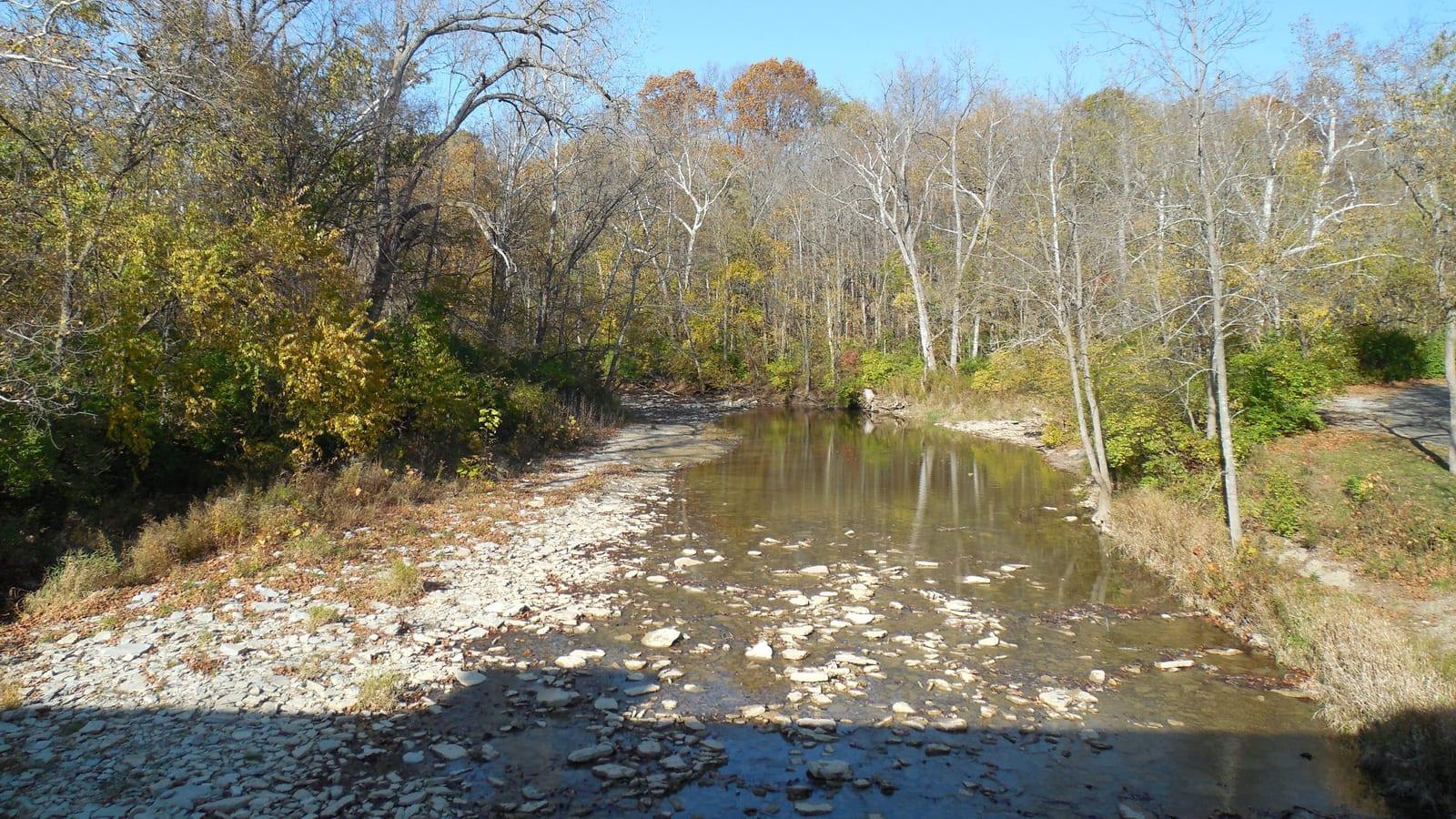
Three areas are the usual starting points. The Four Mile Creek picnic area gives direct access to the creek bed, the ground near the dam exposes rock where the water has cut down, and the covered bridge area is the third. All three are within the park and have parking nearby.
Stop at the nature centre first if it is open. Ohio DNR guidance asks visitors to check with a naturalist before collecting, and the practical benefit is that staff know which stretches have been productive recently, which changes with the weather.
The park has a lodge, cabins, a campground, a beach, a golf course, and a network of trails, so this is an easy site to fold into a longer visit. College Corner and Oxford have services.
Photo: Smithsonian National Museum of Natural History, CC0, via Smithsonian Open Access
What Fossils You'll Find
The rock exposed in the creek beds is Richmondian, the upper part of the Cincinnatian sequence, and it carries the standard south-western Ohio fauna in good numbers.
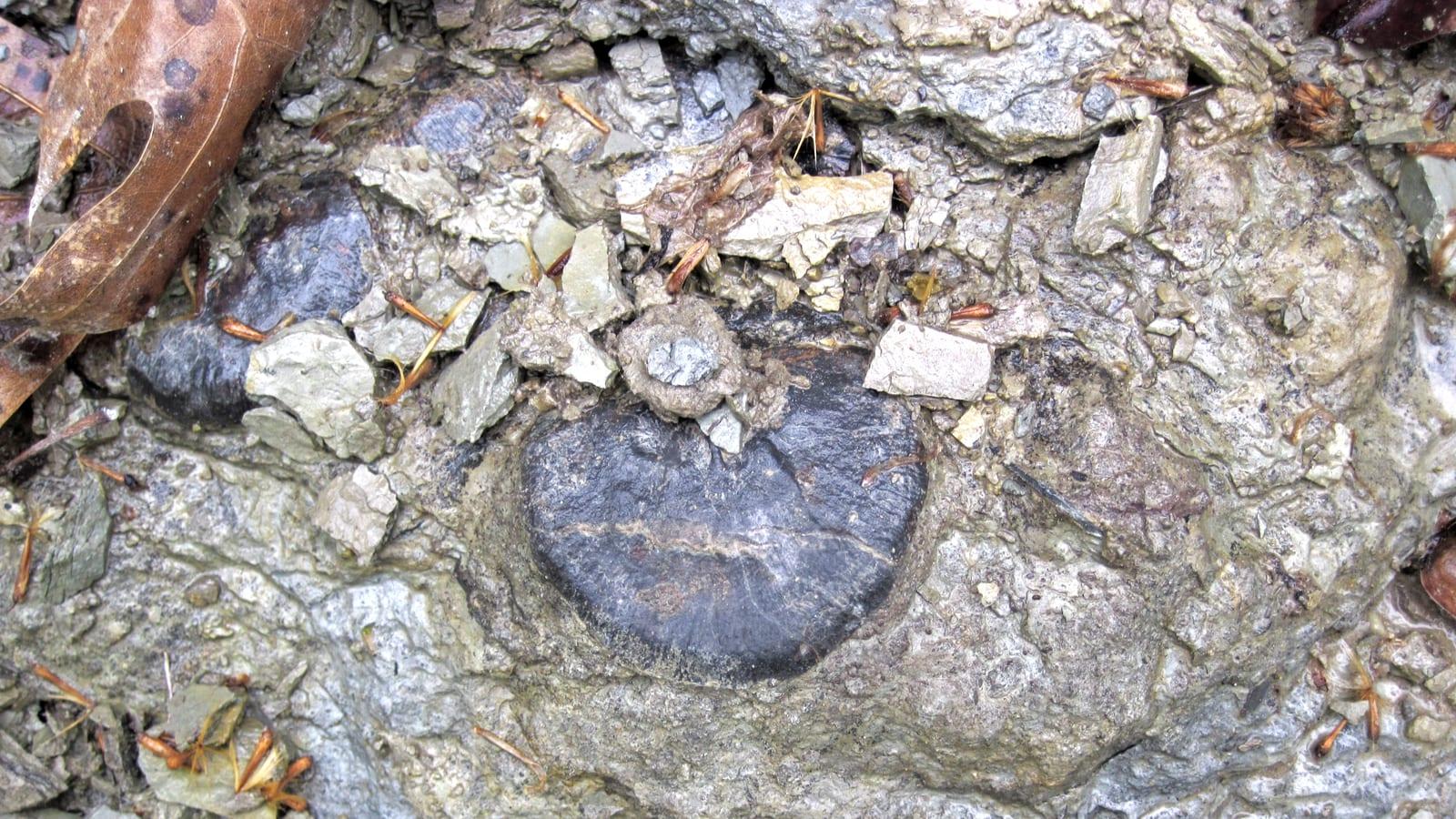
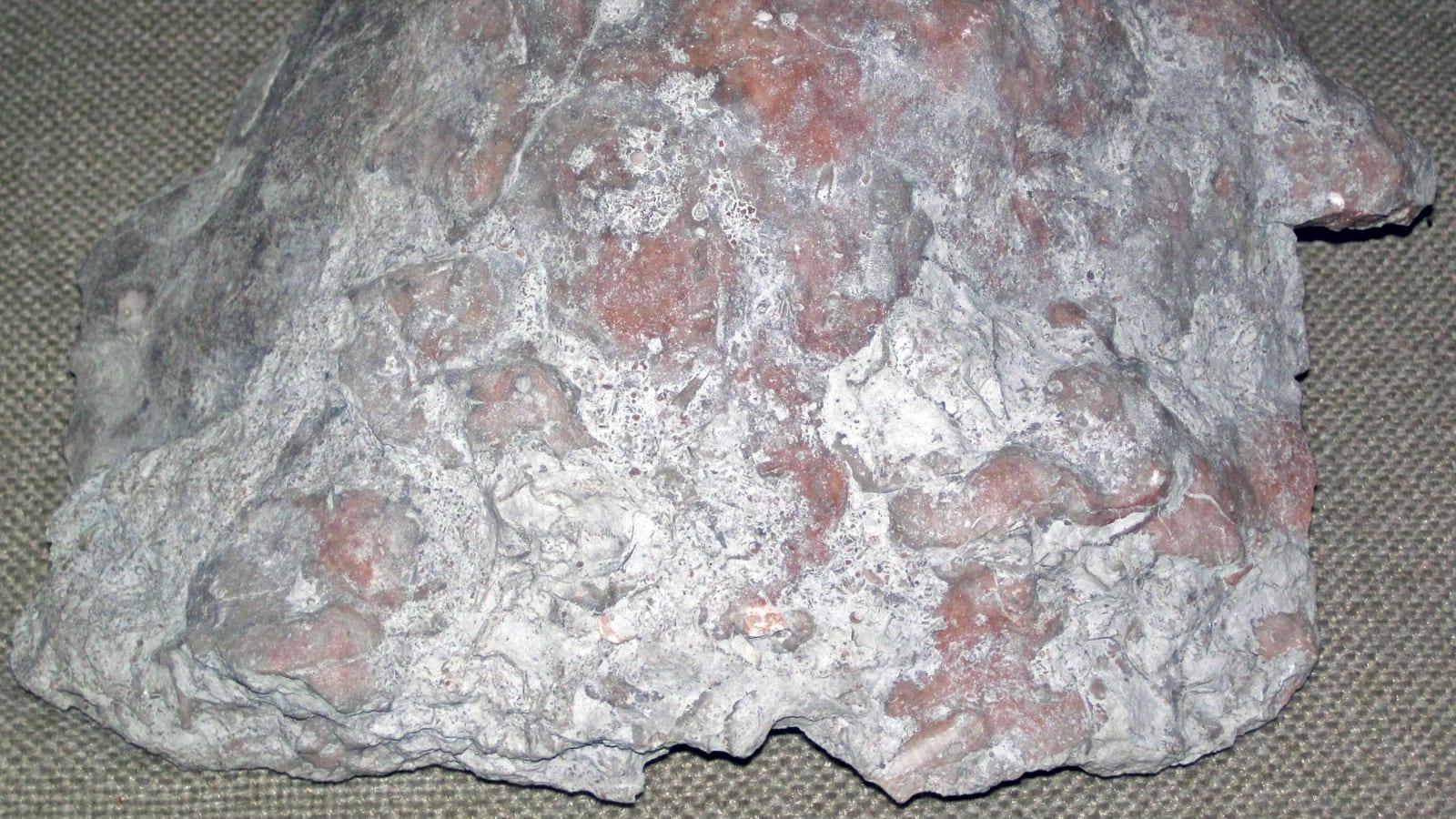
Brachiopods are the most abundant find. Bivalves occur alongside them, which is worth noting because bivalves are less prominent at some of the nearby sites. Bryozoans are common as branching fragments and encrusting sheets, and horn corals turn up as small solitary cones.
Crinoid material is mostly disarticulated stem sections and columnals. Trilobites are present and are the find worth hoping for, though as everywhere in this rock, complete specimens are uncommon.
Creek beds have a natural advantage over a static exposure. Running water sorts and cleans the material continuously, washing fine sediment off fossils and concentrating durable pieces in gravel and along the inside of bends. That means the site restocks itself after every high-water event, and the best collecting follows heavy rain once the level drops enough to walk the bed safely.
Photo: Smithsonian National Museum of Natural History, CC0, via Smithsonian Open Access
Geologic History
The rock belongs to the Richmondian stage of the Late Ordovician, roughly 445 to 443 million years ago, and correlates with the Whitewater and Liberty Formations exposed elsewhere in the region. At that time this part of North America lay south of the equator beneath a warm, shallow sea, and the alternating limestone and shale beds record shifting depth and storm energy on that sea floor.
These beds are at the surface because of the Cincinnati Arch, a broad upward flexure that lifted Ordovician strata across south-western Ohio, south-eastern Indiana, and northern Kentucky. Erosion stripped the younger cover from the crest, leaving Ordovician rock exposed across the region, which is why Hueston Woods, Cowan Lake, Caesar Creek, and Trammel all work broadly the same sequence.
The park's human history is unusually well documented for a fossil site. Matthew Hueston began buying this land in 1797 after serving under General Anthony Wayne, and his descendants held it into the 1930s. Their decision not to clear the woodland is why the old-growth forest survives. The state acquired the land in 1941 and developed it as a park.
Photo: Smithsonian National Museum of Natural History, CC0, via Smithsonian Open Access
Collecting Rules and Regulations
Collecting is allowed at Hueston Woods, it is free, and no permit is required. Visitors keep what they find, and the fossils are abundant enough that open collecting for personal use is the park's settled position.
Check with a naturalist first. This is the guidance Ohio DNR gives, and it is the one procedural step to observe. It also serves you, since staff can direct you to currently productive ground and away from anywhere temporarily closed.
Collect for personal use. Take a reasonable quantity for your own collection rather than clearing a productive stretch, and do not collect to sell.
Work the creek beds. The loose material in and beside the water is the collecting ground. Do not dig into the banks, which accelerates erosion, and leave the old-growth forest areas and any posted nature preserve ground alone entirely.
Ohio state park regulations apply throughout, and the nature preserve sections of the park have stricter protection than the recreational areas.
Safety
This is one of the lower-risk sites in the region, but creek work has its own hazards. Wet limestone and shale are slippery, and algae on submerged slabs makes them slicker still, so wear boots with grip that you do not mind soaking and move deliberately. Water levels rise fast after heavy rain, and a creek that was ankle-deep in the morning can be knee-deep and pushing hard by afternoon, so do not work the bed during or immediately after a storm.
Watch for the ordinary hazards of Ohio woodland. Poison ivy is common along creek banks, ticks are active in the warmer months, and snakes occur, though nothing here is aggressive. Long trousers are sensible for all three reasons.
The creek banks are undercut in places and can collapse if you stand on the lip, so approach the water from a shallow bank rather than the edge of a cut. Supervise children in and near the water, and keep an eye on the sky in summer, when thunderstorms build quickly and open water is no place to be.
Sources
https://ohiodnr.gov/go-and-do/plan-a-visit/find-a-property/hueston-woods-state-park https://ohiodnr.gov/discover-and-learn/safety-conservation/about-odnr/geologic-survey/rocks-fossils-identification/fossil-collecting-in-ohio https://www.ordovicianatlas.org/fossil-collecting/
Frequently asked questions
- Do you need a permit to collect fossils at Hueston Woods?
- No. Collecting is open for personal use and you keep what you find. Ohio DNR does ask visitors to check with a park naturalist first, which is worth doing anyway since staff will point you to the productive stretches.
- Where do you look for fossils at Hueston Woods?
- The creek beds. The Four Mile Creek picnic area, the ground near the dam, and the covered bridge area are the three usual starting points.
- What fossils are found at Hueston Woods State Park?
- Upper Ordovician Richmondian material: brachiopods, bivalves, bryozoans, horn corals, crinoid fragments, and trilobites, roughly 445 to 443 million years old.