Trammel Fossil Park Fossil Hunting Guide
Trammel Fossil Park is a free ten-acre city park in Sharonville, Ohio, where a graded hillside exposes four Upper Ordovician formations. Brachiopods and bryozoans are abundant, crinoids and trilobites less so. Collecting is allowed with hand tools, and there is no permit and no fee.
By Edward Chen · Updated 26 July 2026
Introduction
Trammel Fossil Park is a ten-acre city park in Sharonville, in Hamilton County on the northern edge of the Cincinnati metropolitan area. The park is built around a graded hillside where cutting for industrial development exposed a stack of Upper Ordovician marine rock, and the slope is now a public collecting ground with interpretive signage.
What makes Trammel useful is that the hillside shows four named formations in sequence rather than a single bed. From the bottom up they are the Fairview, the Miamitown Shale, the Bellevue, and the Corryville, and the park labels them, so you can walk up through several million years of sea floor and see how the fauna changes as you climb. Collecting is free, needs no permit, and the fossils are abundant enough that most visitors leave with something.
Location and Directions
Trammel Fossil Park sits in Sharonville, Hamilton County, near 39.297 degrees north, 84.405 degrees west. Sharonville is just off Interstate 75 north of Cincinnati, and the park has its own parking area with the collecting hillside rising directly behind it.
From the parking area a path leads up onto the terraced slope. The terraces are the collecting ground, and the formation labels along them tell you which unit you are standing on. A hiking trail continues to the top of the hill, where there is a view south toward Cincinnati.
The park is open year-round and free. Facilities are modest and seasonal: picnic tables and a drinking fountain, with portable toilets and a hand-washing station available from April through November. Sharonville has food, fuel, and supplies within a few minutes' drive.
What Fossils You'll Find
The hillside is Cincinnatian rock, the Upper Ordovician sequence that made this region a reference area for geologists worldwide. More than 1,200 fossil species have been described from the Ordovician deposits of southwestern Ohio as a whole, and a good share of the common ones turn up here.
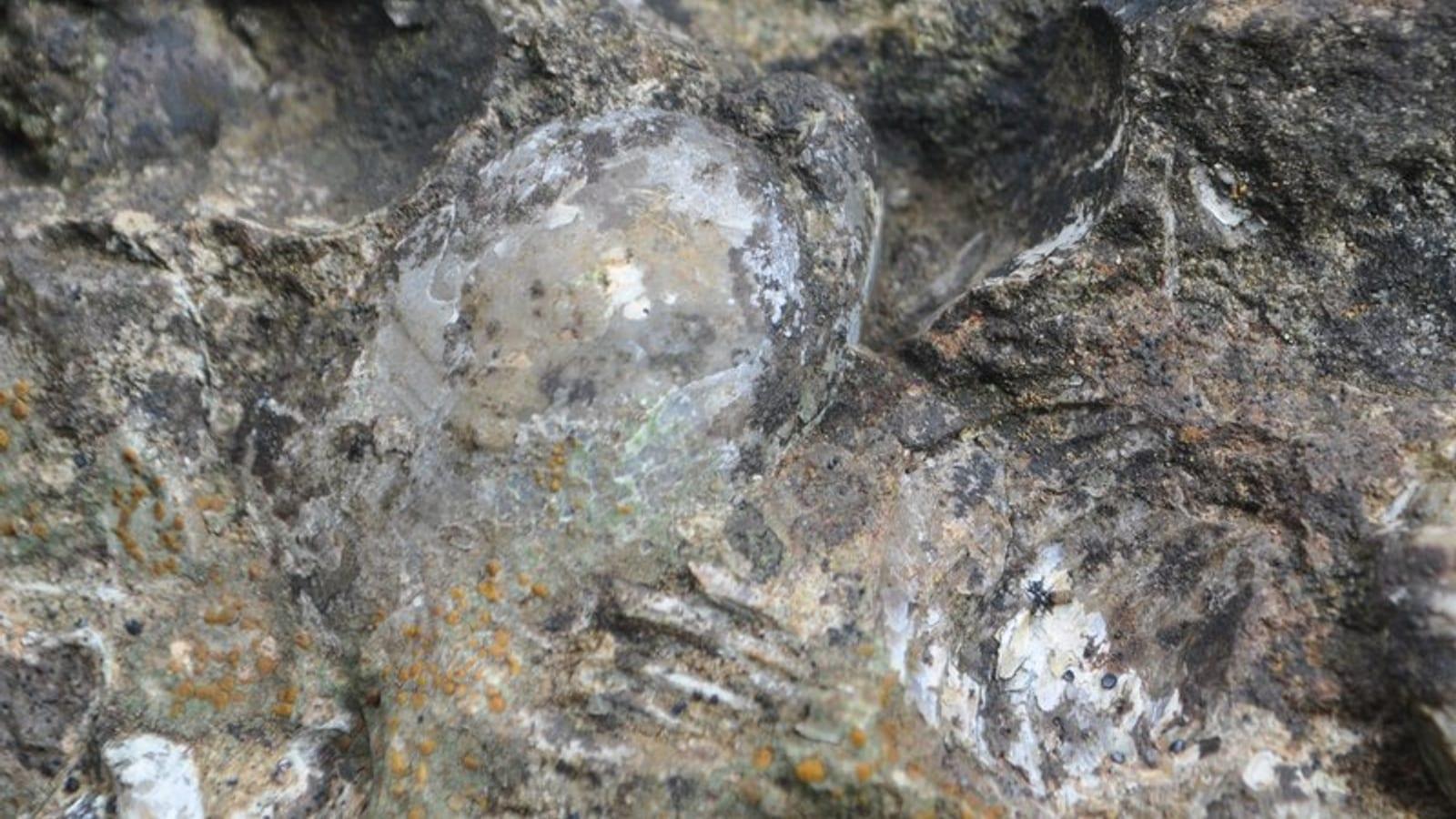
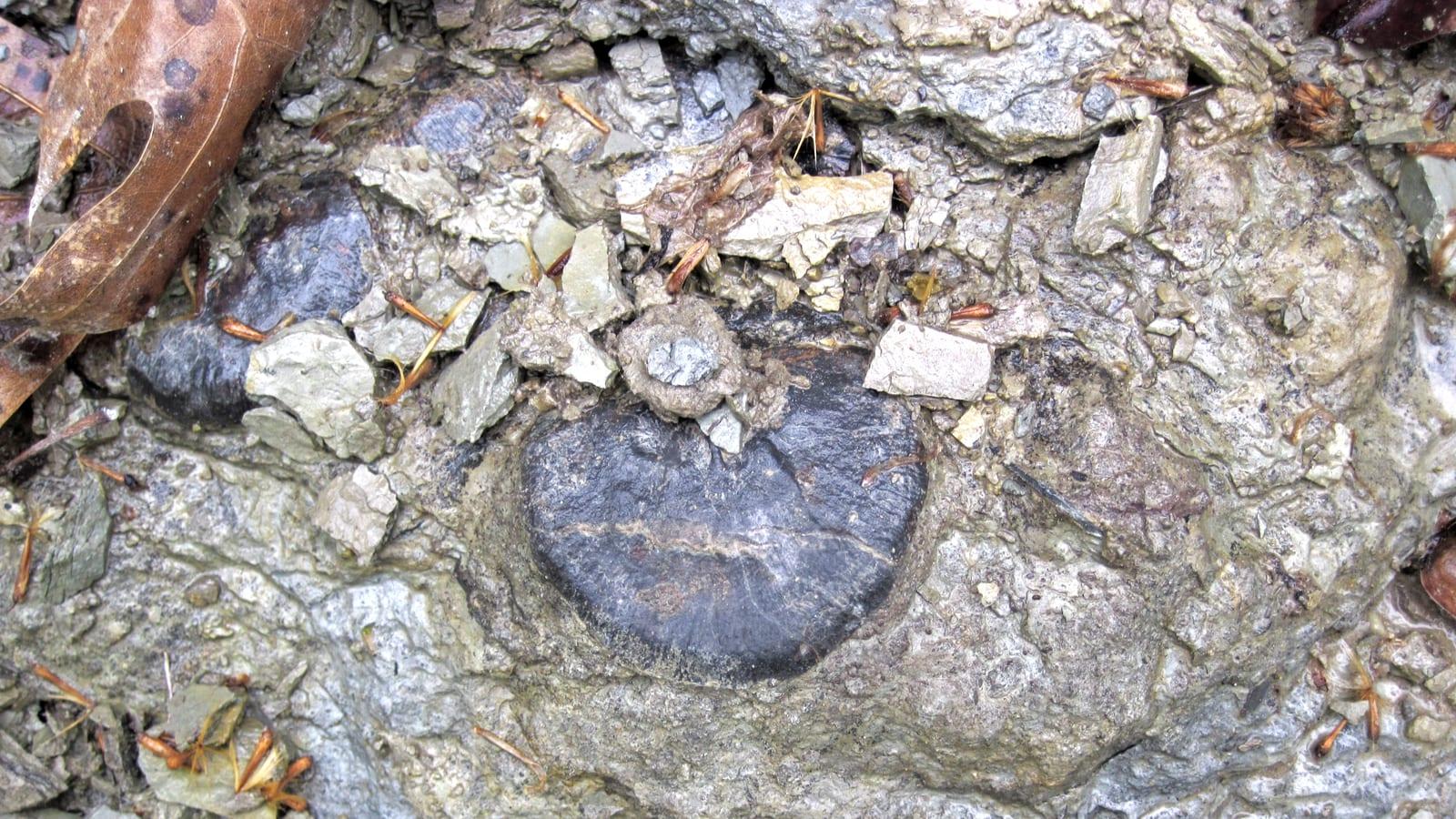
Brachiopods and bryozoans are the abundant finds, and on the shale terraces they can make up most of the loose material. Bryozoans appear both as branching twig-like fragments and as thin sheets encrusting other shells. Crinoid remains are less common and usually disarticulated, showing up as stem sections and individual columnals. Trilobites occur but are the scarce prize, and complete specimens are unusual. Corals round out the assemblage as small solitary forms.
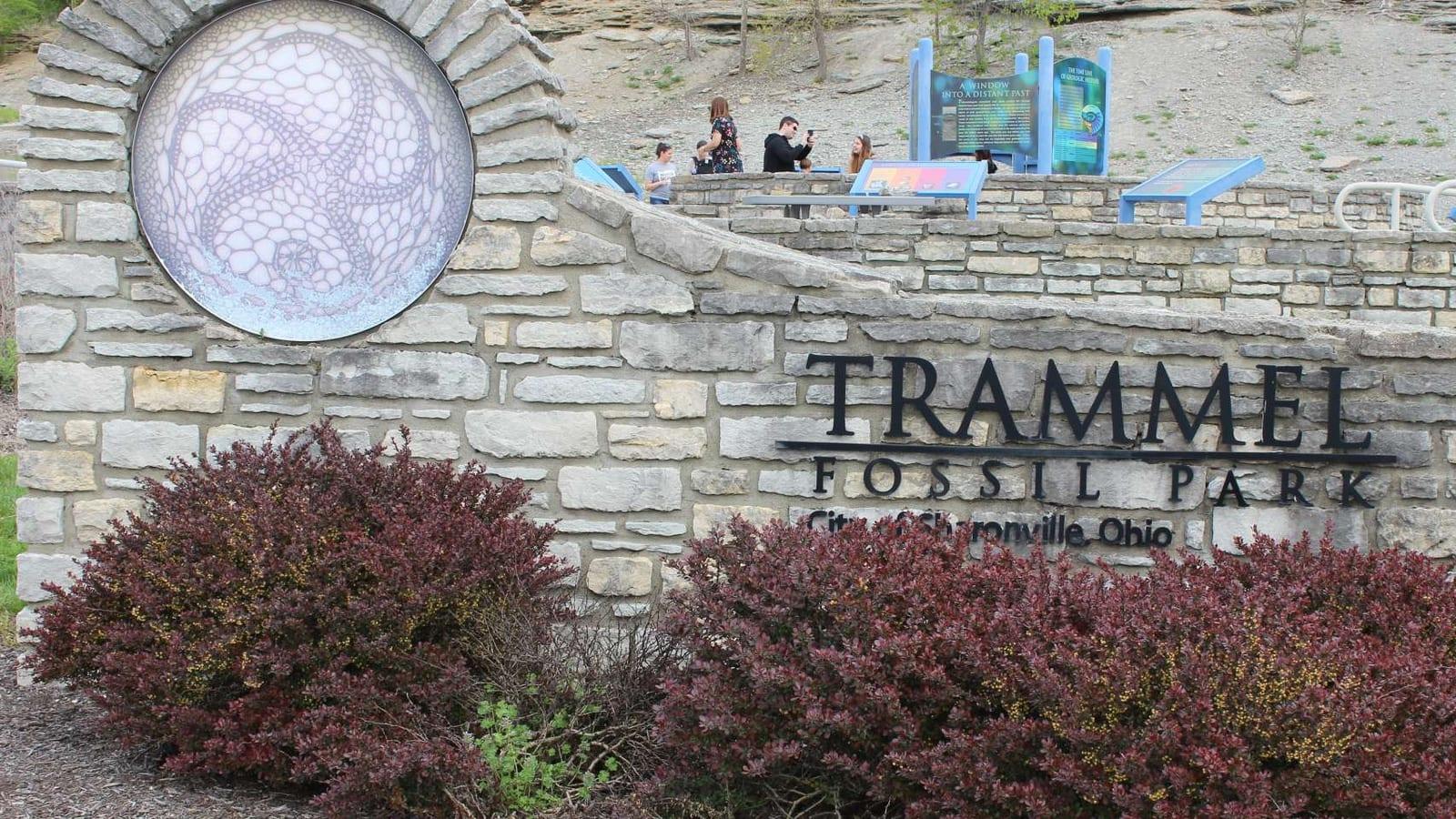
The park has a particular claim in the echinoderms. Before the land became a park it was part of an industrial site, and a layer of edrioasteroids was found and excavated there by staff from the University of Cincinnati working alongside amateur collectors from the Dry Dredgers. The edrioasteroid is Cincinnati's official city fossil, and the park's educational kiosk is built in its shape.
Rain is the thing to watch. Fresh material washes out of the slope after a downpour, so the days following wet weather are consistently the best, and a picked-over terrace restocks itself after a storm.
Geologic History
In the Late Ordovician, roughly 450 to 440 million years ago, this part of North America lay south of the equator beneath a shallow tropical sea. The four formations at Trammel record that sea shifting between quiet muddy conditions and higher-energy shelly ones, which is why the shale beds and the limestone beds carry noticeably different proportions of the same animals.
These rocks sit at the surface today because of the Cincinnati Arch, a broad upward warp in the crust that lifted Ordovician strata across southwestern Ohio, southeastern Indiana, and northern Kentucky. Younger rock was stripped off the crest of the arch by erosion, leaving Ordovician beds exposed across the region. The Cincinnatian Series takes its name from this area, and sections here are used as a reference for rock of this age.
Collecting Rules and Regulations
Collecting is allowed, free, and needs no permit. The park's rules are short.
Hand tools only. Small hand tools are permitted, which distinguishes Trammel from the no-tools rule at nearby Caesar Creek.
Do not dig into the hillside. Excavating the slope is prohibited. Work the loose material on and below the terraces, which is where weathering has already done the job for you.
Take a representative sample. The park asks visitors to collect a reasonable amount and leave specimens for the people who come next, rather than clearing a productive spot.
Stay off any areas the park has fenced or signed as closed, and follow the current user guide published by the City of Sharonville, since a municipal park can change its terms.
Safety
The hazards here are the hillside itself. The terraces are loose shale and rubble on a slope, and the footing shifts, so wear boots with a firm sole and good grip and take the climb steadily. After rain the shale turns slick and the clay beds become greasy, which is precisely when collecting is best, so expect to trade footing for finds.
Since hand tools are permitted, eye protection is worth wearing if you intend to strike anything. Loose rock can also be dislodged by people above you, so avoid working directly below other visitors on the terraces.
The slope is open and exposed with little shade, so carry water and sun protection in summer. Supervise children closely on the terraces and near the upper edges. The park sits in a built-up suburban area with services close at hand, which makes it one of the lower-risk sites in the region.
Sources
https://www.sharonville.org/Facilities/Facility/Details/Trammel-Fossil-Park-13 https://www.sharonville.org/DocumentCenter/View/2976/Trammel-Park-User-Guide https://www.gosoin.com/ohio-valley-fossil-trail/trammel-fossil-park/ https://ohiodnr.gov/discover-and-learn/safety-conservation/about-odnr/geologic-survey/rocks-fossils-identification/fossil-collecting-in-ohio
Frequently asked questions
- Do you need a permit to collect at Trammel Fossil Park?
- No. Trammel is a free City of Sharonville park with no permit requirement and no admission fee, and visitors may keep what they find.
- Can you use tools at Trammel Fossil Park?
- Hand tools are permitted, but digging into the hillside is not. The intent is that you work loose material rather than excavate the exposure.
- What fossils are found at Trammel Fossil Park?
- Brachiopods and bryozoans are abundant, with crinoid fragments and trilobites less common. The rock is Upper Ordovician, roughly 450 to 440 million years old.