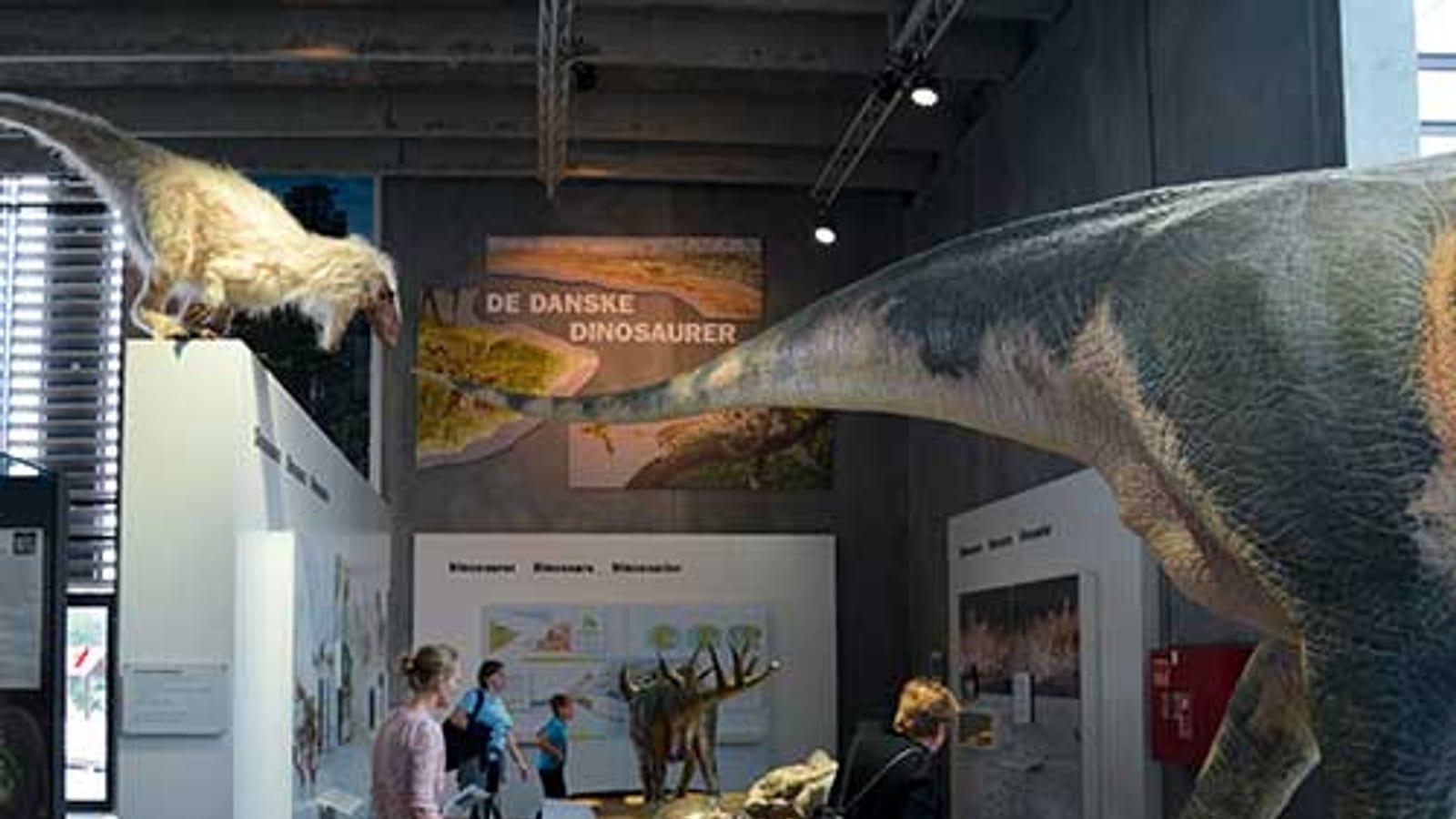
Robbedale Gravel Pit Fossil Hunting Guide
Image: Thomas Zulu (CC BY 3.0)
Robbedale is the only place in Denmark where you can find dinosaur teeth, and you can only do it on a guided tour with NaturBornholm.
By Edward Chen · Updated 1 August 2026
Introduction
Robbedale is the only place in Denmark where you can find dinosaur teeth, and you can only do it on a guided tour with NaturBornholm. The pit sits in farmland a short drive south of the small town of Aakirkeby on the Baltic island of Bornholm, and it cuts into a thin wedge of Early Cretaceous river sands that escaped the chalk-dominated story of the rest of Denmark. The fossils are tiny, mostly teeth between 5 and 20 millimetres long, and they come out of sieved gravel rather than out of the cliff face. Even so, finds are real and consistent: most tour groups recover crocodile and fish teeth, and dinosaur teeth turn up on a meaningful share of visits. Theropod and ornithopod teeth, turtle shell scraps, and rare mammal teeth have all come out of the same screens. This guide covers how to reach Bornholm and the pit, what the gravel actually yields, the river-and-lagoon environment that produced it, and the rules that govern the guided-only access.
Location and Directions
The pit sits south of Aakirkeby in central Bornholm. There is no public address for the workings themselves because access is only on guided NaturBornholm tours that depart from the museum.
The starting point is NaturBornholm, Grønningen 30, 3720 Aakirkeby, Denmark. From mainland Denmark, you reach Bornholm by ferry or air. Bornholmslinjen runs the fast ferry from Køge harbour south of Copenhagen to Rønne in around six and a half hours, with two or three sailings a day depending on season. Direct flights from Copenhagen to Bornholm Airport take about 35 minutes and are run by DAT. From Rønne, drive southeast on Route 38 for roughly 20 kilometres to Aakirkeby. NaturBornholm is signed from the main road and has a free car park.
You will not drive yourself to the pit. Tour participants meet at the museum, watch a short briefing on what the gravel contains, and then travel together by minibus or car convoy the short distance to the working aggregate pit. The pit operator restricts entry to organised groups for safety reasons, and the location of the active screening face changes from year to year as quarrying advances.
Tours run seasonally, normally from late spring through early autumn, and they require advance booking through NaturBornholm. Bring closed shoes, sun protection, and water. The working area has no shelter and no facilities.
What Fossils You'll Find
Everything found at Robbedale is small. The fossils are concentrated in lag gravels deposited at the base of Early Cretaceous river channels, and the screening process at the pit recovers exactly what the rivers themselves were able to roll along the bed: durable teeth, scales, and small bone fragments. Anything fragile was destroyed long before burial.
- Theropod dinosaur teeth. Small, recurved, blade-like teeth from carnivorous dinosaurs, typically 5 to 15 millimetres along the curve. Serrations on the carinae are the diagnostic feature. On well-preserved teeth you can count them under a hand lens. Several theropod morphotypes have been recovered, including dromaeosaurid-type teeth.
- Ornithopod dinosaur teeth. Leaf-shaped teeth with vertical ridges, from small plant-eating dinosaurs. Less common than theropod teeth.
- Crocodyliform teeth. Conical to slightly recurved, often with fine vertical striations. These are the most abundant tetrapod teeth in the gravel, and most tour groups recover several.
- Fish teeth and scales. Small, robust teeth from bony fish and hybodont sharks, plus ganoid scales. Among the most reliable finds on any tour.
- Turtle shell fragments. Small flat plates of bone showing pitted external ornament. Harder to spot than teeth but regular finds.
- Mammal teeth. Multituberculate and other small mammal teeth have been described from the formation. They are rare, but Bornholm is one of the few European Early Cretaceous sites that produces them.
You sieve material under supervision, sort by eye, and consult the guide for identification before bagging anything. All finds can be kept.
Geologic History
The teeth come from the Jydegaard Formation, with the underlying Robbedale Formation (a clean white quartz sandstone) giving the pit its name. Both belong to the Early Cretaceous of Bornholm, deposited between roughly 140 and 133 million years ago in the Berriasian and Valanginian stages.
During this interval, Bornholm sat at the northern margin of the Tethys realm, in a fault-bounded basin formed during the long, slow rifting of the North Sea and Baltic regions. The island was emergent land for much of the Early Cretaceous, drained by sluggish, low-gradient rivers that crossed a coastal plain and emptied into a brackish, restricted sea to the south. The Robbedale Sandstone records the cleaner, higher-energy parts of that system, including beach and barrier-bar sands. The overlying Jydegaard Formation is finer-grained and more variable, with green-grey clays, lignite stringers, and thin gravel lenses that mark the bases of small river channels and tidal creeks.
The dinosaur teeth, crocodile teeth, fish teeth, turtle scraps, and mammal teeth were swept off the floodplain during occasional floods and concentrated in the channel-base lag gravels along with reworked quartz pebbles, plant debris, and amber. The climate was warm and seasonal, with monsoonal wet and dry periods, and the vegetation was conifer-dominated with ferns and cycadophytes in the understorey. Bornholm's geological history then took the rocks down, then back up: a long burial under younger Cretaceous and Cenozoic sediments was reversed by Late Cretaceous and Cenozoic uplift along the Tornquist Zone, which tilted the Bornholm block and brought the Robbedale and Jydegaard Formations close enough to the surface that aggregate quarrying eventually exposed them.
How Robbedale Gravel Pit Became a Fossil Collecting Site
Robbedale began as an industrial gravel pit, not a paleontological dig. Aggregate has been worked here for decades for use in concrete and road base. The dinosaur connection started in the early 1980s, when Danish researcher Per Christiansen recognised dinosaur teeth in screened gravel from the Jydegaard Formation. That find rewrote the Mesozoic record of Denmark, which until then had been almost entirely a story of marine chalk, and triggered systematic screening of the pit through the 1990s and 2000s by the University of Copenhagen and partners. Subsequent work has steadily expanded the recovered fauna, including the first Danish mammal teeth of Mesozoic age.
NaturBornholm opened in 2000 as the island's main natural history museum, and arranged with the pit operator and the regulator to run public guided collecting visits from the mid-2000s onward. The pit remains an active commercial operation, and the public access programme is built around brief, supervised excursions that do not interfere with quarrying.
Collecting Rules and Regulations
Independent access is not permitted. The pit is privately operated, and the only legal way to collect is on a NaturBornholm guided tour.
- Book through NaturBornholm in advance. Tours typically run from late spring into early autumn and fill quickly during the Danish school holidays.
- Tour cost is in the range of 200 to 250 DKK per person, separate from the 150 DKK adult and 75 DKK child museum admission. Confirm current prices on the NaturBornholm website before booking.
- The minimum age is 6 years, and children must be supervised at all times.
- Tour duration is around 2 to 3 hours, including transport, briefing, and screening.
- Sieves, containers, and high-visibility vests are provided. Wear closed shoes and weather-appropriate clothing.
- All finds may be kept, but anything unusual (whole bones, articulated material, mammal teeth, complete skulls of any kind) should be shown to museum staff. Significant finds may need to be reported under Danish heritage and natural history rules.
- Heavy tools, mechanical sieves, and unsupervised digging are not allowed. The pit is an active worksite with truck and loader traffic, and you must stay inside the area marked by the guide.
Safety
Robbedale is visited on a guided tour with NaturBornholm, and the guides manage the site, which removes most of the risk. What remains is straightforward pit ground.
The pit faces and spoil are loose. Gravel and sand slopes shift underfoot and undercut faces can slump, so stay where the guide puts you, do not climb the working faces, and do not dig into a face from below. Wear boots or closed shoes with a firm sole rather than sandals, since the ground is uneven and wet sand is heavy going.
Dress for the Baltic. Bornholm weather is changeable and often windier than the forecast suggests, and a sorting session in an exposed pit is cold work when the wind gets up. Bring a windproof layer and something waterproof whatever the morning looks like, and add warm layers outside high summer.
The work itself is sieving and sorting fine material, so expect wet hands and knees. Gloves are useful, and a mat or something to kneel on makes a long session considerably more comfortable.
Book ahead rather than turning up, since access is only with the tour and places are limited. Tell the guide in advance about mobility limitations, as the walk in and the pit floor are uneven. There are no facilities at the pit itself, so use those at the visitor centre before setting out and bring your own water.
Sources
- NaturBornholm. "Fossils and Dinosaurs on Bornholm." https://www.naturbornholm.dk/
- Geological Survey of Denmark and Greenland (GEUS). "The Cretaceous of Bornholm." https://www.geus.dk/
- Christiansen, P. and Bonde, N. "Body plumage in Archaeopteryx: a review, and new evidence from the Berlin specimen" / earlier Bonde and Christiansen papers describing Bornholm dinosaur teeth, Bulletin of the Geological Society of Denmark.
- Lindgren, J., Currie, P.J., Siverson, M., Rees, J., Cederström, P. and Lindgren, F. "The first neoceratopsian dinosaur remains from Europe." Palaeontology (relevant for European Early Cretaceous dinosaur context).
- Wikipedia. "Robbedale Formation" and "Jydegaard Formation." https://en.wikipedia.org/wiki/Robbedale_Formation
Nearby sites
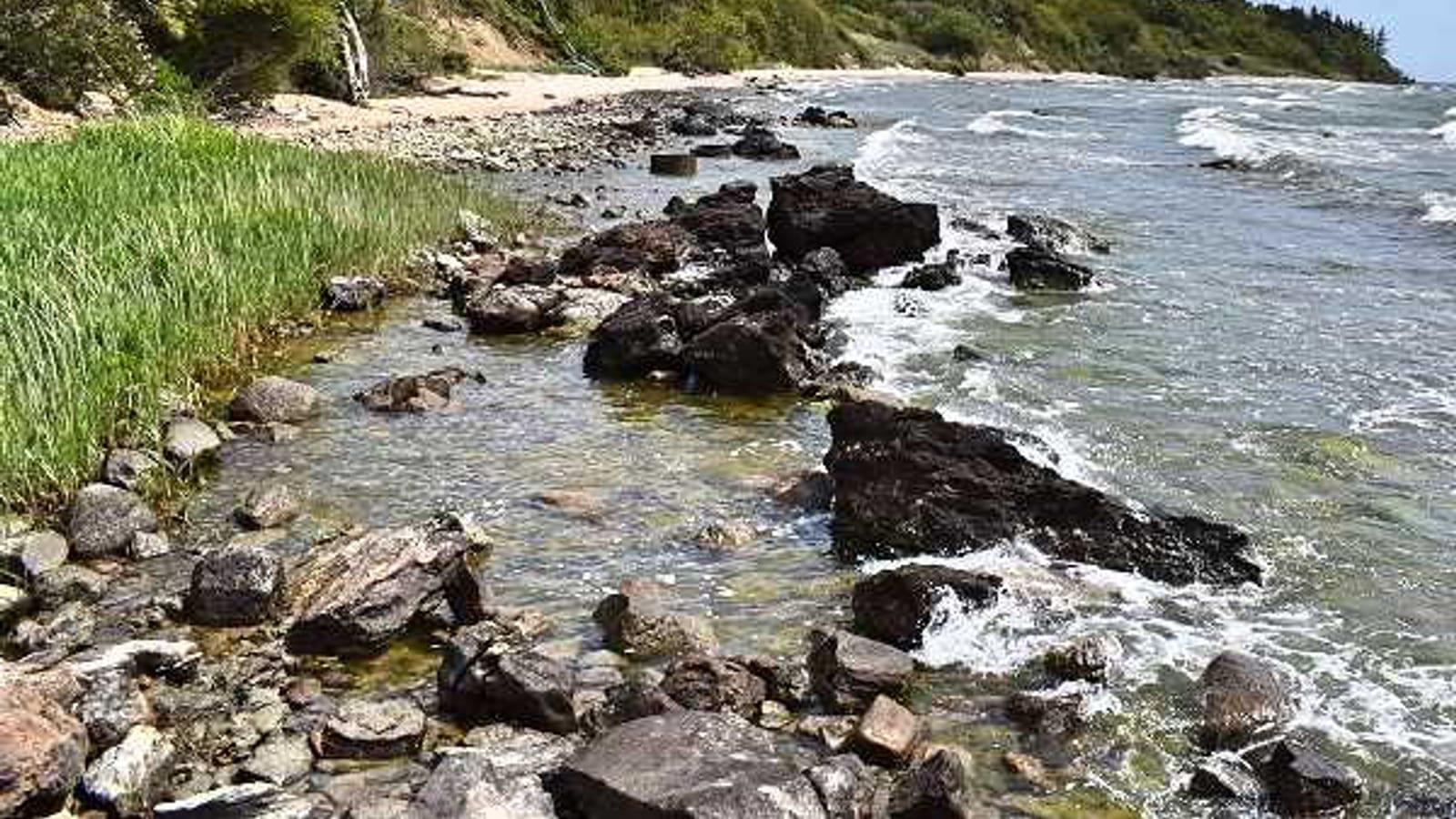 Find Campanian Fossils at Arnager Beach Bornholm Fossil Hunting GuideSponges, Ammonites
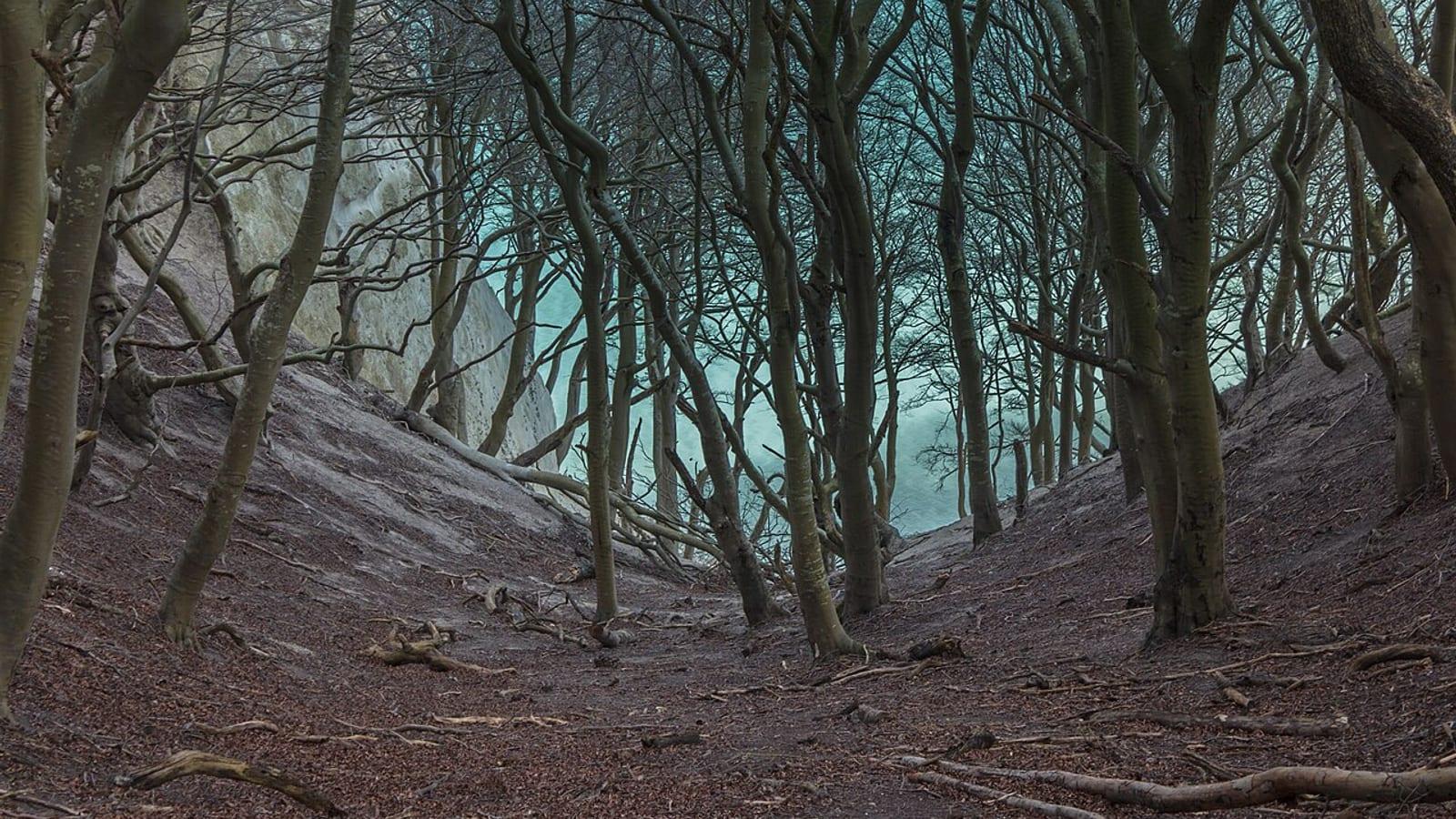 Mons Klint Beach Fossil Hunting GuideMøns Klint, Belemnites
 Store Klint Mons Klint Tallest Cliffs Fossils Fossil Hunting GuideBelemnites, Sea urchin
 Liselund Park Mons Klint Beach Access Fossil Hunting GuideBelemnites, Sea urchin