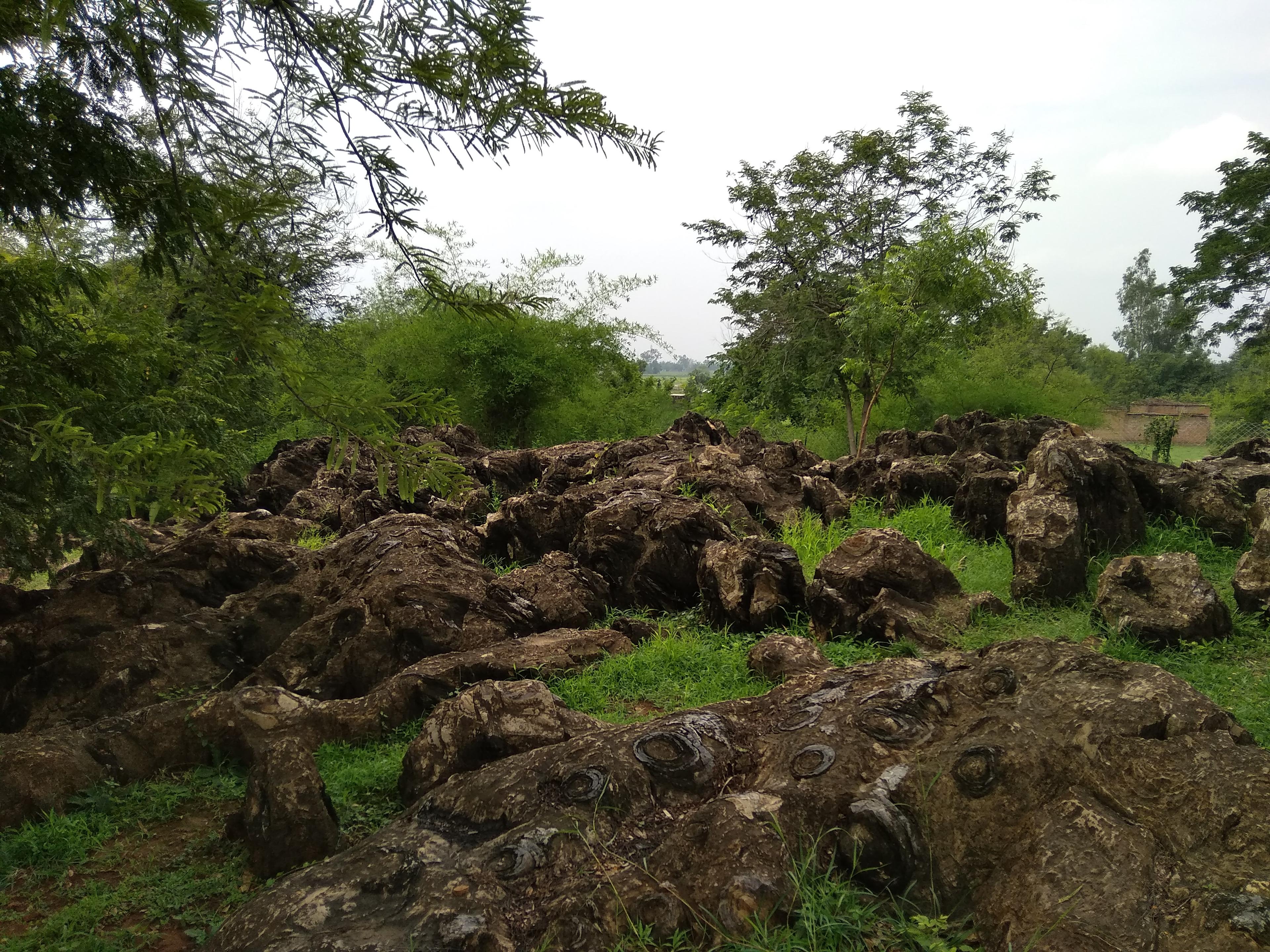
Salkhan Fossils Park: 1.4-Billion-Year-Old Stromatolites
Image: Yash partner (CC BY-SA 4.0)
Salkhan Fossils Park in Sonbhadra district preserves Mesoproterozoic stromatolites, layered microbial mound fossils roughly 1.4 billion years old, on the Kaimur Plateau of Uttar Pradesh.
By Edward Chen · Updated 27 July 2026
Introduction
Salkhan Fossils Park sits on the southern edge of the Kaimur Plateau in Sonbhadra district, Uttar Pradesh, about 100 kilometres south of Varanasi. The park preserves a continuous outcrop of stromatolites, the layered carbonate structures built by microbial communities in shallow ancient seas, on rocks roughly 1.4 billion years old, among the oldest visible fossils in India and globally significant for the study of early life. The site was at risk of destruction during the late 20th century when limestone quarrying for the cement industry expanded across the Kaimur Plateau. Protection was eventually secured by the Uttar Pradesh Forest Department in cooperation with the Geological Survey of India. The stromatolites are exposed in a wide bedding-plane surface that visitors can walk across, with hundreds of individual circular and dome-shaped structures visible at once. This guide covers how to reach the park from Varanasi, what stromatolites look like in person, the deep-time geological context of the Vindhyan Supergroup, and the rules that govern a remote, fragile Precambrian site.
Location and Directions
Salkhan village lies in the Robertsganj subdivision of Sonbhadra district, eastern Uttar Pradesh. The closest major city is Varanasi (around 100 kilometres north), with daily air, rail, and road connections to Delhi, Mumbai, and the rest of India.
From Varanasi, take State Highway 5A south through Chunar and Mirzapur, then continue toward Robertsganj. About 12 kilometres before Robertsganj, take the marked turn toward Salkhan village. The drive from Varanasi takes 2.5 to 3 hours depending on road conditions. The final approach from the main road to the park entrance is on a paved village road. The last 1 to 2 kilometres can be rough during the monsoon.
From Allahabad (Prayagraj), the distance is around 150 kilometres south-southeast, taking roughly 4 hours.
The site is operated by the Uttar Pradesh Forest Department. A small entrance gate, a parking area for a handful of vehicles, and a basic interpretive board mark the boundary. There is no formal museum on site.
There is no accommodation in Salkhan village itself. The nearest reliable lodging is in Robertsganj (15 kilometres), with a few small hotels around the main market and a UP Tourism rest house. For higher-quality accommodation, base in Varanasi and make Salkhan a day trip.
Best time to visit is October through March. The Kaimur Plateau is exposed and rocky, with summer temperatures regularly exceeding 40°C and limited shade. The monsoon (June to September) makes the rural roads difficult and brings dense vegetation that obscures some of the smaller stromatolite structures.
What Fossils You'll Find
The visible feature at Salkhan is a continuous stromatolite bedding plane, a wide outcrop where the bedding surface has been exposed by weathering and reveals the original tops of hundreds of microbial mounds.
Stromatolites are layered sedimentary structures built by communities of photosynthetic bacteria (cyanobacteria and related microbes) in shallow seas. As the microbes grew on the seafloor, they trapped and bound fine carbonate particles into thin laminations. Each lamination is roughly a millimetre thick. A single dome-shaped stromatolite at Salkhan can contain thousands of laminations stacked over centuries to millennia of growth.
At Salkhan, the dominant morphologies are:
- Conophyton: tall, conical stromatolites with internal cone-in-cone lamination. These appear in cross-section as a series of nested cones, often 30 to 80 centimetres tall in this outcrop.
- Collenia: broader, dome-shaped stromatolites with hemispherical outer surfaces and concentric internal laminations. At Salkhan these range from 10 centimetres to over a metre in diameter.
- Columnar stromatolites: branching column-like forms that grew upward from a common base, with internal laminations that follow the column shape.
The bedding plane reveals the plan view of all three morphologies side by side. Visitors see concentric circles of varying size, often packed closely together, like a geological mosaic of microbial reefs. Photographs taken from above show the patterns clearly. Oblique lighting in early morning or late afternoon enhances the contrast.
The park does not preserve any body fossils, Salkhan predates the evolution of animals by roughly 800 million years. The site's significance lies entirely in the microbial structures.
Geologic History
The Salkhan stromatolites are preserved in the Semri Group, the basal package of the Vindhyan Supergroup of central and northern India. The Vindhyan sequence is one of the world's thickest unmetamorphosed Proterozoic sedimentary records, extending from roughly 1.7 billion to 0.6 billion years ago.
Radiometric dating of associated volcanic ash beds places the Salkhan horizon at approximately 1.4 to 1.6 billion years old, in the Mesoproterozoic era (Calymmian to Ectasian periods). At that time, the area was a shallow, sunlit tropical sea on the margin of one of the early Indian cratons. Atmospheric oxygen had risen considerably since the Great Oxidation Event of 2.4 billion years ago, but it was still well below modern levels. The ocean chemistry favoured carbonate precipitation, and microbial communities dominated shallow-water ecosystems in the absence of any grazing or burrowing animals.
The stromatolite mounds grew where the cyanobacterial communities formed continuous mats on the seafloor, trapping carbonate mud during the day and producing carbonate by photosynthetic uptake of dissolved CO₂. The vertical growth of each mound depended on water depth and sediment supply. The conical Conophyton structures suggest deeper, quieter water, while the broader Collenia domes record shallower, more agitated settings.
Burial under younger Vindhyan sediments preserved the stromatolites with minimal recrystallization. The subsequent geological history of central India was unusually quiet, the Vindhyan Basin never underwent major mountain-building deformation or metamorphism. As a result, the Salkhan beds today retain their original sedimentary textures across a region where most rocks of comparable age have been thoroughly metamorphosed.
Uplift along the Kaimur Plateau during the late Cenozoic exposed the stromatolite-bearing bedding plane at the modern surface, where weathering of the surrounding mudstones has stripped soft cover and left the carbonate stromatolites standing in low relief.
How Salkhan Became a Fossil Collecting Site
The stromatolites at Salkhan were first described in the geological literature in the early 20th century, though their formal interpretation as Mesoproterozoic microbial structures came later, in the 1970s and 1980s. The site was rediscovered in the early 2000s as part of a broader inventory of Vindhyan exposures, and growing local interest in the geology and ecotourism potential of the area led to formal protection by the Uttar Pradesh Forest Department.
The primary threat had been limestone quarrying: the Kaimur Plateau hosts active and disused cement quarries, several within a few kilometres of the Salkhan stromatolite exposure. Without protection, the bedding plane could have been broken up and used as cement feedstock within a decade. The Forest Department's intervention, supported by the GSI's designation of comparable sites as National Geological Monuments, halted the immediate threat.
A simple fenced enclosure, an interpretive sign, and a small parking area were added in the 2010s. No formal museum has been built. Active research is conducted by Indian university paleontologists with permits from the Forest Department. Specimens are studied in place and on small collected fragments outside the protected boundary.
Collecting Rules and Regulations
Collecting is strictly prohibited. Salkhan is protected as a geological heritage site under the Antiquities and Art Treasures Act, 1972, and the surrounding land is administered by the Uttar Pradesh Forest Department. Chipping, hammering, or removing any material from the stromatolite outcrop is a criminal offence.
Practical rules:
- Walk on the bedding plane carefully. The stromatolite domes stand in low relief and are fragile in places.
- Do not pour water or apply chalk to enhance contrast for photography. Both leave residues that damage the rock surface.
- Photograph in low-angle sunlight (early morning or late afternoon) for the best contrast.
- Entry is typically free or carries a nominal fee at the gate. Hours are dawn to dusk.
Safety
Salkhan is a remote outcrop on an exposed plateau with no facilities, and that is the whole of the safety picture.
Heat and exposure come first. The Kaimur Plateau surface is bare rock with almost no shade, and summer temperatures regularly exceed 40°C. Visit between October and March, walk in the morning, and carry all your water from Robertsganj, 15 kilometres away. There is nothing at the site.
The bedding plane is uneven, with stromatolite domes standing in low relief and loose rock at the margins. Wear closed shoes with a firm sole and walk carefully, both for your own footing and because the structures are fragile in places.
Snakes are active in the warmer months, particularly along the edges of the outcrop where vegetation meets exposed rock. Look before you step down off the plane or put a hand on a ledge.
The site is lightly visited and lightly staffed, and mobile coverage is patchy. Tell someone in Robertsganj or Varanasi where you are going and when you expect to be back. Travel in daylight and check your vehicle before leaving Robertsganj, since the final approach is a rural road and the last kilometre or two is rough after the monsoon. Breaking down here means a long wait.
The nearest hospital is at Robertsganj. Varanasi, 100 kilometres north and two and a half to three hours away, is the nearest city with serious medical facilities.
Sources
- "Salkhan Fossils Park." Wikipedia. https://en.wikipedia.org/wiki/Salkhan_Fossils_Park
- Geological Survey of India. "Vindhyan Supergroup and Proterozoic Fossils." https://www.gsi.gov.in/
- Government of Uttar Pradesh, District Sonbhadra. https://sonbhadra.nic.in/
- Government of India, Ministry of Culture. "The Antiquities and Art Treasures Act, 1972." https://www.indiaculture.gov.in/sites/default/files/acts_rules/TheAntiquitiesandArtTreasuresAct1972_12.03.2018.pdf (link no longer available)
Nearby sites
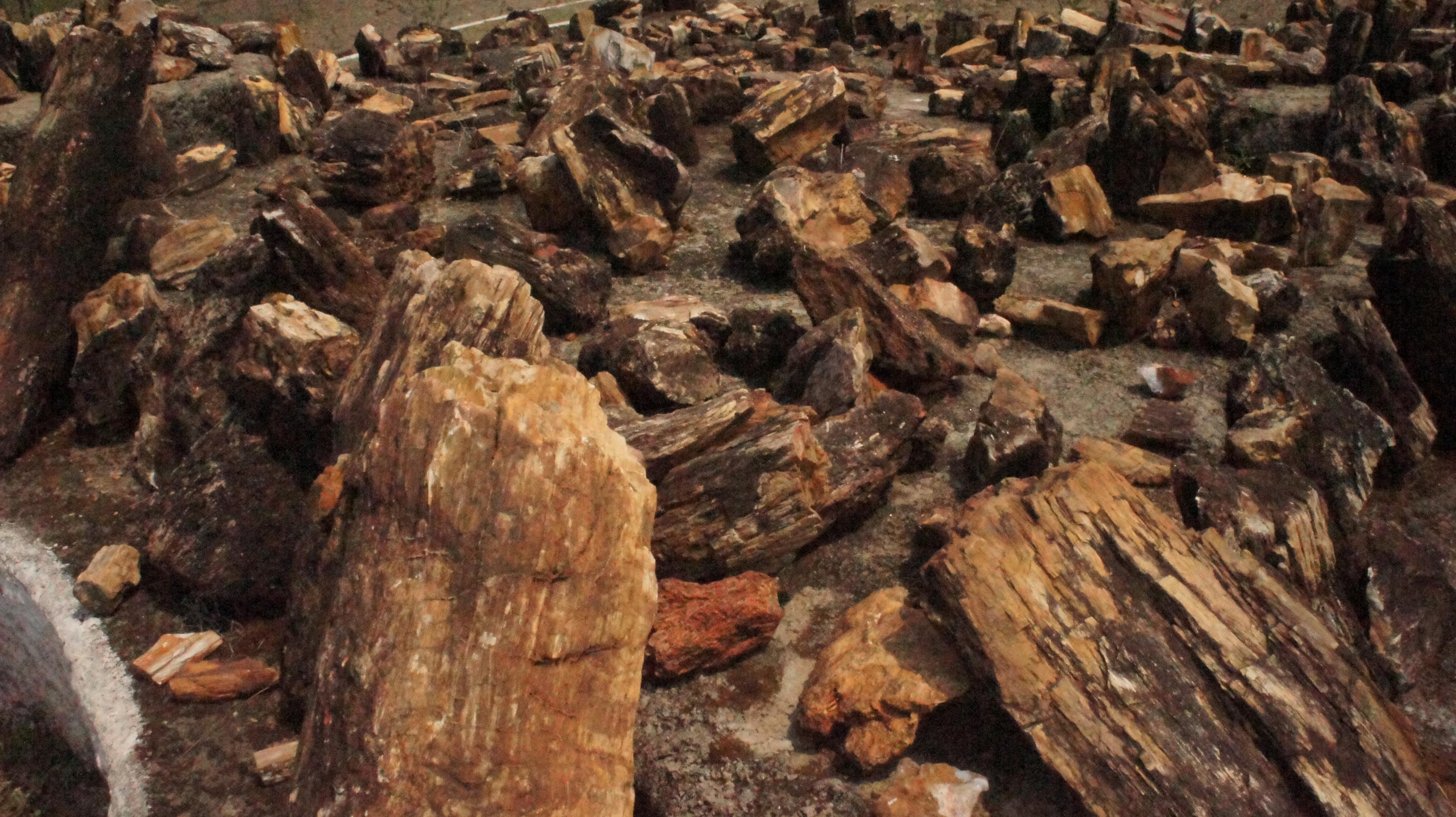 Ghughua National Fossil Park Fossil Hunting GuidePetrified Wood, Seeds and Fruits
 Lameta Geological Park Fossil Hunting GuideIsisaurus colberti, Jainosaurus septentrionalis
 Wadadham Fossil Park Fossil Hunting GuideDinosaur Bones, Dinosaurs
 Spiti Valley: Shaligram Ammonites of the Tethys SeaAmmonites, Belemnites