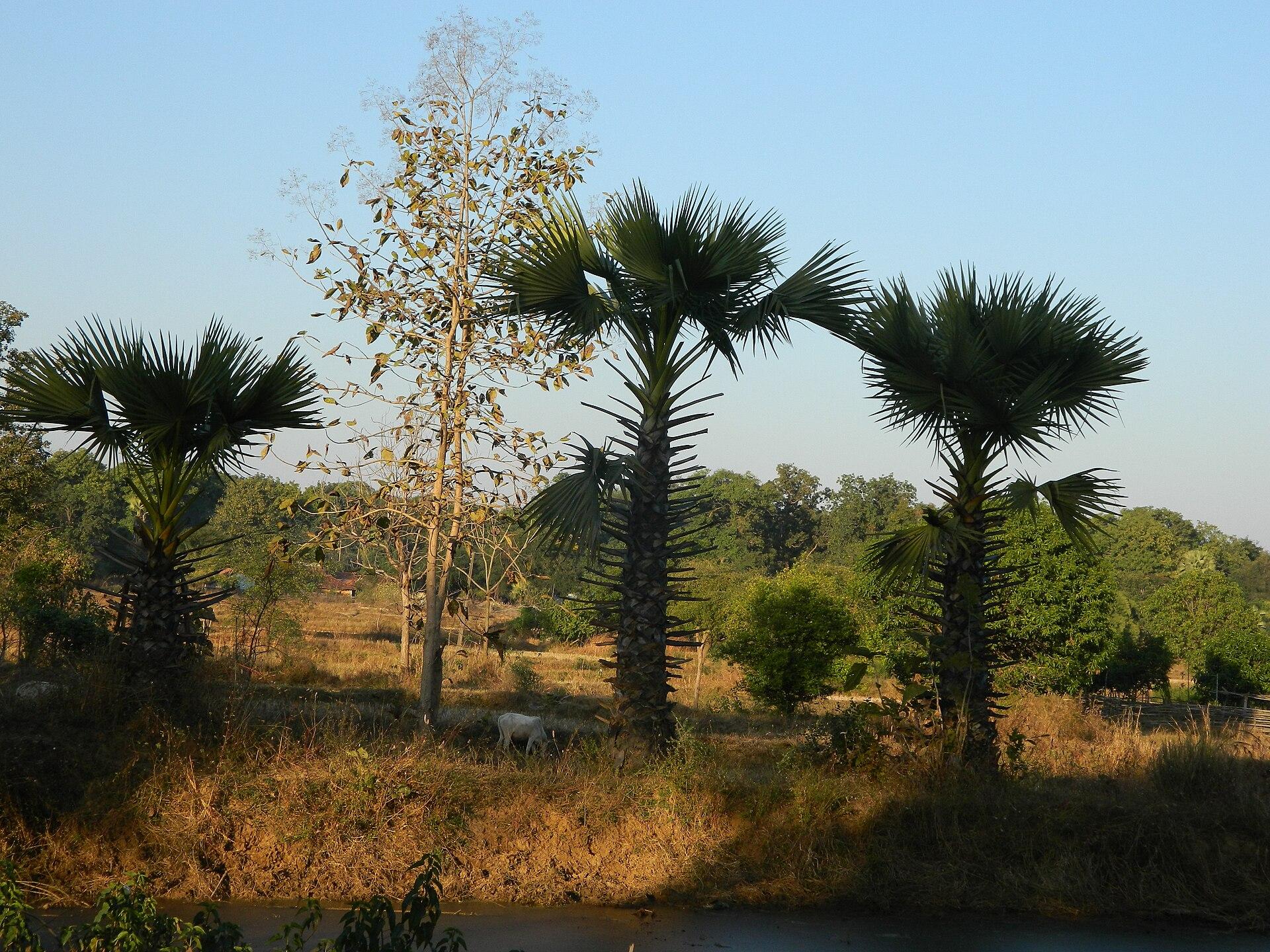
Wadadham Fossil Park Fossil Hunting Guide
Image: Aparajita Rajwade (CC BY-SA 4.0)
An emerging fossil park in remote eastern Maharashtra preserving Early to Middle Jurassic sauropod bones from the Kota Formation, including Barapasaurus tagorei and Kotasaurus yamanpalliensis.
By Edward Chen · Updated 27 July 2026
Introduction
Wadadham is one of India's newest protected fossil sites, sitting in remote Sironcha taluka of Gadchiroli district in eastern Maharashtra, near the tri-junction with Telangana and Chhattisgarh. The site preserves bone-bearing horizons of the Kota Formation, an Early to Middle Jurassic fluvial-lacustrine unit that has produced two important Indian sauropod dinosaurs: Barapasaurus tagorei, one of the earliest known true sauropods, and Kotasaurus yamanpalliensis, a contemporaneous mid-sized sauropod from the same depositional system. The Kota Formation also yields plant fossils that document a Gondwana flora roughly 180 million years ago. Wadadham was developed by the Maharashtra Forest Department in the 2020s as part of a regional push to showcase state prehistoric heritage and to deter clandestine fossil removal that had been documented in the area. This guide covers how to reach the site from Nagpur or Sironcha, what visitors can examine in the field and at the interpretive centre, the geological setting of the Kota Formation, and the access realities of a remote rural location.
Location and Directions
Wadadham village lies in Sironcha taluka, the southernmost part of Gadchiroli district in eastern Maharashtra. The closest larger town is Sironcha (about 19 kilometres). The nearest major city and railhead is Nagpur, roughly 250 kilometres to the northwest.
From Nagpur, the drive takes 6 to 7 hours via Chandrapur, Allapalli, and Aheri to Sironcha, then east to Wadadham. Most of the route is paved but rural, with stretches through Gadchiroli forest reserves where speeds are limited. The final 19 kilometres from Sironcha to Wadadham follow a paved village road that becomes a graded dirt track in the last 2 kilometres to the site.
From Hyderabad, an alternative route runs north through Adilabad and Asifabad into Gadchiroli, then to Sironcha. The drive is roughly 350 kilometres and takes 7 to 8 hours.
The site is operated by the Maharashtra Forest Department in cooperation with the GSI. A small interpretive centre has been built near the main bone-bearing outcrop, and a marked viewing path leads through the protected enclosure. Visitor traffic is low. Most arrivals are organized groups or researchers with permits rather than independent tourists.
Best time to visit is November through February when daytime temperatures are 25 to 30°C and the monsoon has cleared. From March through May the area is hot and dry. From June through September monsoon rainfall makes rural roads difficult and the bone-bearing surface becomes muddy.
There is no formal accommodation in Wadadham or Sironcha beyond simple guesthouses. Most visitors stay in Chandrapur (160 kilometres northwest) or arrange overnight accommodation through the district administration. Confirm current security advisories with the Gadchiroli district administration before travelling, as the eastern parts of the district have historically experienced periodic Naxalite activity. Recent years have been quiet, but conditions change.
What Fossils You'll Find
The site's preserved fossils are in situ or in the small on-site interpretive centre. Most visitors see the bone-bearing surface from the viewing path. The interpretive centre holds prepared casts of major specimens.
Sauropod bones are the headline feature. Two named genera from the Kota Formation are represented in nearby quarries, though the in-situ specimens at Wadadham are typically isolated bones rather than complete skeletons:
- Barapasaurus tagorei: one of the earliest true sauropods, described from a bone bed at the nearby Yamanpalli site in 1975. Adults reached about 14 metres in length. Vertebrae and limb bones are the most commonly preserved elements.
- Kotasaurus yamanpalliensis: a contemporaneous sauropod of similar size, described in the 1980s. Distinguished from Barapasaurus by limb bone proportions and vertebral morphology.
Other vertebrate remains documented from the Kota Formation include early crocodylomorph teeth, freshwater fish remains, and rare turtle fragments. Specimens prepared from earlier quarries are held at the Geological Studies Unit, Indian Statistical Institute (Kolkata) and at the GSI's regional offices. Some casts are displayed in the Wadadham interpretive centre.
Plant fossils, primarily fern fronds and gymnosperm leaves, are reported from interbedded mudstones. The Kota Formation flora is part of the Gondwana sequence and represents a Mesozoic continental ecosystem before the breakup of the supercontinent.
Visitors are unlikely to see fresh bone exposures on the surface during a casual visit. Most active excavation is conducted under research permits at adjacent localities. The in-situ display surface at Wadadham contains prepared examples of bone fragments that have been left in place after partial excavation.
Geologic History
The Wadadham fossils are preserved in the Kota Formation, the upper unit of the Pranhita-Godavari Gondwana sequence in central India. The Kota was deposited during the Early to Middle Jurassic, roughly 190 to 175 million years ago, in a fluvial and lacustrine environment along the southeastern margin of the Indian craton.
At the time, India was still attached to the rest of Gondwana, with East Africa, Antarctica, and Australia connected to the south and west. The Pranhita-Godavari basin was a continental rift valley that had been actively subsiding since the Late Carboniferous, accumulating thousands of metres of Gondwana-affinity sediment. By the Early Jurassic, the rift had stabilized into a broad alluvial basin with meandering rivers, shallow lakes, and broad floodplains supporting dense vegetation.
The bone-bearing horizons at Wadadham and the nearby Yamanpalli quarries represent channel sandstone and floodplain mudstone facies. Sauropod carcasses were transported by river currents and concentrated in channel point-bars and oxbow lake fills. The preservation is typically as isolated bones rather than articulated skeletons, suggesting some transport before final burial.
The Kota Formation's plant assemblage includes ferns, cycadophytes, and conifers typical of the Mesozoic Gondwana flora. Notably absent are the Glossopteris flora that dominated the older Permian Gondwana sequences, by the Early Jurassic, Glossopteris had been extinct for nearly 60 million years, replaced by Jurassic gymnosperms. Visitors should disregard older popular accounts that conflate the two floras.
Subsequent geological history of the Pranhita-Godavari basin has been relatively quiet. Mild Cretaceous-Cenozoic uplift along the eastern margin tilted the sequence, and modern erosion exposes the Jurassic beds at the surface in a narrow corridor through Gadchiroli and Telangana districts.
How Wadadham Became a Fossil Collecting Site
The sauropod bone beds of the Pranhita-Godavari valley have been known to paleontologists since the late 1950s, when collecting parties from the Indian Statistical Institute (Kolkata) and the GSI documented the Yamanpalli quarry, about 60 kilometres south of Wadadham across the Telangana border. Barapasaurus tagorei was described from Yamanpalli material in 1975, and Kotasaurus yamanpalliensis in the 1980s.
The Wadadham site itself was developed by the Maharashtra Forest Department in the 2020s as a complementary in-state showcase, partly in response to documented clandestine fossil removal from rural exposures across the Gadchiroli area. State funding paid for the perimeter fence, the interpretive centre, and the marked viewing path. The GSI provides ongoing scientific oversight and verifies new specimens that emerge through natural erosion.
Active research excavation in the broader area continues under permits issued by the state government and the Archaeological Survey of India. The Wadadham site itself is now treated as a viewing-only paleontological monument. No new commercial collecting is permitted.
Collecting Rules and Regulations
Collecting is strictly prohibited. Wadadham is protected under the Antiquities and Art Treasures Act, 1972, and the surrounding land is administered by the Maharashtra Forest Department. Removal of any natural material, including bone fragments, soil, and stones, is a criminal offence.
Practical rules:
- Examine specimens in place. Do not touch, hammer, or attempt to chip any material.
- Stay on the marked viewing path.
- Entry is typically free or carries a nominal fee. The interpretive centre is staffed during daylight hours from October through March. In summer and monsoon, opening hours may be reduced.
- Confirm visiting hours with the Gadchiroli district administration or the Sironcha tehsil office before driving from Nagpur or Hyderabad.
Safety
Wadadham is remote, and the practical risks are travel-related rather than anything at the outcrop.
Check current security advisories with the Gadchiroli district administration before you travel. Eastern Gadchiroli has historically experienced periodic Naxalite activity. Recent years have been quiet, but conditions change, and this is not a judgement to make from a website. Travel in daylight only, avoid the area after dark, and take a local guide from Sironcha both for navigation and for knowing where the protected boundaries run.
The drive is long. Nagpur is 6 to 7 hours away and Hyderabad 7 to 8, over rural roads that pass through forest reserves, and the final 2 kilometres are a graded dirt track. Carry water, food, and a spare tyre, and expect intermittent mobile coverage for much of the route. Do not set off late in the day expecting to arrive and return.
Season shapes the visit. March through May is hot and dry, and from June through September the monsoon makes rural roads difficult and the bone-bearing surface muddy. November through February is the sensible window.
On site, the viewing path crosses uneven excavation terrain with loose stone, so wear sturdy closed shoes. Snakes are active from June through October, particularly along the vegetated edges of the enclosure. Watch where you step.
Facilities are minimal. There is no formal accommodation in Wadadham or Sironcha beyond simple guesthouses, and the nearest substantial medical care is at Chandrapur, 160 kilometres northwest. Confirm the interpretive centre's hours before driving out, since a closed gate after a seven-hour drive is the likeliest disappointment here.
Sources
- District Administration, Gadchiroli, Maharashtra. https://gadchiroli.gov.in/
- Geological Survey of India. "Mesozoic of the Pranhita-Godavari Basin." https://www.gsi.gov.in/
- Jain, S.L. et al. 1975. "The sauropod dinosaur from the Lower Jurassic Kota Formation of India." Proceedings of the Royal Society of London B 188(1091).
- Yadagiri, P. 2001. "The osteology of Kotasaurus yamanpalliensis." Journal of Vertebrate Paleontology 21(2).
- Government of India, Ministry of Culture. "The Antiquities and Art Treasures Act, 1972." https://www.indiaculture.gov.in/sites/default/files/acts_rules/TheAntiquitiesandArtTreasuresAct1972_12.03.2018.pdf (link no longer available)
Nearby sites
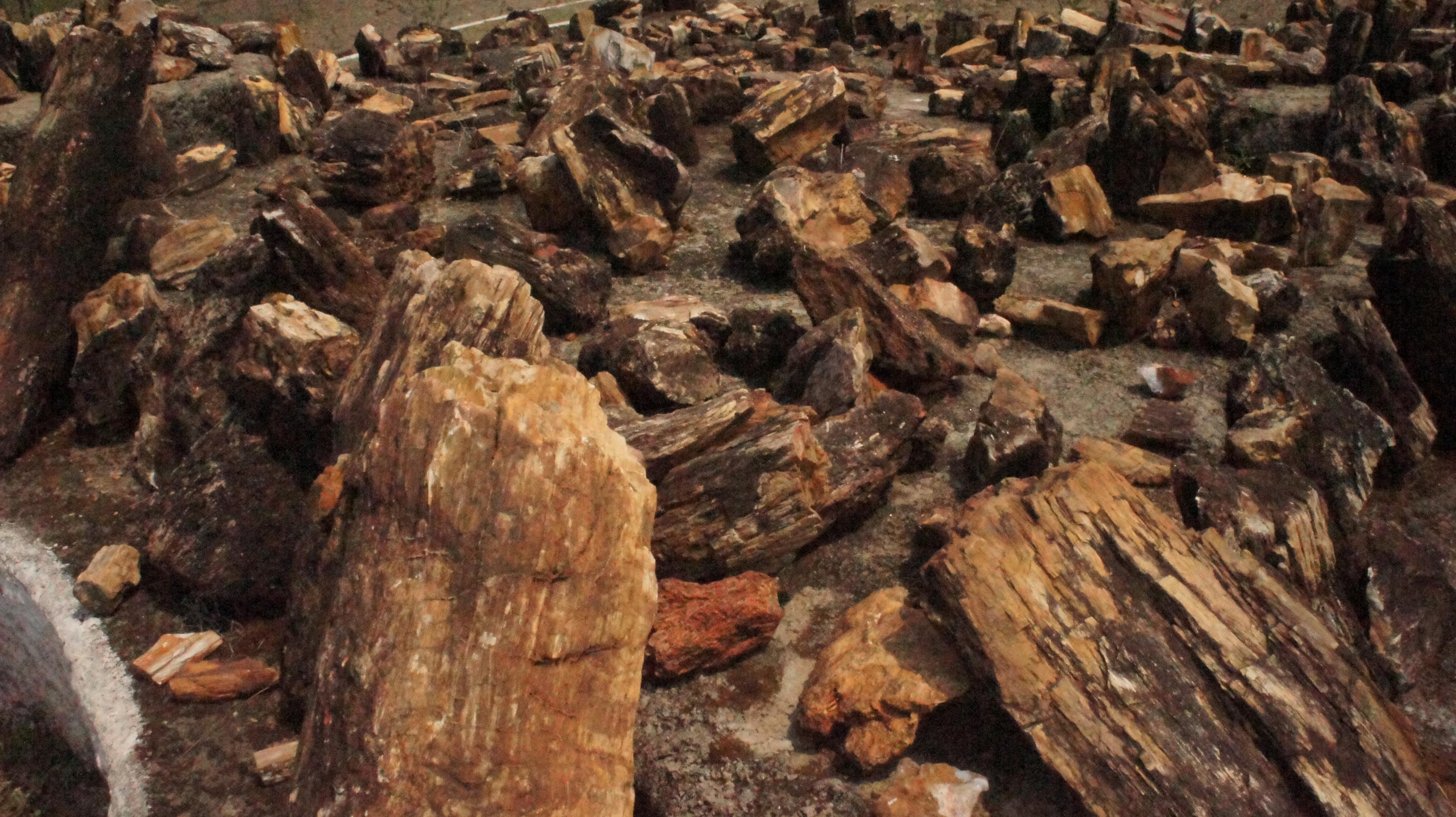 Ghughua National Fossil Park Fossil Hunting GuidePetrified Wood, Seeds and Fruits
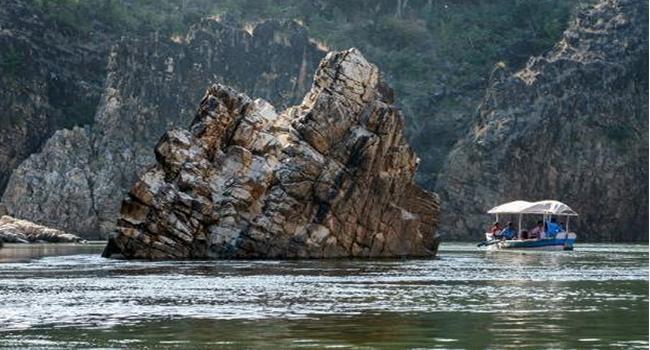 Lameta Geological Park Fossil Hunting GuideIsisaurus colberti, Jainosaurus septentrionalis
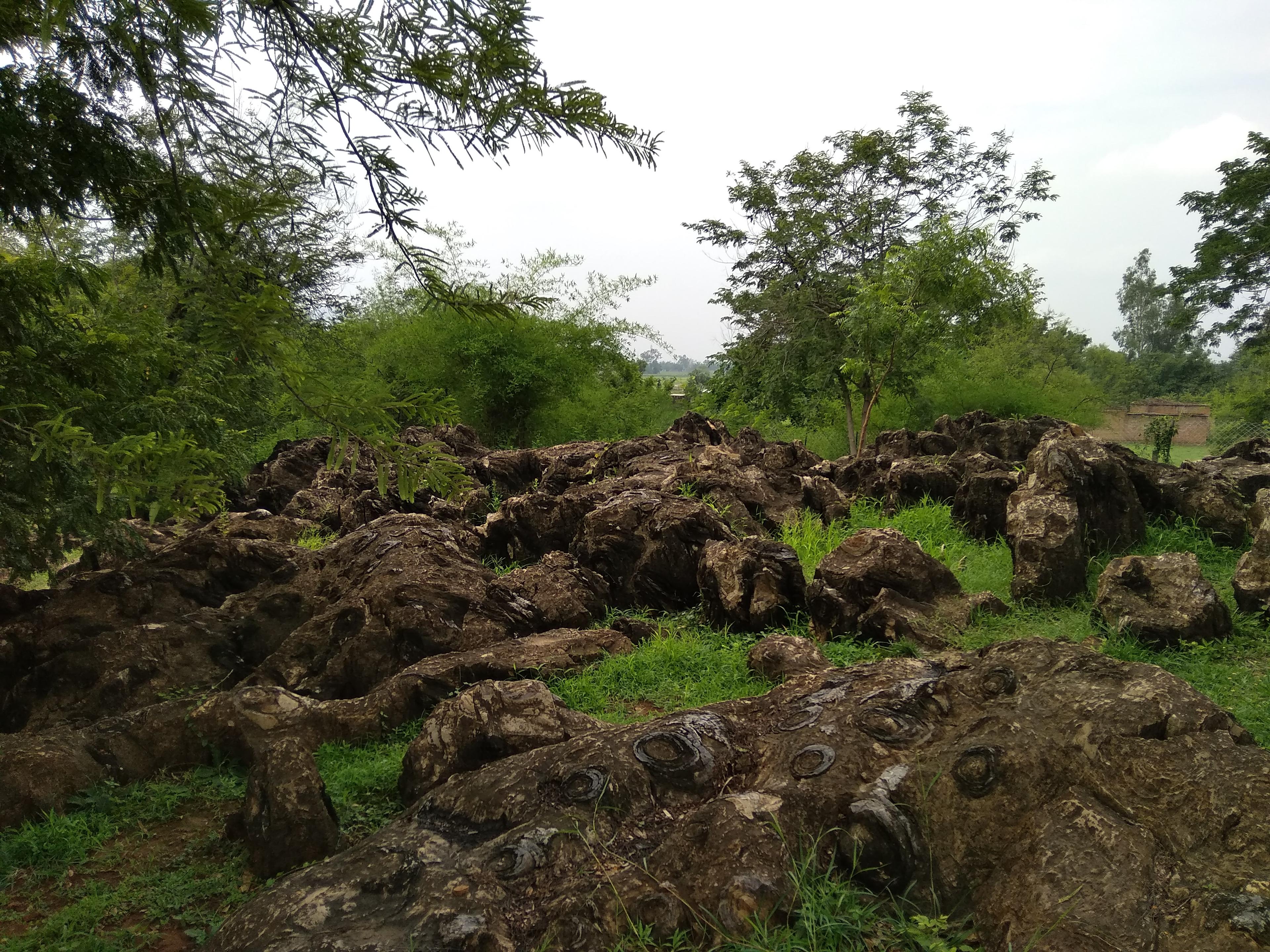 Salkhan Fossils Park: 1.4-Billion-Year-Old StromatolitesStromatolites, Microbialites
 National Fossil Wood Park at Tiruvakkarai Fossil Hunting GuidePetrified Wood, Plants