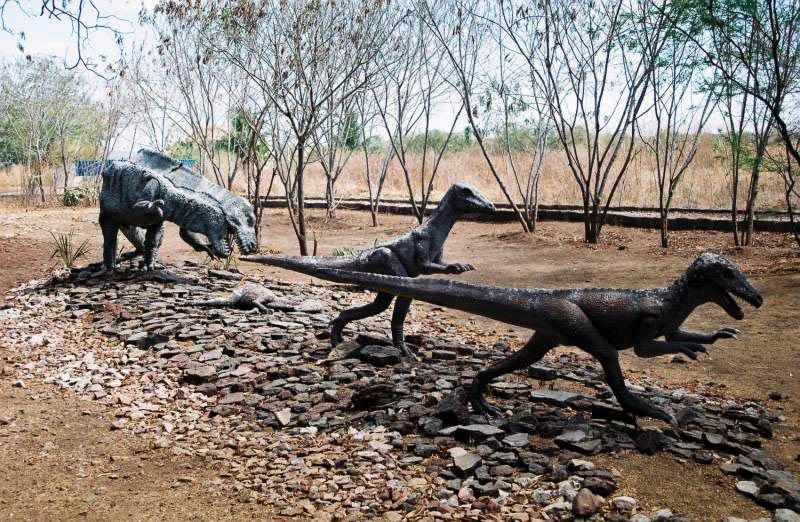
Vale dos Dinossauros (Sousa Basin) Fossil Hunting Guide
Image: Valdiney Pimenta (CC BY 3.0)
The Vale dos Dinossauros around the town of Sousa in Paraíba State, northeast Brazil, contains more than 30 tracksites preserving 80+ types of dinosaur footprints in the Sousa Formation of the Rio do Peixe Basin. The principal park at Passagem das Pedras is free to visit.
By Edward Chen · Updated 1 August 2026
Introduction
The Vale dos Dinossauros (Valley of the Dinosaurs) sits in the semi-arid sertão of northeast Brazil, around the town of Sousa in the western corner of Paraíba State. The valley follows the floor of the Rio do Peixe basin, a small Early Cretaceous rift basin that extends across about 700 square kilometres of Paraíba and Rio Grande do Norte. The basin is filled with continental fluvial and lacustrine sediments of the Antenor Navarro, Sousa, and Rio Piranhas formations, deposited during the early stages of the South Atlantic opening. Since the 1920s, more than 30 separate dinosaur tracksites have been documented across the valley, with more than 80 distinct footprint morphotypes recorded on a total of about 20 stratigraphic horizons. The principal public site is at Passagem das Pedras on the southern edge of Sousa, where a major sauropod and theropod trackway runs through a fenced municipal park. The 40-hectare site was protected as the Monumento Natural Vale dos Dinossauros under municipal law in 2002, and the wider 146-hectare Área de Relevante Interesse Ecológico Vale dos Dinossauros has been administered by ICMBio (the Chico Mendes Institute for Biodiversity Conservation) under federal law since 1984. Entry is free, with optional tipped guides. Collecting is prohibited. This guide covers how to reach the park, what is visible along the trail, the Cretaceous geology, and the rules that apply.
Location and Directions
Sousa sits in the western Paraíba sertão, about 400 kilometres west of the state capital João Pessoa and about 200 kilometres west of Campina Grande. From João Pessoa, the drive takes about six hours on the BR-230 west. From the Recife area, the drive takes about seven hours via the BR-101 and BR-230. The closest commercial airport is Campina Grande Presidente João Suassuna, about three hours away.
The Vale dos Dinossauros Natural Monument is at Passagem das Pedras on the southern edge of Sousa. GPS for the park entrance is 6.7392 degrees south, 38.2275 degrees west. Parking is gravel and free.
The park includes an interpretive centre and museum at the entrance, a 1-kilometre boardwalk loop that passes the main sauropod and theropod trackways on the riverbed of the Riacho do Cazé, and several smaller exhibits on Cretaceous flora and crocodyliform fauna.
The park is open Tuesday through Sunday, generally from 8 a.m. to 5 p.m., with occasional adjustments for the dry-season schedule. Entry is free. Local guides at the park gate provide tours in Portuguese, and a tip of 10 to 20 Brazilian reais per group is customary.
Sousa town has standard Brazilian-budget hotels, restaurants, and basic services. The Universidade Federal de Campina Grande's Centro de Saúde e Tecnologia Rural campus at Patos, about 100 kilometres east, hosts the active regional paleontology research programme.
The Sousa tracksite is one of the stops on the long-distance Rota das Origens cultural tourism route that links paleontological and Indigenous-art sites across northeastern Brazil.
What Fossils You'll Find
You will not collect at Vale dos Dinossauros. What you can do is walk the boardwalk loop above the Riacho do Cazé riverbed and see in-place dinosaur trackways on the sandstone bedding plane. Identifications below follow the Wikivoyage practical guide, the SIGEP geological survey site sheet, and the 2024 Scientific Reports study by Heider Leite and co-authors.
- Sauropod trackways. Large rounded prints up to 40 centimetres across, attributed to brachiosaurid-grade sauropods. Several long trackway sequences are visible on the riverbed at the main park.
- Theropod footprints. Three-toed prints attributed to mid-sized carnivorous theropods, including very large prints up to 35 centimetres long and small prints down to 5 centimetres.
- Iguanodontian footprints. Broader three-toed prints with rounded toe pads, attributed to early iguanodontians.
- Stegosaurid prints. Rare four-toed prints with elongated toes, interpreted as stegosaur tracks. Some of these are among the youngest known stegosaur tracks anywhere.
- Small ornithopod prints. Very small three-toed prints, possibly from juvenile or small adult dinosaurs.
- Bird-like footprints. A small number of three-toed prints with reduced central toe length have been interpreted as early bird tracks, although the attribution is debated.
- Petroglyphs. Pre-Columbian rock art appears on the same bedrock surfaces and is documented alongside the tracks in the 2024 Scientific Reports study.
The interpretive centre at the park includes scale outlines of the major track makers and explanatory panels in Portuguese and English.
Geologic History
The fossil-bearing rocks at Vale dos Dinossauros belong to the Sousa Formation of the Rio do Peixe basin, an Early Cretaceous rift basin that opened along the South Atlantic margin during the latest Jurassic and Early Cretaceous, between roughly 145 and 130 million years ago. The Sousa Formation is dated to roughly 140 million years ago, in the Berriasian to Valanginian stages.
The Rio do Peixe basin is one of a series of small rift basins (the Araripe, Tucano, and Recôncavo basins among them) that opened along the South American margin as Africa and South America began to separate during the early stages of South Atlantic opening. The basin floors filled with continental fluvial, alluvial-fan, and lacustrine sediments. The Sousa Formation, the middle of the three named units in the basin, was deposited in a meandering river and floodplain system with periodic shallow lakes.
The dinosaur trackways at Passagem das Pedras lie on a sandstone bedding plane at the base of the formation, representing a single floodplain mud surface that hardened, was covered by fresh sand, and was preserved with sharp print outlines. The site lies on the floor of the Riacho do Cazé, a small intermittent stream that exposes the bedrock during the dry season.
After Cretaceous deposition, the Rio do Peixe basin was buried under thin Cenozoic continental cover, then exhumed during late Cenozoic uplift of the South American craton. Modern erosion has exposed the Sousa Formation in scattered outcrops across the dry sertão.
How Vale dos Dinossauros Became a Fossil Site
The first dinosaur tracks at Passagem das Pedras were noticed by local residents in the 1920s. Italian-Brazilian geologist Luciano Jacques de Moraes published a brief note on the site in 1924, but systematic study did not begin until the 1970s under Giuseppe Leonardi of Universidad Federal Fluminense. Leonardi's work in the late 1970s and 1980s established Sousa as a major South American tracksite and produced the first formal mapping of the Riacho do Cazé exposures.
The municipality of Sousa designated the 40-hectare core area as a Monumento Natural in 1986, with full formal protection under municipal law confirmed in 2002. ICMBio designated the wider 146-hectare Área de Relevante Interesse Ecológico in 1984. The park's interpretive centre and boardwalks were renovated in 2013 with federal and Petrobras support. The Universidade Federal de Campina Grande and the Universidade Federal de Pernambuco have led the most recent research, including the 2024 Scientific Reports study on the co-occurrence of dinosaur tracks and pre-Columbian petroglyphs.
Collecting Rules and Regulations
Collecting is prohibited. All fossils in Brazil are property of the federal state under Decree-Law 4.146/1942, and the National Heritage Institute (IPHAN) regulates protected paleontological sites. The Vale dos Dinossauros sits under joint federal (ICMBio) and municipal (Sousa) jurisdiction.
Practical rules:
- Stay on the boardwalk loop. Walking on the trackway surfaces themselves is not permitted.
- Photography for personal use is welcomed across the park.
- Admission is free. Tips to the local guides at the gate are welcomed.
- Drones require advance permission from ICMBio.
- Pets are not allowed in the park.
- Research collection is restricted to permitted teams working under IPHAN, ICMBio, and CPRM/SGB authorisation.
The other tracksites in the wider basin (Pedra do Riacho do Cazé, Engenho Novo, Piau, Várzea dos Ramos and others) sit on a mix of private and public land and are not all open to casual visit. The park staff at Passagem das Pedras can advise on which sites are accessible at any given time.
Safety
The Sousa sertão has a tropical semi-arid climate. The dry season from June through December is the recommended visiting window, with daytime temperatures around 28 to 33 degrees Celsius and low humidity. The wet season from January through May brings short heavy showers and can flood the Riacho do Cazé bedrock, hiding the tracks.
Sun exposure is intense year round. Carry water, sun cover, and a wide-brimmed hat on the 1-kilometre loop. The boardwalk has minimal shade.
Watch for snakes (mostly the pit viper Bothrops jararaca) and scorpions in the dry-season vegetation around the boardwalk. Stay on the path.
Cell coverage is reliable in Sousa town and intermittent on the access road. Sousa is a small regional town with limited late-night services.
Sources
- Wikipedia, "Valley of the Dinosaurs, Paraíba." https://en.wikipedia.org/wiki/Valley_of_the_Dinosaurs,_Para%C3%ADba
- Leite, H.A.A. et al., 2024. "A remarkable assemblage of petroglyphs and dinosaur footprints in Northeast Brazil." Scientific Reports, 14. https://www.nature.com/articles/s41598-024-56479-3
- SIGEP / CPRM (Brazilian Geological Survey), "Sítio 026: Pegadas de dinossauros da Bacia Rio do Peixe, Paraíba." http://sigep.cprm.gov.br/sitio026/sitio026.htm
- Leonardi, G., 1979. "Pegadas de dinossauros das formações Botucatu, Pirambóia, Rosário do Sul e da Bacia do Rio do Peixe." Anais do II Congresso Brasileiro de Paleontologia.
- ICMBio (Chico Mendes Institute for Biodiversity Conservation), "Área de Relevante Interesse Ecológico Vale dos Dinossauros." Site management plan, accessed June 2026.
Nearby sites
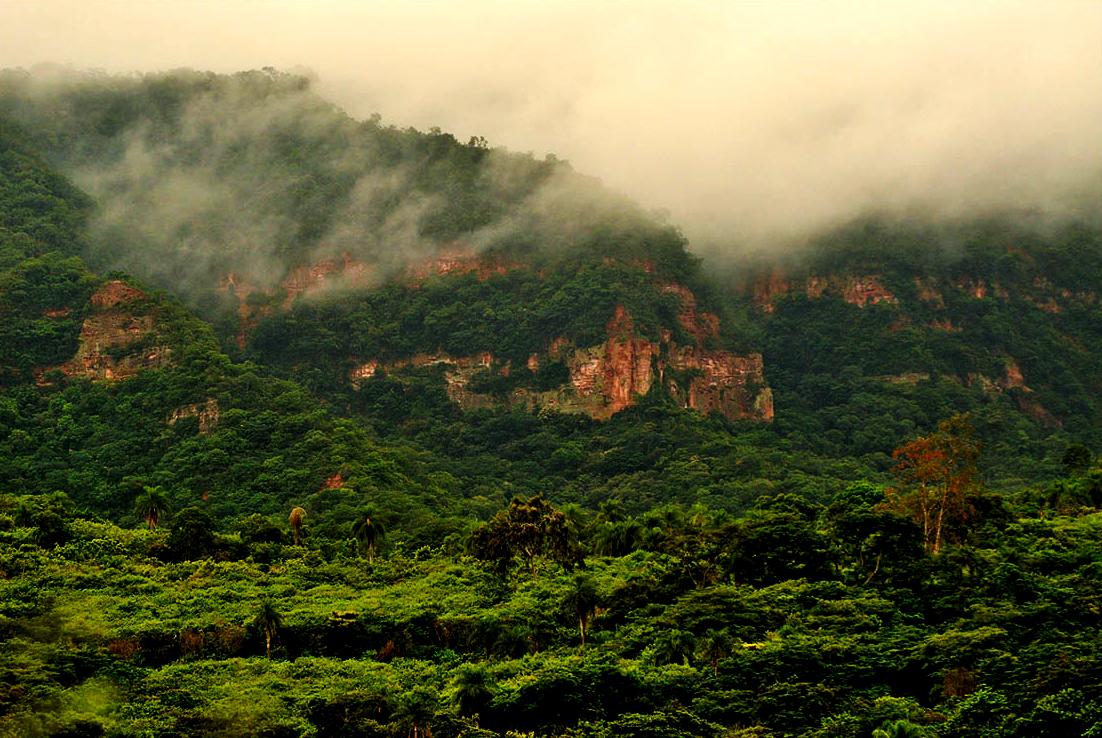 Araripe Geopark Fossil GuidePterosaurs, Fish
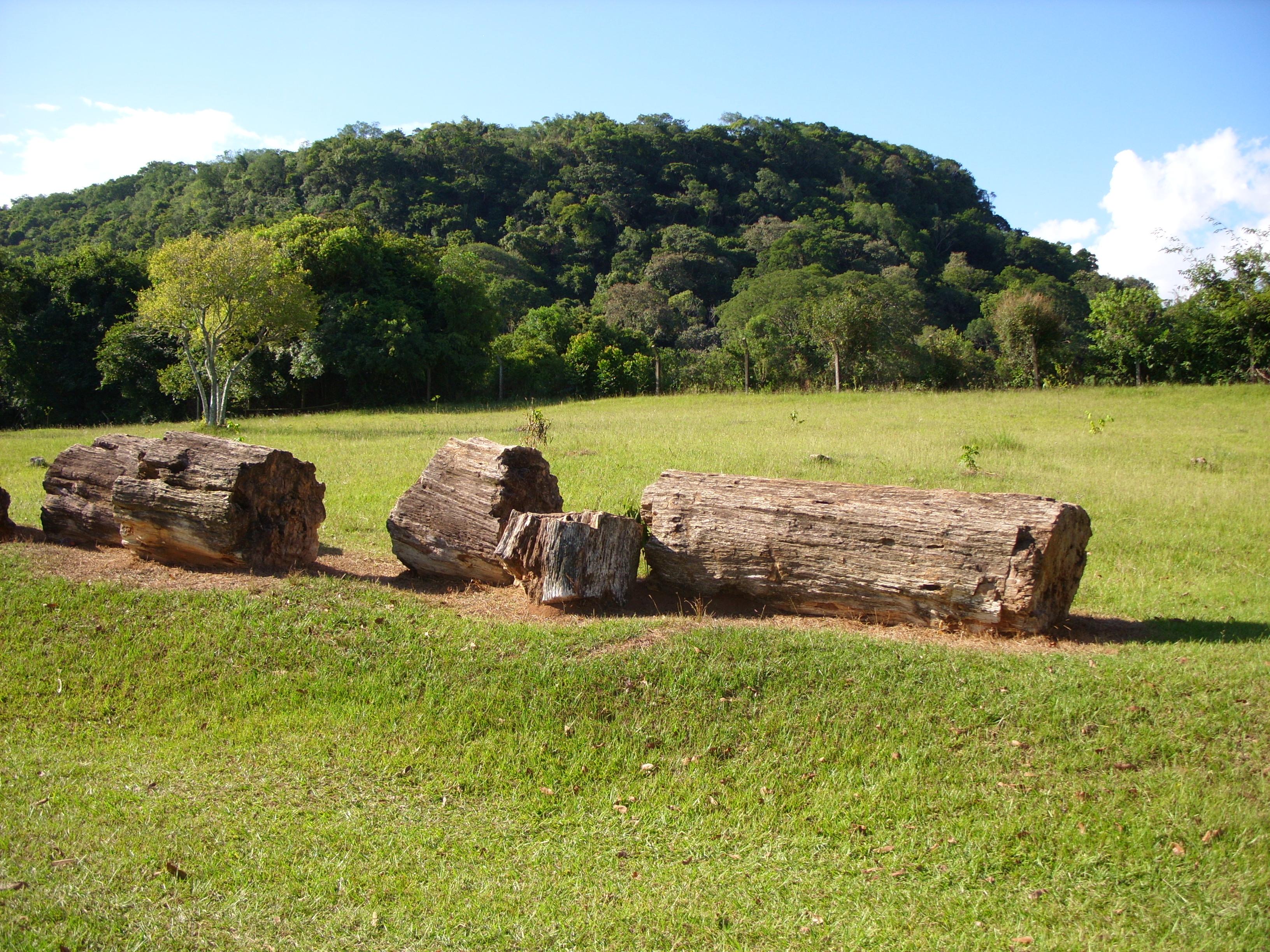 Paleorrota Geopark Fossil Hunting GuideStaurikosaurus pricei (early dinosaur), Hyperodapedon (rhynchosaur)
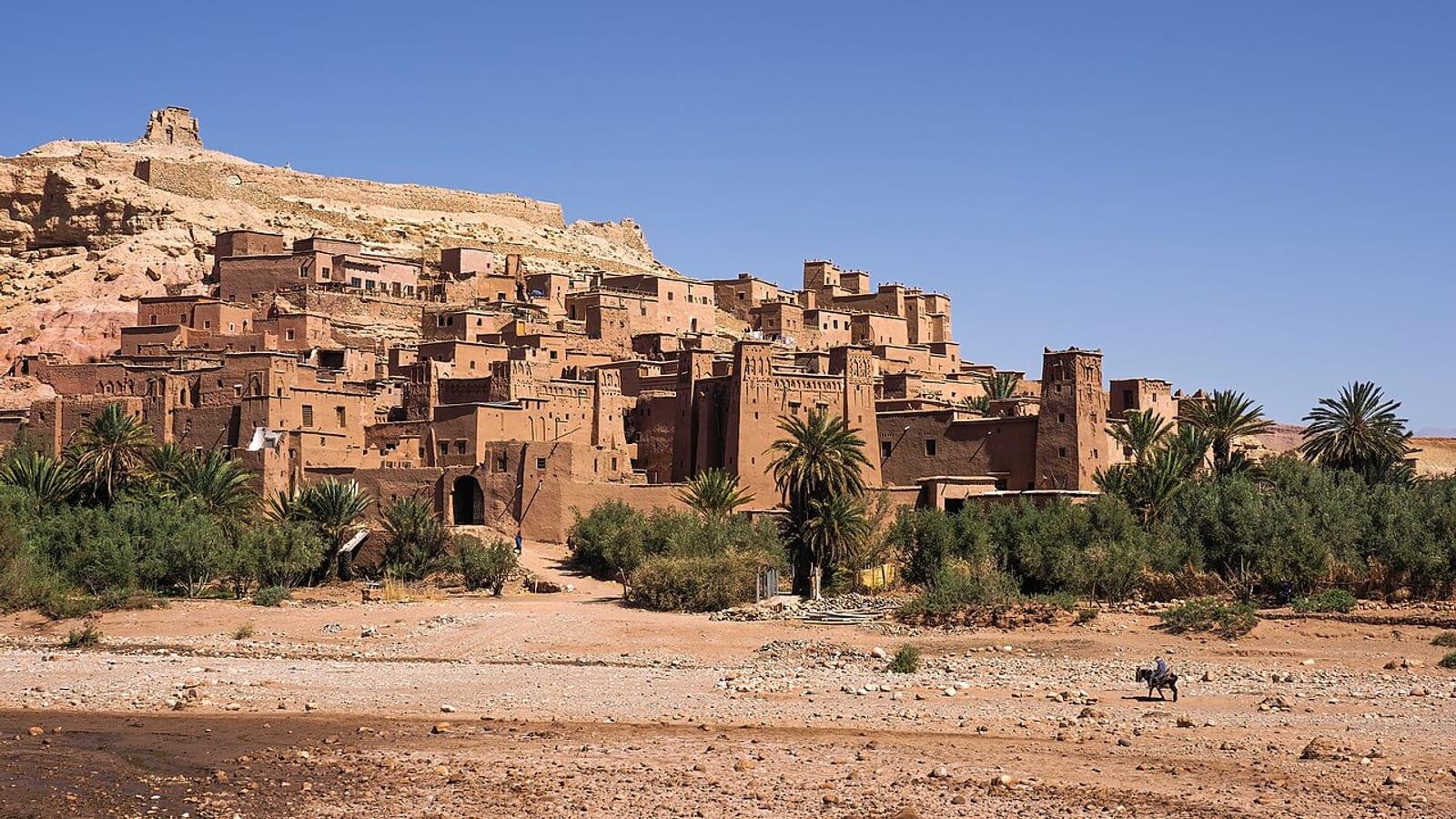 Ait Benhaddou Echinoid Site Ouarzazate Fossil Hunting GuideCretaceous echinoids, Brachiopods
 Kem Kem Dinosaur Fossil Beds Taouz Fossil Hunting GuideSpinosaurus aegyptiacus, Carcharodontosaurus saharicus