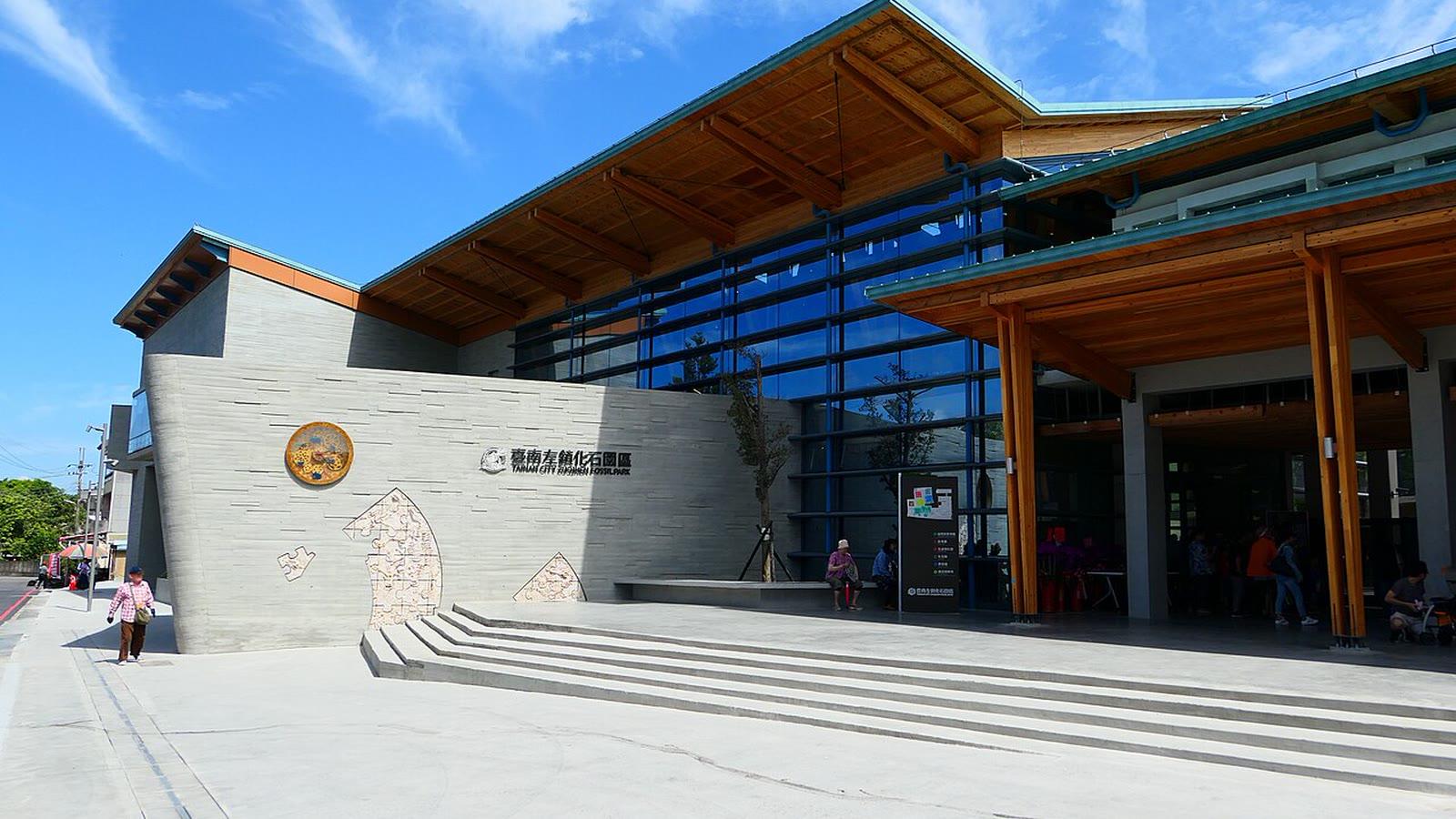
Tainan City Zuojhen Fossil Park Fossil Hunting Guide
Image: Pbdragonwang (CC BY-SA 4.0)
Tainan City Zuojhen Fossil Park stands on the Tsailiao Creek fossil beds in southern Taiwan, where Middle Pleistocene mammals have been collected for almost a century. Five halls hold the Hayasaka rhino skeleton, Stegodon teeth and crocodile bone. The park replaced the old Tsailiao Fossil Museum in 2019.
By Edward Chen · Published 12 October 2026
Introduction
Tainan City Zuojhen Fossil Park is built on the Tsailiao Creek fossil beds, the locality that has produced most of Taiwan's Pleistocene land mammals. The park opened in May 2019.
It is not a new institution so much as a rebuilt one. The park merged the old Tsailiao Fossil Museum and the Natural History Education Hall on the same ground. It shares its site with Guangrong Elementary School.
Five halls fill the complex. They are the Fossil Hall, the Life Evolution Hall, the Natural History Education Hall, the Story Hall and the Exploration Hall. Each takes a different part of the story.
The headline specimen is a mounted skeleton of the Hayasaka rhino, Nesorhinus hayasakai. Hiroyuki Otsuka and Lin named the animal in 1984 as Rhinoceros sinensis hayasakai, and later work moved it into the genus Nesorhinus. Type material of the species is held at this park and at National Taiwan University.
You do not collect real fossils here. The Natural History Education Hall carries a modelled strata wall and a simulated riverbed where visitors dig. The fossils in the ground outside are a different matter, covered under collecting rules below.
Location and Directions
The park is at No. 61-23, Ronghe Village, Zuojhen District, Tainan City, in the hills east of the Tainan plain.
GPS: 23.0645°N, 120.3893°E.
Telephone: 06-5731174 or 06-5732385.
By bus, take the Tainan city Green Trunk Line from in front of Tainan Railway Station. It runs along Provincial Highway 20 through Xinhua and stops at the Zuojhen Fossil Park stop.
By car from National Freeway 3 southbound, leave at the Shanhua interchange, turn left and drive through Shanshang to Zuojhen. Northbound, leave at the Xinhua system interchange onto National Freeway 8 and follow Provincial Highway 20. From National Freeway 1, take the Tainan system interchange onto National Freeway 8, then the Xinhua system interchange, then Highway 20.
Parking runs to 30 spaces on the park grounds and 50 more at the Zuojhen Station car park. Do not park along Highway 20. The park warns that doing so blocks the motorcycle lane and can bring a fine or a tow.
Opening hours are 09:00 to 17:00. The last ticket is sold at 16:00 and the last entry is at 16:30. The park closes every Wednesday. Older listings say Tuesday, which is out of date.
Full admission costs NT$100. A concession ticket costs NT$70 for students with a student card and for groups of 20 or more. A half ticket costs NT$50 for visitors aged 65 and over and for children aged 6 to under 12. Children under 6, residents of Zuojhen District, disabled visitors with one companion, licensed tour guides and holders of a volunteer honour card enter free. Bring the document that proves your category, or you pay full price.
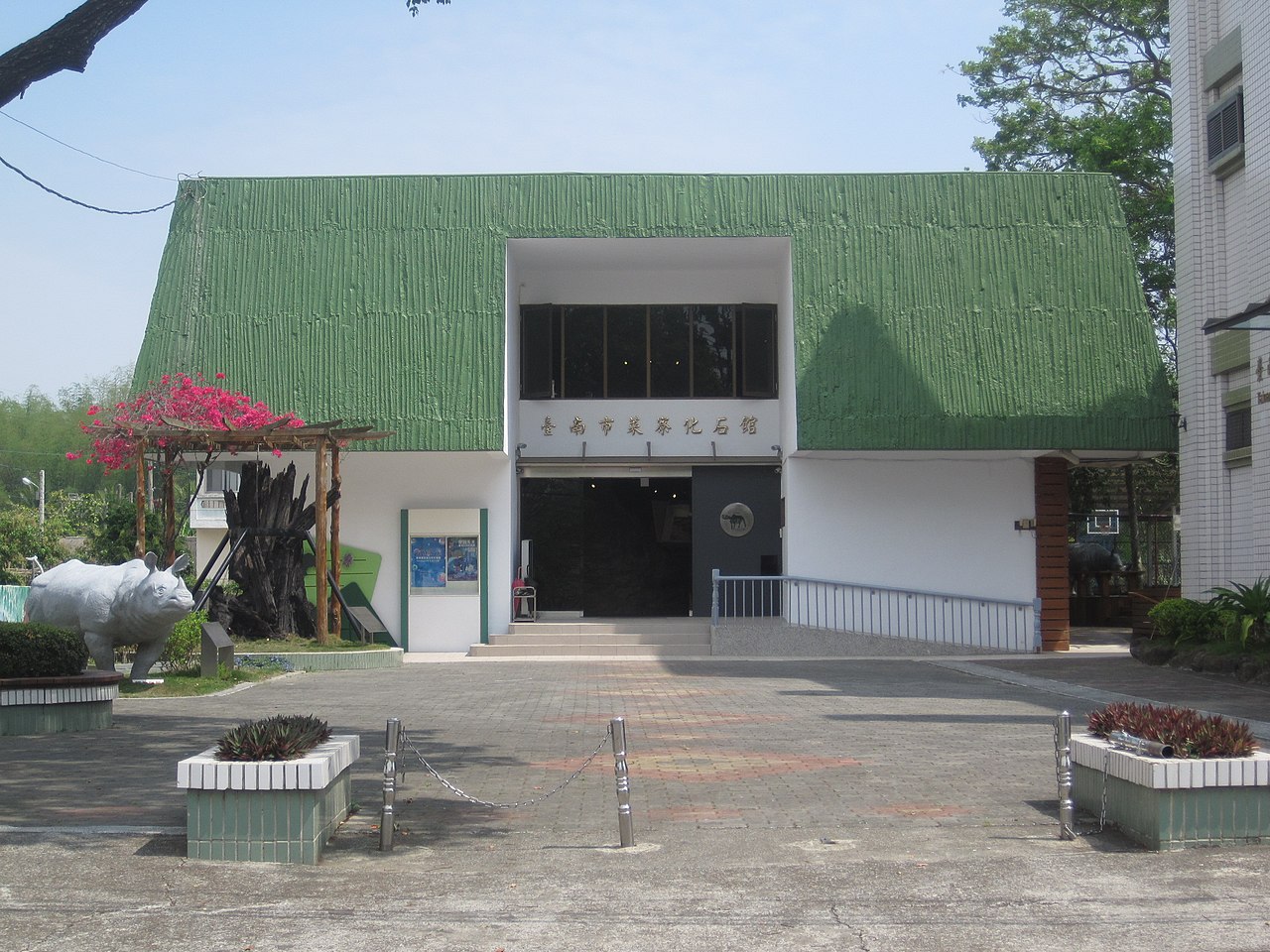 Photo: Pbdragonwang, CC BY-SA 4.0, via Wikimedia Commons

What Fossils You'll Find
The Chochen and Tsailiao area has yielded primates, proboscideans, pigs, deer, rhinoceroses, crocodiles, a bird and fishes. That list comes from a 2025 review in Fossil Record by Lin and colleagues. The same paper described the first fossil frog and snake assemblage from southern Taiwan.
The park's own account of its collection names mammoths, Stegodon, deer, crocodiles and shellfish, both marine and terrestrial. Elephants, rhinoceros and water buffalo were among the earliest finds, from the 1930s.
Stegodon orientalis is the species on the label of the upper jaw displayed in the Fossil Hall. The label gives it as Middle Pleistocene from the Xinhua Hills. A 2009 National Taiwan University revision concluded that Taiwanese Stegodon material supports S. orientalis and found no solid evidence for S. aurorae on the island.
Crocodile material is on display as a wall of mandibles, a maxilla, a cervical vertebra and a scute. Fragments of water buffalo, Bubalus teilhardi, are shown too.
What a visitor actually does is dig the simulated riverbed in the Natural History Education Hall and observe the modelled strata wall. The Fossil Hall adds an augmented-reality sand table of the Tsailiao River basin. The Exploration Hall holds a fossil preparation room and covers the Zuojhen human skull.
The Story Hall covers the Xinhua hills, Siraya material including the Sinkang manuscripts, and the collector Chen Chun-mu, known locally as the fossil grandfather. Much of the collection came through his hands.
 Photo: 宜蘭第一公民, CC BY-SA 4.0, via Wikimedia Commons

Geologic History
The fossils come from the Chiting Formation, a Middle Pleistocene unit. It consists mainly of interbedded sandstones, siltstones and mudstones and reaches about 2,000 metres in thickness.
Lin and colleagues gave the formation a conservative age of about 0.8 to 0.4 million years in 2025. They dated the Kuoling and Takengwei members, which supply most of the Chochen and Tsailiao fossils, to about 0.7 to 0.4 million years.
The stratigraphy carries a caution that matters for anyone reading a label. Many of the fossils were collected loose from the bed of the Tsailiao River rather than dug out of a measured section. Lin and colleagues describe much of the material as secondarily reworked and lacking precise stratigraphic context.
That does not make the fossils worthless. It does mean that an individual specimen's exact level within the formation is often unknown. That is why age statements for this fauna come as ranges rather than dates.
The setting was a warm, wet subtropical lowland with open ground. Work on Nesorhinus reads the rhino's habitat as open grassland shared with proboscideans and wild pigs.
 Photo: 宜蘭第一公民, CC BY-SA 4.0, via Wikimedia Commons

Collecting Rules and Regulations
The digging area inside the park is a simulation. You are not excavating the Chiting Formation and nothing you turn up there is a real fossil. Treat it as an activity for children rather than as a collecting opportunity.
The park publishes no permission to collect from the Tsailiao River bed, and this guide does not suggest you try. The riverbed material is the source of a scientific collection that is still being worked on. Type specimens of Nesorhinus hayasakai had already been lost once through poor curation. Tsai, Otsuka and Fang tracked five of them down and published the recovery in 2024.
If you find something in the creek, photograph it where it lies and record the spot. Call the park on 06-5731174 rather than removing it.
Normal museum rules apply inside the halls. Do not touch mounted material, and follow staff direction around the preparation room.
Anyone claiming a concession, half price or free entry must show the supporting document at the desk.
 Photo: 宜蘭第一公民, CC BY-SA 4.0, via Wikimedia Commons

Safety
The halls themselves are an indoor, air-conditioned, step-free museum visit. The hazards are outside them.
Southern Taiwan is hot. Tainan summers run hot and humid, and the walk between the car park and the halls is in the open. Carry water and plan the outdoor part for early or late in the day.
Do not enter the Tsailiao River bed after rain. This is a monsoon and typhoon region. A dry gravel bed in a Taiwanese hill catchment can run deep and fast within an hour. Taiwan's typhoon season runs through the summer and early autumn.
Watch children on the riverbed activity and in the preparation room, where tools are in use.
Highway 20 outside the park carries fast traffic and a motorcycle lane. Cross at the marked points and keep off the carriageway, which is why the park bans roadside parking.
The park publishes no hazard list of its own for the surrounding land. The points above are general practice for a hot-climate river catchment rather than site-specific rules.
Sources
https://fossil.tnc.gov.tw/content/index.php?m2=96 https://fossil.tnc.gov.tw/content/index.php?m2=52 https://fossil.tnc.gov.tw/content/index.php?m2=23 https://fossil.tnc.gov.tw/ https://doi.org/10.3897/fr.28.164568 https://bioone.org/journals/mammal-study/volume-49/issue-2/ms2023-0070/Rediscovery-of-type-specimens-of-Nesorhinus-hayasakai-Mammalia-Rhinocerotidae-from/10.3106/ms2023-0070.full https://tdr.lib.ntu.edu.tw/handle/123456789/8838
Nearby sites
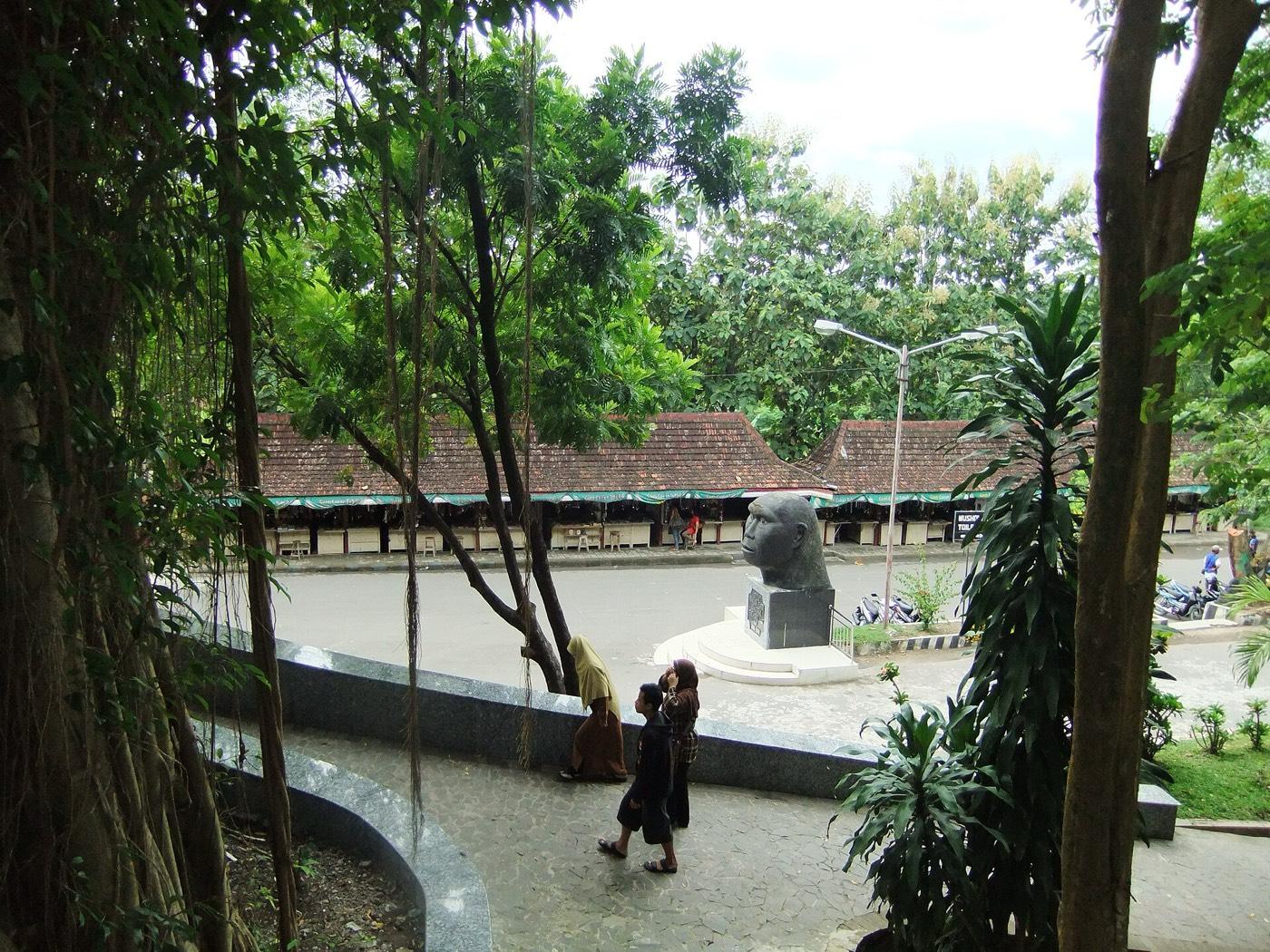 Sangiran Early Man Site Fossil Hunting GuideHominins, Mammals
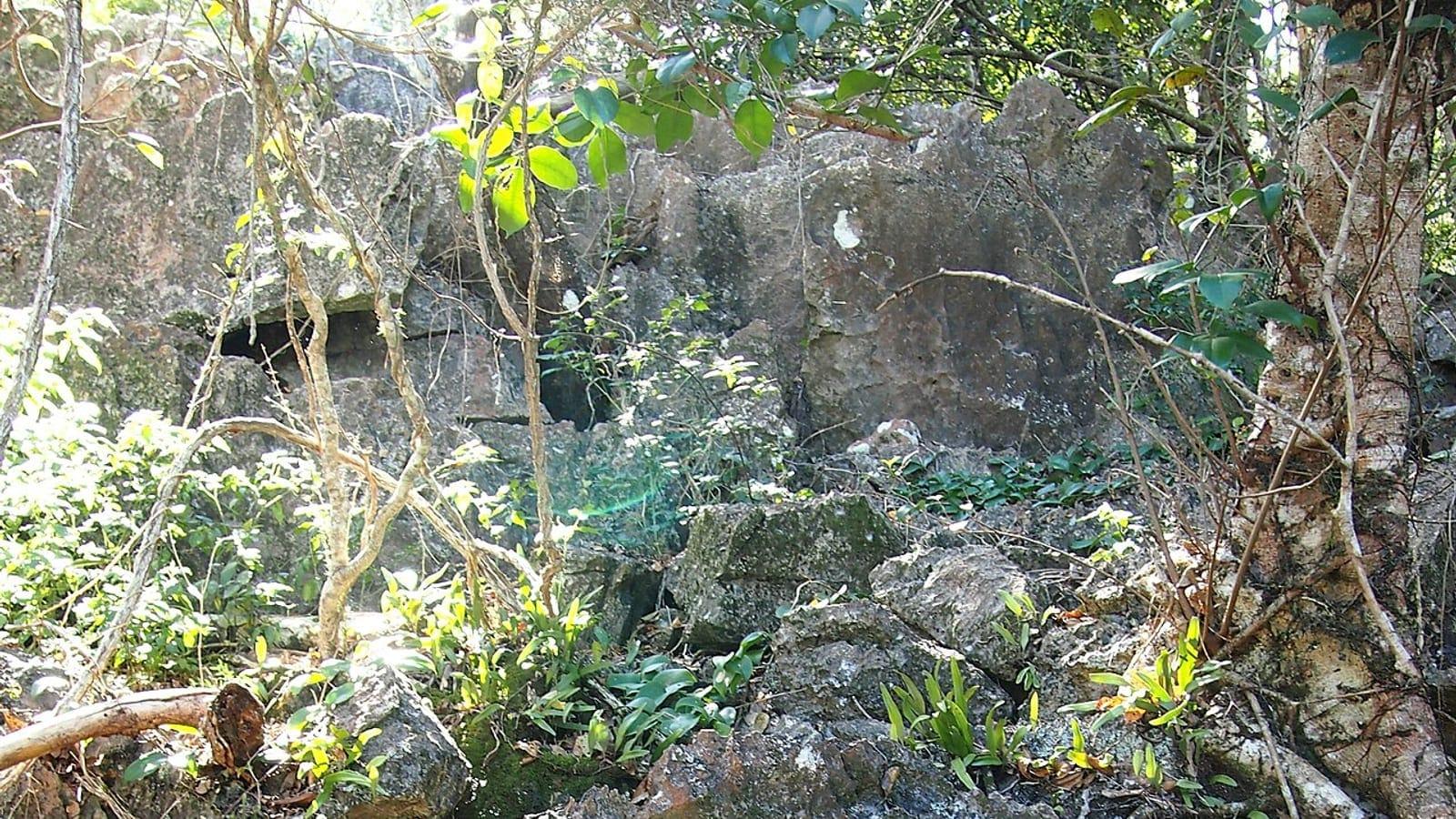 Mount Etna Caves National Park Fossil Hunting GuidePleistocene fossil assemblage, Invictokoala monticola
 Lake Clifton Thrombolites Yalgorup National Park Fossil Hunting GuideThrombolites
 Mungo National Park Fossil Hunting GuideMungo Lady, Mungo Man