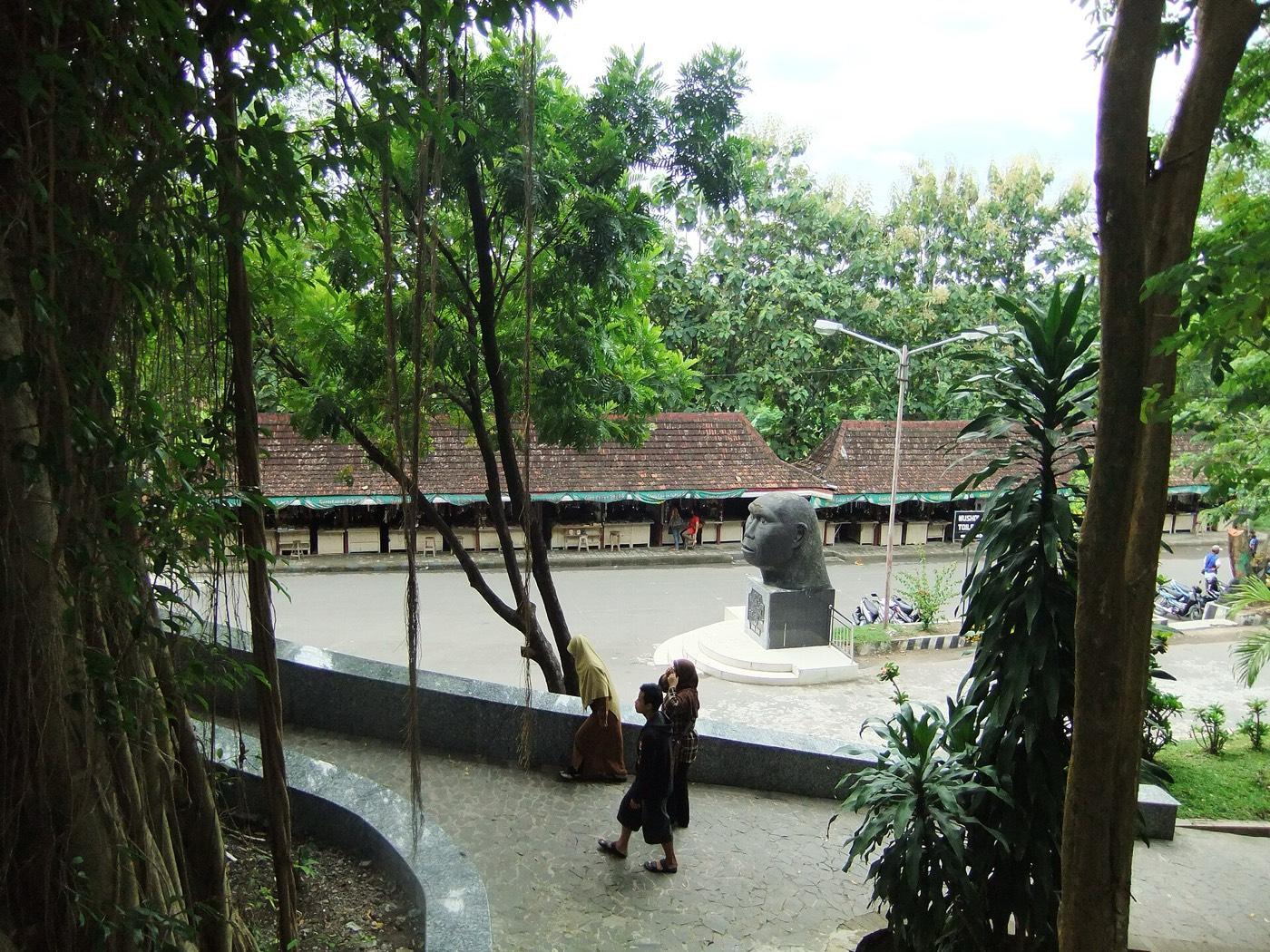
Sangiran Early Man Site Fossil Hunting Guide
Image: Midori (CC BY 3.0)
A UNESCO World Heritage Site in Central Java that has produced a large share of the world's Homo erectus fossils, interpreted through five cluster museums across an eroded dome. It holds Sangiran 17, the only Homo erectus cranium in Asia still keeping its facial structure as found.
By Edward Chen · Published 12 September 2026
Introduction
Roughly half of all known Homo erectus fossils have come from Java, and a large share of those came from Sangiran. That single fact is why the site carries World Heritage status.
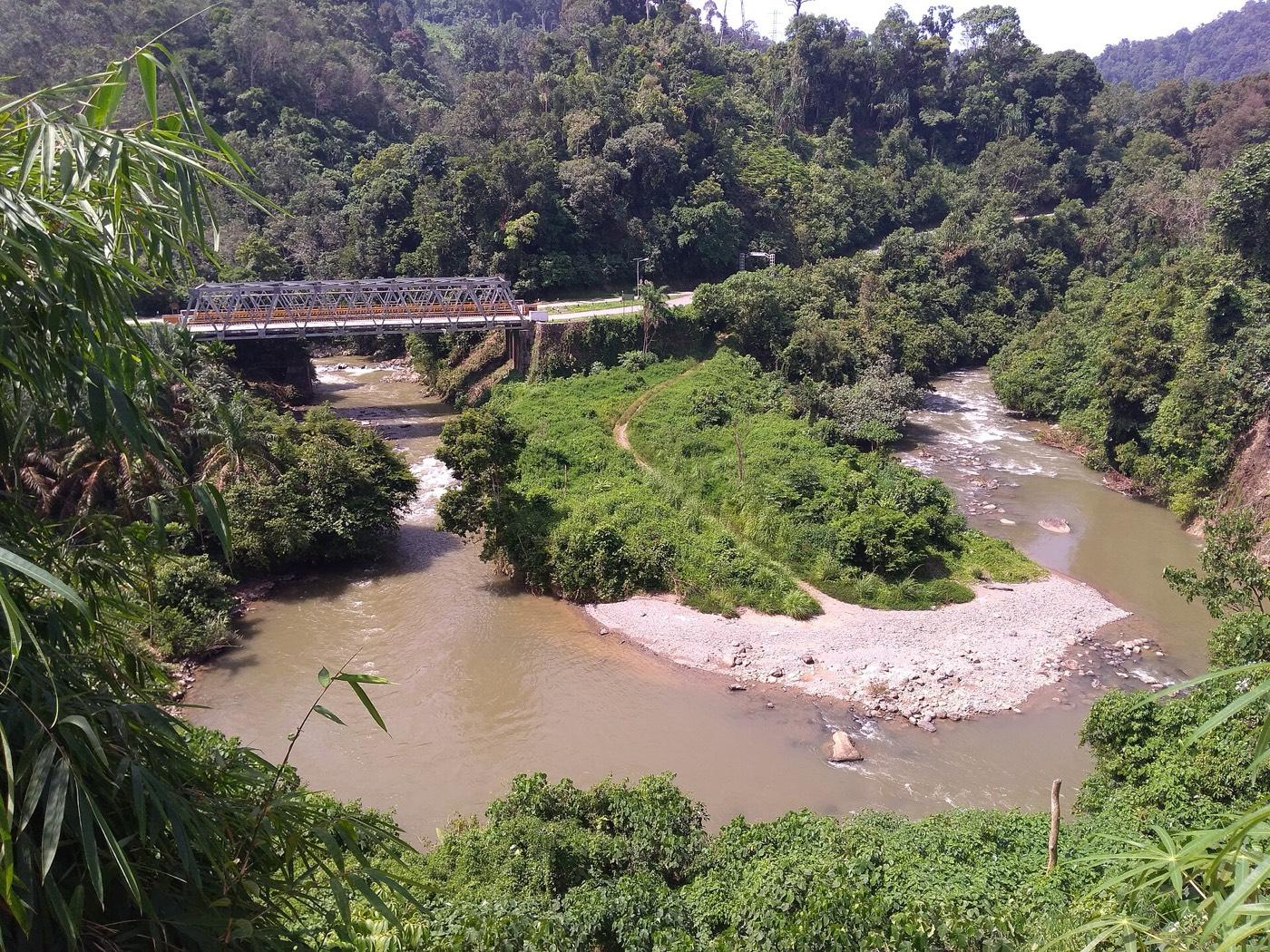
The story starts with Eugène Dubois, a Dutch physician. He went to the Indies in 1887 with the explicit aim of finding the fossil that linked humans to earlier apes. He found material at Trinil on the Solo River rather than at Sangiran, and called it Pithecanthropus erectus. Sangiran was worked later, from the 1930s, by Gustav Heinrich Ralph von Koenigswald, and it proved far richer.
The site's best known specimen is Sangiran 17. It is the only Homo erectus cranium in Asia that still keeps its facial structure as found. That makes it the reference point for what these people actually looked like.
Sangiran is not a single dig. It is a dome of eroded country roughly 56 square kilometres across, with five separate cluster museums spread over it.
Location and Directions
The main museum is at Krikilan in Kalijambe district, Sragen Regency, Central Java, about 15 kilometres north of Solo.
GPS: 7.4500°S, 110.8333°E.
Solo, formally Surakarta, is the nearest city and has an airport and rail connections. The museum is reached by road.
Opening runs Tuesday to Sunday, 08:00 to 16:00, and the site closes on Mondays. Admission is charged.
Five cluster museums make up the site: Krikilan, Dayu, Ngebung, Bukuran and Manyarejo. Krikilan is the largest and the one most visitors mean when they say Sangiran. Each of the others covers a different theme, and reaching all five needs a full day and a vehicle.
What Fossils You'll Find
Nothing is collectable. The dome is a protected World Heritage property and an active research area.
The museums hold the material. Homo erectus cranial and dental remains are the centrepiece, displayed alongside casts and reconstructions.
The vertebrate fauna around them is substantial in its own right. Stegodon, an elephant relative, occurs commonly, along with bovids, deer, rhinoceros, hippopotamus, crocodiles and freshwater molluscs.
Stone tools are present in the sequence, including flakes and the chopping tools associated with early hominin occupation in island south-east Asia.
Local people do find and sell fossil fragments around the dome. Do not buy them. That trade removes material from its stratigraphic context, which is the thing that gives it scientific meaning, and it is illegal.
 Photo: Vicpeters, CC BY 4.0, via Wikimedia Commons
Geologic History
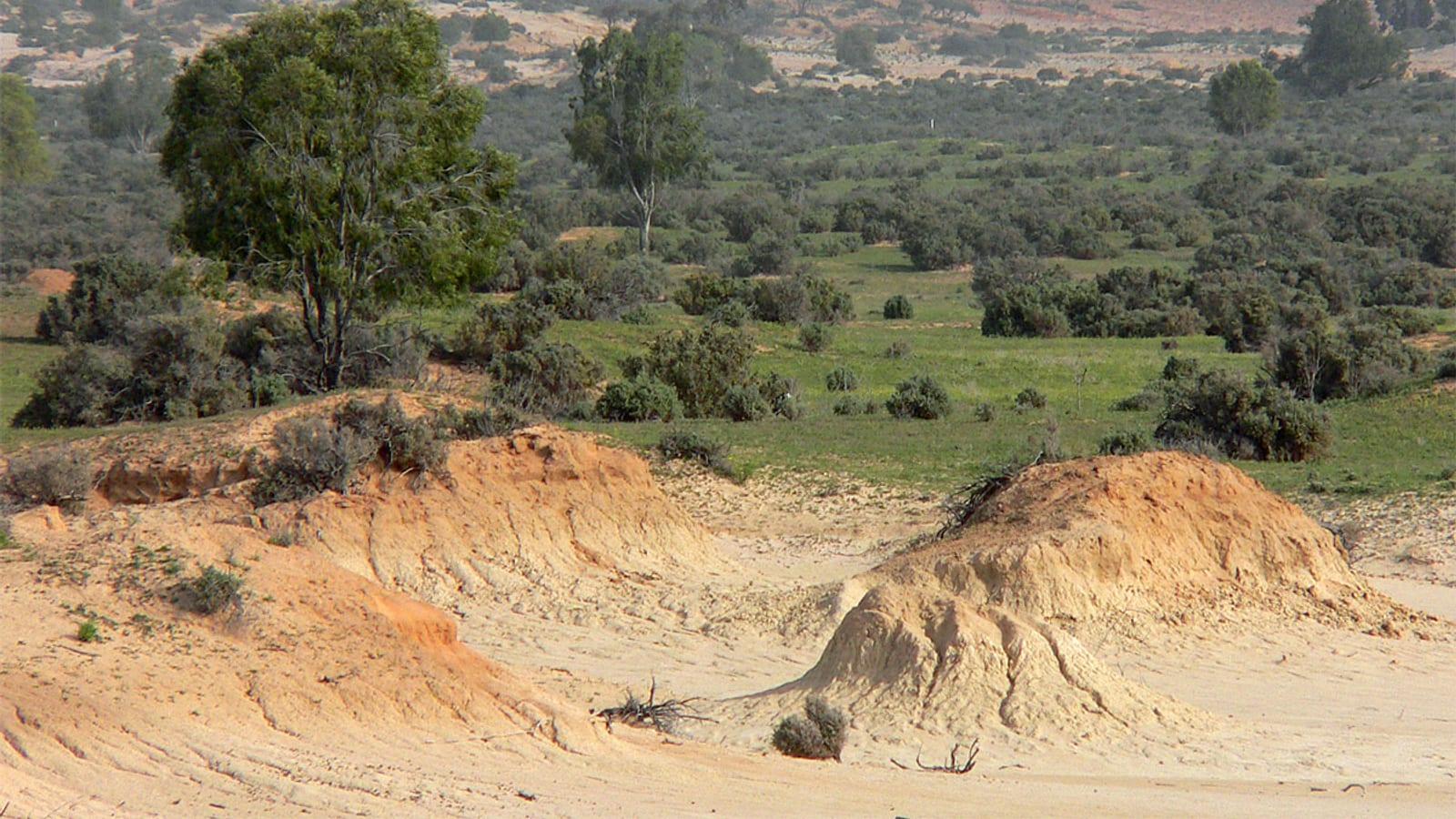
The Sangiran Dome is a partially eroded anticline. Rock layers were folded upward and the crest was then stripped away by erosion, which exposes progressively older beds toward the centre. That structure is why a large sequence is accessible at the surface in a small area.
Two units carry the hominin record. The lower Pucangan Formation, also called the Sangiran Formation, is Early Pleistocene and includes volcanic and marine facies. The overlying Kabuh Formation, also called Bapang, is Middle Pleistocene and is fluvial.
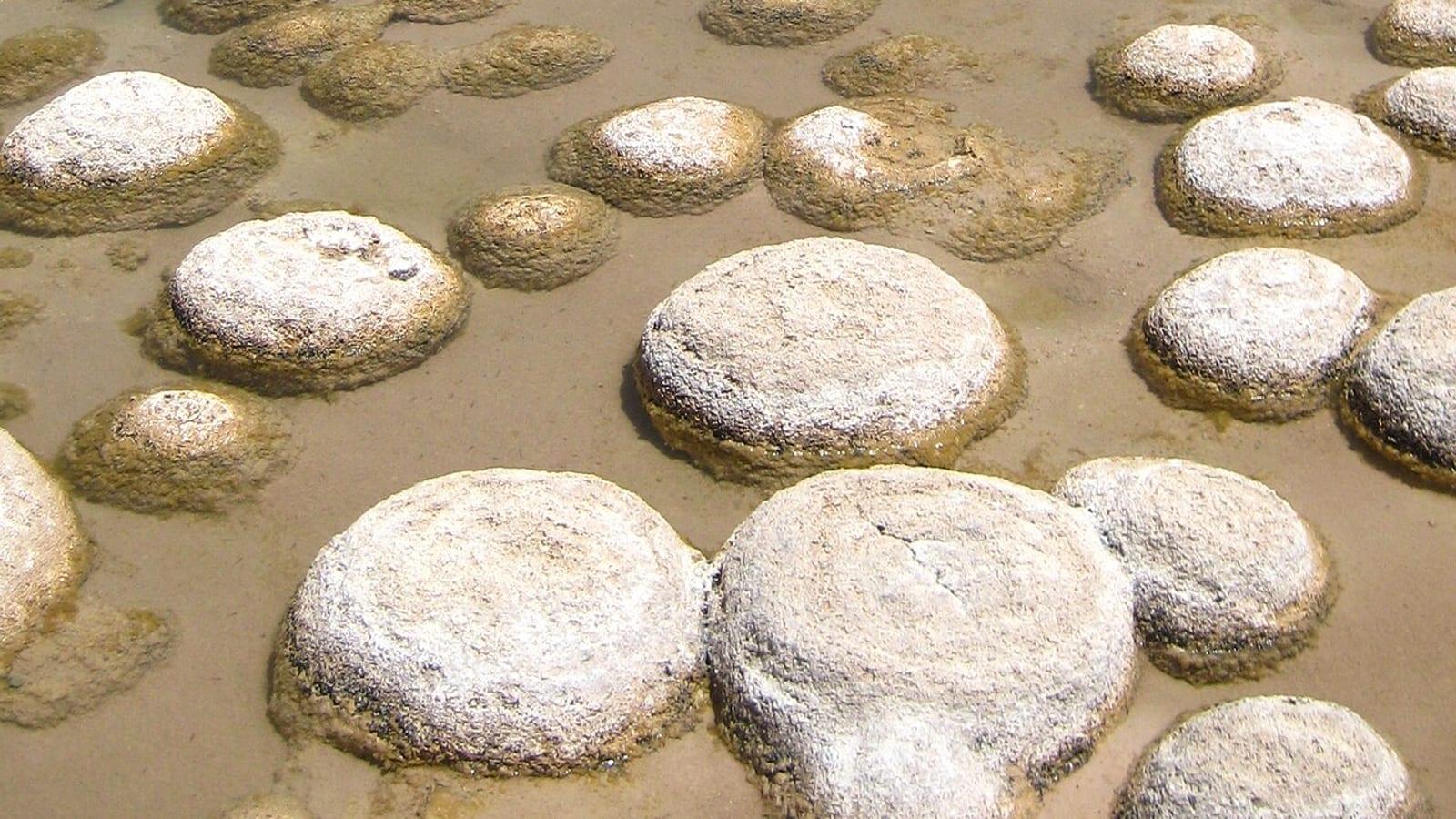
Argon dating of the Bapang Formation hominins established an Early Pleistocene framework for the sequence. The age of the earliest Sangiran hominins has been contested for decades, with figures from 1.66 million years downward. Work published in 2020 places their first appearance at roughly 1.3 million years ago, which is later than the older estimates.
Java sat on an active volcanic arc throughout. Ash falls are interbedded through the sequence, and they are what makes the radiometric dating possible.
Java's hominin record does not stand alone. Trinil, Ngandong and Mojokerto are the other major Javanese localities. Together they document Homo erectus on the island across a very long span, from perhaps 1.5 million years ago to well under 150,000.
 Photo: James St. John, CC BY 2.0, via Wikimedia Commons
Collecting Rules and Regulations
Collecting is prohibited. Sangiran is a UNESCO World Heritage Site and Indonesian cultural heritage law protects it.
Do not dig, and do not buy fossils offered by people around the site.
Excavation is carried out under permit by Indonesian institutions in partnership with foreign researchers.
Report anything you notice eroding out to museum staff rather than picking it up.
The dome's structure is worth grasping before you visit, because it explains the layout. Older rocks sit at the centre and younger ones at the rim, so moving across the site means moving through time. The cluster museums are positioned to take advantage of that, each sitting near the beds it interprets.
 Photo: Gerbil, CC BY-SA 3.0, via Wikimedia Commons
Safety
The museums are managed indoor facilities.
Outside them the dome is farmland and eroded gullies, and the ground is uneven. Wear proper footwear if you walk between clusters.
Central Java is hot and humid year-round. The wet season runs roughly November to April and makes the tracks between clusters difficult.
Carry water and sun protection. Shade between museums is limited.
Dubois joined the Dutch Army Medical Service in 1887 and was posted first to Sumatra, moving to Java only after several unproductive years. Von Koenigswald's teams worked Sangiran from the 1930s and eventually recovered material from close to forty individuals. That is what turned Java from a single famous find into a sustained record.
Sources
https://iha.kemenbud.go.id/en/portfolio/sangiran-early-man-museum/ https://whc.unesco.org/en/list/593/ https://journals.plos.org/plosone/article?id=10.1371%2Fjournal.pone.0067233 https://www.pnas.org/doi/10.1073/pnas.081077298
%20%26%20indochinite%20tektites%20(Pleistocene%3B%20southeastern%20Asia)%201%20(44861525054).jpg)
.jpeg)