Wales Fossil Hunting Guide
7 Best Fossil Hunting Sites in Wales
Wales spans more geological time than any similarly sized region in Britain. The Pembrokeshire coast exposes Ordovician and Silurian rocks 450 million years old; the Glamorgan Heritage Coast has Jurassic ammonite horizons; Anglesey's Carboniferous limestones produce corals and brachiopods from tropical seas. The sites in this guide range from free foreshore walks to fee-access quarry visits. Several are viewing-only, but the quality of in-situ geology makes them worth including.
7 fossil sites
Updated 1 August 2026
Half a billion years in one small country
Wales sits at the junction of several ancient tectonic blocks and acted as a platform margin for much of the Palaeozoic, which is why a journey across the country passes through more geological periods than most regions of comparable size. The Ordovician slates of Pembrokeshire, approximately 470 million years old, include the global boundary stratotype for the base of the Ordovician at Castell Coch near Ponterwyd. Silurian reef limestones follow, then Devonian Old Red Sandstone across the south, then the Carboniferous limestone belt that runs through Anglesey and the northeast. The south coast adds a final layer: Triassic and Jurassic marine sediments deposited as the region subsided beneath shallow Mesozoic seas. Each of these periods produced distinct fauna, and the Welsh coastline exposes them all at accessible, walkable sites.
Visiting fossil sites in Wales requires more planning than inland sites. The southwest Pembrokeshire coast is strongly tidal: the tidal range at Milford Haven can exceed seven metres, and many of the most productive foreshore exposures are only accessible for two to three hours around low water. Timing a visit to coincide with a low spring tide will typically double the accessible foreshore area. Welsh weather is Atlantic and changeable in all seasons; rain gear and layered clothing are practical on any coastal visit, including summer. Some cliff sections in Pembrokeshire are actively eroding, and loose material above the foreshore should be treated with caution. Stick to the beach and do not position yourself below an unstable face.
- 1
Marloes Sands Fossil Hunting Guide
Pembrokeshire
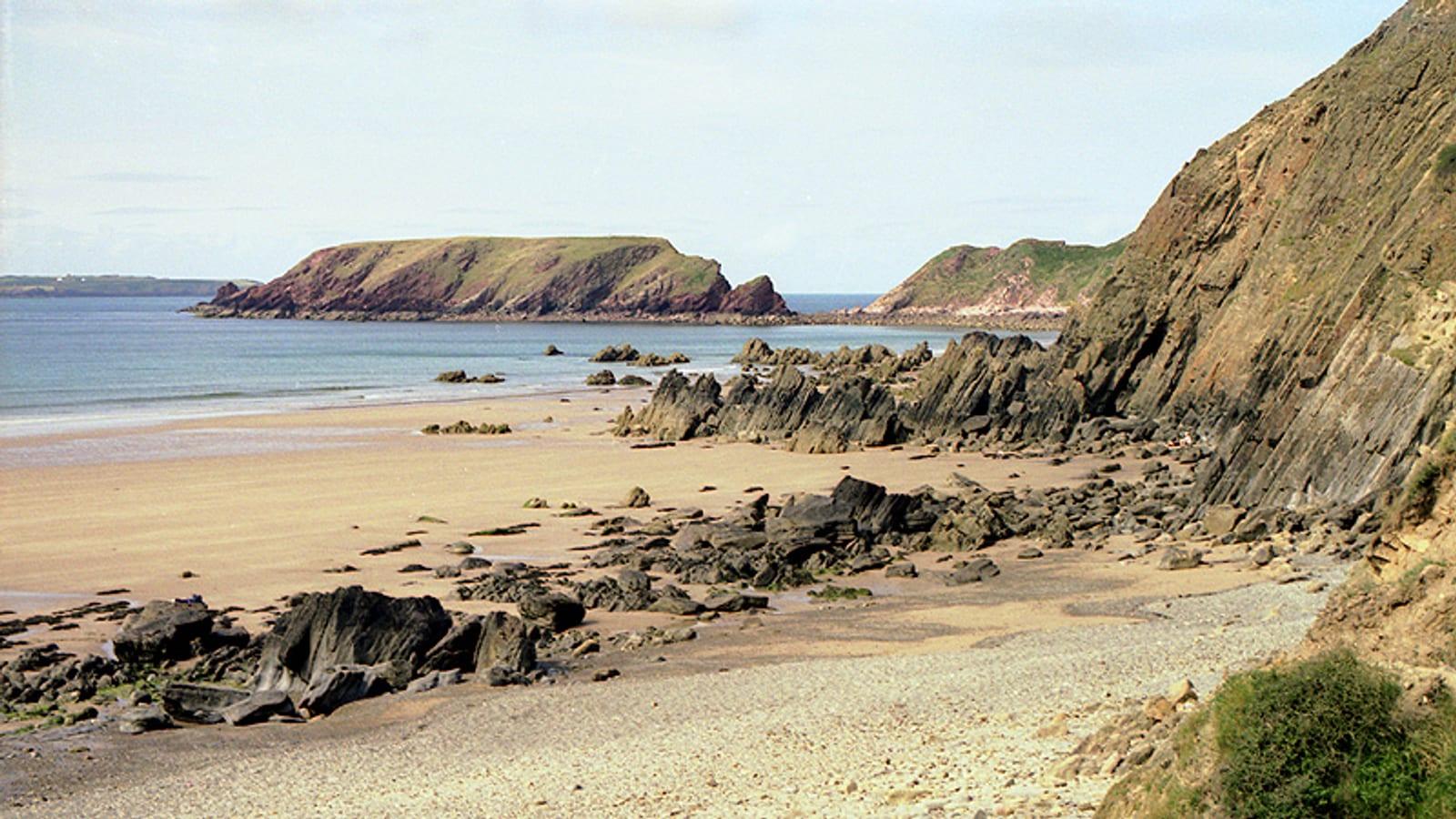
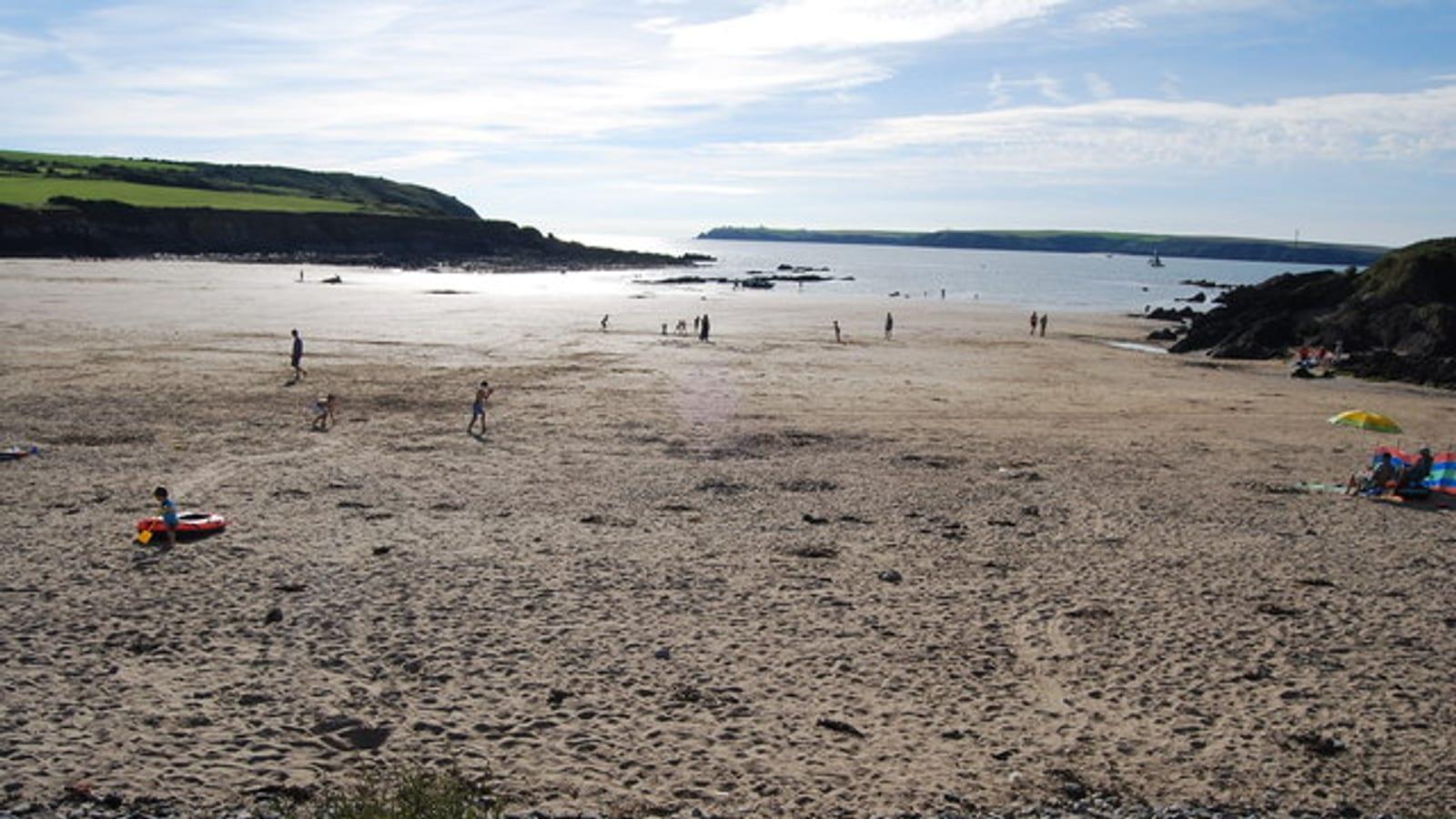
Free collectingCoralsBrachiopodsTrilobitesMarloes Sands is a Silurian marine site within the Pembrokeshire Coast National Park. Access is free and foreshore collecting is permitted. The grey limestone slabs on the foreshore produce Silurian corals (Favosites, Halysites), brachiopods, trilobite fragments, and bryozoans. The rocks tilt steeply and expose fresh faces regularly. Reach the site from the Marloes Sands car park via a 20-minute coastal path walk. Check tides before visiting: the productive foreshore is accessible for only two to three hours around low water.
Read the full guide → - 2
Lavernock Fossil Hunting Guide
Wales, United Kingdom
Viewing onlyAmmonitesBrachiopodsBivalvesLavernock Point sits on the south Wales coast near Penarth and exposes a Triassic Blue Lias sequence with ammonites (Psiloceras) and marine reptile material from the earliest Jurassic. The site carries historical weight on two counts: it produced the first confirmed Welsh ichthyosaur, and in 1897 Marconi received the first radio transmission across open water here. The cliffs are protected, making this a viewing-only site, but the foreshore scree regularly yields loose ammonites and bivalves that visitors may examine and keep.
Read the full guide → - 3
Abereiddy Bay Fossil Hunting Guide
principally Didymograptus murchisoni (tuning-fork graptolite)
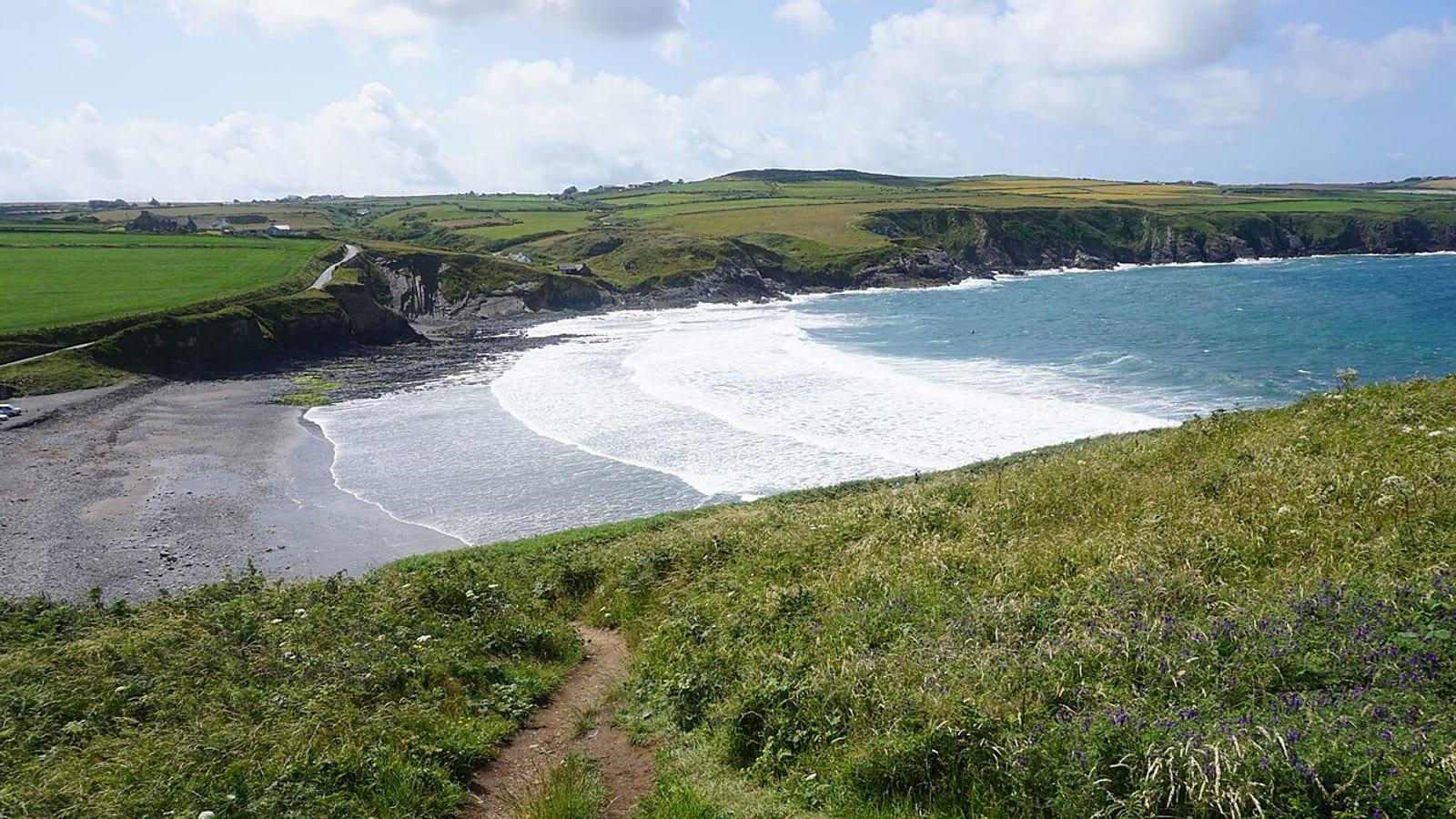
Free collectingGraptolitesTrilobiteAbereiddy Bay in north Pembrokeshire exposes black slate cliffs that are Ordovician in age, approximately 470 million years old, and preserve graptolites: the linear colonial organisms used as zone fossils for global Ordovician stratigraphy. The Blue Lagoon at the north end of the bay is a flooded Ordovician slate quarry. Collecting is permitted from loose beach material; the slates split cleanly and reveal graptolites on fresh surfaces. Access is free, with parking at Abereiddy village.
Read the full guide → - 4
Southerndown Glamorgan Heritage Coast Fossil Hunting Guide
Southerndown
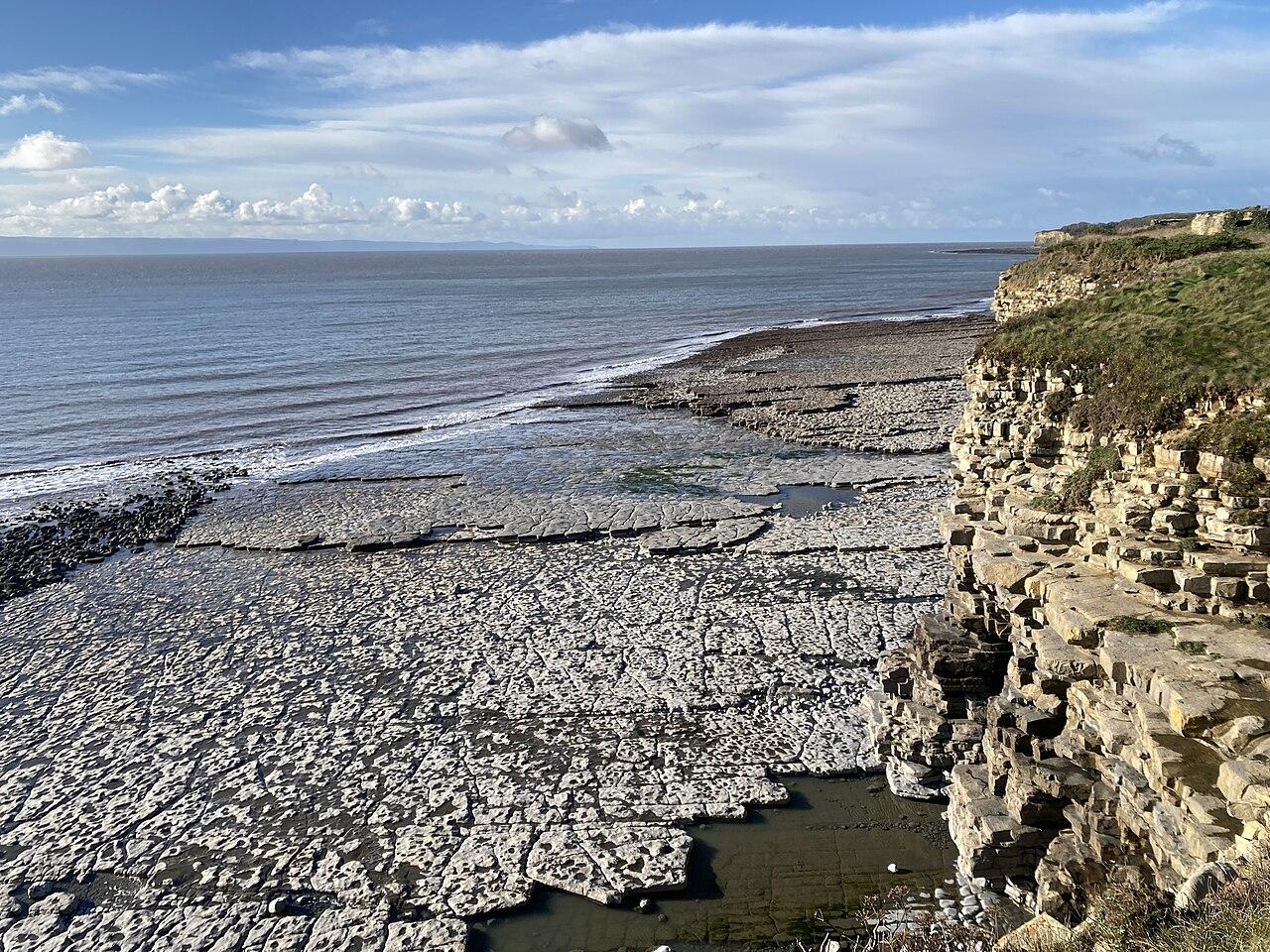
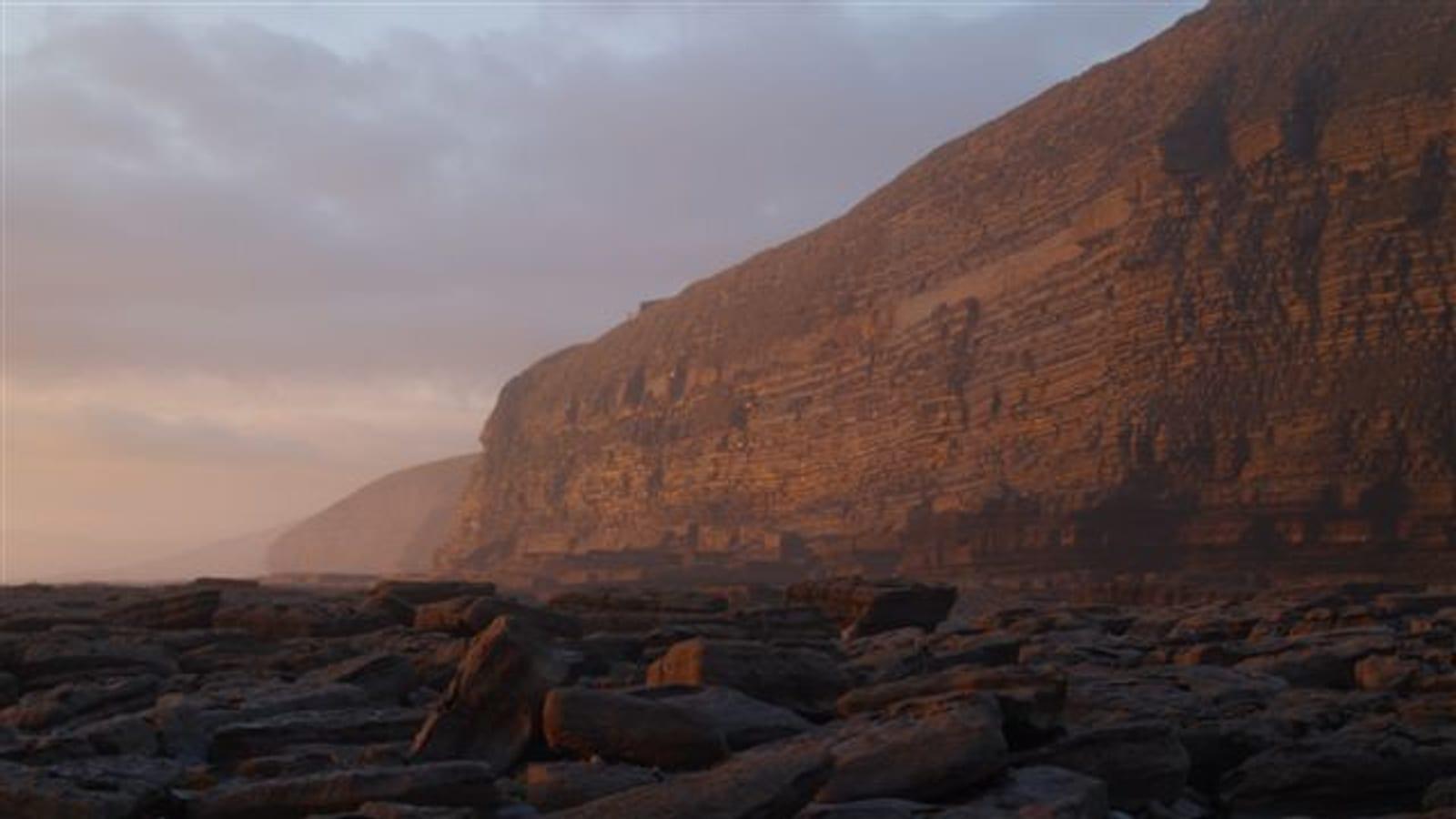
Free collectingAmmonitesBelemnitesBrachiopodsSoutherndown on the Glamorgan Heritage Coast exposes the same Blue Lias sequence as Lyme Regis through wave-cut platforms and cliff sections, but with far fewer visitors. Ammonites, belemnites, and brachiopods occur in the limestone bands and foreshore scree. A modest fee applies for access. The site is managed by the Vale of Glamorgan Council as part of the Glamorgan Heritage Coast; check seasonal access arrangements with the council before visiting.
Read the full guide → - 5
Caim Anglesey Carboniferous Corals Fossil Hunting Guide
United Kingdom
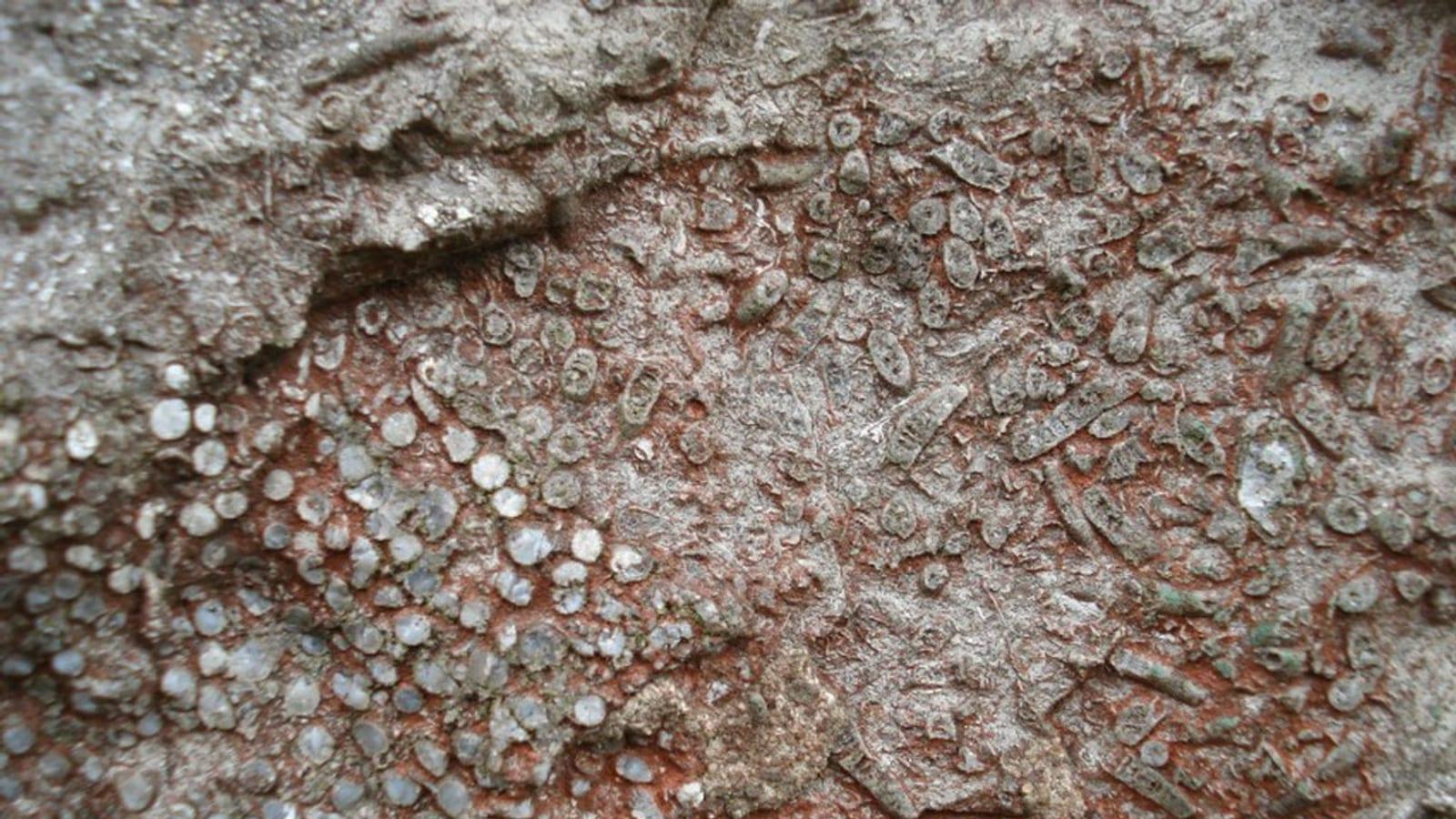
Free collectingCoralsBrachiopodsBivalvesCaim on the northeast coast of Anglesey exposes Carboniferous limestone that produces colonial and solitary rugose corals, brachiopods, and bivalves from a tropical Carboniferous sea. A fee applies to visit. The site requires a short coastal walk from the nearest car park. Limestone foreshores are most accessible in summer when tidal conditions are more predictable, and the clear banding of the rock makes the coral horizons straightforward to identify.
Read the full guide → - 6
West Angle Bay Fossil Hunting Guide
United Kingdom
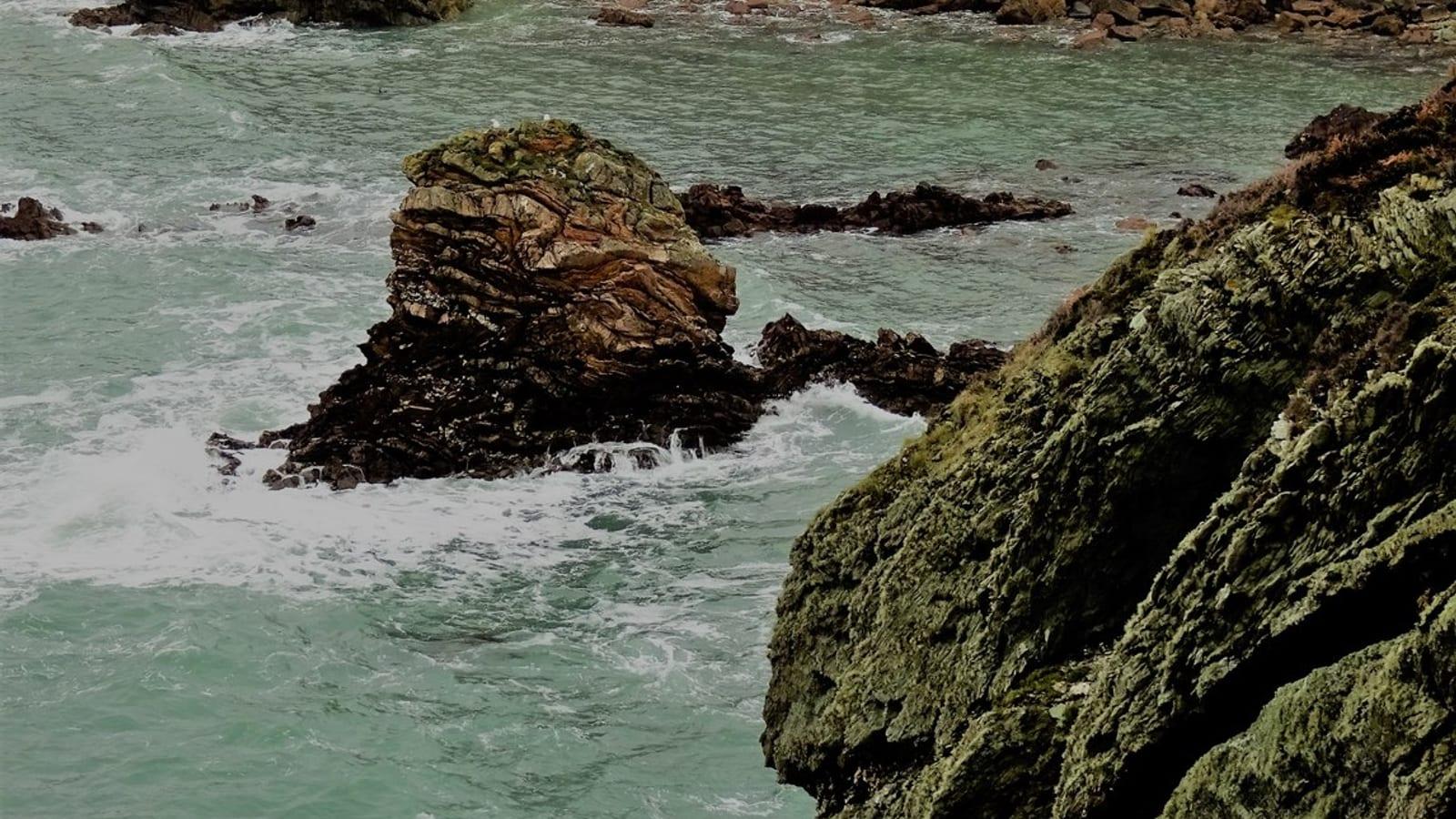
Free collectingCrinoid ossiclesBryozoaCoralsWest Angle Bay on the south Pembrokeshire coast exposes Devonian Old Red Sandstone and marine Devonian limestone. The foreshore reveals crinoid ossicles, brachiopods, and bryozoans from Devonian marine sediments. Collecting is restricted here: the site falls within the Pembrokeshire Coast National Park, making it a viewing-only location. The geology is accessible and clearly layered, which makes West Angle Bay a practical site for understanding Devonian reef environments without picking over the rock.
Read the full guide → - 7
Halkyn Mountain Fossil Hunting Guide
Wales, United Kingdom
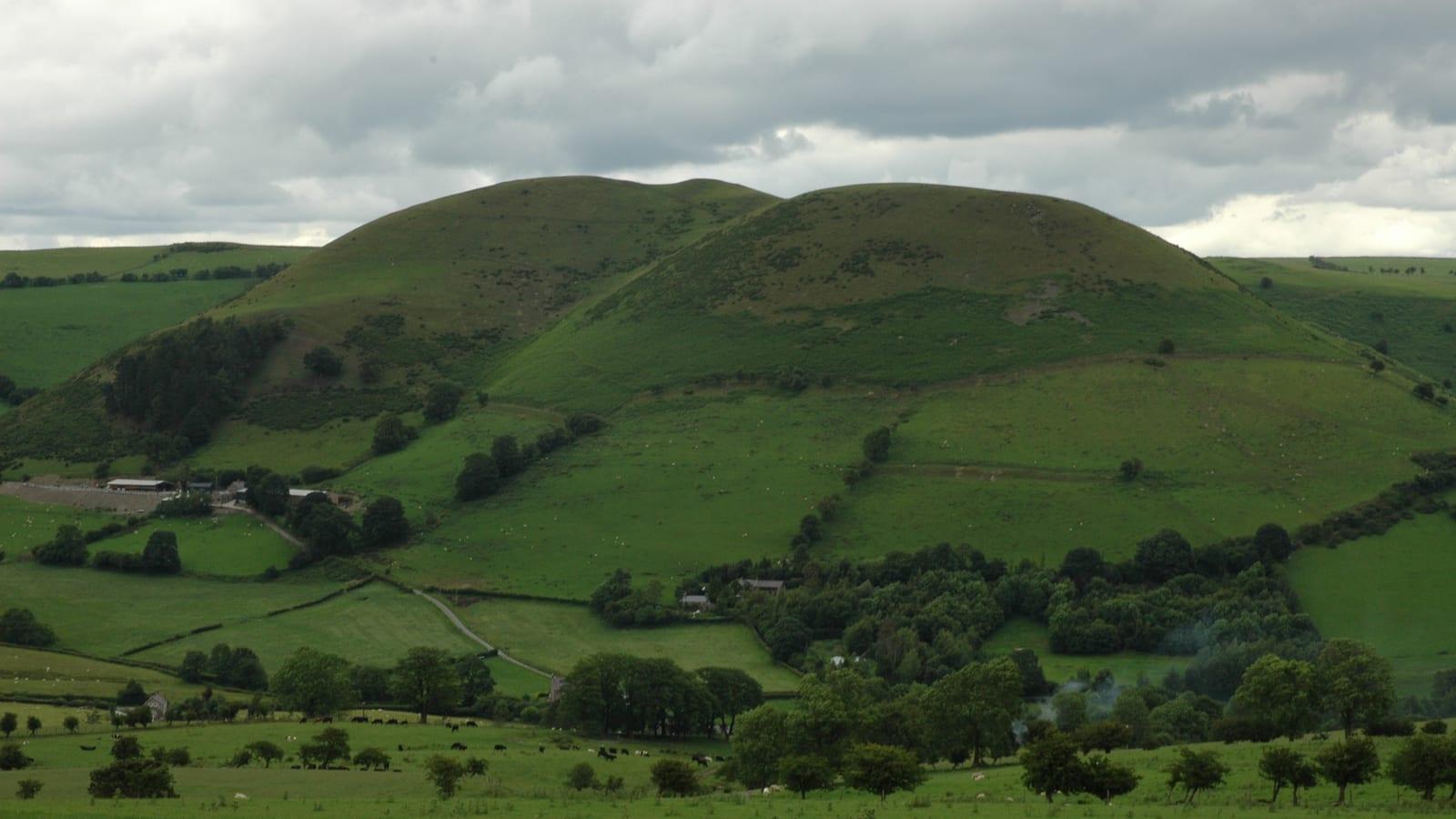
Free collectingBrachiopodsCrinoidsCoralsHalkyn Mountain in Flintshire, north Wales, is a moorland plateau with Carboniferous limestone pavement and old quarry exposures. The limestone yields brachiopods, crinoids, corals, and bryozoans visible without any collecting. The site is viewing-only. Halkyn has a long history of lead mining, and the landscape is pockmarked with mine shafts: stay on established paths and do not approach any shaft openings. The exposed pavement at Halkyn makes the fauna visible on the surface, which suits photography and identification rather than hands-on collecting.
Read the full guide →
Frequently asked questions
- What fossils can you find in Wales?
- Wales covers an exceptional range of geological time in a small area, and the fossil fauna reflects that. Ordovician graptolites occur in the black slates of Pembrokeshire at sites such as Abereiddy Bay; these 470-million-year-old colonial organisms are used to correlate rock sequences worldwide. Silurian corals and brachiopods appear at Marloes Sands. Devonian invertebrates, including crinoid ossicles and brachiopods, occur at West Angle Bay. Carboniferous corals and brachiopods are found on Anglesey at Caim and at Halkyn Mountain in north Wales. The south coast produces Triassic and Jurassic ammonites at Lavernock and Southerndown respectively. Wales has no accessible vertebrate collecting sites, but the Palaeozoic invertebrate variety across the country is the broadest of any comparable stretch of coastline in Britain.
- Is fossil collecting allowed in Wales?
- Surface collecting from foreshore scree is generally permitted below mean high-water mark on public beaches. Sites within the Pembrokeshire Coast National Park carry additional restrictions, particularly regarding hammering or excavation; check the current rules with the National Park Authority before visiting. The Wildlife Trust of South & West Wales manages several coastal reserves in Pembrokeshire — check their site for any access notices before visiting reserve sections. Significant vertebrate finds should be reported to Amgueddfa Cymru, the National Museum Wales. Sites designated as SSSIs may restrict all collecting; signage at each site indicates the current rules.
- What is the best fossil hunting beach in Wales?
- Marloes Sands is the best option for self-guided collecting: Silurian corals and trilobite fragments on a free foreshore with no permit required. Southerndown is the best option for ammonites on the south coast, offering a similar experience to Jurassic Coast sites with a smaller crowd and a modest access fee. Abereiddy Bay suits anyone looking for something unusual: the Ordovician graptolite slates there split cleanly and produce well-defined specimens from one of the oldest fossil-bearing sequences in Wales.
- Do I need a permit to fossil hunt in Wales?
- No permit is required for surface collecting at most coastal sites in Wales. Sites in National Parks, SSSIs, or National Nature Reserves may restrict hammering or excavation; signage at each location indicates what is and is not allowed. The Countryside and Rights of Way Act 2000 provides general access rights to coastal land in Wales, subject to nature conservation restrictions. Collecting on private land requires the landowner's permission in all cases.
- When is the best time to fossil hunt in Wales?
- Late autumn through early spring produces the best conditions at coastal sites: Atlantic storms erode the cliffs and expose fresh material on the foreshore that has not been picked over by summer visitors. Summer is more practical for access, particularly at tidal Pembrokeshire sites, but the foreshore is less productive after a calm season. Always check tide times before visiting Pembrokeshire and south Wales coast sites, where the tidal range is among the highest in Europe and the accessible foreshore window can be as short as two hours.
Recommended resources
- Pembrokeshire Coast National Park Authority — Authority for access rules and visitor guidance across the Pembrokeshire Coast National Park — the first point of reference for site-specific restrictions.
- Amgueddfa Cymru — National Museum Wales — The reporting authority for significant palaeontological finds from Welsh sites; contact them if you find an unusual vertebrate specimen.
- Wildlife Trust of South & West Wales — Manages coastal nature reserves in Pembrokeshire; publishes access guidance for reserve sections on the coast.