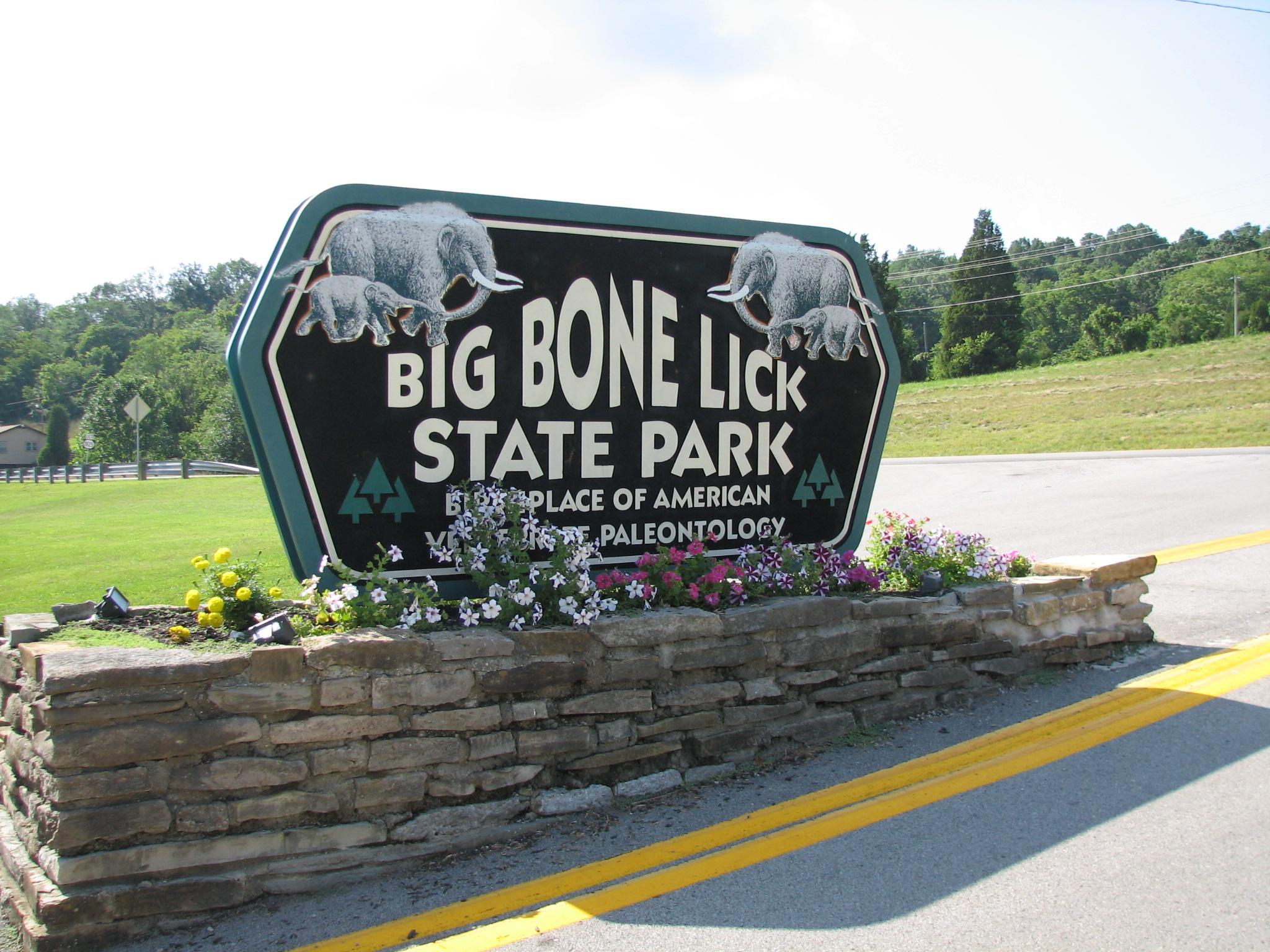
Big Bone Lick State Historic Site Fossil Hunting Guide
Image: Mattguyver (CC BY 3.0)
Big Bone Lick State Historic Site in northern Kentucky preserves the salt and sulfur springs where Pleistocene mammoths, mastodons, ground sloths, and bison became mired and died between roughly 20,000 and 11,700 years ago. The site is the birthplace of American vertebrate paleontology.
By Edward Chen · Updated 1 August 2026
Introduction
Big Bone Lick State Historic Site sits on Big Bone Creek in Boone County, Kentucky, about 25 miles southwest of Cincinnati, Ohio. The 813-acre park preserves a cluster of natural salt and sulfur springs that drew large Pleistocene mammals to the marshy ground around the springs from about 20,000 to 11,700 years ago. Mammoths, mastodons, ground sloths, ancient bison, and stag-moose stepped onto the soft mire while drinking the brackish water and many became trapped in the mud, where their carcasses were buried in soft alluvium and preserved. The springs were known to Shawnee and other Indigenous communities for centuries, and recorded American collection began in 1739 when Charles le Moyne de Longueuil sent bones from the site east to the Paris Museum. President Thomas Jefferson ordered William Clark to excavate the licks in 1807, producing the first organised paleontological expedition in American history. The park is administered by Kentucky State Parks and was designated a National Historic Landmark in 2009. The site is viewing-only. This guide covers visitor access, the species recovered, the salt-lick geology, and the historic role the site played in the development of vertebrate paleontology in North America.
Location and Directions
The park is in northern Kentucky, in Boone County, about 22 miles southwest of downtown Cincinnati and 80 miles north of Lexington. From Interstate 75 at Walton, take Exit 175 and follow Kentucky Route 338 west for about 7 miles to the park entrance.
The address is 3380 Beaver Road, Union, Kentucky 41091. GPS for the visitor center is 38.8786 degrees north, 84.7517 degrees west. Parking is paved and free near the visitor centre, museum, campground, and trailheads.
The site includes a new Big Bone Lick Visitor Centre and Museum, a 1.5-mile Discovery Trail loop with bog dioramas at the historic spring sites, a separate bison observation pasture with a small live herd, a 62-site campground, a fishing lake, and picnic shelters. The trail is mostly level gravel with boardwalks across the wet ground at the licks themselves.
The site is open year round. The museum keeps regular daytime hours through the warm season and reduced hours from December through March. There is no entrance fee. The campground charges standard Kentucky State Park rates. The closest commercial airport is Cincinnati-Northern Kentucky International Airport (CVG), about 15 miles north.
What Fossils You'll Find
You will not collect at Big Bone Lick. What you can do is walk to the springs themselves, see in-place display of recovered bones in the visitor centre, and follow the Discovery Trail through bog reconstructions that show how the licks looked in the late Pleistocene.
- Mammut americanum (American mastodon). The dominant identified species in the historic bone collections, present at all the major licks. Tusk, mandible, and limb material from Big Bone Lick is held at the British Museum, the American Philosophical Society, the Academy of Natural Sciences of Philadelphia, the Smithsonian, and the University of Nebraska State Museum.
- Mammuthus columbi (Columbian mammoth). Identified in the 1962 to 1967 University of Nebraska excavations and in earlier Clark collections.
- Megalonyx jeffersonii (Jefferson's ground sloth). The type specimen of Megalonyx is from the eastern United States, and Jefferson referenced Big Bone Lick material in his 1799 paper to the American Philosophical Society.
- Bison antiquus. Ancient bison material is common in the upper bone-bearing layers and overlaps in time with early human occupation of the region.
- Cervalces scotti (stag-moose). A large extinct cervid identified in the modern Nebraska collections.
- Equus (Pleistocene horse). Several teeth and limb bones are referred to the late Pleistocene New World horse.
The Big Bone Lick collection at the University of Nebraska State Museum, recovered between 1962 and 1967, holds more than 2,000 catalogued specimens. The visitor centre includes a working preparation lab on the public side of the glass and cases of original Clark-era bones on loan from partner institutions.
Geologic History
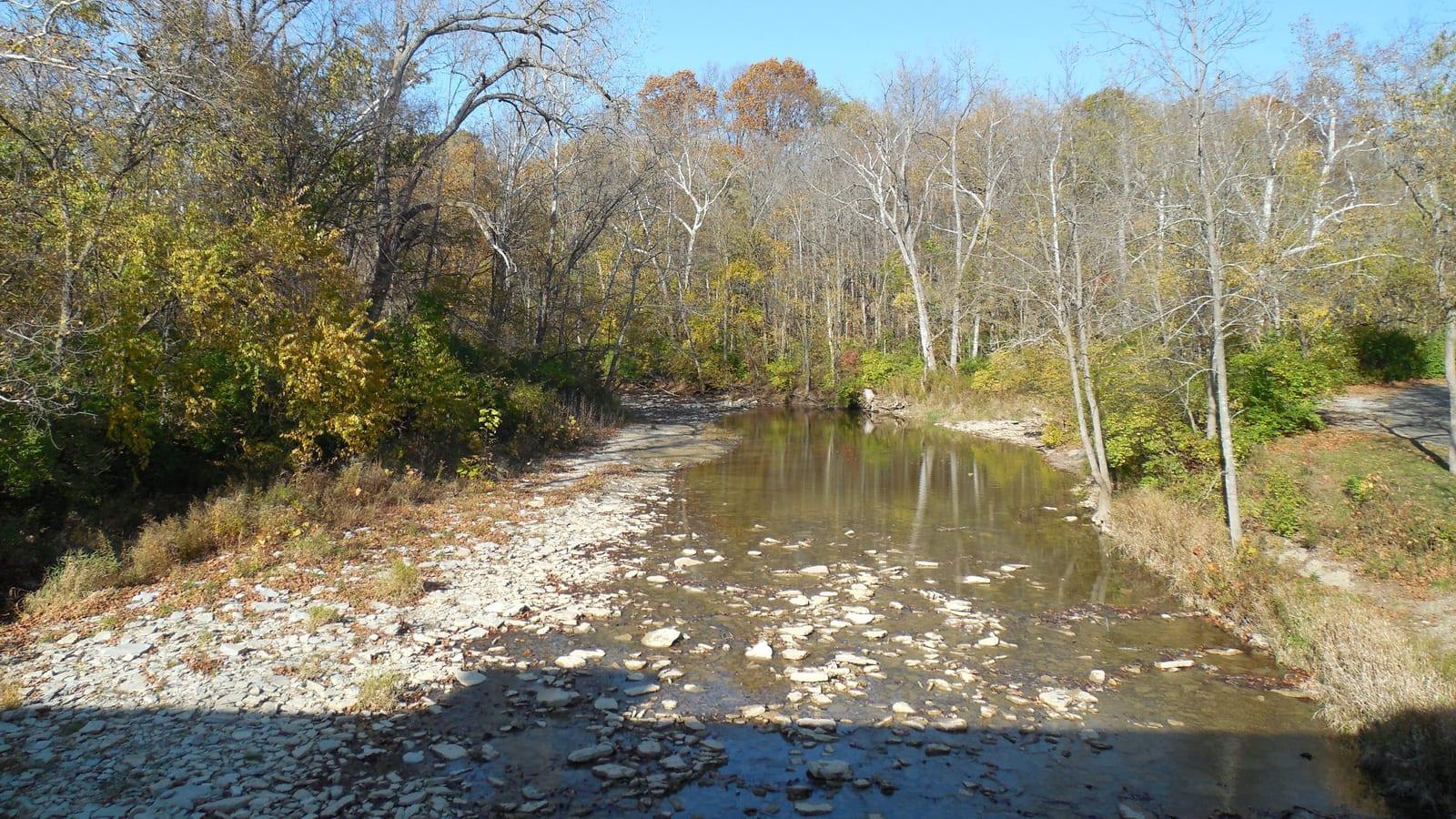
Big Bone Lick sits in the lower Big Bone Creek valley, a tributary of the Ohio River. The bedrock under the licks is the Upper Ordovician Kope Formation, a shale and limestone unit that contains soluble carbonate and minor evaporite mineralisation. Groundwater moving through the Kope picks up sodium chloride and calcium sulfate. The salt-rich water reaches the surface at a cluster of perennial springs on the valley floor, where it forms wet, muddy "licks" that have drawn herbivorous mammals for at least the past 200,000 years.
The fossil-bearing layers are Holocene alluvium and reworked Wisconsinan glacial outwash that bury the Pleistocene mire surfaces. Radiocarbon ages on bone collagen from the 1962 to 1967 University of Nebraska excavations cluster between roughly 20,000 and 11,700 years before present, placing the main bone-bearing interval in the Wisconsin Glacial Period.
The Pleistocene landscape around the licks was a mosaic of spruce parkland, sedge meadow, and open boreal forest. The mire itself trapped large heavy animals that stepped into the soft ground while drinking. Carcasses sank into the mud, were buried by subsequent overbank flooding, and were preserved by anoxic conditions in the salt-rich groundwater.
How Big Bone Lick Became a Fossil Site
Indigenous peoples used the licks for tens of thousands of years before recorded European visits. The first European collection from the site is attributed to Charles le Moyne de Longueuil, who in 1739 sent a femur, a tusk, and several molars from the licks to the French royal cabinet in Paris. Bernard Germain de Lacépède later identified the material as belonging to the same animal that Georges Cuvier would name the American mastodon.
In 1807, Thomas Jefferson commissioned William Clark, fresh from the Lewis and Clark Expedition, to excavate Big Bone Lick. Clark led the first organised paleontological dig in American history at the site, recovering about 300 specimens, including mastodon, mammoth, and bison material. Three hundred bones reached the White House and were displayed in the East Room before being divided between the American Philosophical Society and the Royal College of Surgeons in London. Jefferson published the first scientific description of the animal in 1799, drawing on Big Bone Lick comparison material. The binomial Megalonyx jeffersonii was given later, by Desmarest in 1822.
Nathaniel Southgate Shaler led a more systematic Harvard excavation in 1868 and removed most of the remaining surface fossils to the Harvard Museum of Comparative Zoology. The 1962 to 1967 University of Nebraska excavations under C. Bertrand Schultz produced the modern stratigraphic framework and the 2,000-specimen collection now held in Lincoln.
Kentucky State Parks acquired the site in 1953 and dedicated the park in 1960. The site was designated a National Historic Landmark in 2009 in recognition of its role as the birthplace of American vertebrate paleontology.
Collecting Rules and Regulations
Collecting is prohibited. Big Bone Lick State Historic Site is owned by the Commonwealth of Kentucky and managed by Kentucky State Parks. Removing or disturbing any fossil, sediment, or artefact from the park is prohibited under Kentucky Revised Statutes 433.871 to 433.885.
Practical rules:
- Stay on the Discovery Trail and the boardwalks at the licks. Off-trail travel damages the soft soil at the springs.
- Photography for personal use is permitted across the park and inside the visitor centre.
- There is no entrance fee. The campground charges standard Kentucky State Park rates.
- Pets must be leashed and are allowed on the Discovery Trail but not inside the visitor centre.
- Drones are not permitted in the park without prior written permission.
- Research permits are issued only to qualified scientists working with an institutional affiliation.
Safety
The Discovery Trail and lick boardwalks pass through wet, sometimes muddy ground around active brine and sulfur springs. The springs themselves are off-limits to direct contact. The water is not safe to drink, and the soft ground around the licks can swallow a foot up to mid-shin. Stay on the boardwalks.
Summer temperatures along the Ohio River are warm and humid, with afternoon thunderstorms common from May through September. The park does not have many open shelters along the trail. Carry water and rain protection.
Watch for poison ivy on the trail edges and for ticks from April through October. Use repellent and check for ticks after the visit. Copperhead snakes are present in the woods around the lick clearings but are not common.
Sources
- Kentucky State Parks, "Big Bone Lick State Historic Site." https://parks.ky.gov/explore/big-bone-lick-state-historic-site-7807
- National Park Service, "Big Bone Lick State Historic Site." https://www.nps.gov/places/big-bone-lick-state-historic-site-kentucky.htm
- Schultz, C.B., Tanner, L.G., and Whitmore, F.C., 1963. "Big Bone Lick, Kentucky: A Pictorial Story of a Pleistocene Salt Lick." University of Nebraska State Museum.
- Hedeen, S., 2008. "Big Bone Lick: The Cradle of American Paleontology." University Press of Kentucky.
- Jefferson, T., 1799. "A Memoir on the Discovery of Certain Bones of a Quadruped of the Clawed Kind in the Western Parts of Virginia." Transactions of the American Philosophical Society, 4.