Canelas Quarry and Arouca Geopark Fossil Hunting Guide
Image: Jérémy Toma (CC BY-SA 4.0)
A working roofing-slate quarry in northern Portugal that produces the largest trilobites known anywhere, some over 70 centimetres. The Geological Interpretation Centre of Canelas displays the collection on site, about 60 km from Porto.
By Edward Chen · Published 11 September 2026
Introduction
Trilobites are usually small enough to hold in a palm. The ones from Canelas are not. The quarry produces the largest trilobites known anywhere in the world, with specimens over 70 centimetres. They are the defining feature of the Arouca UNESCO Global Geopark.
Canelas is a working slate quarry supplying roofing and wall tile, and its fossils have been known since the middle of the nineteenth century. The fossils come out as a by-product of that industry. That is an unusual arrangement and one the geopark cites as an example of cooperation between extraction, science and tourism.
The quarry operator built a Geological Interpretation Centre on site to hold and display the collection. That means the fossils stay where they were found rather than dispersing to institutions elsewhere.
Location and Directions
Canelas is in the municipality of Arouca, Aveiro District, in northern Portugal, roughly 60 kilometres south-east of Porto.
The centre's postal address is Alto do Campêlo, 4540-252 Canelas, Arouca. It opened in 2006 and is now also branded the Museu das Trilobites. Check the current telephone number and opening hours on the geopark website before you travel. The quarry sits in the village of Canelas.
Admission is charged. Check current opening with the geopark or the centre before you travel, because a working quarry does not keep museum hours and arrangements change.
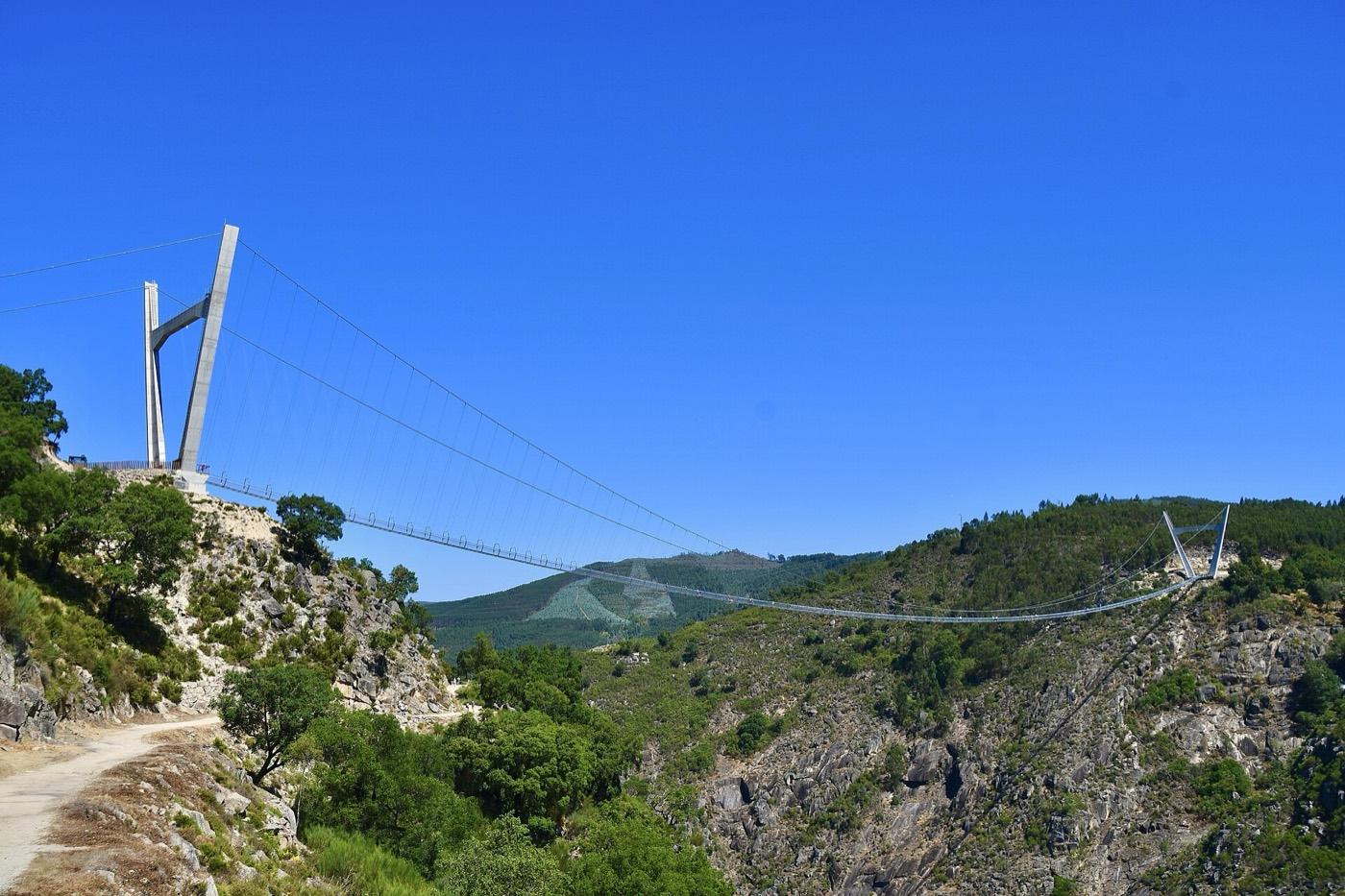
Arouca itself is the base for the wider geopark, which also includes the Paiva walkways and the Arouca 516 suspension bridge. Most visitors combine the two.
What Fossils You'll Find
Nothing is collectable. This is an active industrial site and a protected geosite, and the fossils are held in the on-site collection.
The trilobites are the reason to come. Giant specimens of the Ordovician fauna are displayed on slate slabs, and some are preserved in clusters of many individuals on a single bedding plane. Those clustered assemblages are scientifically interesting in their own right, because they suggest gregarious behaviour or mass moulting rather than chance accumulation.
Other Middle Ordovician invertebrates occur alongside them, including brachiopods, bivalves, echinoderms and graptolites.
Clusters of dozens of individuals on one slab have been interpreted as moulting or mating aggregations. That are behaviours rarely visible in the fossil record at all.
 Photo: Dwergenpaartje, CC BY-SA 3.0, via Wikimedia Commons

Geologic History
The fossils come from the Valongo Formation, a Middle Ordovician slate in the Darriwilian stage, roughly 470 to 458 million years ago.
The rock was deposited in a marine basin on the northern margin of Gondwana, at high southern latitude. Cold, deep, quiet water is the setting, and it explains both the fine grain of the sediment and the quality of preservation.
Why the trilobites are so large is a genuine scientific question rather than a settled fact. Cold water and high oxygen availability are commonly proposed as factors in the gigantism of marine invertebrates. The Gondwanan polar setting is consistent with that.
Later Variscan mountain building compressed and metamorphosed the sediment into slate, which is what gave it commercial value and what brings the fossils to the surface.
One thing makes the Canelas material scientifically unusual beyond its size. Because the quarry splits the rock along bedding for commercial reasons, complete bedding planes come out intact rather than in fragments. Whole assemblages can therefore be studied as they lie, with the animals in the positions they died in.
Collecting Rules and Regulations
Collecting is prohibited. The quarry is private, working, and hazardous, and the geosite is protected within a UNESCO Global Geopark.
Portugal treats palaeontological material of scientific interest as cultural heritage. Ask the museum what that means for anything you are shown. This page could not find the statute that settles who owns a find here.
Do not enter the quarry workings. Visits are to the interpretation centre and along the designated route.
The site is recognised by the IUGS as a geoheritage site of international standing. That is a recognition of scientific value rather than a legal designation, and it carries no protection of its own.
Arouca's other attractions carry real visitor numbers, and the Paiva walkways in particular can be busy. If your interest is the trilobites rather than the scenery, visit the interpretation centre first and treat the walkways as optional.
Getting there without a car is awkward. There is no rail connection to Arouca and bus services from Porto are infrequent, so most visitors drive. The roads into the Serra da Freita are narrow and steep, and a satnav will sometimes route you along tracks that are better avoided.
Safety
This is an operating quarry. Do not enter the working areas, and keep to the visitor route and the interpretation centre.
Slate is sharp and the spoil is loose. Wear boots.
The walking routes around Canelas cross uneven ground and are slippery when wet.
Northern Portugal is wetter than the south, and rain is likely outside high summer.
Arouca is also where the geopark's stone-based folklore sits. The pedras parideiras, the stone that gives birth, are granite boulders near Castanheira that shed small biotite nodules as they weather. They are not fossils, but they are the other reason the area holds geopark status.
Sources
https://iugs-geoheritage.org/geoheritage_sites/middle-ordovician-giant-trilobites-of-canelas-quarry/ https://www.unesco.org/en/iggp/arouca-unesco-global-geopark https://oiccpress.com/geoconservation-research/article/giant-trilobites-and-other-middle-ordovician-invertebrate-fossils-from-the-arouca-unesco-global-geopark-portugal/ https://www.visitportugal.com/en/node/73748
Nearby sites
 Lourinhã Jurassic Dinosaur Coast Fossil Hunting GuideDinosaur eggs and embryos, Sauropod bone (Lusotitan, Dinheirosaurus)
 Jbel Tiskaouine Ordovician Trilobite Site Alnif Fossil Hunting GuideJbel Tiskaouine, Flexicalymene
 Draa Valley Ordovician Trilobite Site Agdz Fossil Hunting GuideGiant trilobites, Brachiopods
 Fezouata Biota Locality Zagora Fossil Hunting Guideanomalocaridids, Trilobites