Bognor Regis Fossils: London Clay Foreshore Guide
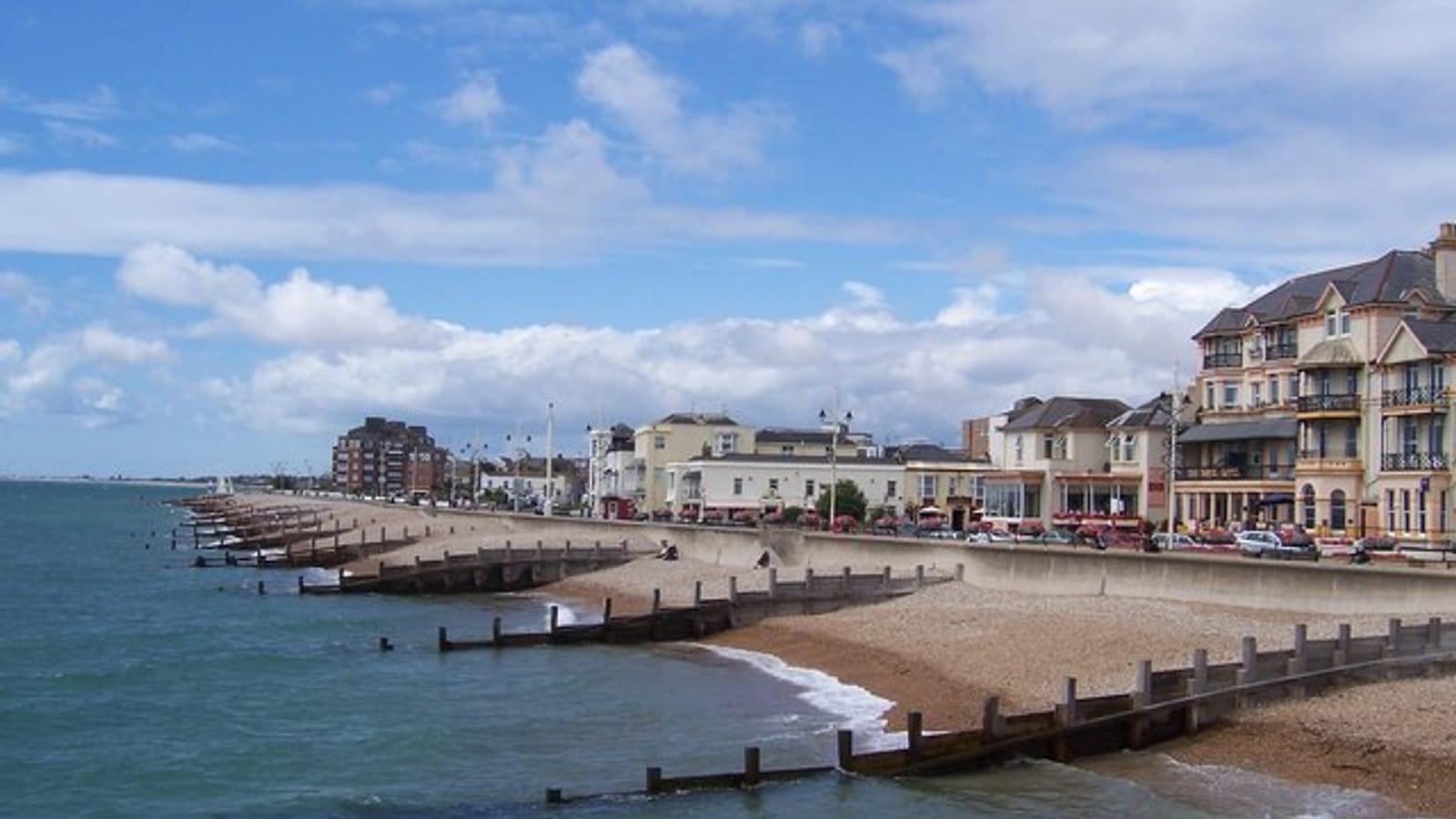
Image: Simon Carey (CC BY-SA 2.0)
Bognor Regis foreshore exposes Eocene London Clay yielding sharks' teeth, fish otoliths, and rare pyritised insects from a 50-million-year-old subtropical sea.
By Edward Chen · Updated 30 July 2026
 Photo: Simon Carey, CC BY-SA 2.0 via Wikimedia Commons
Introduction
Bognor Regis fossils come from the London Clay Formation, a predominantly argillaceous Ypresian unit dated by the British Geological Survey to roughly 54 to 50 million years ago, exposed on the Aldwick foreshore at the western edge of town. The Bognor Regis exposures are the easternmost end of the Hampshire Basin sub-crop, deposited in the same shallow epicontinental sea that covered both the London and Hampshire basins during the Early Eocene. The site is famous among specialists for its London Clay insect fauna, one of the best-preserved Eocene insect assemblages in Britain, and for exceptional fish fossils, including type specimens of Eocene teleost otoliths described from what are known as the Aldwick Beds.
For beach visitors, the most accessible Bognor Regis fossils are sharks' teeth, fish vertebrae, mollusc shells, and occasional plant debris preserved in the grey-brown clay exposed on the foreshore and around the old rock outcrops known locally as the Bognor Rocks. The site is designated as a Site of Special Scientific Interest (SSSI) for both its Lower Eocene geology and its palaeontology, the JNCC Geological Conservation Review notes that the Bognor foreshore is one of the few localities where the whole thickness of London Clay strata can be studied in sequence. Loose surface collecting of already-detached material is permitted under the SSSI management framework. Cutting sections from the in-situ clay is not. This guide covers access, the fossils you can realistically expect to find, the Eocene geology of the site, and what the rules allow.
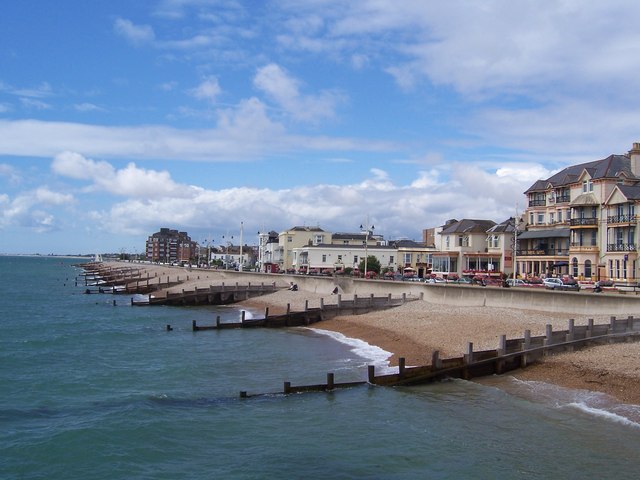 Photo: Pam Goodey, CC BY-SA 2.0, via Wikimedia Commons
Location and Directions
Address
Aldwick Beach, western end of Bognor Regis, West Sussex PO21 4LU, England. The fossil-bearing exposures are concentrated around the Bognor Rocks, which appear on Ordnance Survey maps, at the Aldwick beach hut area.
Directions and Parking
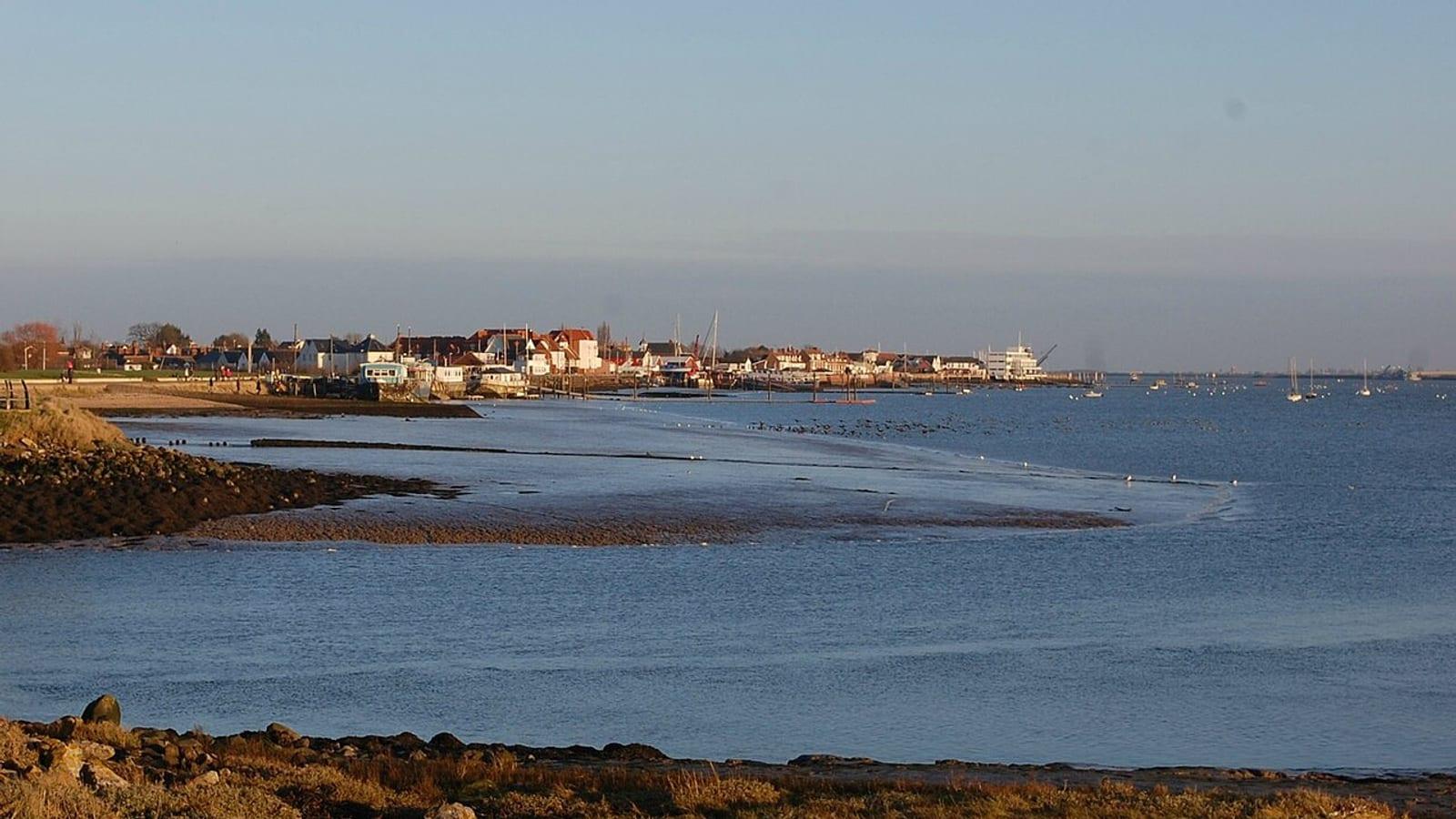
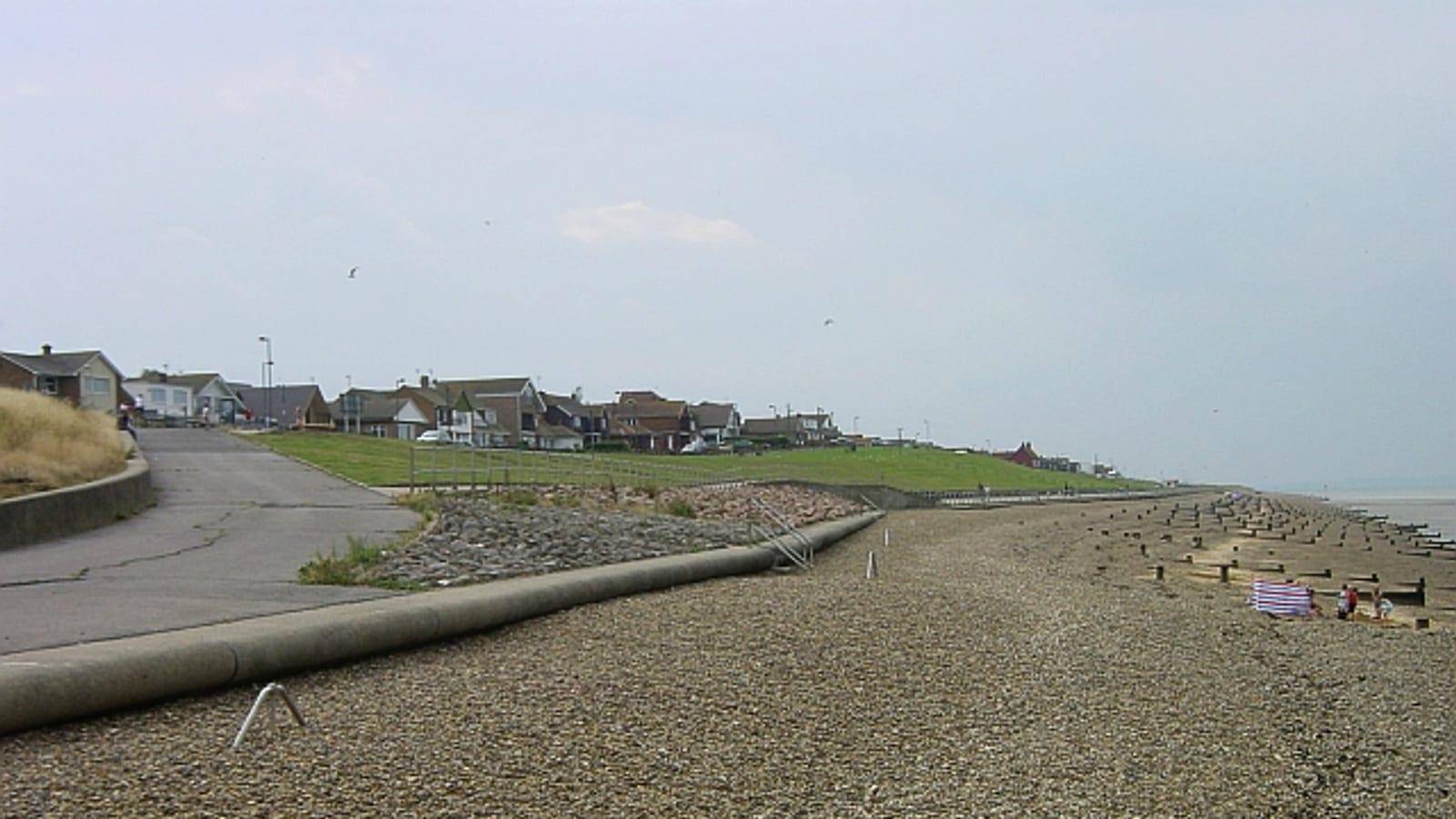
From the A259 in Bognor Regis, follow signs for Aldwick and the western seafront. Drive along Aldwick Road to its junction with the seafront. Turn onto Marine Drive West and continue west toward Aldwick Bay. There is good street parking along the seafront near the beach huts, and a pay-and-display car park a short walk away in Aldwick Road. The beach huts mark the best section: the London Clay exposures are concentrated here, appearing as dark grey-brown clay on the foreshore at low to mid tide. The Bognor Rocks themselves are an Eocene limestone outcrop that emerges at low water and forms the core of the fossil-bearing section.
The site is best visited at low tide, when the clay foreshore and rock exposures are accessible. At high tide the area is largely covered. Check tide times for Bognor Regis before visiting. No specialist access or permissions are required for the beach itself.
What Fossils You'll Find
Fish remains including vertebrae, fin spines, and the distinctive inner ear bones known as otoliths occur in the Aldwick Beds. Bognor is the type locality for several Eocene teleost otolith species, meaning specimens collected here were used to formally describe and name those species for science. Otoliths are small, dense, oval structures that preserve well in the clay.
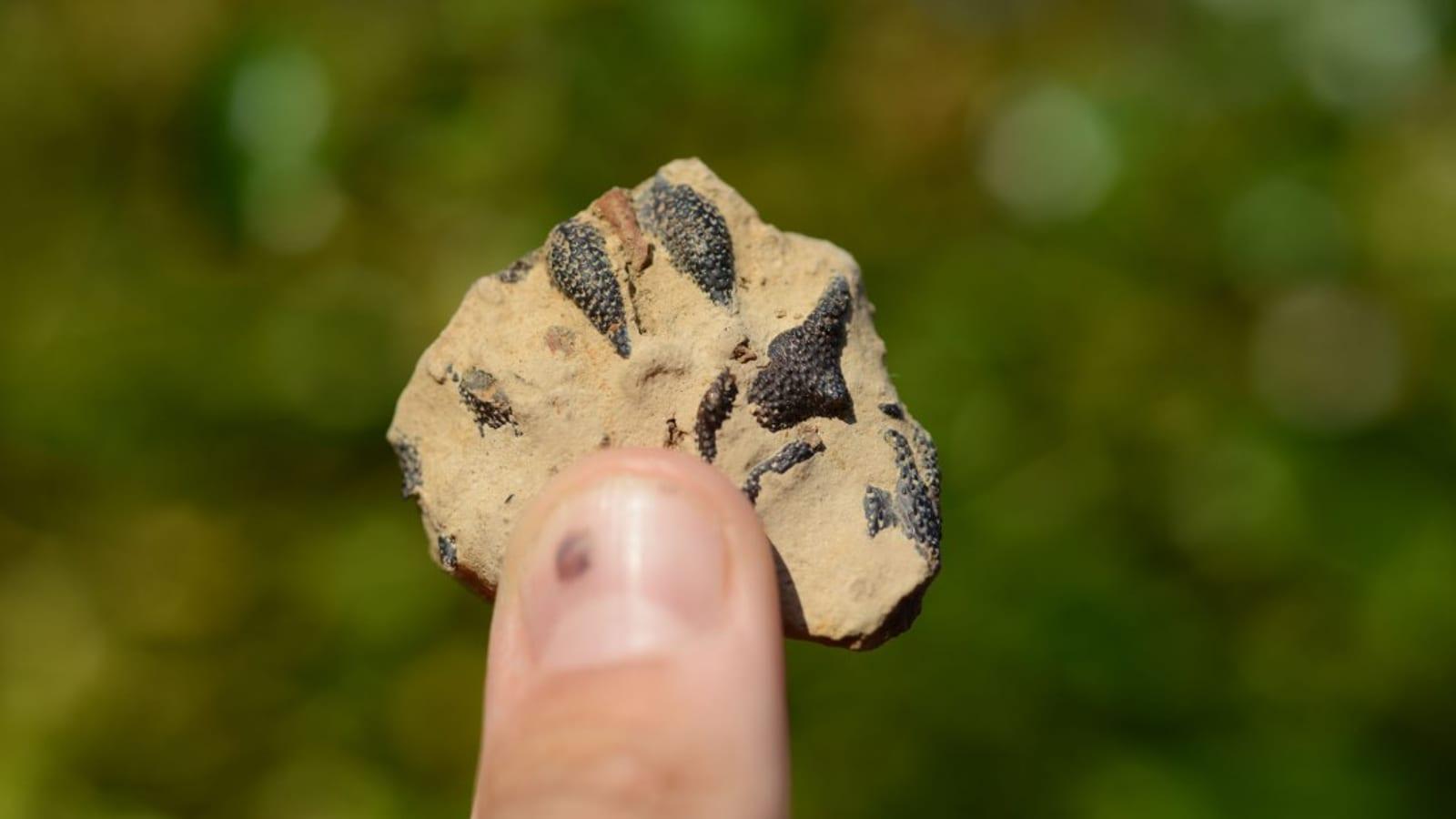
Eocene insects are the site's most scientifically celebrated fossils. The London Clay here has yielded over 400 pyritised beetles ranging from 0.5 to 6.2 mm, along with other insect orders. These are not casual collector finds. They require careful excavation of specific clay horizons and detailed laboratory preparation. If you encounter pyrite-bearing clay nodules, these may contain insect material worth examining under magnification.
Molluscs including gastropods and bivalves occur throughout the London Clay, typically as moulds or replaced shells. Turritella, a tightly coiled, elongate gastropod, is one of the most recognisable and reasonably common forms. Bivalves such as Venericor also occur.
Plant material including seeds, nutlets, and leaf fragments erodes from the clay, reflecting the tropical and subtropical vegetation that grew on nearby landmasses during the Eocene. Palms and other warm-climate plants are represented in the seed flora.
Geologic History
The Ancient Environment
The London Clay Formation at Bognor belongs to the early Eocene, specifically London Clay Divisions A, B, and C, with the locally named Aldwick Beds corresponding to Division B, approximately 52 to 50 million years ago. At this time the Hampshire-Dieppe Basin was occupied by a warm, shallow subtropical sea. Britain lay at about 40 to 45 degrees north latitude, somewhat lower than today, and global temperatures were near their Cenozoic maximum during the Early Eocene Climatic Optimum.
The London Clay sea received silty muds and sands from rivers draining the nearby landmasses to the north and west. These rivers carried abundant tropical vegetation into the sea, which is why plant seeds and wood fragments are so common in the clay. The sea floor supported sharks, rays, bony fish, crocodilians, and turtles, as well as a diverse community of molluscs and other invertebrates. Periodic influxes of plant debris, including palm fruits and mangrove propagules, are recorded in the seed flora. The depositional environment was similar to that of the present-day London Clay exposures at the Isle of Sheppey, to which the Bognor beds are broadly correlative.
How Bognor Became a Fossil Collecting Site
The London Clay at Aldwick is exposed on the foreshore because the beach sediments are thin here, allowing wave action to scour down to the clay surface and the underlying Eocene limestone of the Bognor Rocks. The Bognor Rocks represent a hard, resistant Eocene limestone bed that has not eroded as rapidly as the surrounding clay, creating a low-relief reef-like structure on the beach at low water. Coastal erosion maintains the exposure by removing the overlying superficial deposits, and storms periodically strip the beach to reveal fresh clay surfaces. The site has been scientifically collected since at least the late 19th century.
Collecting Rules and Regulations
Is Fossil Collecting Allowed?
The Bognor foreshore, including the London Clay exposures and the Bognor Rocks, is designated SSSI for both its London Clay fauna and the Reading Formation exposures at nearby Felpham. SSSI designation does not prohibit fossil collecting. It prohibits actions that damage or destroy the special scientific interest of the site. Collecting loose, surface-detached material from the foreshore using hand tools is legal and does not constitute damage to the SSSI. You should not dig into or cut sections out of the clay face, remove large blocks of in-situ rock, or use mechanical tools.
The insect fauna is of particular scientific significance and any well-preserved nodules with pyritised material should be handled carefully and, if they contain significant specimens, considered for donation or loan to a museum. Report significant finds to the Natural History Museum or the Booth Museum of Natural History in Brighton.
Recommended Tools
A geological hammer, a flat chisel, and a hand lens are the basic requirements. The London Clay splits with some effort along bedding planes. A kitchen knife or spatula is useful for carefully opening clay seams without shattering the contents. Bring bags and newspaper for wrapping specimens. Pyritised material from the clay can be unstable. Any such specimens should be treated with Paraloid B-72 consolidant as soon as possible after collection to prevent pyrite decay.
Safety
The Bognor foreshore is gentle and safe compared to cliff-backed sites, but the clay is very slippery when wet and the Bognor Rocks are covered in algae at all times. Wear boots with good grip. The tide range at Bognor is moderate. Check the times and plan to arrive as the tide ebbs. The best exposures are only accessible for two to three hours around low water. The beach is popular with families, particularly in summer, so early morning visits give you more space to work and a cleaner foreshore before foot traffic disturbs loose material.
Sources
- British Geological Survey, London Clay Formation (BGS Earthwise)
- British Geological Survey, Bedrock Geology UK South: Cenozoic
- JNCC, Guidelines for selection of Earth Science SSSIs
- Natural England, Designated Sites View (SSSI search)
- Natural History Museum, Fossil Record (collections data)