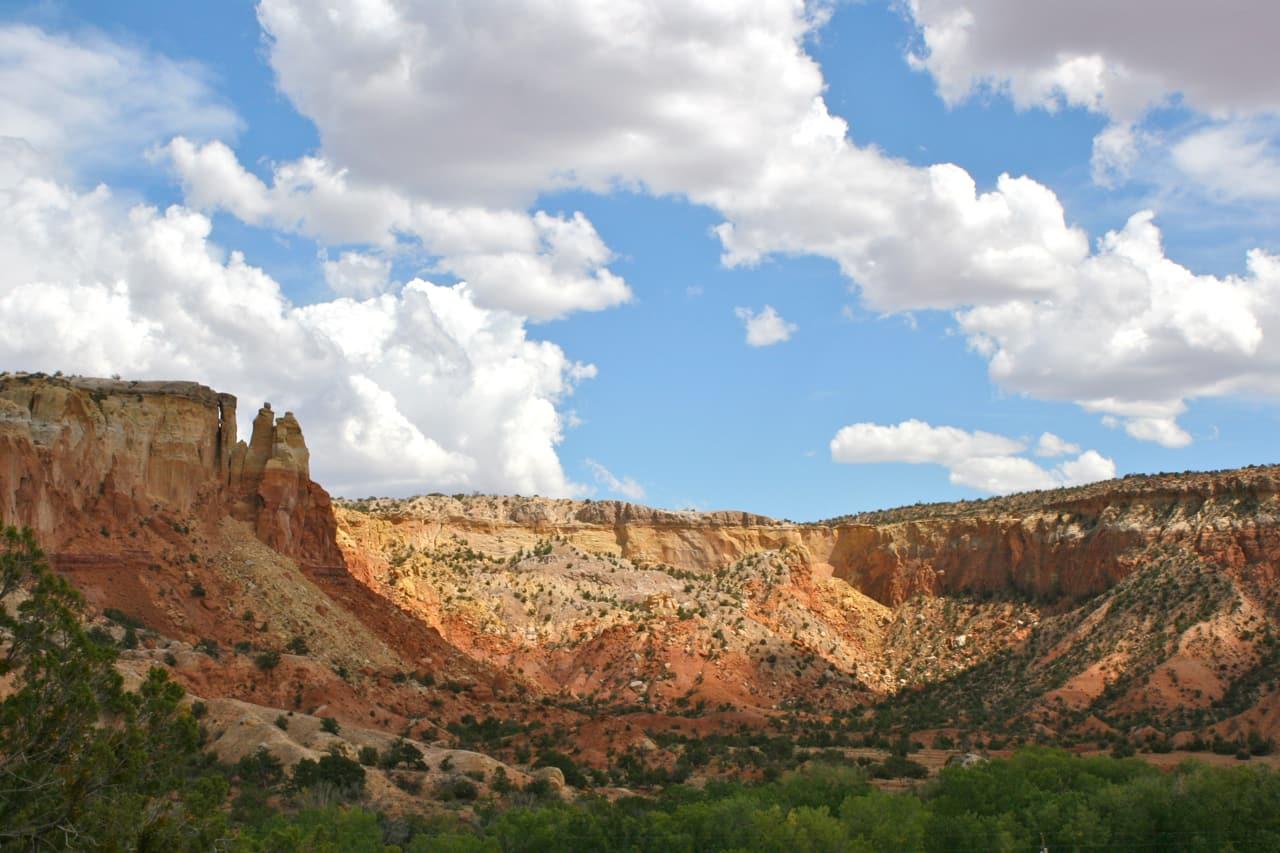
Ghost Ranch Coelophysis Quarry Fossil Guide
Image: Artotem (CC BY 2.0)
The Coelophysis Quarry at Ghost Ranch near Abiquiu, New Mexico, is the richest source of the early dinosaur Coelophysis bauri, with remains of at least 1,000 individuals pulled from the Late Triassic Chinle Formation since 1947. It is a National Natural Landmark. Visitors see the fossils at the Ruth Hall Museum and reach the quarry on guided tours, with no public collecting.
By Edward Chen · Updated 31 July 2026
Introduction
The Coelophysis Quarry at Ghost Ranch is the single most productive source of the early dinosaur Coelophysis bauri, a slender meat-eater from near the dawn of the dinosaurs. Since Edwin Colbert's crew opened the quarry in 1947, it has produced the remains of at least 1,000 individuals from only about 30 cubic meters of excavated rock, a concentration of skeletons unmatched at other Triassic sites. The bones come from the Late Triassic Chinle Formation, and the quarry, also called the Whitaker Quarry, is a National Natural Landmark.
The mass of skeletons appears to record a group of these animals killed and buried together, possibly in a flood event, then preserved in fine sediment. The result is a window onto a single early dinosaur species in unusual detail, which is why blocks from the quarry are studied in museums across the country.
Location and Directions
Ghost Ranch is a 21,000-acre education and retreat center in Rio Arriba County in north-central New Mexico, about 65 miles northwest of Santa Fe and roughly 14 miles north of the village of Abiquiu, near 36.33°N, 106.47°W. It is reached from US Highway 84.
Visitors start at the ranch headquarters, where the Ruth Hall Museum of Paleontology displays specimens from the quarry and explains the late Triassic world of about 230 to 200 million years ago. A day pass, around 10 dollars per adult, grants access to the museums, trails, and grounds. The actual quarry is reached on a guided tour that takes visitors to where the Coelophysis graveyard was found. Book tours ahead, since they run on a set schedule and seasonally.
 Photo: Adamnewbie, CC BY 4.0, via Wikimedia Commons

What Fossils You'll Find
The quarry is defined by Coelophysis bauri, a lightly built theropod a few meters long, preserved as numerous complete and partial skeletons stacked together. Alongside the dinosaurs, the Chinle beds at Ghost Ranch have produced other Triassic reptiles, including phytosaurs, which were crocodile-like predators, armored aetosaurs, and other archosaurs of the period.
What a visitor sees are the prepared and displayed fossils in the Ruth Hall Museum and the quarry site itself on a tour. The fossils are not available to collect. Excavation is done by qualified researchers, and blocks of bone-bearing rock have been distributed to institutions for preparation and study under proper arrangements.
Geologic History
The Coelophysis Quarry sits in the upper part of the Chinle Formation, deposited in the Late Triassic roughly 212 to 208 million years ago, when this region lay in the tropics on the supercontinent Pangaea. Rivers, floodplains, and lakes spread mud and sand across a seasonally wet landscape. At the quarry, a group of Coelophysis was buried rapidly in fine sediment, which preserved articulated and stacked skeletons. Over time the Chinle beds were buried, lithified, and later uplifted and eroded on the Colorado Plateau, exposing the bone bed on the Ghost Ranch property where it was discovered in 1947.
Collecting Rules and Regulations
Collecting is not permitted at Ghost Ranch. The Coelophysis Quarry is a National Natural Landmark and an active scientific site, and its vertebrate fossils are protected and curated by the institution. Visitors experience the site through the Ruth Hall Museum and guided tours, paying the day-pass fee for access to the grounds and museums. Stay on designated trails and tour routes, follow staff instructions, and do not remove rocks or fossils. People who want to dig should ask Ghost Ranch staff about any educational programs they run rather than collecting on their own.
Safety
Ghost Ranch sits at high elevation in the high desert, so sun, heat, and dehydration are the main concerns. Carry water, wear sun protection and a hat, and pace yourself on trails and tours, especially if you are not used to the altitude. Wear sturdy shoes for uneven ground on the way to the quarry. Afternoon thunderstorms are common in summer, and flash flooding can occur in low areas, so heed weather warnings and follow your guide. Watch for rattlesnakes on the trails. Follow all directions from ranch staff during tours.
Sources
https://en.wikipedia.org/wiki/Ghost_Ranch https://www.ghostranch.org/museums/ https://geoinfo.nmt.edu/tour/landmarks/ghost_ranch/home.html https://www.amnh.org/explore/videos/shelf-life/ghost-ranch-fossil-site
Nearby sites
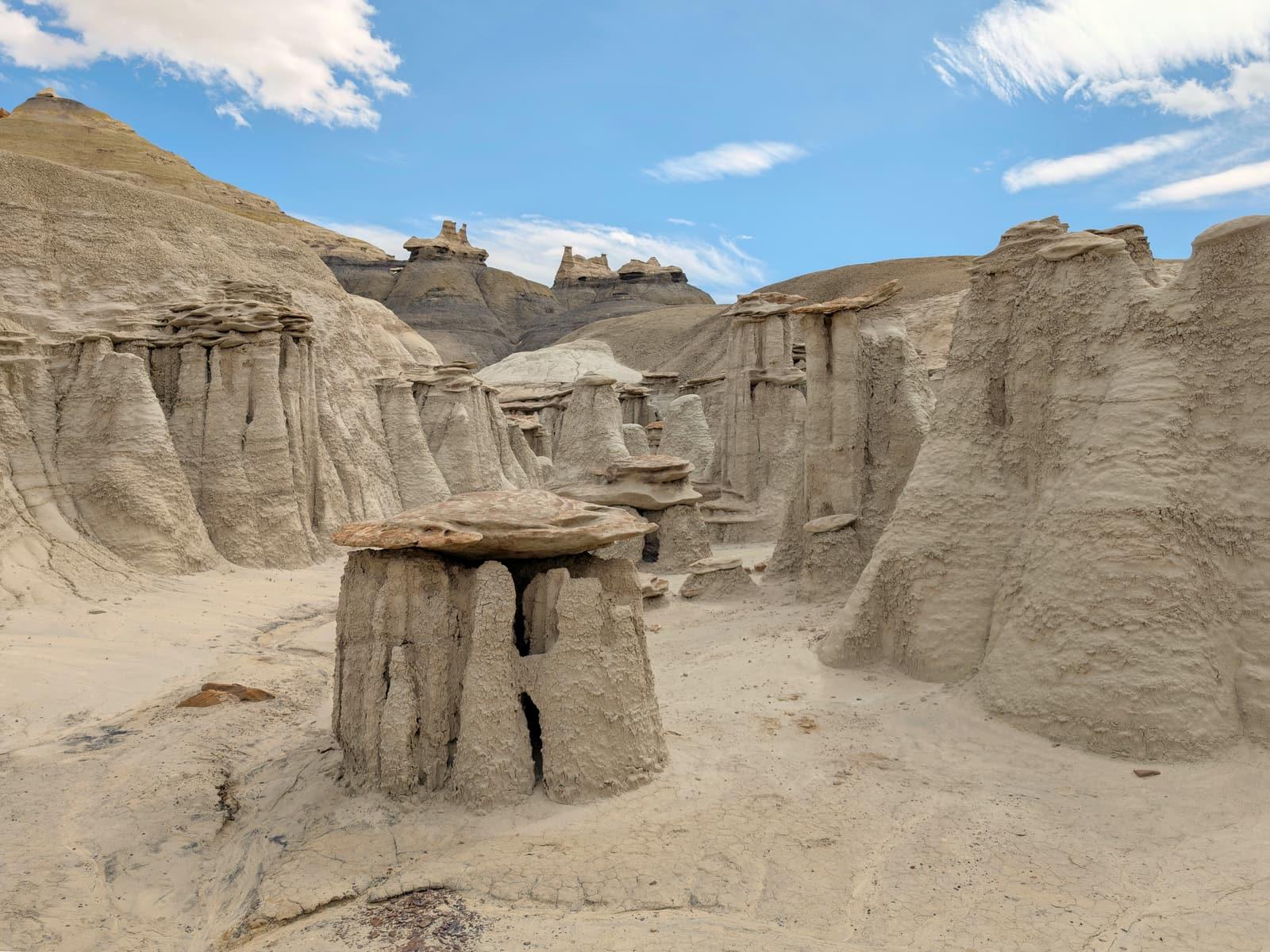 Bisti / De-Na-Zin Wilderness Fossil GuidePetrified wood, Fossil leaves
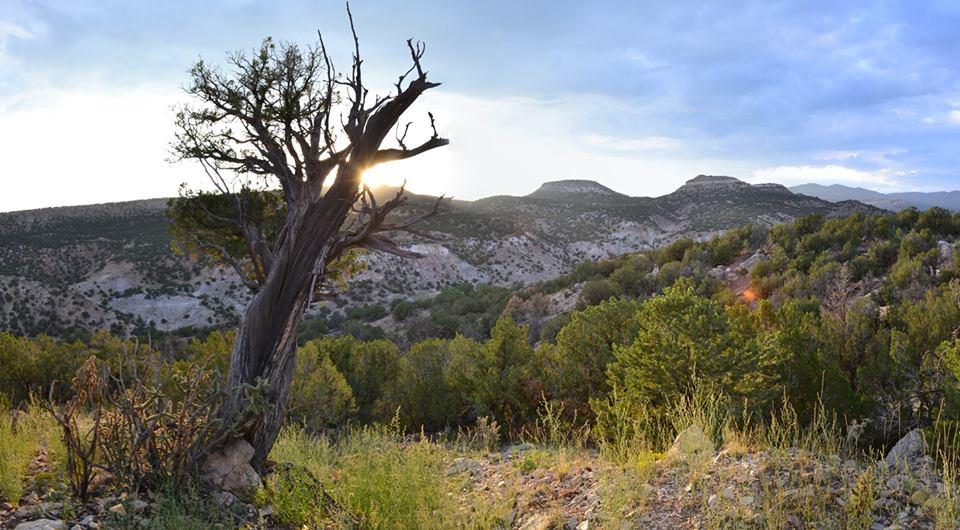 Garden Park Fossil Area Fossil Hunting GuideAllosaurus fragilis (type), Stegosaurus stenops (type)
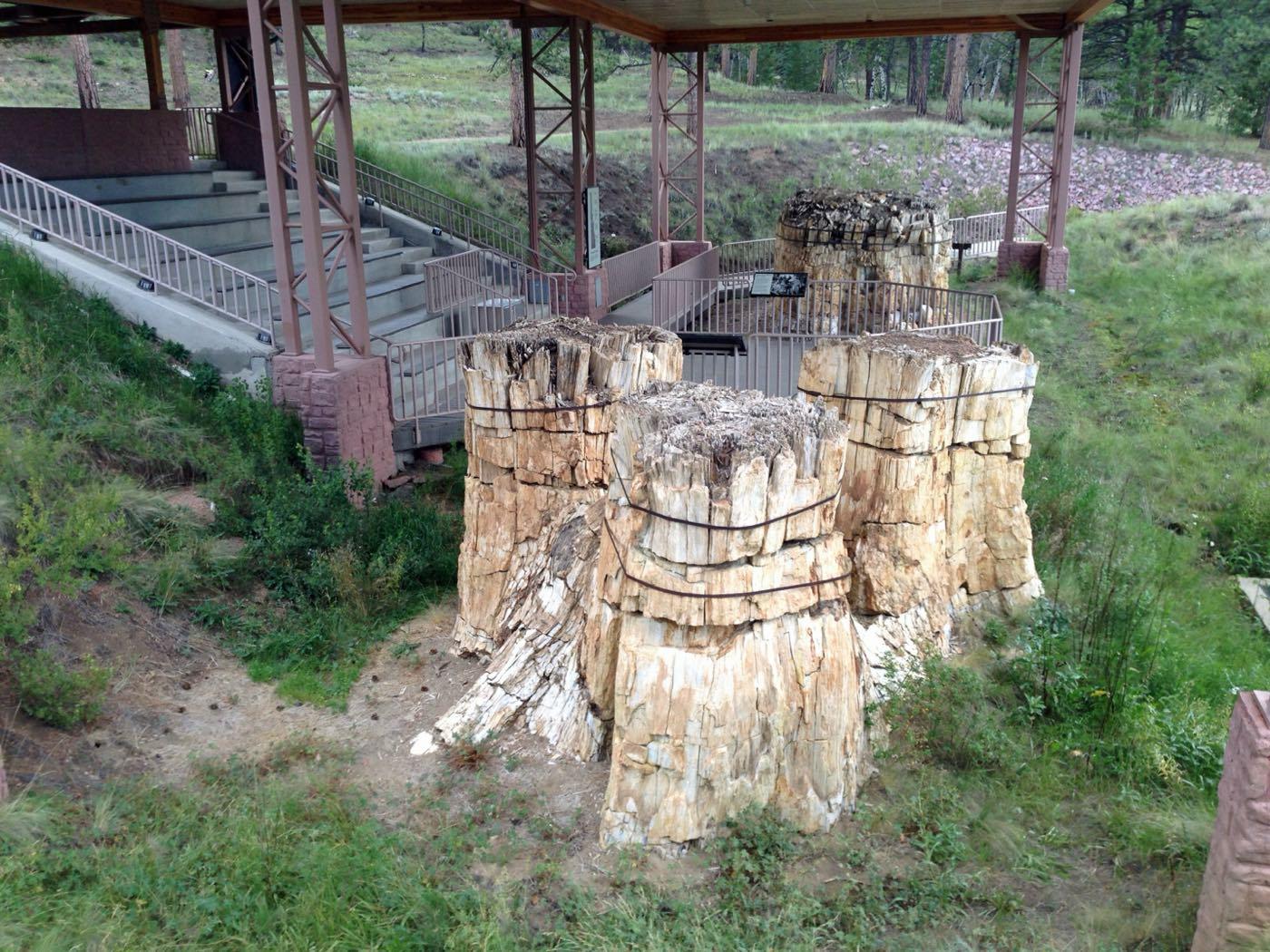 Florissant Fossil Beds National Monument Fossil Hunting GuideInsects, Plant leaves
 Florissant Fossil Quarry Fossil Hunting GuidePlants, Insects