Jacks Peak County Park Fossil Hunting Guide
Jacks Peak County Park in Monterey, California sits on Miocene-age shale of the Monterey Formation. Fossil leaf impressions, marine shells, and microfossils are visible along the Coffeeberry Trail, and a display case on the Skyline Nature Trail holds additional specimens. Collecting is not permitted.
By Edward Chen · Published 15 July 2016
Introduction
Jacks Peak County Park covers 525 acres on the highest point of the Monterey Peninsula, rising 1,068 feet above the cities of Monterey and Carmel. The hilltop and its slopes are built from shale beds of the Monterey Formation, a Miocene marine deposit that dates from roughly 18 to 6 million years ago. Where erosion has exposed these beds along the park's trail system, visitors can see fossil leaf impressions and marine shells preserved in the rock face. A glass display case on the Skyline Nature Trail holds additional specimens collected from the park. Jacks Peak is a viewing-only site managed by Monterey County Parks. No collecting is allowed.
Location and Directions
Jacks Peak County Park is at 25020 Jacks Peak Park Road in Monterey, California 93940. The park entrance is off State Highway 68, between Monterey and Salinas.
From Salinas and Route 101, take Route 68 west to Olmstead Road. Turn left on Olmstead Road and follow it to Jacks Peak Road, then turn left again. From the coast and Route 1, take Route 68 east to Olmstead Road. Turn right on Olmstead Road and follow it to Jacks Peak Road, then turn left.
The closest commercial airport is Monterey Regional Airport, about 4 miles away. San Jose International Airport is roughly 75 miles north. The park has paved parking lots near the summit with restroom facilities nearby. No fuel or food services are available inside the park.
 Photo: Elf, CC BY 3.0, via Wikimedia Commons
What Fossils You’ll Find
The rocks at Jacks Peak belong to the Monterey Formation, a thick sequence of siliceous shale, sandstone, and diatomite deposited on the Miocene seafloor between about 18 and 6 million years ago. During that period, the area lay beneath the Pacific Ocean, and layers of marine sediment accumulated at the edge of the continental shelf. Tectonic forces later lifted these deep-sea deposits to their current elevation above Monterey Bay.
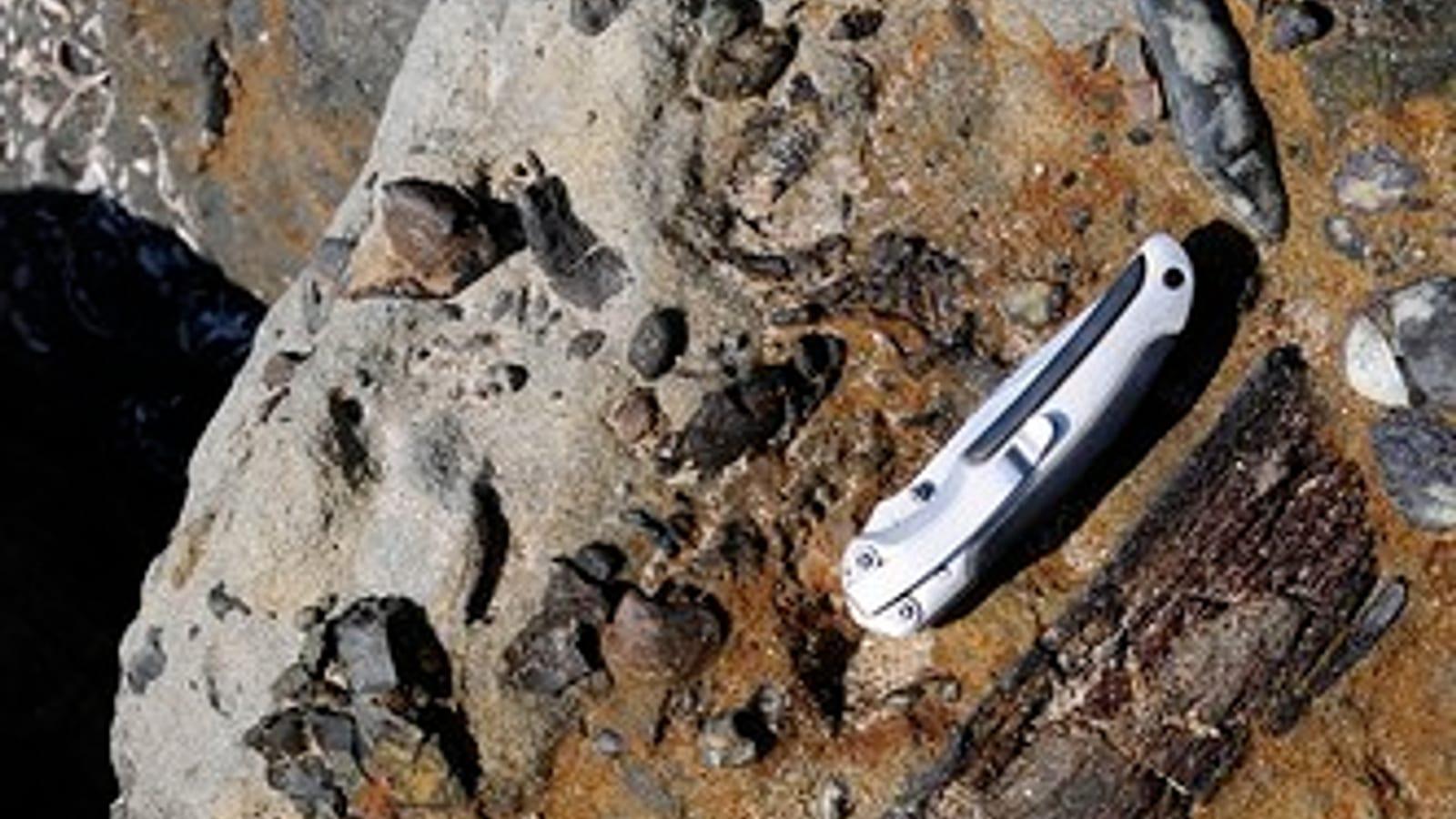
The fossils most commonly seen at Jacks Peak are leaf impressions and small marine shells embedded in the shale. These appear as flattened outlines in the rock, with shells sometimes retaining three-dimensional shape where the surrounding matrix is softer. The leaf fossils represent vegetation that washed offshore from the nearby Miocene coastline and settled into the marine mud.
At the broader formation level, the Monterey Formation preserves a wide range of organisms. According to the University of California Museum of Paleontology, the formation has produced fossil whales, dolphins, finely preserved crabs, and some of the only known fossilized non-calcareous kelps and seaweeds in the world. The microscopic component of the shale is equally productive. Diatoms, radiolarians, foraminifera, and coccolithophores make up much of the rock itself, their siliceous and calcareous tests having accumulated by the billions on the ancient ocean floor. These microfossils give the Monterey Formation its characteristic light-colored, finely layered appearance.
At Jacks Peak specifically, the exposures are limited to the invertebrate and plant material visible in outcrop. Vertebrate fossils like whale and dolphin bones are known from other Monterey Formation localities farther south, near Lompoc and in the Palos Verdes area, but have not been documented from this park.
Geologic History
The Monterey Formation is one of the most studied geological units in California. It extends along the Coast Ranges and Peninsular Ranges and crops out on several offshore islands. The type locality is near the city of Monterey itself, making the park's location close to where the formation was first described and named.
The formation's lower Miocene members contain calcareous-siliceous rocks formed from diatom and coccolithophorid remains, indicating weak coastal upwelling. Its middle and upper Miocene layers are far more silica-heavy, composed almost entirely of diatom-heavy plankton that became diatomite, porcelainite, and banded chert. Most of the Monterey Formation's sediments represent shale deposited at the edge of the continental shelf or in the lower to middle bathyal zone, at depths of several hundred to over a thousand meters.
The Monterey Bay region's tectonic history has been complex. A 1977 USGS report by H. Gary Greene documented how uplift and depression created a series of regressive and transgressive sedimentary units. Right-lateral slip along faults of the San Andreas system offset major structures and rock bodies. This deformation produced multiple unconformities within the upper Tertiary rocks and initiated the canyon systems that today include Monterey, Ascension, and Carmel submarine canyons.
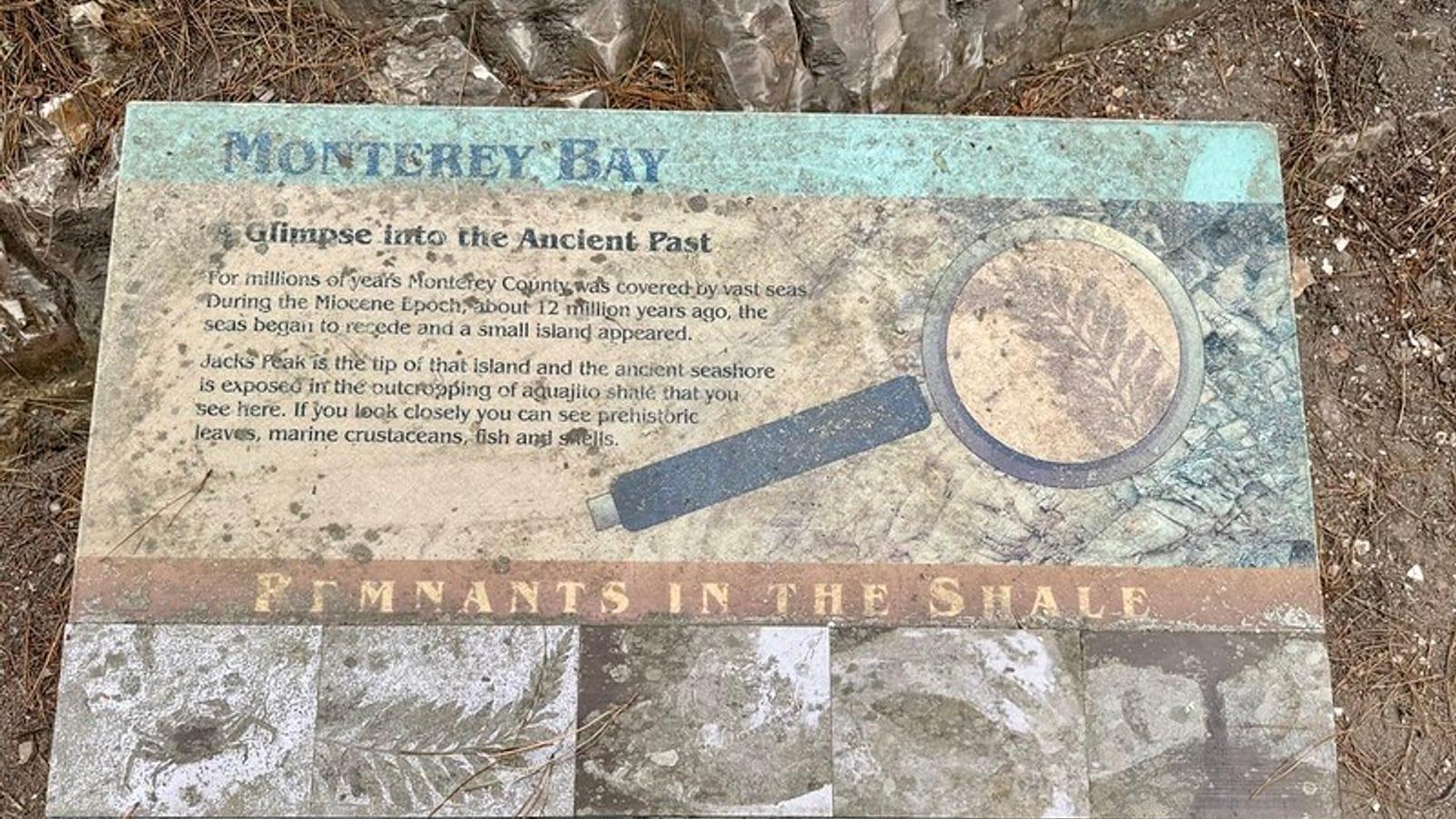
At Jacks Peak, the result of this tectonic activity is a hilltop made of ancient seafloor. During the Cenozoic, changes in sea level temporarily isolated the peak as an island, which is why marine shale and fossils are common across the summit area despite its current elevation well above sea level.
Collecting Rules and Regulations
Jacks Peak County Park is a day-use park. Collecting fossils, rocks, or any natural material is not permitted under county park rules. The fossil outcrops are for viewing only. Do not use hammers, chisels, or other tools on the rock.
Daily admission is $2 per person, with an additional $2 per dog. Dogs must be on leash at all times.
Park hours vary by season. January through February the park is open from 10 a.m. to 5 p.m. March hours extend to 6 or 6:30 p.m. depending on daylight saving time. April through May the park closes at 6:30 p.m. June through August hours run from 10 a.m. to 7 p.m. The park begins closing earlier again in September and returns to 10 a.m. to 5 p.m. by December. Check the Monterey County Parks website before your visit, as closures can occur after storms or during fire weather.
Where to Look
Two trails in the park pass fossil exposures. The Coffeeberry Trail runs through shale outcrops where fossils are embedded in the rock face. Look for flat, circular shell impressions and elongated leaf outlines in the lighter-colored shale beds. The fossils are visible starting about a hundred yards down the trail from the west parking lot.
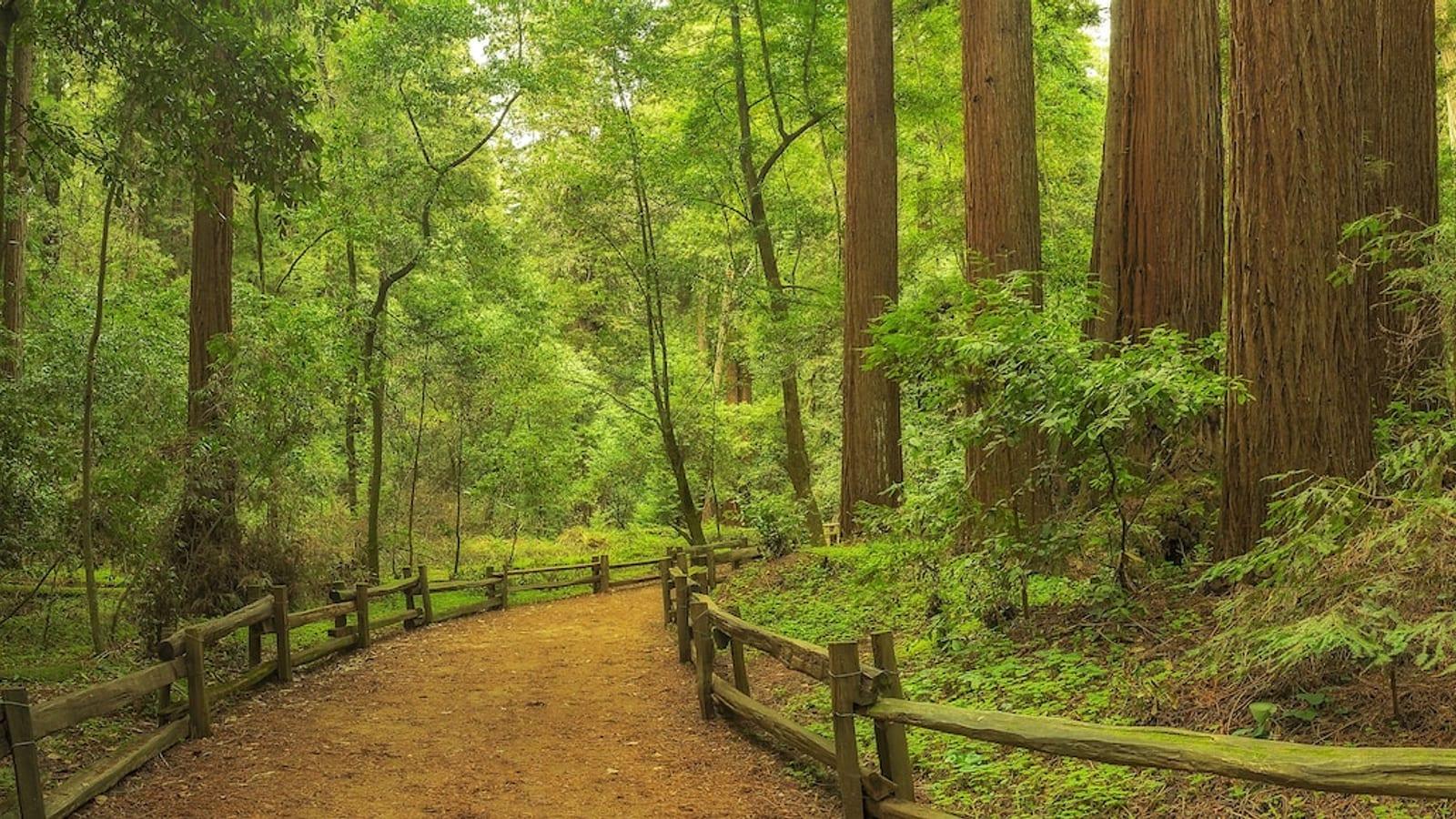
The Skyline Nature Trail is a short 0.9-mile loop with about 134 feet of elevation gain. It passes through a native stand of Monterey pine and reaches a ridge with views over Monterey Bay and Carmel Valley. Along this trail, a glass display case holds labeled fossil specimens from the park, giving visitors a closer look at identified material. This trail takes about 30 to 60 minutes to walk.
The park has 11 trails covering 8.5 miles total. Most are short and not steep. Beyond the two fossil-focused trails, the remaining paths wind through coastal scrub and pine forest but do not pass exposed shale beds.
Safety
The shale beds can be crumbly and loose, and the hillsides below the trails drop steeply in places. Stay on marked trails and do not climb on or below exposed rock faces.
Poison oak grows in the coastal scrub areas of the park. Watch for it along trail edges, especially on the lower-elevation paths. The park receives fog and wind from the coast, and temperatures can be 10 to 15 degrees cooler than nearby inland areas. Bring a layer even in summer.
The trails have little shade except in the pine groves. Carry water, especially from April through October. Rattlesnakes are present in Monterey County but are uncommon at this elevation.
Sources
- H. Gary Greene, "Geology of the Monterey Bay Region," USGS Open-File Report 77-718 (1977). https://pubs.usgs.gov/publication/ofr77718
- University of California Museum of Paleontology, "Monterey Formation, California." https://ucmp.berkeley.edu/tertiary/mio/monterey.html
- See Monterey County, "Jacks Peak County Park." https://www.seemonterey.com/things-to-do/parks/jacks-peak/
- County of Monterey, "Jacks Peak Park." https://www.countyofmonterey.gov/government/departments-i-z/public-works-facilities-parks/county-parks/list-of-county-parks/jacks-peak-park
- Wikipedia, "Jacks Peak Park." https://en.wikipedia.org/wiki/Jacks_Peak_Park
- Wikipedia, "Monterey Formation." https://en.wikipedia.org/wiki/Monterey_Formation