Find Fossils on Capitola Beach Fossil Hunting Guide
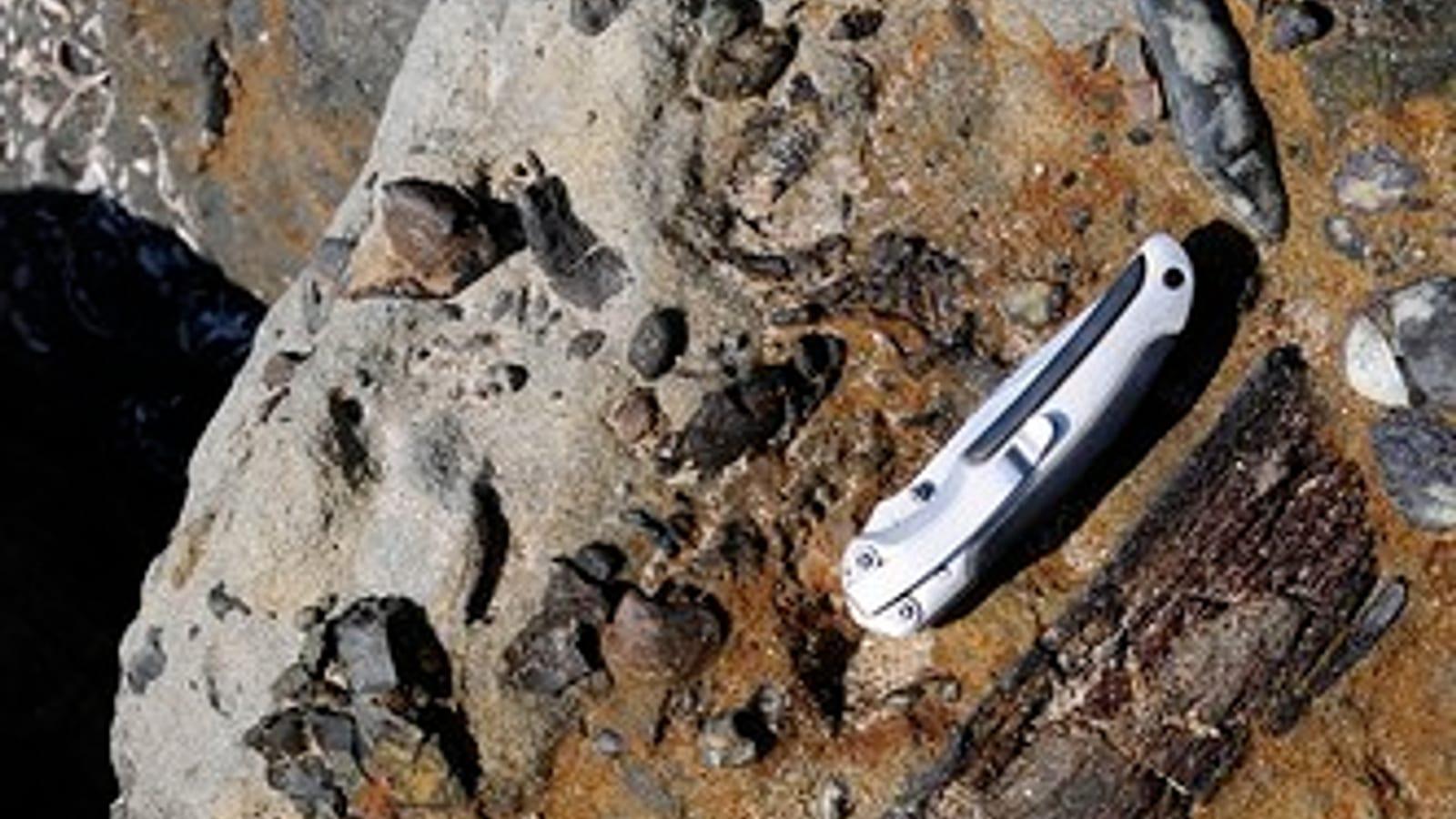
Image: F ASTILY (CC BY-SA 4.0)
Geology of the Beach: The yellow brown sandstones that contain the fossils are part of the Purisma formation.
By Edward Chen · Updated 2 August 2026
Introduction
Capitola City Beach sits 5 miles (8 km) east of Santa Cruz on Monterey Bay, and the sandstone cliffs and wave-cut rock platform at the base of the Esplanade expose a sequence of late Miocene and Pliocene marine sediments known as the Santa Cruz Mudstone and the overlying Purisima Formation. Both units contain marine invertebrate fossils, bivalves, gastropods, echinoids, and occasional shark teeth, that erode onto the beach and wave platform continuously. Collecting is free and requires no permit. The beach is public and there are no access restrictions. The best conditions are at low tide in winter, when storm scouring strips sand from the wave-cut platform and exposes fresh fossil-bearing rock surfaces. This is a low-intensity site, you will not fill a bag in an afternoon, but the setting is accessible, the geology is easy to read, and even a short visit at the right tide can produce a handful of good invertebrate specimens.
Location and Directions
Capitola City Beach is located at the foot of the Esplanade in Capitola, CA 95010, approximately 60 miles (97 km) south of San Francisco and 5 miles (8 km) east of Santa Cruz.
By car from Santa Cruz, take Soquel Drive east from the Santa Cruz city limits and follow signs for Capitola Village. Turn south on Capitola Avenue and continue to the Esplanade, which runs along the beachfront. Paid parking is available in the Capitola City Beach lot directly on the Esplanade, and in additional municipal lots one block back. Parking fills quickly on summer weekends. A weekday or early morning visit avoids the crowds and coincides better with low tides. By public transport, Santa Cruz Metro Route 69R connects Santa Cruz Transit Center to Capitola. The stop at 41st Avenue is within a 10-minute walk of the beach.
The active fossil zone is the wave-cut rock platform between the base of the sea cliffs and the waterline, not the sand beach itself. The platform is exposed for varying widths depending on tide level. At a low tide below 0.5 metres (1.6 feet), a platform 10 to 20 metres wide is accessible. Check tide tables for Capitola or Monterey Bay before visiting. NOAA publishes free daily tide predictions for the Santa Cruz area online.
What Fossils You'll Find
The Santa Cruz Mudstone and Purisima Formation together produce a consistent invertebrate fauna. Most finds are worn by wave action but identifiable.
- Bivalves. The most common find. Pectenid scallops, oysters, and various venerid clams occur as whole valves, fragments, and casts in the platform sandstone. Some valves retain surface ornamentation. Large pectinid shells up to 10 centimetres across erode from the cliff base after winter storms.
- Gastropods. Turritellid tower shells and rounded volutid forms appear as steinkerns (internal moulds) and occasionally as complete shells with the outer surface intact. Sizes range from 2 to 8 centimetres.
- Echinoid plates and spines. Complete tests are rare, but isolated plates and robust spines of irregular echinoids are found on the platform.
- Shark teeth. Small and genuinely uncommon at Capitola, but present. Most are fragmentary. Complete teeth typically fall in the 1 to 3 centimetre range and belong to lamniform sharks similar to modern makos. Searching the back of shallow tide-pool depressions in the platform produces the best results.
- Marine mammal fragments. Occasional rib sections and vertebral fragments of mysticete whales and pinnipeds occur in the cliff-face exposures. These are typically embedded in rock rather than loose on the platform, and should be noted but not extracted.
- Fish material. Vertebrae and scales from bony fish are present in the finer-grained beds and occasionally erode onto the platform surface.
The productive zone rewards slow, systematic searching of the platform surface and the talus accumulated at the cliff base rather than open-beach walking.
Geologic History
The rock exposed at Capitola Beach records two distinct Neogene marine intervals. The lower unit, the Santa Cruz Mudstone, is late Miocene in age, approximately 8 to 5 million years old, and was deposited in relatively deep, cold, nutrient-rich water on the outer continental shelf. It is a fine-grained, silica-rich mudstone that weathers to a grey-green colour and preserves invertebrates as three-dimensional casts and moulds rather than original shell material.
The overlying Purisima Formation is Pliocene in age, approximately 5 to 2 million years old, and represents shallower, warmer shelf conditions. Its yellow-brown sandstone beds contain original shell material alongside casts, and it is the Purisima that produces most of the collectible specimens at Capitola. The Purisima Formation extends across much of the Santa Cruz area and crops out at several coastal and inland locations. Capitola Beach is one of the most accessible outcrops.
Both units were deposited on the eastern margin of the ancestral Pacific Ocean as the Coast Ranges were rising to the east and the San Andreas Fault system was reshaping the California coastline. Post-depositional uplift of the Santa Cruz Mountains has tilted the beds gently and brought them into the modern wave-erosion zone, where the Pacific continues to expose fresh fossil-bearing surfaces every winter.
 Photo: btwashburn, CC BY 2.0, via Wikimedia Commons
Visiting Rules and Regulations
Capitola City Beach is a free public beach managed by the City of Capitola. There are no permits required for visiting, and no restrictions on surface collecting of loose fossil material from the wave platform.
Do not excavate the cliff face or disturb intact rock outcrops with tools. The sea cliffs are actively eroding and unstable. Stay clear of the cliff base when surf is running or after heavy rain. Marine mammal bones and any articulated material embedded in the rock face should be left in place, California state law prohibits removal of marine mammal remains. Loose, already-eroded invertebrate material on the platform surface may be collected for personal, non-commercial use. The beach has public restrooms and seasonal food vendors near the Esplanade parking area. Dogs are permitted on the beach during certain hours. Check current City of Capitola regulations for the seasonal schedule.
A hand lens, a small bag, and sturdy sandals or water shoes are sufficient equipment for a visit. There is no need for hammers or chisels, the fossils here are found on eroded surfaces, not extracted from rock.
Safety
Capitola is a town beach with a car park, cafes, and lifeguards in season, which makes it one of the gentler sites on this coast. Two hazards still apply and both have killed people elsewhere on the same shoreline.
Stay away from the base of the cliffs. The bluffs behind the beach are weak, poorly consolidated Neogene sandstone and mudstone, and they fail without warning, particularly during and after the winter rains. Do not sit beneath them, do not dig into them, and do not climb. Collect from the beach and the wave-cut platform instead, which is where the material has already been freed.
Watch the sea, not your feet. This is the open Pacific, and sneaker waves, larger sets that run far higher up the beach than the ones before them, are a known killer on the central California coast. They arrive without warning. Never turn your back on the water when working the rock platform, and stay off it entirely in a big swell or a high tide.
The platform itself is slick with algae and cut by pools and channels, so wear grippy footwear and move carefully. Check a tide table, since low water exposes far more of the platform and a rising tide can cut off parts of it.
Rip currents run along this stretch of Monterey Bay, and the water is cold enough year-round that cold-water shock is a real factor if you go in unexpectedly. Bring sun protection and water, and note that summer fog can make a cool morning deceptively burning.
Sources
- Addicott, W.O. "Late Cenozoic bivalves of the Purisima Formation, California." USGS Professional Paper, 1969.
- Clark, J.C., and Brabb, E.E. "Geology of the Santa Cruz Mountains." USGS Open-File Report, 1997.
- Fossiel.net. "CA Capitola." http://english.fossiel.net/sites/fossil_site.php?plaats=506](http://english.fossiel.net/sites/fossil_site.php?plaats=506)- NOAA. "Tides and Currents, Santa Cruz, CA." https://tidesandcurrents.noaa.gov
_(cropped).jpg)