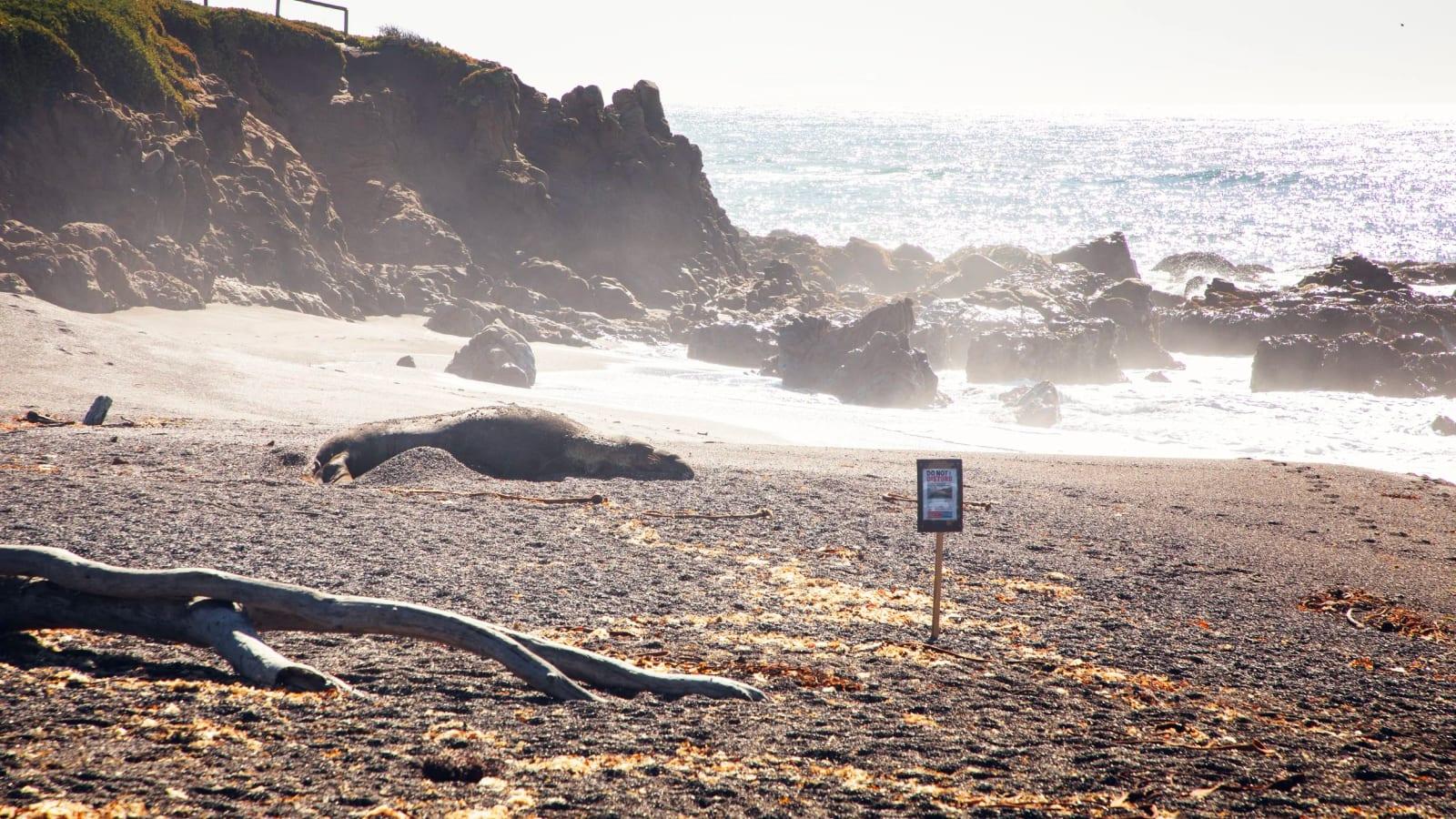
Moonstone Beach, Cambria Fossil Hunting Guide
Image: Tatianafri (CC BY-SA 4.0)
Moonstone Beach at Cambria, on the San Luis Obispo coast, exposes uplifted Pleistocene marine terrace deposits full of shallow-water shells, with the Miocene Monterey Formation forming the sea cliffs behind. Mussels, clams, sand dollars, and barnacles weather out of the bluffs and wash onto the beach.
By Edward Chen · Updated 1 August 2026
Introduction
Moonstone Beach at Cambria, on the northern San Luis Obispo coast, is better known for the agate and jasper pebbles that give it its name, but the low bluffs behind the beach also hold fossils. Uplifted Pleistocene marine terrace deposits cap the cliffs, and they preserve the shells of mussels, clams, sand dollars, and barnacles that lived in the shallow water when these terraces were at sea level.
The taller sea cliffs are cut into the much older Miocene Monterey Formation, the diatom-rich rock that forms much of the central California coast. The fossils most visitors notice are the shallow-marine shells that erode from the terrace deposits and collect on the beach below, rather than the microscopic diatoms that make up the cliff rock itself.
Location and Directions
Cambria sits on State Route 1 about 35 miles north of San Luis Obispo and 7 miles south of the San Simeon elephant seal rookery, near 35.57°N, 121.11°W. Moonstone Beach Drive runs along the shore on the west side of town, with several signed parking lots and a boardwalk that follows the top of the bluff.
The boardwalk gives easy views of the eroding cliffs, and stairs and paths lead down to the beach at intervals. Cambria has fuel, food, and lodging, and there are restrooms at the main beach parking areas.
 Photo: Peter D. Tillman, CC BY-SA 2.0, via Wikimedia Commons

What Fossils You'll Find
The finds here are shallow-marine shells preserved in the terrace deposits and reworked onto the beach.
Bivalves are the most common. Look for mussels such as Mytilus, along with cockles and other clams, often still holding their pale mineralized shell. Sand dollars, mostly the flat disks of Dendraster, weather out of the bluff sands. Barnacles, including large Balanus plates, are frequent, and gastropods such as small snails and limpets turn up in the same beds.
The best approach is to walk the tide line and the base of the bluffs, checking the loose material that has fallen from the terrace deposits above. Wet shells stand out against the sand, and low tide exposes more of the beach.
Geologic History
Two very different ages of rock meet here. The sea cliffs are cut into the Monterey Formation, deposited between roughly 16 and 7 million years ago as fine, silica-rich mud on the Miocene seafloor when upwelling made the California coast intensely productive.
Long after the Monterey mud hardened, the coast rose. During the Pleistocene, within the last few million years, repeated changes in sea level cut a series of flat wave-cut platforms into the coast. Each platform collected beach and shallow-marine sediment full of shells before uplift raised it above the waves. Those raised terrace deposits, now perched on top of the older cliffs, are the source of the shell fossils on the beach.
Collecting Rules and Regulations
Moonstone Beach is a public beach, and picking up a few loose shells or pebbles from the sand is a normal part of a visit. Keep any collecting light and casual, take only a little, and leave plenty for the next person.
Do not dig into or hammer the bluffs. They are actively eroding, protected in places, and undermining them is both dangerous and damaging. The land above the beach includes the Fiscalini Ranch Preserve and other protected areas where collecting is not allowed. Vertebrate fossils are protected everywhere and should be left in place and reported.
Safety
The bluffs at Cambria are soft and unstable, and blocks fall without warning. Stay back from the cliff edge above and do not sit or dig at the base below. Watch the ocean as well, because sneaker waves and rising tides can catch people off the rocks. Wear shoes with grip, since the rocks and kelp are slick, and check a tide table before working the lower beach.
Sources
https://ucmp.berkeley.edu/tertiary/mio/monterey.html https://natmus.humboldt.edu/sites/default/files/geol-fossil-guide.pdf https://en.wikipedia.org/wiki/Monterey_Formation
Nearby sites
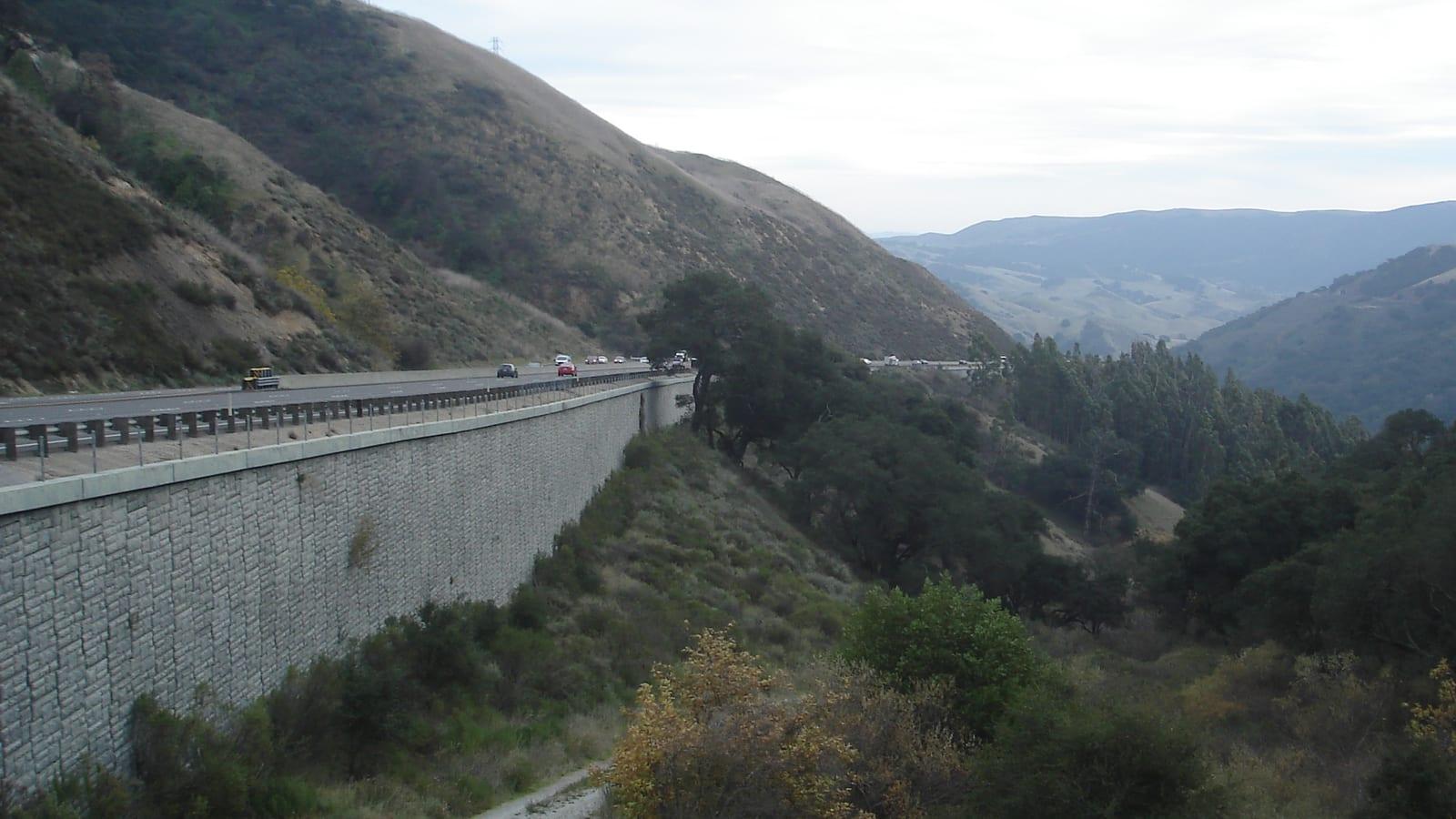 Oyster Fossils at Santa Margarita Ranch, San Luis Obispo CountyOysters (Crassostrea titan), Bivalves
 Shell Creek Fossil Hunting GuideClams (Protothaca staleyi), Oysters (Crassostrea)
 Marine Fossils near Coalinga Fossil Hunting GuideSand Dollars, Bivalves
 Jacalitos Creek Fossil Hunting GuideBivalves, Gastropods