Lance Creek Fossil Hunting Guide
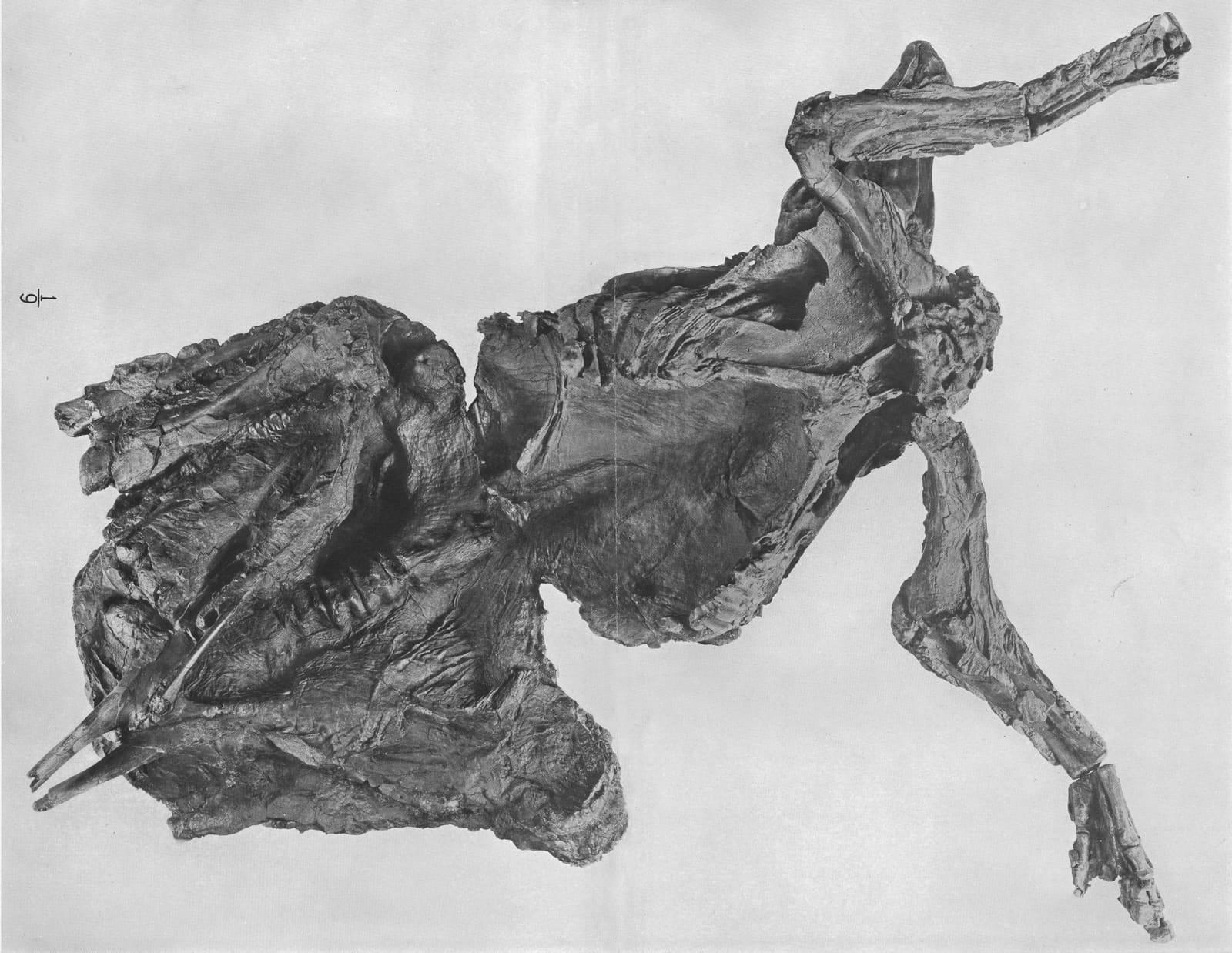
Image: Henry Fairfield Osborn (Public domain)
Lance Creek in Niobrara County, eastern Wyoming, is the type area of the Lance Formation, a Late Cretaceous river-plain deposit dated to about 69 to 66 million years ago. It produces Triceratops, Tyrannosaurus rex, Edmontosaurus, and one of the best records of latest-Cretaceous mammals. The fossil ground is private and BLM land where vertebrate collecting requires permission or a permit.
By Edward Chen · Published 21 June 2026
Introduction
Lance Creek gives its name to the Lance Formation, a Late Cretaceous unit that records the last few million years before the end-Cretaceous extinction. The beds were laid down by streams on a coastal plain along the edge of the Western Interior Seaway, under a subtropical climate with ample rain and no cold season. Tens of thousands of vertebrate fossils have come from the formation, ranging from microscopic teeth to articulated dinosaur skeletons and extensive bonebeds. The site has drawn paleontologists since the late 19th century, when early expeditions recovered well-preserved dinosaur remains near the creek.
The Lance fauna is essentially the same world as the better-known Hell Creek Formation farther north. It includes Triceratops, Tyrannosaurus rex, the duckbill Edmontosaurus, the armored Ankylosaurus, plus pterosaurs, birds, and an unusually complete record of small mammals, including early marsupials.
Location and Directions
Lance Creek is a small community and a drainage in Niobrara County, in far eastern Wyoming. The fossil-bearing badlands lie around the creek and its tributaries near 43.03°N, 104.66°W. Lusk, on US Highway 18/20, is the nearest service town, roughly 25 to 30 miles to the southeast, and Douglas and Newcastle are the other regional towns.
Access is by state and county roads off the highways near Lusk, with unpaved roads leading into the badlands. The fossil ground is a mix of private ranch land and BLM public land, and the boundaries are not obvious on the ground. Before any visit, establish exactly whose land you intend to be on, and arrange permission for private parcels in advance.
What Fossils You'll Find
The Lance Formation produces the classic latest-Cretaceous dinosaurs. Triceratops horns, frills, and teeth are among the more frequent large-vertebrate finds, and Tyrannosaurus rex material has been recovered here, including specimens described in the scientific literature. The duckbill Edmontosaurus, the armored Ankylosaurus, and other dinosaurs are present, and a famous duckbill "mummy" with skin impressions came from these beds. The formation is also a key source of small mammal teeth that document the rise of mammals at the close of the Cretaceous, along with turtles, crocodilians, fish, and amphibians.
These vertebrate fossils are protected on public land and owned by the landowner on private land, so they are not free to collect. Commercial dig operations on private ranches in the broader region give paying visitors a legal way to dig dinosaur material, but that is by arrangement, not open access.
Geologic History
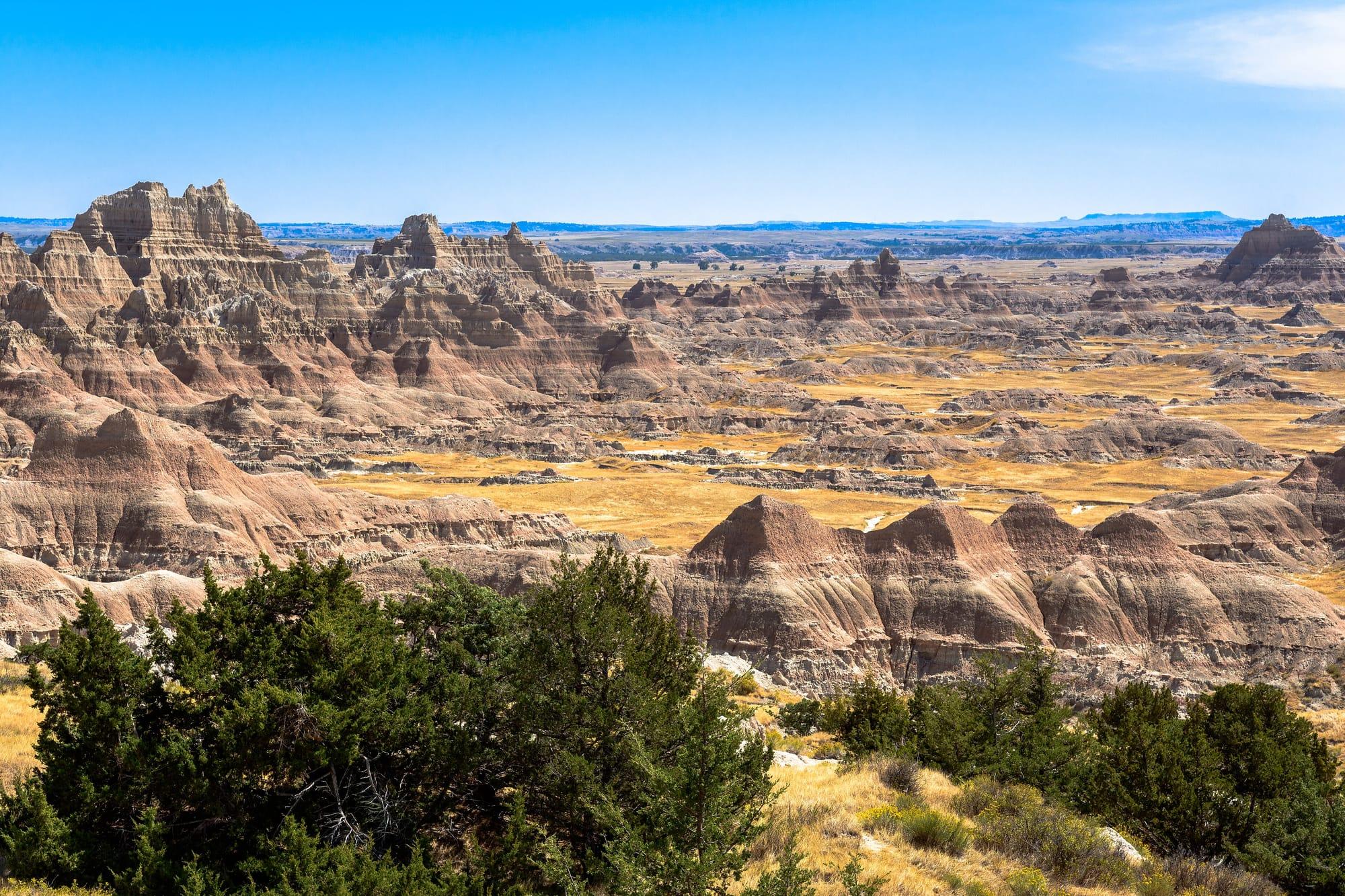
The Lance Formation dates to roughly 69 to 66 million years ago, the very end of the Cretaceous. Rivers flowing east toward the shrinking Western Interior Seaway spread sand, silt, and mud across a low coastal plain. Channel sands, floodplain mudstones, and thin lignite beds built up to hundreds of feet thick, burying the remains of the animals living there. In places, rapid burial preserved nearly complete, sometimes articulated skeletons and even skin impressions. After the seaway withdrew and the region was uplifted, erosion exposed the soft beds as badlands around Lance Creek, bringing the fossil layers to the surface.
Collecting Rules and Regulations
Lance Creek is not an open public collecting site. On BLM public land, vertebrate fossils such as the dinosaur and mammal remains the area is known for may only be collected under a federal scientific permit, while reasonable amounts of common invertebrate and plant fossils may be collected for personal use. On private ranch land, all fossils belong to the landowner, and you must have permission to enter and collect. Because public and private parcels are interwoven, assume you need to confirm land status and secure permission before collecting anything. The legitimate route to digging dinosaur fossils here is through a permitted institution or a commercial operator working private land with the owner's consent.
Safety
The Lance Creek badlands are remote and dry, with long distances between services and limited cell coverage. Unpaved roads become impassable when wet, so check the weather and avoid the area after rain. Carry plenty of water, food, and fuel, and tell someone your plans. Summer heat, sudden storms, and lightning on the open plains are real risks. Watch your footing on steep, crumbly slopes, and be alert for rattlesnakes in the brush and rocks. A high-clearance vehicle is advisable for the back roads.
Sources
https://en.wikipedia.org/wiki/Lance_Formation https://www.britannica.com/topic/Lance-Formation https://www.britannica.com/place/Lance-Creek https://bioone.org/journals/bulletin-of-the-peabody-museum-of-natural-history/volume-54/issue-2/014.054.0202/New-Examples-of-Tyrannosaurus-rex-from-the-Lance-Formation-of/10.3374/014.054.0202.short
Nearby sites
 Agate Fossil Beds National Monument Fossil Hunting GuideMenoceras arikarense, Stenomylus hitchcocki
 The Mammoth Site of Hot Springs Fossil Hunting GuideColumbian mammoth (Mammuthus columbi), Woolly mammoth (Mammuthus primigenius)
 Como Bluff Fossil Hunting GuideSauropod bones, Stegosaurus
 Badlands National Park Fossil GuideTitanotheres, Oreodonts