Las Hoyas Lagerstätte Fossil Hunting Guide
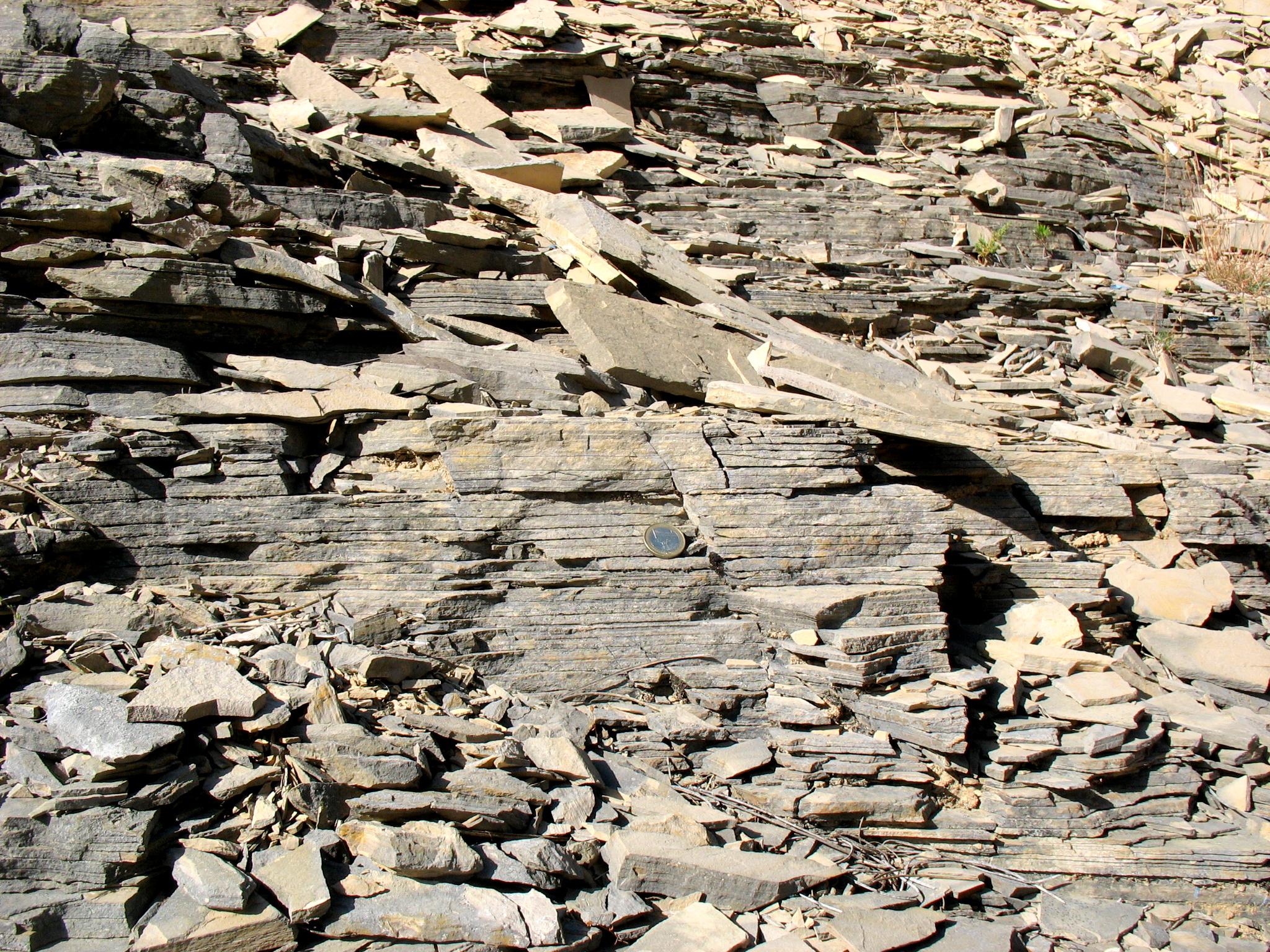
Image: PePeEfe (CC BY-SA 4.0)
Las Hoyas is an Early Cretaceous Konservat-Lagerstätte in the Serranía de Cuenca, eastern Spain, with more than 20,000 catalogued plant and animal fossils from the La Huérguina Formation, including the theropod Concavenator and the early bird Iberomesornis. Specimens are viewed at the Museo de Paleontología de Castilla-La Mancha in Cuenca.
By Edward Chen · Updated 1 August 2026
Introduction
Las Hoyas is an Early Cretaceous Konservat-Lagerstätte in the Serranía de Cuenca, in the autonomous community of Castilla-La Mancha in eastern Spain. The site sits in the upper part of the La Huérguina Formation, a freshwater lacustrine limestone deposited in shallow karst lakes on a subtropical floodplain about 129 to 125 million years ago, during the late Barremian stage. The fine, finely laminated calcareous mudstones preserve more than 20,000 catalogued fossils, with intact soft tissue, skin impressions, and gut contents on many vertebrate specimens. The fauna includes the carcharodontosaurid theropod Concavenator corcovatus, the early bird Iberomesornis romerali, the eutriconodont mammal Spinolestes xenarthrosus, and the ornithomimosaur Pelecanimimus polyodon, along with insects, fish, plants, and the earliest known angiosperms. Las Hoyas was protected as a Bien de Interés Cultural site by the Government of Spain in 2016, and the field site itself is closed to the public during active research. Specimens, mounts, and detailed exhibits are on view at the Museo de Paleontología de Castilla-La Mancha (MUPA) in the city of Cuenca, about 25 kilometres from the dig. This guide covers the museum visit, the field site and its access, the lagoonal geology, and the rules that apply.
Location and Directions
The Las Hoyas field site sits in a high karst valley on the eastern flank of the Sierra de las Cuerdas, in the municipality of La Cierva, about 25 kilometres east-northeast of the city of Cuenca. The site itself is gated and protected as a research-only area under Spanish heritage law.
Visitors should plan around the Museo de Paleontología de Castilla-La Mancha (MUPA), Río Gritos s/n, 16004 Cuenca, Spain. GPS for the museum is 40.0827 degrees north, 2.1300 degrees west. The museum is the public face of the Las Hoyas project and holds the principal type and display specimens.
Cuenca is reached by train from Madrid in about an hour on the AVE high-speed line to Cuenca-Fernando Zóbel, then a short taxi or bus ride into the city centre. From Valencia, the AVE trip takes about an hour and a quarter. Cuenca old town, a UNESCO World Heritage city in its own right, is the recommended base for a visit.
MUPA is open Tuesday through Sunday, generally from 10:00 to 14:00 and 16:00 to 19:00, with seasonal variation. The standard adult admission at the time of writing is 5 euros, with reduced rates for students and seniors, and free entry on Wednesday afternoons. Children under 8 enter free. Group guided tours can be booked in advance through the museum.
During the summer dig season, the Las Hoyas research team sometimes holds open-house days at the field site. Dates are announced through the MUPA website and the Universidad Autónoma de Madrid Las Hoyas project page.
What Fossils You'll Find
You will not collect at Las Hoyas. What you can do is study a long sequence of articulated and soft-tissue-preserved specimens at MUPA, including type material for several Cretaceous taxa. Identifications below follow the published Las Hoyas literature.
- Concavenator corcovatus. A 6-metre theropod carcharodontosaurid with a tall hump-like neural spine over the hips. The holotype, recovered from Las Hoyas in 2003 and described in 2010, is mounted as a full skeleton at MUPA and includes integumentary structures interpreted as quill knobs on the ulna.
- Iberomesornis romerali. A pigeon-sized early bird described in 1992 and considered a key transitional form between non-avian theropods and modern birds. The holotype is on display.
- Pelecanimimus polyodon. An ornithomimosaur with more than 220 teeth, described in 1994. The holotype includes a soft-tissue throat sac impression.
- Spinolestes xenarthrosus. A small eutriconodont mammal described in 2015 from a specimen preserving fur, hedgehog-like dermal spines, and internal organ outlines.
- Eoalulavis hoyasi. An enantiornithine bird known from a single specimen with feather impressions, described in 1996.
- Plants and insects. Charophyte algae, ferns, ginkgophytes, conifers, and rare early angiosperm reproductive structures are preserved across many bedding planes. The insect collection includes complete dragonflies, lacewings, and aquatic beetles.
- Fish and amphibians. Articulated specimens of Notagogus, Rubiesichthys, and the salamander Iberobatrachus.
The MUPA exhibits include scale outlines for the larger taxa, casts of major holotypes, and a working preparation lab visible through glass.
Geologic History
The Las Hoyas fossils come from the upper La Huérguina Formation, a sequence of calcareous mudstone and microbial laminate deposited in a system of shallow, alkaline karst lakes during the late Barremian stage of the Early Cretaceous. Recent biostratigraphy and palynology place the main fossiliferous section between 129 and 125 million years ago.
The Iberian Range in the Early Cretaceous was a subtropical archipelago bordering the Tethyan margin. Karst valleys on emergent limestone platforms held shallow ponds fed by springs and seasonal rain. The fine laminations in the lake mud preserve a record of seasonal change, with dark organic-rich layers separated by light-coloured carbonate winter deposits. Episodic mass mortality, microbial mat smothering, and rapid carbonate precipitation locked organisms onto bedding planes with very little decay.
The 2022 Journal of the Geological Society overview by Buscalioni and Fregenal-Martínez recognises three taphonomic zones in the lake system: a marginal swamp belt with plants and amphibians, a shallow water lacustrine zone with fish and aquatic insects, and a deeper anoxic basin with the best soft-tissue preservation of vertebrates.
After deposition, the Iberian basin was inverted during Alpine orogenesis. The La Huérguina Formation now dips moderately to the east across the Serranía de Cuenca. Modern stream cutting and small quarry operations in the late twentieth century exposed the productive horizon at Las Hoyas.
How Las Hoyas Became a Fossil Site
The first fossils were collected from limestone slabs around the village of La Cierva by local residents in the 1980s. José Luis Sanz of the Universidad Autónoma de Madrid identified the significance of the deposit in 1985 and began systematic excavation. The Las Hoyas project, run jointly by UAM, the Universidad Complutense de Madrid, and the Junta de Comunidades de Castilla-La Mancha, has dug at the site every summer since. The project has produced more than 200 peer-reviewed papers and described several new genera, including those listed above.
The Museo de Paleontología de Castilla-La Mancha opened in Cuenca in 2015 to house and display the Las Hoyas collection. The field site was designated a Bien de Interés Cultural under Spanish heritage law in 2016, formalising the strict-protection access regime.
Collecting Rules and Regulations
Collecting is prohibited. The Las Hoyas site is protected as a Bien de Interés Cultural under Spanish Law 16/1985 on Spanish Historical Heritage. Removing fossils, sediment, or rock from the field site is an offence under Spanish national law. Castilla-La Mancha heritage regulations require any collection from the La Huérguina Formation elsewhere in the region to be reported to the Consejería de Cultura.
Practical rules:
- The field site is closed except during scheduled research excavations and announced open-house days.
- Visitors who arrive at the field site outside those windows can view interpretive panels at the entrance, but the dig area itself is gated.
- The Museo de Paleontología de Castilla-La Mancha is the main public access point and is open year round on the schedule above.
- Photography for personal use is allowed inside MUPA, with flash discouraged near the type specimens.
- Drones are restricted across the protected area.
- Research collection is permitted only to teams working under federal and regional permit.
Safety
The MUPA museum is fully indoor and accessible. Tile floors can be slippery when wet. There is no major hazard inside the building beyond standard museum precautions.
The field site lies at about 1,200 metres elevation in a remote rural valley. Summer temperatures regularly exceed 30 degrees Celsius. Winter can bring snow and ice on the access road. Independent travel to the gated site is discouraged outside posted open-house dates.
If joining a research open-house day, wear sun cover, sturdy boots, and carry water. The walking distance from the parking area to the dig is short, but the ground is uneven.
Sources
- Wikipedia, "La Huérguina Formation," summary of peer-reviewed work. https://en.wikipedia.org/wiki/La_Hu%C3%A9rguina_Formation
- Buscalioni, A.D. and Fregenal-Martínez, M.A., 2023. "The Las Hoyas Lagerstätte: A Palaeontological View of an Early Cretaceous Wetland." Journal of the Geological Society. https://www.lyellcollection.org/doi/abs/10.1144/jgs2022-079
- Poyato-Ariza, F.J. and Buscalioni, A.D. (eds.), 2016. "Las Hoyas: A Cretaceous Wetland." Verlag Dr. Friedrich Pfeil, Munich.
- Sanz, J.L. et al., 2017. "The Exceptional Fossil Site of Las Hoyas (Spain) from an Educational Perspective." Geoheritage, 9. https://link.springer.com/article/10.1007/s12371-017-0270-z
- Museo de Paleontología de Castilla-La Mancha (MUPA), Cuenca. Visitor information accessed June 2026.
Nearby sites
 Galve Dinosaur Trail Fossil Hunting GuideSauropod trackways, Theropod footprints
 Salas de los Infantes Dinosaur Sites Fossil Hunting GuideDemandasaurus darwini (sauropod), Europatitan eastwoodi
 Atapuerca Archaeological Site Fossil GuideHominin remains, Homo antecessor
 Ziz Gorge Echinoid Site Errachidia Fossil Hunting GuideMicraster echinoids, irregular echinoids