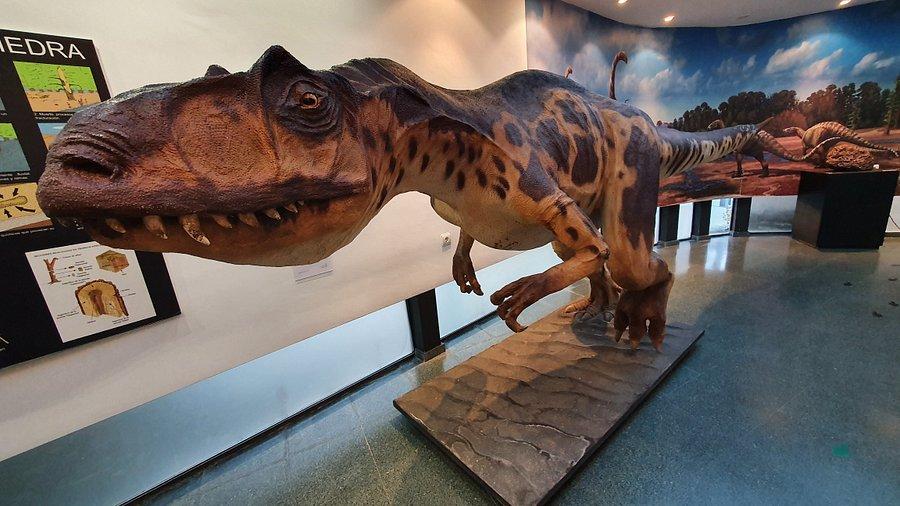
Salas de los Infantes Dinosaur Sites Fossil Hunting Guide
The Sierra de la Demanda around Salas de los Infantes in southeastern Burgos Province, Spain, contains an extended sequence of Late Jurassic and Early Cretaceous tracksites and bone localities. Highlights include Costalomo, Las Sereas, and El Frontal, and the Dinosaur Museum in Salas. Mostly free trail access plus a paid museum.
By Edward Chen · Published 4 June 2026
Introduction
Salas de los Infantes is a small town of about 1,800 residents in the southeastern corner of Burgos Province, at the western edge of the Sierra de la Demanda. The hills around the town expose an extended sequence of Late Jurassic to Early Cretaceous fluvial and lacustrine rocks of the Tera and Oncala groups, deposited in the Cameros basin between roughly 150 and 125 million years ago. Since the 1970s, the Universidad Autónoma de Madrid, the Universidad Complutense de Madrid, and the Colectivo Arqueológico-Paleontológico Salense have mapped more than 60 tracksites and 15 bone localities across the southeastern Burgos hills. Several sites contain hundreds of dinosaur footprints exposed on bedding planes accessible from public footpaths. The bone localities have produced the type specimens of Demandasaurus darwini, a small rebbachisaurid sauropod, and Europatitan eastwoodi, a basal somphospondylan sauropod. The Dinosaur Museum (Museo de Dinosaurios) on the Salas town plaza holds the principal display collection and runs as the public visitor hub. The Land of Dinosaurs Route (Ruta de los Dinosaurios) is a signposted itinerary that links the museum, Costalomo, Las Sereas, Mambrillas de Lara, and El Frontal sites across a network of paved and unpaved roads. Public access to most trail-side tracksites is free. The museum charges a small admission. Collecting is prohibited. This guide covers how to plan a visit, what each main stop shows, the Iberian Cretaceous geology, and the rules that apply.
Location and Directions
Salas de los Infantes sits in the southeastern corner of Burgos Province, about 55 kilometres southeast of the city of Burgos and 200 kilometres north of Madrid. From Madrid, the drive takes about three hours via the A-1 north and the N-234 east. From Burgos, the drive takes about an hour on the N-234 east.
The Museo de Dinosaurios is at Plaza Jesús Aparicio 9, in the town centre. GPS is 42.0247 degrees north, 3.2861 degrees west. The museum is open Tuesday through Sunday, generally from 10 a.m. to 2 p.m. and 4 p.m. to 7 p.m., with seasonal variation. Standard adult admission is 3 euros at the time of writing, with reduced rates for children, students, seniors, and groups.
The Land of Dinosaurs Route covers about 60 kilometres of paved and gravel roads across four municipalities. Major stops:
The Costalomo tracksite, 5 kilometres west of Salas, preserves 239 footprints from the Lower Cretaceous, including the type material for Iniestapodus burgensis. The site is reached by a marked footpath from a small gravel parking area.
The Las Sereas megafield, 18 kilometres northwest of Salas near Quintanilla de las Viñas, contains stegosaur, sauropod, and theropod trackways on multiple bedding planes. The site is reached by a marked footpath from a small parking area.
Mambrillas de Lara, near Salas, contains ornithopod and theropod trackways on a single large bedding plane.
El Frontal, near Regumiel de la Sierra in the southeast of the route, contains additional sauropod trackways.
The Fundación para el Estudio de los Dinosaurios en Castilla y León publishes a printed route map and operates the museum. Several short driving and walking days are possible from a base in Salas.
The nearest commercial airport is Madrid Adolfo Suárez Madrid-Barajas. Burgos has secondary regional service. Salas town has standard Spanish-budget hotels and restaurants.
What Fossils You'll Find
You will not collect at Salas de los Infantes. What you can do is walk to four major tracksites and the Las Sereas megafield, see in-place dinosaur footprints on natural bedding planes, and visit the Salas Dinosaur Museum to see prepared body fossils. Identifications below follow the published Burgos paleontological literature.
- Demandasaurus darwini. A small rebbachisaurid sauropod described in 2011 from material recovered at the Tenadas del Carrascal site east of Salas. Bone material is on display at the Salas museum.
- Europatitan eastwoodi. A basal somphospondylan sauropod, described in 2017 from material recovered at the El Oterillo II site. The museum holds the type specimen.
- Iniestapodus burgensis. A theropod ichnotaxon described in 2014 from Costalomo material and named for the Spanish footballer Andrés Iniesta.
- Stegosaurid material. Plate and spike fragments referable to a primitive stegosaur, including the first stegosaurian remains from the Early Cretaceous of Spain.
- Iguanodontian bone material. Vertebral and limb fragments referable to early iguanodontian ornithopods.
- Crocodyliforms. Lusitanisuchus-grade neosuchian remains have been recovered.
- Microvertebrates. Multituberculate mammal teeth, lizards, and freshwater turtles are abundant in screen-wash samples.
The Salas Dinosaur Museum holds the principal Burgos Cretaceous body-fossil collection, with mounted material, casts, and a detailed stratigraphic display.
Geologic History
The dinosaur-bearing rocks at Salas de los Infantes belong to the Tera and Oncala groups of the Cameros Basin. The Cameros Basin opened as a rift basin during the latest Jurassic and Early Cretaceous, as part of the wider Iberian rifting that separated Iberia from the European plate. The basin filled with fluvial, lacustrine, and marsh sediments deposited in a humid subtropical setting.
The Tera Group, latest Jurassic to earliest Cretaceous in age at roughly 150 to 140 million years ago, contains the lower bone-bearing horizons including the Tenadas del Carrascal site. The Oncala Group, lower to middle Early Cretaceous at roughly 140 to 130 million years ago, contains the principal tracksites including Costalomo, Las Sereas, and Mambrillas de Lara. Higher in the section, the Urbión and Enciso groups, dated to roughly 130 to 125 million years ago, contain the El Frontal and Tenadas localities.
The dinosaurs at Salas lived along the floodplains and lake margins of the Cameros basin. Sauropods, stegosaurs, ornithopods, and theropods all left footprints in damp mud at lake and channel margins, which were buried under fresh sand and silt pulses during floods. The hard sandstone surfaces preserved the print impressions.
After Cretaceous deposition, the Cameros basin was inverted during Alpine compression. The Tera and Oncala groups now dip moderately across the Sierra de la Demanda, and modern stream cutting and quarry operations have exposed the productive horizons.
How Salas de los Infantes Became a Fossil Site
The first dinosaur footprints in southeastern Burgos were noticed by local hikers in the 1970s. The Colectivo Arqueológico-Paleontológico Salense was founded in 1978 to document the regional finds. Systematic university work began in the 1980s under José Luis Sanz of the Universidad Autónoma de Madrid, who established the Cameros Basin as a major Iberian Cretaceous locality. Fidel Torcida and the Fundación para el Estudio de los Dinosaurios en Castilla y León have led modern excavation and outreach since the late 1990s.
The Salas Dinosaur Museum opened in 2001 and was expanded in 2009. The Land of Dinosaurs Route was inaugurated in 2010 as a regional tourism and heritage programme. Active research collection continues at several sites under permits from the Junta de Castilla y León.
Collecting Rules and Regulations
Collecting is prohibited. The Salas tracksites and bone localities are protected as Bienes de Interés Cultural under Spanish Law 16/1985 on Spanish Historical Heritage and as regional paleontological heritage under Castilla y León Law 12/2002. Removing fossils, rocks, or any material from the protected areas is an offence under Spanish federal and regional law.
Practical rules:
- Stay on marked footpaths between parking areas and tracksite viewing zones. Walking on the trackway surfaces is not permitted.
- Photography for personal use is welcomed at all sites and inside the museum.
- The signed trackside sites are free of charge. The Salas Dinosaur Museum charges a small admission.
- Drones require advance permission from the Junta de Castilla y León.
- Pets must be leashed at outdoor sites and are not permitted inside the museum.
- Research collection is restricted to permitted teams working under Junta de Castilla y León authorisation.
Safety
Salas de los Infantes sits at about 970 metres elevation. Summer temperatures reach 28 to 30 degrees Celsius with strong sun. Winter brings overnight frost and occasional snow. The recommended visiting window is April through October.
The trail to the tracksites involves short walks on uneven terrain. Sturdy walking shoes are recommended. After heavy rain, mountain run-off can make some paths slippery.
The trackway surfaces themselves are smooth limestone that can be slick when wet. Stay on the marked walkways and behind chain barriers at each site.
Cell coverage is reliable around Salas town and intermittent on some of the outlying tracksite roads. Carry a printed map of the Land of Dinosaurs Route.
Sources
- Fundación para el Estudio de los Dinosaurios en Castilla y León, "Dinosaur Museum." https://www.fundaciondinosaurioscyl.com/en/c/?idsec=376
- Fundación para el Estudio de los Dinosaurios en Castilla y León, "Costalomo." https://www.fundaciondinosaurioscyl.com/en/c/?idsec=373
- Fundación para el Estudio de los Dinosaurios en Castilla y León, "Route Land of Dinosaurs." https://www.fundaciondinosaurioscyl.com/en/c/?idsec=365
- Torcida, F. et al., 2011. "Demandasaurus darwini, a new rebbachisaurid sauropod from the Early Cretaceous of the Iberian Peninsula." Acta Palaeontologica Polonica, 56.
- Torcida Fernández-Baldor, F. et al., 2017. "Europatitan eastwoodi, a new sauropod from the lower Cretaceous of Iberia in the initial radiation of somphospondylans in Laurasia." PeerJ, 5:e3409.
Nearby sites
 Atapuerca Archaeological Site Fossil GuideHominin remains, Homo antecessor
 Las Hoyas Lagerstätte Fossil Hunting GuideConcavenator corcovatus (carcharodontosaurid), Iberomesornis romerali (early bird)
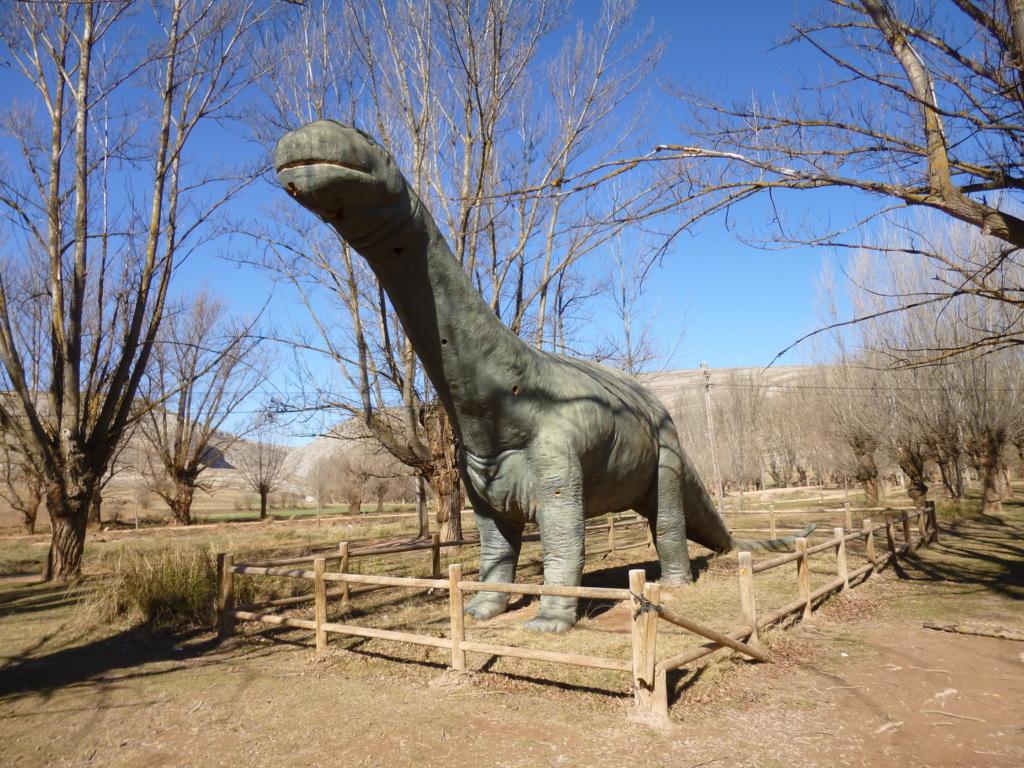 Galve Dinosaur Trail Fossil Hunting GuideSauropod trackways, Theropod footprints
 Beer Head Fossil Hunting GuideAmmonites, Echinoids