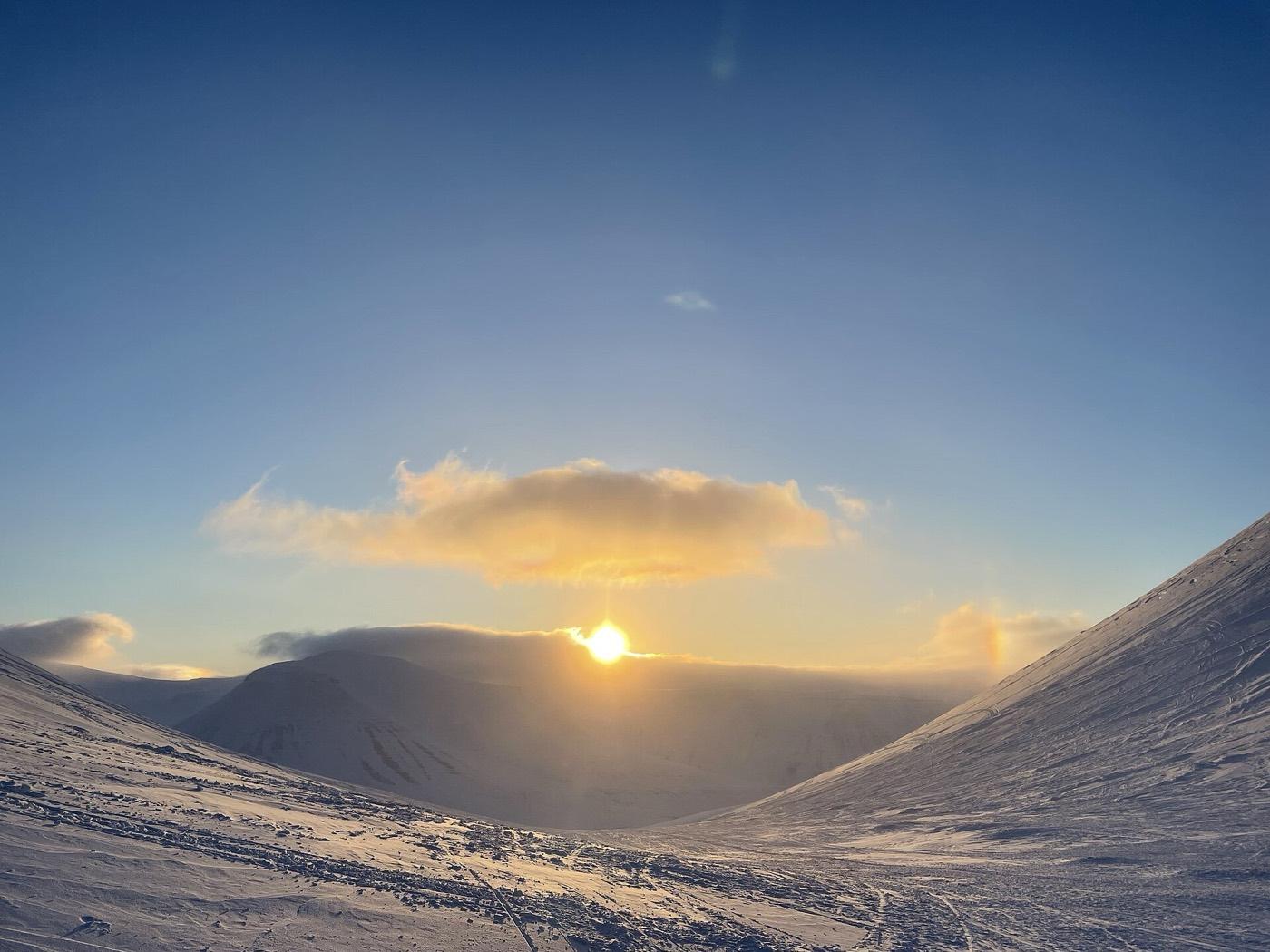
Longyearbreen Fossil Hunting Guide
Image: Ssu (CC BY-SA 4.0)
Paleogene plant fossils in the moraine below a glacier, a walk up-valley from Longyearbyen at 78 degrees north. The site lies outside Svalbard's national parks and nature reserves, where the removal of fossils is prohibited.
By Edward Chen · Published 11 September 2026
Introduction
Svalbard sits at 78 degrees north, and its rocks record a time when the archipelago was warm enough for forests. The plant fossils in the moraine below Longyearbreen are the evidence.
Longyearbreen is the glacier at the head of Longyeardalen, the valley that holds Longyearbyen. The walk up-valley from the town is one of the standard local excursions. The moraine it crosses carries fossil leaves and wood weathered out of the Paleogene beds.
The legal position matters more here than at most sites. Inside Svalbard's national parks and nature reserves, fossils must not be removed and are protected from all damage. Longyearbreen lies in Nordenskiöld Land, outside the boundaries of those areas, which is why it remains a practical locality. Nordenskiöld Land National Park merged into Van Mijenfjorden National Park in 2021, so check the current boundary before you rely on being outside it.
Location and Directions
Longyearbyen is reached by air from Tromsø and Oslo. There is no road connection to anywhere else.
GPS for the glacier snout: 78.1900°N, 15.5260°E.
The route runs up Longyeardalen from the town, past the old mining infrastructure, onto the moraine below the glacier snout. It is a walk rather than a climb, but it is Arctic terrain and it is not a stroll.
Guided trips run from Longyearbyen through local operators, and for most visitors that is the sensible way to go. A guide carries a rifle for polar bear protection, which is a legal and practical requirement outside the settlement.
What you actually see is modest, and it is worth saying so. These are leaf impressions and wood fragments in loose rock, not standing trunks or dramatic exposures. The interest is entirely in what they imply about the latitude, not in their appearance.
What Fossils You'll Find
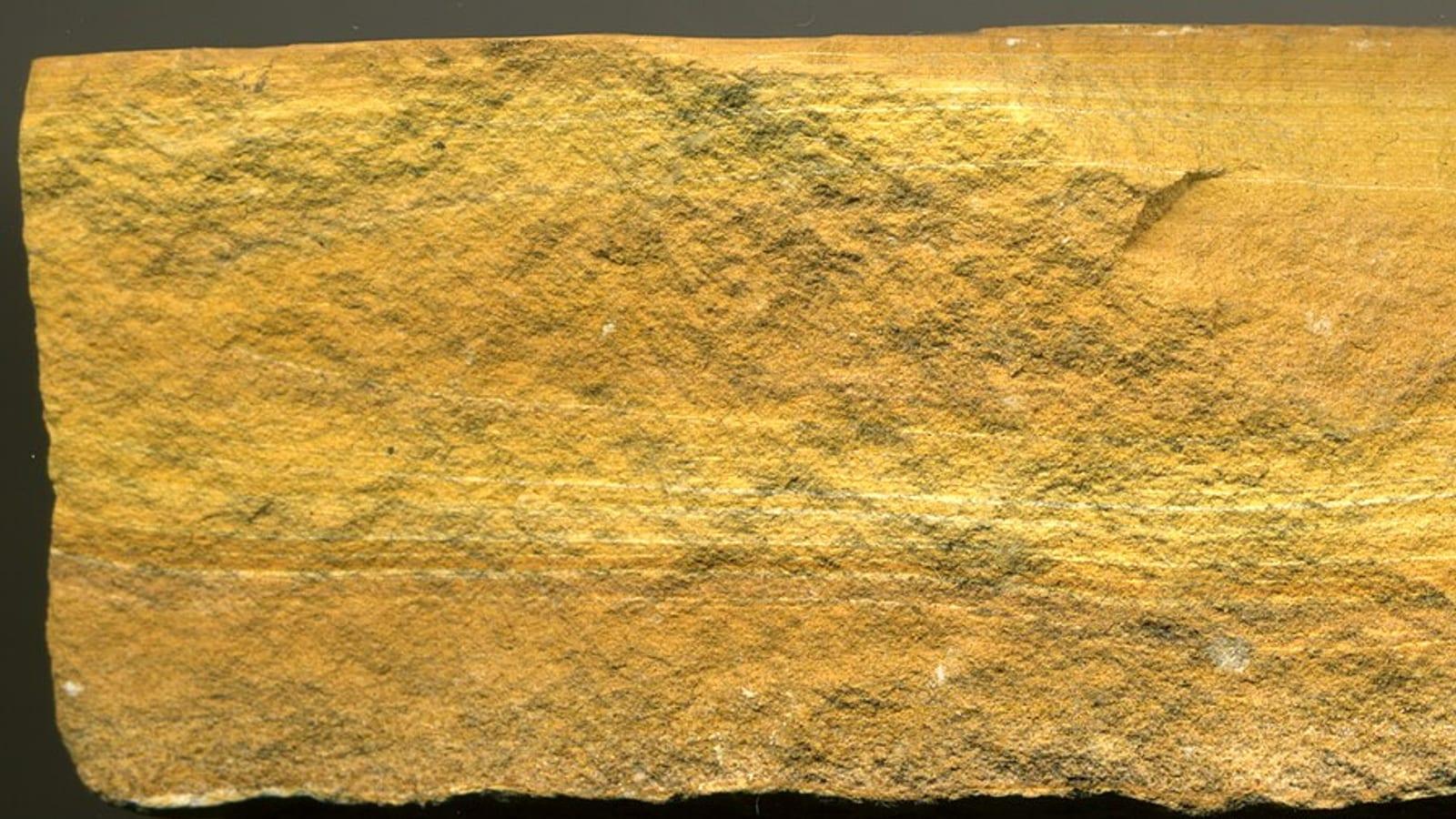
Plant fossils. Leaves, leaf impressions and fragments of fossil wood, weathered out of Paleogene sediments and carried in the moraine.
The material records a temperate to warm-temperate forest growing at a latitude that is now polar desert. That contrast is what makes the fossils interesting, and it is the story the site tells.
Look in the loose moraine and scree rather than at any face. The fossils have already been released by frost and water.
 Photo: Ssu, CC BY-SA 4.0, via Wikimedia Commons
Geologic History
The Central Basin of Spitsbergen holds a thick Paleogene sedimentary sequence, deposited roughly 60 to 45 million years ago in basins that formed as Greenland and Svalbard moved past one another.
The climate then was far warmer than now, and the deposits include coal seams. Those seams are the reason Longyearbyen exists, because the town was founded as a coal-mining settlement.
Coal is compressed plant matter, so a coal-bearing sequence is by definition a plant-fossil sequence. The leaves and wood in the moraine come from the same forests that made the coal.
Glaciers then did the excavation. Ice eroded the valley, and the moraine is the debris left where the glacier dropped it.
Svalbard's plant fossils have been collected since the nineteenth century and they were central to early arguments about continental drift and past climate. A fossil forest at 78 degrees north is hard to explain without either moving continents or changing climates. In the event both turned out to be involved.
Collecting Rules and Regulations
In Svalbard's national parks and nature reserves, plants and fossils shall not be removed and are protected against all damage beyond normal passage. This applies to the three national parks established in 1973 and to other protected areas.
Longyearbreen is in Nordenskiöld Land, outside those areas, so that prohibition does not catch it.
A separate rule protects all traces of human activity from before 1946, including broken tools and mining debris. That is cultural heritage law, and it is not a fossil rule, but around an old mining valley the two overlap. Leave artefacts alone.
The governing statute is the Svalbard Environmental Protection Act, the svalbardmiljølov of 15 June 2001. Outside protected areas the Governor may still close or regulate defined ground. That power covers nature, cultural monuments and watercourses.
No published Governor guidance sets out what a visitor may take, so treat the position as unsettled and ask locally before you pocket anything. Amendments to Svalbard's environmental regulations came into force on 1 January 2025 and apply to residents and visitors alike. Confirm the current position with the Governor of Svalbard rather than relying on a tour operator or on this page.
Mandatory registration applies for travel to large parts of Svalbard outside the settlements.
The glacier has retreated substantially in recent decades, which has exposed more moraine and more fossil material. It has also made the terrain near the snout less stable than older guidebooks describe.
Safety
Polar bears are present across Svalbard. Outside the settlement you are required to have means of protection and to know how to use it. For most visitors this means going with a guide.
The weather changes fast and the temperature is low for most of the year. Carry proper Arctic clothing even in summer.
Glacier margins are hazardous. Crevasses, unstable ice and meltwater channels all occur near the snout. Do not walk onto the ice without a guide and equipment.
Moraine is loose and unstable underfoot.
There is 24-hour darkness in winter and 24-hour daylight in summer, which disrupts judgement of time. Plan accordingly.
Sources
https://www.regjeringen.no/en/documents/regulation-nature-consrevation-areas-bird-reserves-svalbard/id2355095/ https://www.sysselmesteren.no/en/laws-and-regulations/ https://hurtigrutensvalbard.com/en/activities/hiking/fossil-hunting-at-longyearbreen https://en.visitsvalbard.com/visitor-information/rules-of-svalbard-and-safety
.jpg)