Slemmestad Fossil Hunting Guide
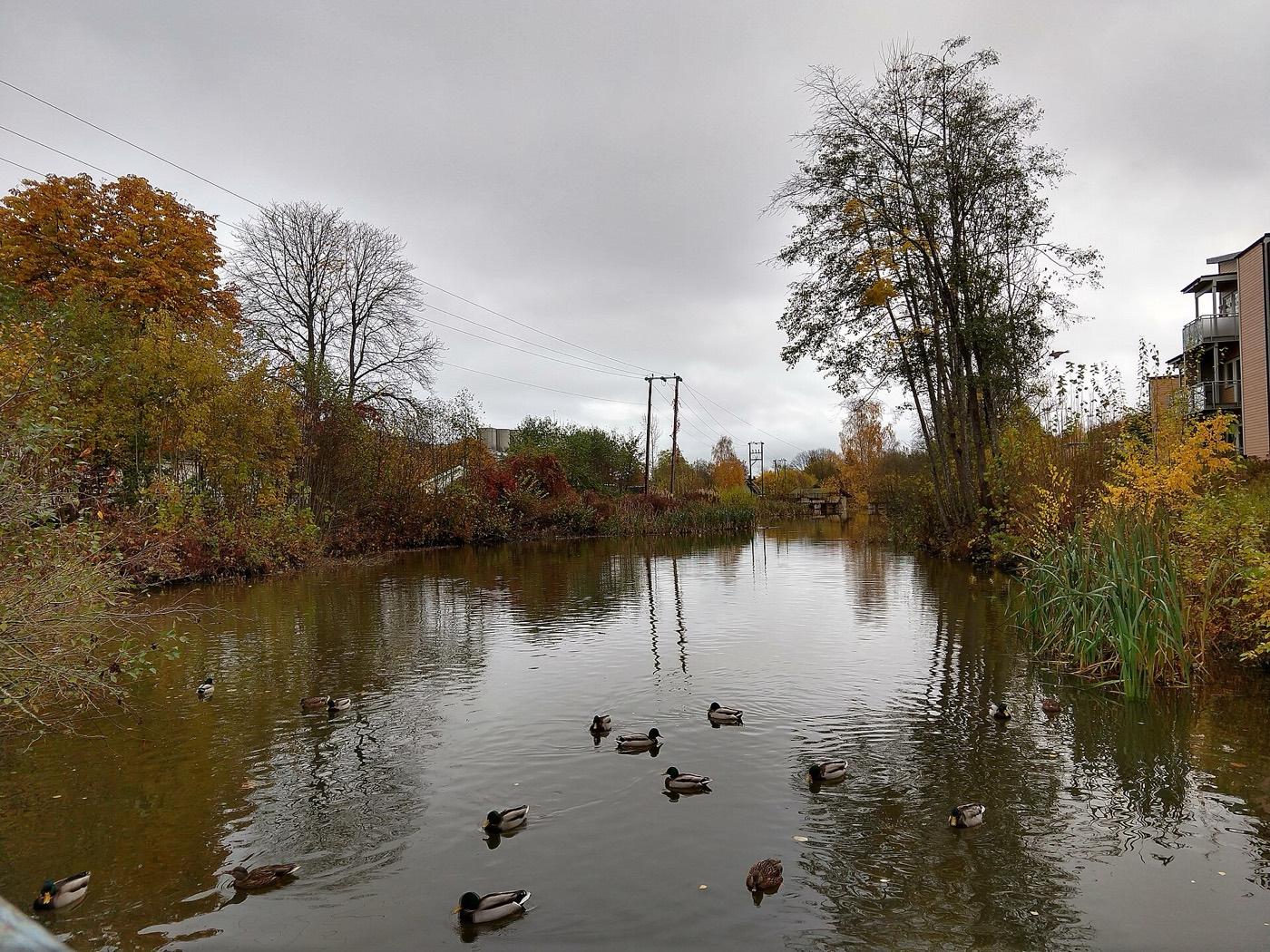
Image: WK (CC BY-SA 4.0)
A former cement town on the Oslofjord where Cambrian to Silurian shales and limestones are exposed in old quarries and along the shore. Trilobites, orthocones and gastropods occur, and the Geologisenteret exhibition stands on the same ground.
By Edward Chen · Published 11 September 2026
Introduction
Slemmestad is a half-hour drive from central Oslo, which makes it one of the most accessible serious fossil localities in Scandinavia. It owes that to industry. The town grew around a cement works, and cement needs limestone, and the limestone here is full of Lower Palaeozoic fossils.
The rocks belong to the Oslo Region, a fault-bounded trough sometimes called the Oslo Graben. That preserves a Cambrian to Silurian marine succession that has been studied since the nineteenth century.
The exhibition and the outcrop are in the same place, which is unusual. The Geologisenteret and its Trilobox display sit on the site. So you can see prepared specimens and then go and look at the beds they came from.
Location and Directions
Slemmestad lies on the western side of the Oslofjord in Asker municipality, Akershus, about 25 kilometres south-west of Oslo.
The Geologisenteret is at Vaterlandsveien 27, 3470 Slemmestad. Village GPS: 59.7833°N, 10.5000°E, which is an area coordinate rather than a point on the outcrop.
The town is reachable by bus from Oslo and by road. The Geologisenteret is the obvious first stop and the right place to ask where collecting is currently acceptable, because quarry ownership and access change.
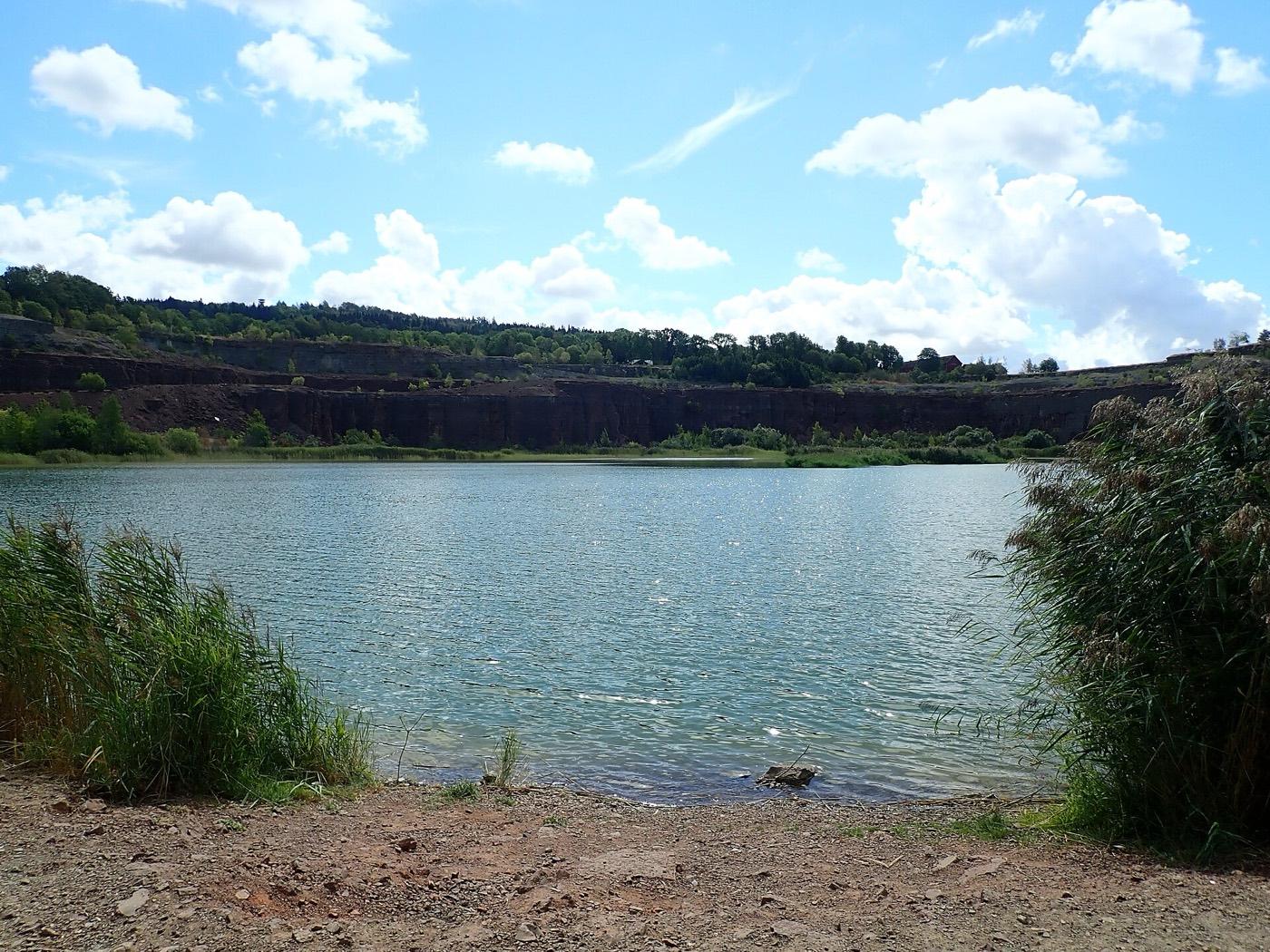
The outdoor exposures include old quarry workings and stream sections such as Bøbekken, along with shore exposures on the fjord.
The Geologisenteret is the practical starting point rather than an afterthought. It is small, it is aimed at visitors rather than specialists, and the staff can tell you which exposures are currently accessible. Quarry ownership and access in the area have changed repeatedly, and a published trip report from a few years ago is not a reliable guide.
What Fossils You'll Find
The fossils date from the Cambrian, Ordovician and Silurian, a span from roughly 541 to 419 million years ago.
Trilobites are the draw. Norway has a long tradition of trilobite study in these beds, and the Oslo Region species are well documented.
Orthocone nautiloids occur in the limestones, as they do across Baltica. Gastropods, brachiopods and graptolites are present, graptolites particularly in the darker shales.
Work loose material and scree rather than faces. Shale splits along the bedding, and a fresh split is where a trilobite appears.
The Oslo Region is one of the classic areas of European geology, described continuously since the early nineteenth century. Its Cambro-Silurian stratigraphy is used as a reference across Baltoscandia. The rocks are the same age as those of Kinnekulle and Öland in Sweden and Ohesaare in Estonia. The faunas are recognisably related, because all four sat on the same ancient continent.
Geologic History
The Oslo Region is a graben, a block of crust that dropped between faults. That subsidence preserved a thick Lower Palaeozoic marine sequence which has been eroded away across most of the surrounding Fennoscandian shield.
During the Cambrian and Ordovician, Baltica lay at southern tropical latitudes and drifted north. The sediments record that journey, from deeper, oxygen-poor shales to shallower carbonate.
Later Permian rifting intruded igneous rocks through the sequence, which is why the Oslo area also has volcanic geology alongside its fossil beds.
The cement works closed in 1989 after almost a century, and the town has since rebuilt itself partly around its geology. The Geologisenteret is the visible result, and the Trilobox exhibition is aimed at families as much as at specialists.
Collecting Rules and Regulations
Two protected natural monuments sit on this shore, Bjerkasholmen and Slemmestad, both designated in 1988. Their regulations prohibit hammering, wedging, drilling and blasting, and they forbid the collection of samples from bedrock.
Take loose stones only with the landowner's permission. Treat the shore exposures as viewing ground rather than as collecting ground.
Norway's allemannsretten gives broad access to walk in open country, including on uncultivated land.
Access is not the same as permission to collect. Private owners hold some old quarries, others are fenced, and some sites are protected.
Ask at the Geologisenteret. Local advice is the most reliable guide to which exposures are currently open and what is acceptable.
Take nothing from the two protected localities. Elsewhere on the shore, ask the landowner before you pick anything up.
Norway protects cultural heritage strictly, and report fossils of scientific significance to the Natural History Museum in Oslo.
Norway is expensive and Slemmestad has limited facilities. Buy food in Oslo or Asker rather than expecting to find much on site. Note that the bus journey from central Oslo takes around an hour.
Safety
Old quarry faces are unstable. Keep clear of the base and do not climb.
Wear eye protection. Splitting shale sends sharp fragments into the air.
Shore exposures are slippery with seaweed and are affected by tides, though the Oslofjord tidal range is small.
Norwegian winters bring ice and snow, and the collecting season is effectively late spring to autumn.
Ticks are present in coastal southern Norway.
For a visitor with one day near Oslo and an interest in fossils, Slemmestad is the obvious choice. The Natural History Museum in Oslo holds the reference collections, and the two together make a coherent introduction to the Cambro-Silurian of the Oslo Region.
Sources
https://www.visitgreateroslo.com/en/activity/fossils-in-slemmestad https://www.visitnorway.com/listings/geologi-center/216729/ https://www.trilobitesofnorway.com/ https://www.nhm.uio.no/