Makoshika State Park Fossil Guide
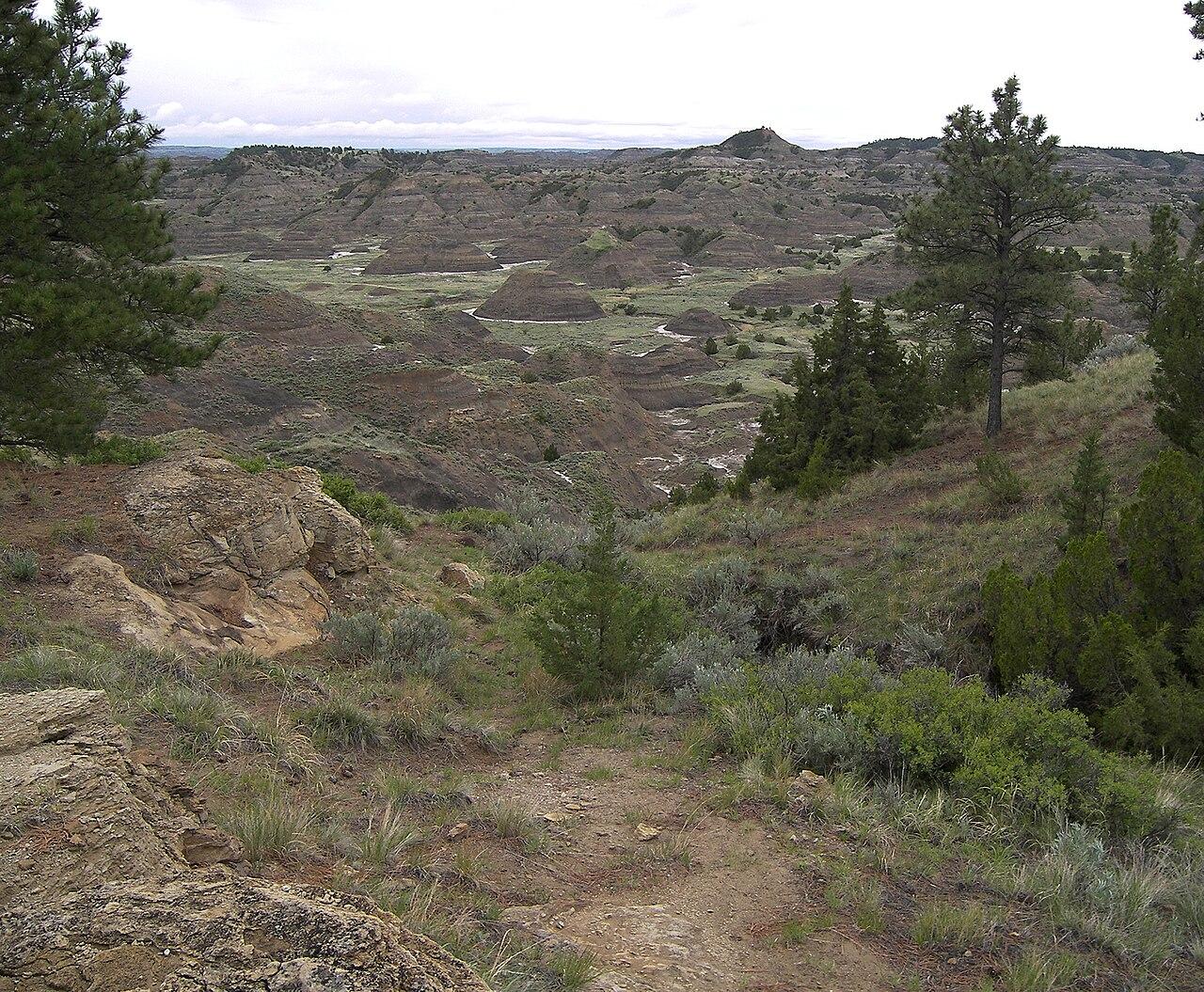
Image: Larry D. Moore (CC BY 4.0)
Makoshika is Montana's largest state park, a 12,200-acre badland of the Late Cretaceous Hell Creek Formation on the outskirts of Glendive. Triceratops, T. rex, Edmontosaurus and Thescelosaurus remains have all come out of the park. Fossil collecting is prohibited inside the park itself. The adjacent Baisch's Ranch runs paid day digs on private Hell Creek land.
By Edward Chen · Updated 31 July 2026
Introduction
Makoshika State Park covers 12,200 acres of wind-carved badlands on the southeast edge of Glendive, Montana, exposing the Late Cretaceous Hell Creek Formation in cliff faces, hoodoos, and pine-dotted ridges. It is Montana's largest state park and one of the most accessible Hell Creek localities in the United States, the same formation that produces Tyrannosaurus rex, Triceratops, Edmontosaurus and the duckbills of the latest Cretaceous.
More than ten dinosaur species have been documented inside the park, including a complete Triceratops horridus skull and a near-complete Thescelosaurus. Fossils within the park are protected: visitors are asked not to bring metal detectors, and no digging, collecting, or removal of fossils or artifacts is permitted. For collectors, several local operators, most notably Baisch's Dinosaur Digs and PaleoAdventures, run day digs on neighbouring private ranches in the same Hell Creek beds.
This guide covers what's visible in the park, how to reach it, and where to dig legally nearby.
Location and Directions
Makoshika is on the southeast side of Glendive in Dawson County, eastern Montana.
Directions to Makoshika State Park
From Interstate 94, take either of the two Glendive exits and follow signs roughly 2–3 miles through town to the park entrance at 1301 Snyder Avenue. The visitor centre is just inside the gate, with interpretive exhibits, a Triceratops skull cast, and a small bookshop. The park is open daily 7:00 a.m.–10:00 p.m. Visitor centre hours are 9:00–17:00 daily May 1–September 30, and Wednesday–Sunday 10:00–16:00 the rest of the year (closed major holidays).
A paved scenic loop climbs the badlands with marked pullouts and overlooks. Several hiking trails, Cap Rock Nature Trail, Diane Gabriel Trail (where the Thescelosaurus came out), and Kinney Coulee Trail, pass interpretive panels marking fossil sites. The campground has 28 sites, picnic shelters, and an amphitheatre. Cell service inside the park is poor.
For paid digs in the adjacent Hell Creek exposures, Baisch's Dinosaur Digs operates one-day field trips on the family ranch a short drive from the park, with experienced guides walking participants through prospecting, excavation, and field-jacketing techniques.
 Photo: Finetooth, CC BY-SA 3.0, via Wikimedia Commons

What Fossils You'll See
The Hell Creek Formation at Makoshika records the last two million years of the Cretaceous, the late-Maastrichtian floodplain world that ended with the K-Pg asteroid impact about 66 million years ago.
Inside the park, surface bone fragments and weathered hadrosaur vertebrae are common finds along trail cuts and erosion gullies. Visitor centre staff ask that any notable finds be photographed and reported rather than collected. Casts and excavated specimens displayed at the visitor centre include the iconic three-horned Triceratops horridus, with its huge frill and parrot-like beak. Both partial skulls and frill fragments are well represented. The hadrosaur Edmontosaurus annectens, the largest duckbill of the latest Cretaceous, has produced limb material, ribs, and at least one partial skeleton from the park area. The apex predator Tyrannosaurus rex is documented from teeth, single elements, and field reports, partial T. rex skeletons have been recovered from adjacent Hell Creek ranches in Dawson County since the 1990s, and the visitor centre exhibits a T. rex tooth cast as one of its centrepiece displays. The smaller ornithischian Thescelosaurus neglectus, an unusual bipedal plant-eater with a stocky build, is rarer but Makoshika produced a nearly complete Thescelosaurus skeleton that gave its name to the Diane Gabriel Trail.
Other Hell Creek taxa documented from the park area and the immediately adjacent ranches include the dome-headed pachycephalosaur Pachycephalosaurus wyomingensis, the smaller pachycephalosaur Stygimoloch, the ankylosaur Ankylosaurus magniventris, the ostrich-mimic Ornithomimus, the small dromaeosaur Acheroraptor, the troodontid Pectinodon, and the heavily-armored ceratopsian Triceratops prorsus (the younger species at the top of the formation). Non-dinosaur vertebrates are equally varied: the freshwater turtle Basilemys, the soft-shelled turtle Aspideretoides, several crocodylians (Brachychampsa), the long-snouted champsosaur Champsosaurus, large freshwater fish (gar, paddlefish, the bowfin relative Cyclurus), and small multituberculate mammals (Mesodma, Cimolomys). Amber, fossil wood, and fossilised palm fragments wash out of the formation regularly. Outside the park's protected boundary, permitted private-ranch digs operated by Baisch's Dinosaur Digs and PaleoAdventures routinely produce partial duck-billed dinosaur skeletons, ceratopsian bones, theropod teeth, turtle plates, and crocodile osteoderms.
"No digging, collecting, or removal of fossils and artifacts is allowed inside the park." Montana Fish, Wildlife & Parks
 Photo: James St. John, CC BY 2.0, via Wikimedia Commons
.jpg)
Geologic History
The Hell Creek Formation was deposited from roughly 68 to 66 million years ago in the last two million years of the Cretaceous, across a low-lying coastal plain along the western margin of the disappearing Western Interior Seaway. The setting was a warm, subtropical floodplain crossed by sluggish, meandering rivers and dotted with seasonal swamps, oxbow lakes, and palm-dotted forests. Fine sandstones, mudstones, and thin lignite beds accumulated across what is now eastern Montana, the Dakotas, and eastern Wyoming. Climate was warm and seasonally wet, with mean annual temperatures perhaps 8 to 12 degrees warmer than today, and the flora was a mix of conifers, palms, magnolia and laurel relatives, and ginkgoes.
The formation is famously capped by the K-Pg boundary clay, a thin layer enriched in iridium and shocked quartz that marks the end-Cretaceous mass extinction triggered by the Chicxulub asteroid impact off the Yucatán. The boundary itself is visible in select cuts elsewhere in eastern Montana (Hell Creek Marina and the McGuire Creek area, for example), where the dinosaurs end in a thin coal a few centimetres below the boundary clay and the Paleogene Tullock Member begins above with a new mammal-dominated fauna.
The Hell Creek Formation is the most intensely studied terminal-Cretaceous terrestrial unit in the world. The famous Hell Creek I, II, and III projects from the late 1990s onward have produced not only the largest and most complete Tyrannosaurus rex specimens ("Sue," "Stan," "Wankel") from neighbouring Montana counties but also detailed studies of the precise tempo of the end-Cretaceous extinction.
Holocene erosion of the Yellowstone and Missouri River drainages, beginning in earnest about 12,000 years ago at the end of the last ice age, exhumed the formation across the Glendive area and continues today. Steeply incised drainages and rapid mass-wasting of the soft mudstones have produced the deeply dissected, eroded badlands landscape that gave the park its Lakota name, makȟóšiča, "bad land." Each spring's runoff exposes new bone, which is part of why park rangers ask visitors to report rather than collect.
How Makoshika Came to Be Protected
The park began in 1939 as a small recreation site donated to the state, established to protect the dramatic badlands landscape rather than specifically the fossil record. The fossil discoveries that followed expanded the park's scope and visibility: the Triceratops horridus skull recovered in 1990 from the park's interior catalysed broader scientific interest, and the Thescelosaurus skeleton recovered by Glendive paleontologist Diane Gabriel in 1991 (and named for her) raised the park's national profile. Makoshika is now Montana's largest state park, administered by Montana Fish, Wildlife & Parks, and is the eastern anchor of the Montana Dinosaur Trail, a 14-museum, six-day driving route across the Big Sky country.
 Photo: Joseph H. Hartman, CC0, via Wikimedia Commons
.jpg)
Collecting Rules and Regulations
Is Fossil Collecting Allowed?
No collection inside the park. Notable finds should be reported to staff at the visitor centre.
Key Points:
- No digging, hammering, or removing fossils or rocks inside the park
- Metal detectors are not permitted
- Photography and surface observation are encouraged
- Adjacent Hell Creek ranches (Baisch's, PaleoAdventures) offer paid day-dig programs by reservation
Safety
Makoshika is 12,200 acres of badlands with little shade and no water on the trails, and the hazards follow from that.
Heat and exposure come first. Eastern Montana summers run into the 90s Fahrenheit and the badland surfaces radiate. Carry more water than the trail distance suggests, start early, and turn back rather than pushing on in the middle of the day. There is no water source on Cap Rock, Diane Gabriel, or Kinney Coulee.
The badlands themselves are the second hazard. Bentonitic clay is the reason the hoodoos exist, and it turns greasy and unwalkable within minutes of rain. Wet Makoshika clay will put you on the ground, and the park roads become impassable. If rain arrives, get back to pavement. Cliff edges above the coulees are undercut and crumble, so stay back from the lip and off the steep slopes below the caprock.
Thunderstorms build fast over this country in summer and the overlooks are the highest ground around. Get off the ridges when a storm approaches.
Prairie rattlesnakes are present and are most active on warm mornings and evenings. Watch where you place hands and feet on ledges and in the shade of rock. Cactus is widespread on the flats and its spines go through soft footwear.
Cell service inside the park is poor. Tell staff at the visitor centre where you are walking, particularly if you are going out alone or off the paved loop.
Sources
Nearby sites
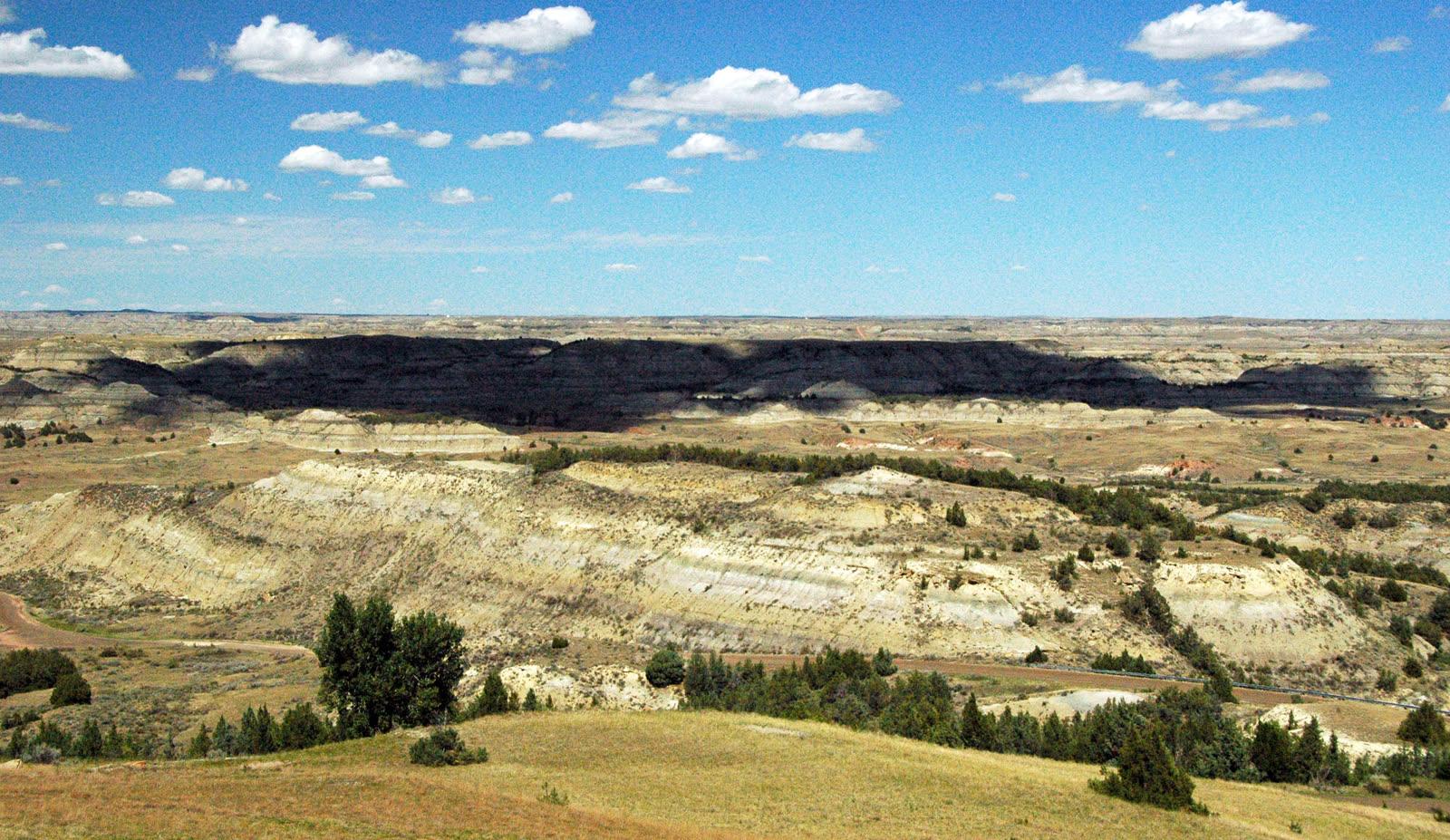 Petrified Forest Plateau, Theodore Roosevelt National Park Fossil Hunting GuidePetrified wood, Plants
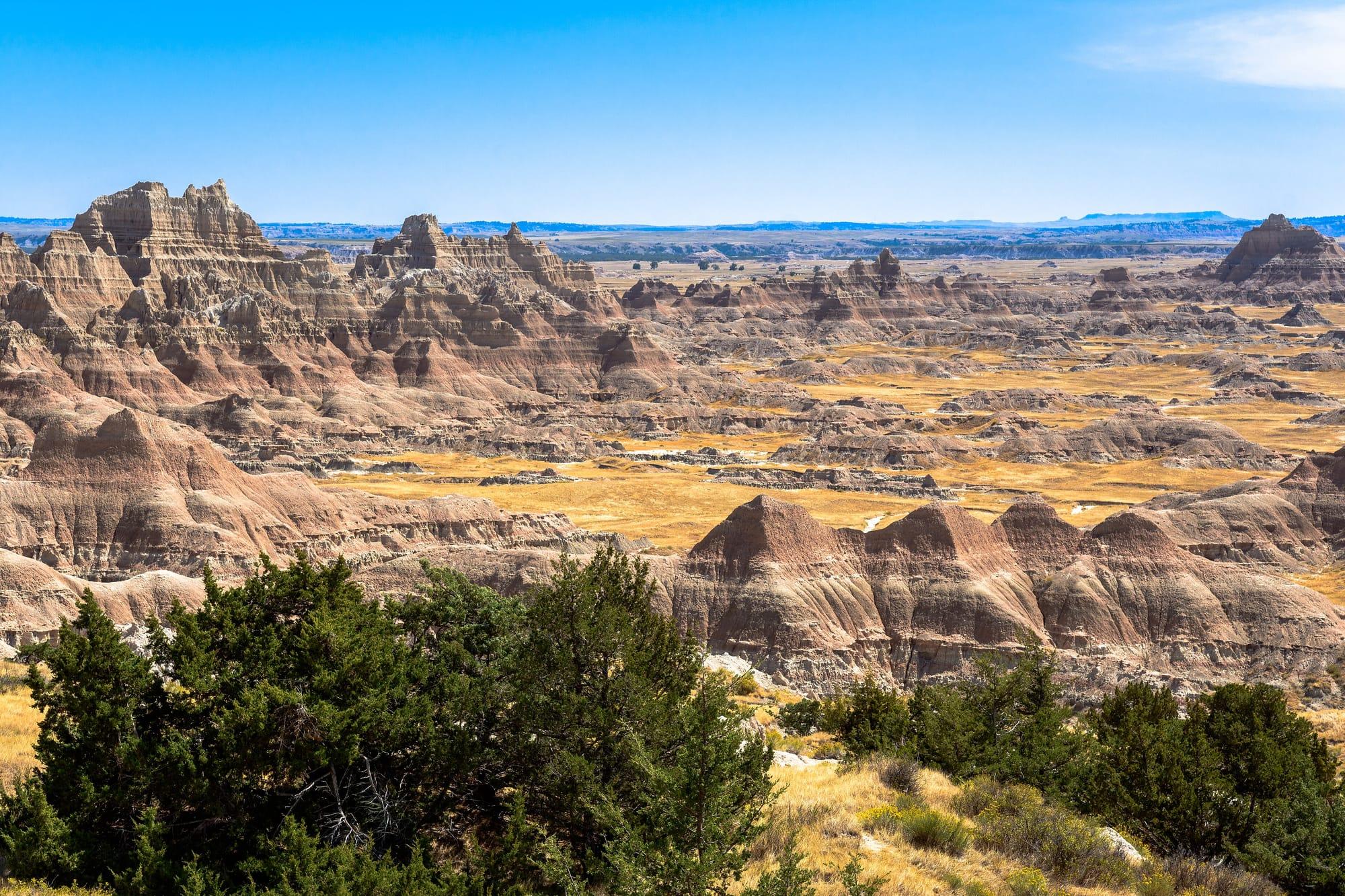 Badlands National Park Fossil GuideTitanotheres, Oreodonts
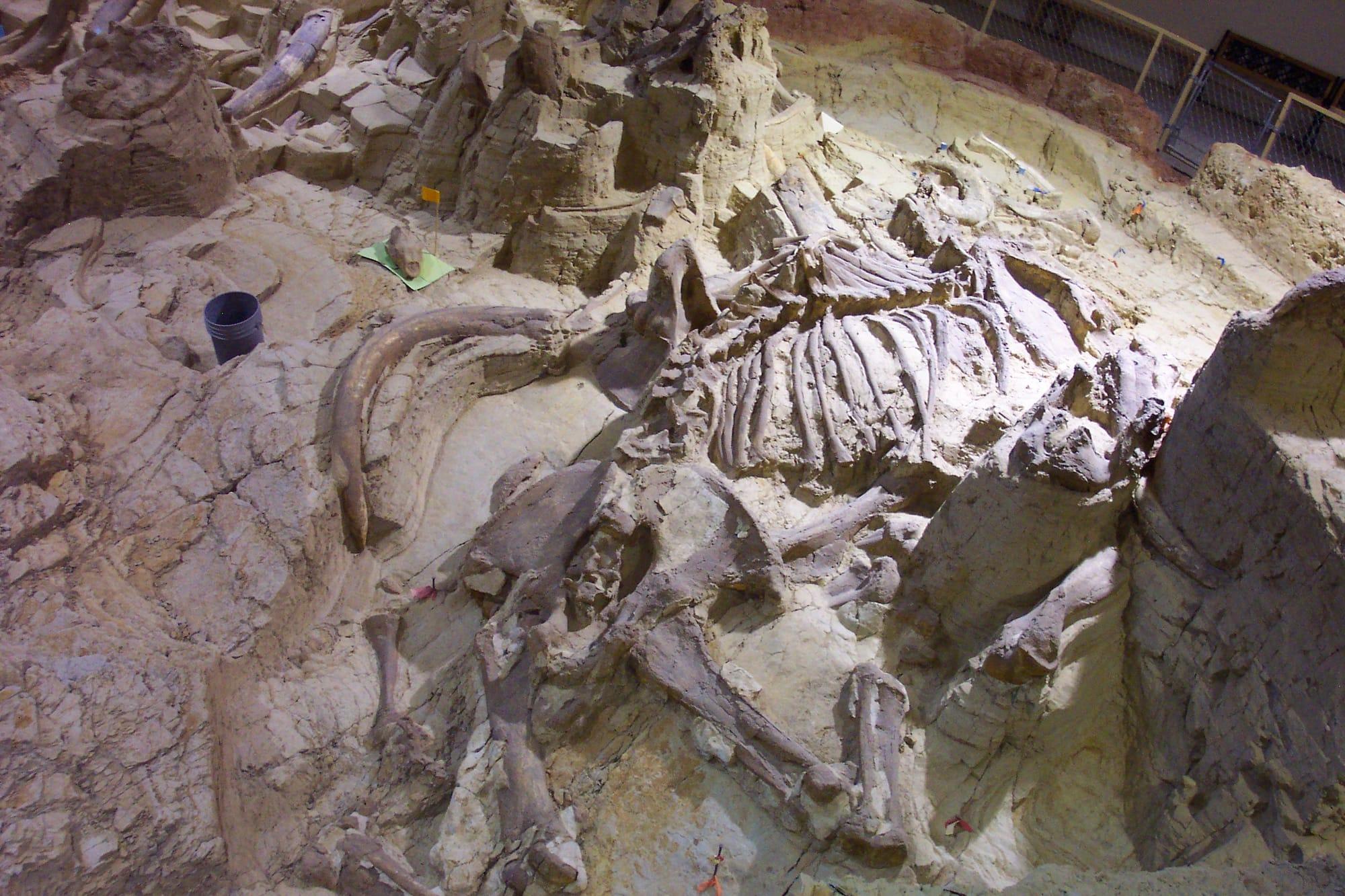 The Mammoth Site of Hot Springs Fossil Hunting GuideColumbian mammoth (Mammuthus columbi), Woolly mammoth (Mammuthus primigenius)
 Bighorn Basin Willwood Formation Fossil Hunting GuideEarly mammal teeth, Dawn horse