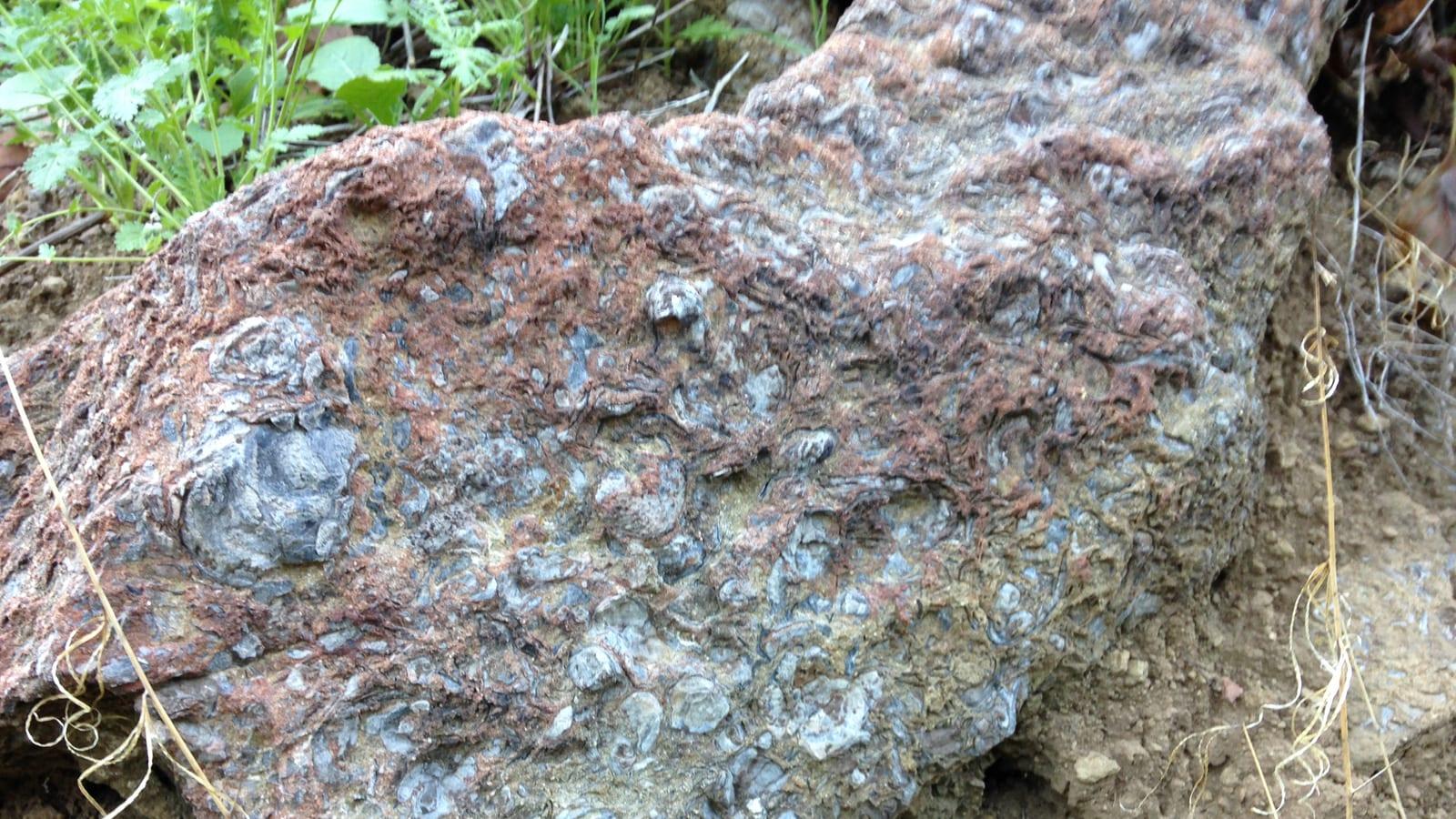
Fossil Hunting Near Ojai in the Los Padres National Forest
The Topatopa Mountains north of Ojai, California expose Eocene-age sandstones of the Coldwater Formation within the Los Padres National Forest. Fossil bivalves, including oysters and mussels, weather out of conglomerate along trails such as the Huntington Trail. The Ojai Ranger District of the LPNF manages access. Casual invertebrate fossil collection may be allowed on non-wilderness National Forest land with hand tools for personal use, but check with the district office before collecting.
By Edward Chen · Updated 27 July 2026
Introduction
The mountains north of Ojai, in western Ventura County, expose a thick stack of Eocene marine sandstones and shales that were deposited on the Pacific continental shelf roughly 42 to 39 million years ago. Fossil bivalves, including oysters and mussels, weather out of these rocks along hiking trails in the Los Padres National Forest. The Huntington Trail, which climbs into the Topatopa Range from the Ojai side, crosses outcrops of the Coldwater Formation where clusters of fossilized shells sit in conglomerate boulders along the path.
This page covers what fossils to expect, the geology behind them, how to reach the area, and what you can and cannot collect on National Forest land.
Location and Directions
The fossil-bearing outcrops described here lie in the Topatopa Mountains, within the Ojai Ranger District of the Los Padres National Forest. The approximate coordinates are 34.464 N, 119.182 W, north of the town of Ojai in Ventura County.
To reach the Ojai area from the south, take Highway 33 north from Ventura (about 14 miles to the town of Ojai). The Ojai Ranger District office is at 1190 East Ojai Avenue, Ojai, CA 93023, and can provide current trail conditions and access information. Phone: (805) 646-4348.
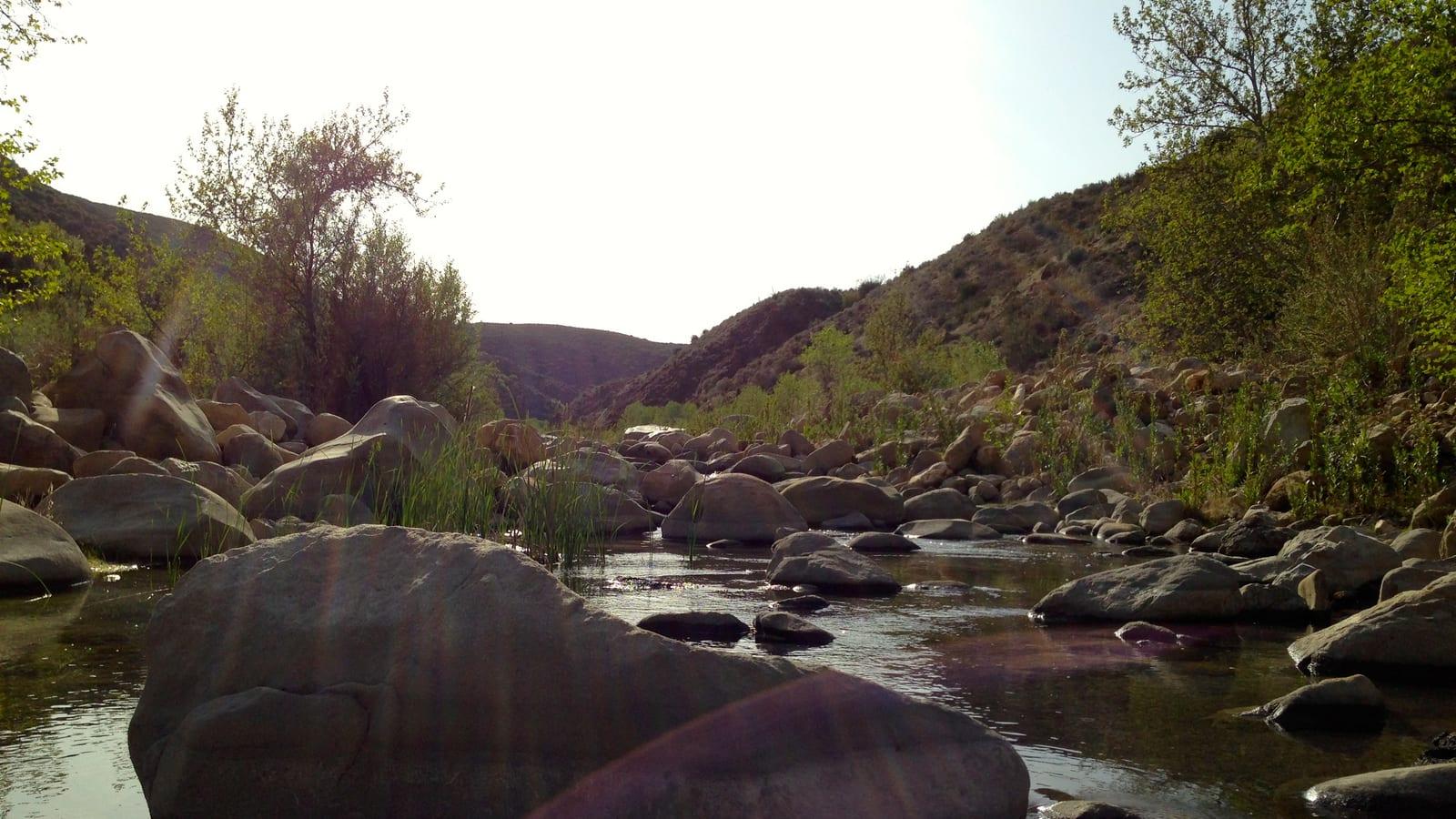
Highway 33 north of Ojai continues into the Los Padres through dramatic canyon scenery. The Jacinto Reyes National Forest Scenic Byway follows this route and passes uplifted and folded sedimentary strata visible from the road. Several trailheads along Highway 33 and the side roads north of Ojai give access to the Topatopa Range. Check current fire closures and trail status with the Ojai Ranger District before your visit, as post-fire closures are common in this area.
What Fossils You Will Find
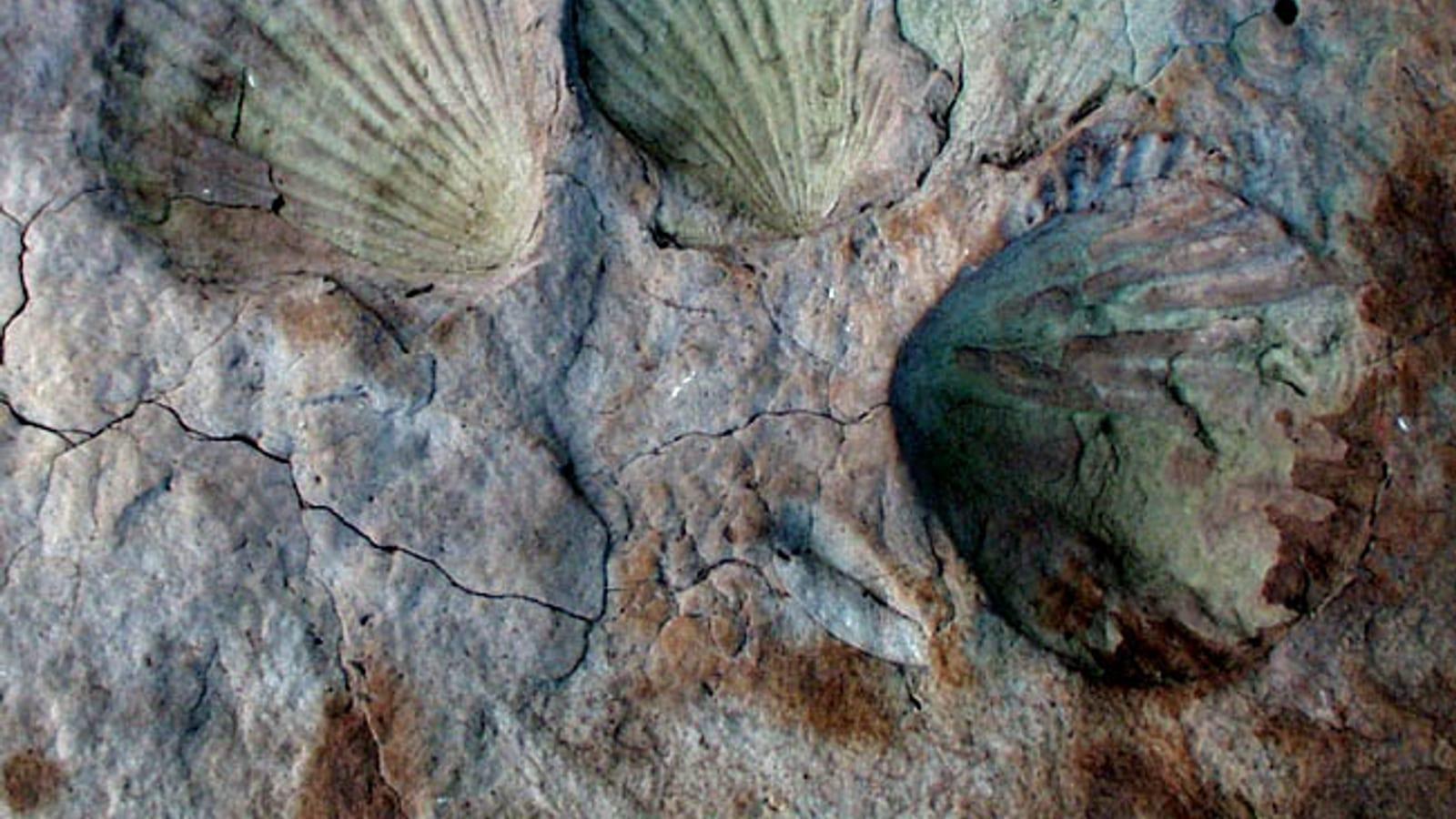
The most visible fossils along the Huntington Trail are bivalves: dark blue to black mussel-like shells preserved in slightly consolidated, clast-supported conglomerate boulders. The shells have a dark sheen when wet. A hydrochloric acid test confirms they are composed of calcium carbonate. The specimens appear in dense clusters, with individual shells facing random directions and showing no consistent pattern in orientation or size.
Across its full geographic range, the Coldwater Formation contains a broader suite of marine invertebrates. Geologist Thomas Dibblee's 1987 mapping of the Matilija quadrangle describes the Coldwater as arkosic sandstone containing strata with oyster shells, specifically Ostrea idriaensis, along with beds of red claystone. The USGS National Geologic Map Database records that early descriptions of the formation noted "hard white sandstones with intercalations of light-pink, pale-green, and grayish shales" carrying "a dwarfed estuarine fauna of Eocene age."
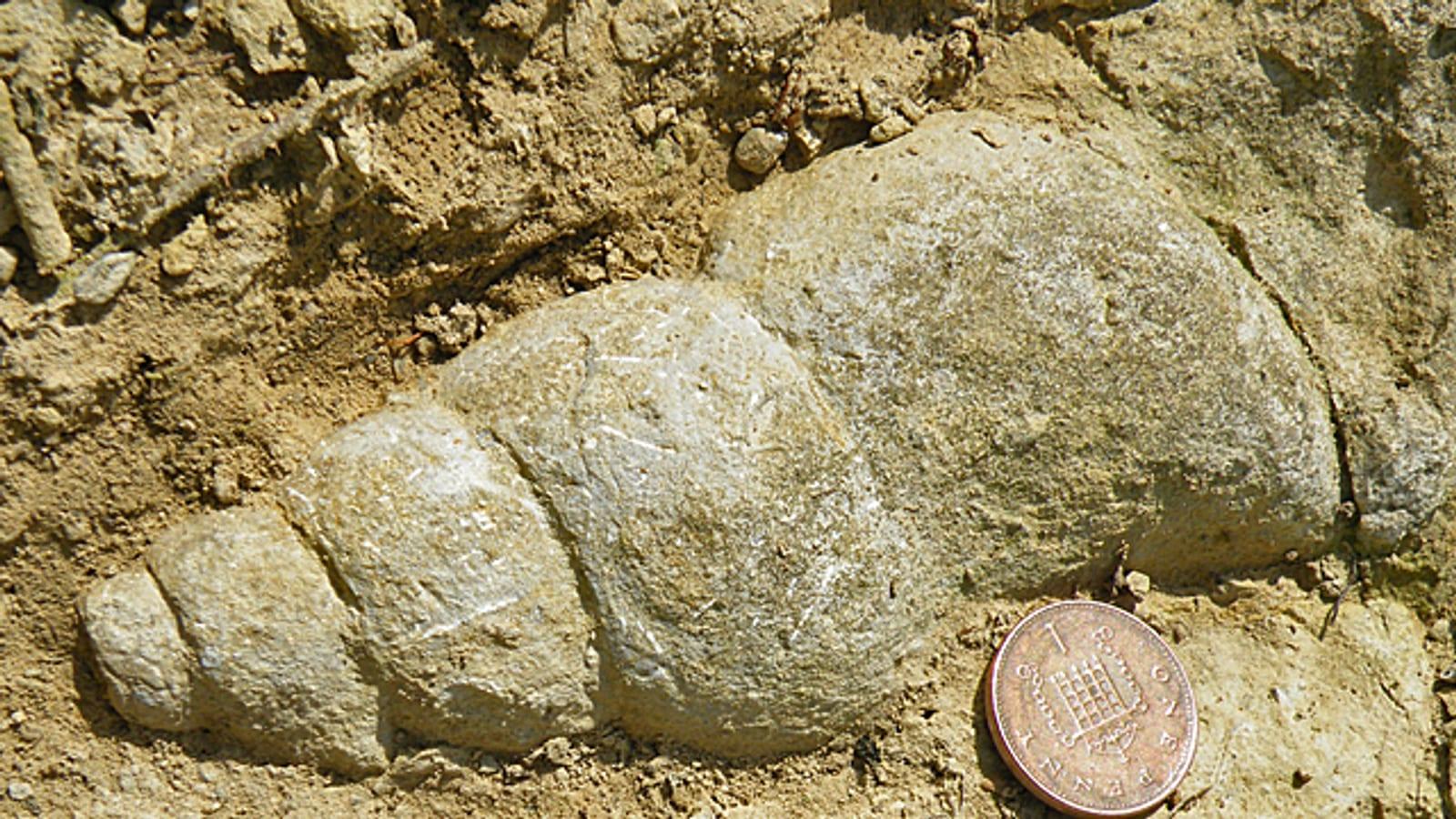
Near the top of the Coldwater, where water at the time of deposition was shallowest, gastropods of the genus Turritella (elongated spiral sea snails) are common. Outcrops along Old San Marcos Pass Road in Santa Barbara County and near the contact with the overlying Sespe Formation are known collecting spots for Turritella elsewhere in the formation's range. The Ojai area exposures are part of the same stratigraphic interval, though specific Turritella occurrences on the Huntington Trail itself are not documented in published literature.
The Los Padres National Forest website notes that "both vertebrate and non-vertebrate fossils, millions of years old, can be found throughout the forest," with clam, oyster, and snail fossils common in some sandstones and shales.
Geologic History
The Topatopa Range is built from a stack of Eocene marine formations deposited on the Pacific continental shelf between roughly 50 and 35 million years ago. From oldest to youngest, the main units are the Juncal Formation, Matilija Sandstone, Cozy Dell Shale, and Coldwater Sandstone.
The Juncal, Matilija, and Cozy Dell formations were deposited in deeper water on the continental shelf as submarine fans. The Coldwater Formation sits at the top of this Eocene section and records a shallower, more nearshore environment. A 1996 magnetostratigraphic study by Donald Prothero and Robert Emry dated the Coldwater to Chrons C19r through C18n, corresponding to approximately 42.5 to 39.5 million years ago (late Uintan to early Duchesnean land mammal ages, middle to late Eocene on the international timescale).
The Coldwater consists primarily of massive arkosic sandstone with lesser siltstone and shale. It ranges from 1,500 to 3,200 feet thick through most of its extent. The sandstone is erosion-resistant and forms dramatic white sculpted slabs, hogback ridges, and cliff faces wherever it outcrops on steep slopes. The formation was deposited as the Eocene sea gradually receded, with periods of shallow-water sedimentation alternating with deeper-water conditions. Late in the depositional period, large oyster beds appear in the stratigraphic record, indicating a brackish-water nearshore environment. At its top, the Coldwater grades into the redbeds and conglomerates of the Sespe Formation, which was deposited on a floodplain and in river channels as the sea fully withdrew.
The tectonic block containing these formations has rotated clockwise nearly 90 degrees since deposition and moved north-northwest from its original position. This rotation is part of the larger clockwise rotation of the Western Transverse Ranges documented through paleomagnetic studies. Uplift of the Topatopa Mountains was driven primarily by the San Cayetano Fault, an east-west trending thrust fault stretching 45 km across Ventura County. The fault initiated around 1.9 million years ago and continues to move at an estimated slip rate of 1.3 to 9 mm per year. Its most recent surface rupture was less than 5,000 years ago.
The result of this compression is that rocks deposited on the seafloor 40 million years ago now stand thousands of feet above sea level in steep mountain terrain. In parts of the area north and northeast of Ojai, the folding has been intense enough to overturn the rock units so that older formations sit on top of younger ones, a feature known as the "Montecito Overturn."
Collecting Rules and Regulations
Is Fossil Collecting Allowed?
The answer depends on exactly where you are and what type of fossil you find. The Los Padres National Forest is federal land managed by the U.S. Forest Service. On general (non-wilderness) National Forest System land, casual collection of common invertebrate and plant fossils is allowed in small quantities (generally up to 10 pounds) for personal, noncommercial use using hand tools only. No permit is required for this level of surface collecting.
Vertebrate fossils (bones, teeth, or any remains of animals with backbones, including shark teeth) may not be collected without a scientific research permit, regardless of where they are found on National Forest land.
Several designated wilderness areas lie within the Los Padres near Ojai, including the Sespe Wilderness and the Matilija Wilderness. Collecting of any kind is prohibited within designated wilderness boundaries. Before visiting, confirm with the Ojai Ranger District whether your planned route falls inside or outside a wilderness boundary.
Key rules on non-wilderness LPNF land:
- Casual invertebrate fossil collection: allowed in small amounts for personal use
- Hand tools only (picks, shovels, hammers). No mechanical equipment
- No commercial sale, trade, or barter of any fossils from National Forest land
- Vertebrate fossils: collection prohibited without a research permit
- Wilderness areas: all collecting prohibited
Contact the Ojai Ranger District at (805) 646-4348 or visit the Los Padres National Forest permits page for current information.
Safety
The Topatopa Range is steep, dry, and remote. Summer temperatures regularly exceed 100 degrees Fahrenheit in the canyons north of Ojai. Carry more water than you think you need. Rattlesnakes are present throughout the area. Poison oak is common along lower-elevation trails. The region is prone to wildfire, and trails may be closed for extended periods after burns due to debris flow risk. Cell service is unreliable once you leave the Ojai Valley floor.
Check fire restrictions and trail closures with the Ojai Ranger District before every visit. The Highway 33 corridor north of Ojai can be subject to seasonal road closures from rockfall and storm damage.