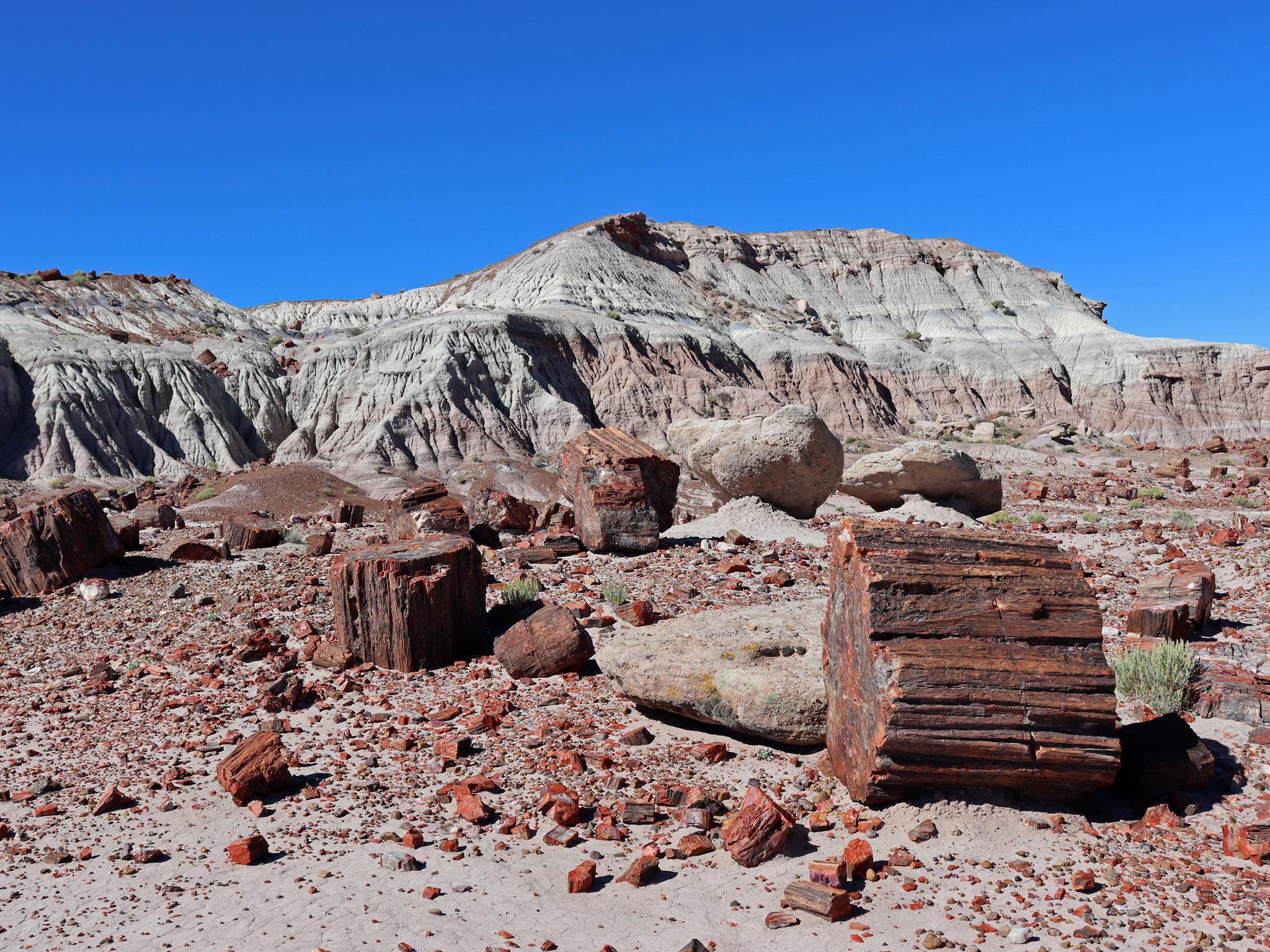
Petrified Forest National Park Fossil Hunting Guide
Image: Jeffhollett (CC BY-SA 4.0)
Petrified Forest National Park covers 230,000 acres of the Painted Desert in northeastern Arizona, exposing the Late Triassic Chinle Formation with more than 400 documented plant and animal taxa, including petrified logs, phytosaurs, and early dinosaurs. Collecting is federally prohibited.
By Edward Chen · Updated 3 August 2026
Introduction
Petrified Forest National Park covers 230,000 acres of the Painted Desert in northeastern Arizona, straddling Interstate 40 between the towns of Holbrook and Sanders. The park was first set aside as a national monument by President Theodore Roosevelt in 1906, redesignated a national park in 1962, and expanded to its current footprint by the 2004 Petrified Forest National Park Expansion Act. The whole area exposes a thick section of the Upper Triassic Chinle Formation, deposited between roughly 225 and 207 million years ago. The Chinle Formation here is one of the richest Late Triassic terrestrial Lagerstätten in the world, with more than 400 documented plant and animal taxa, including the petrified Araucarioxylon arizonicum logs that gave the park its name and a vertebrate fauna of phytosaurs, aetosaurs, metoposaurid amphibians, and early dinosaurs. Collecting is federally prohibited everywhere inside the park. Visitors view fossils in place along marked trails and learn the story of the Chinle through the Painted Desert Inn and Rainbow Forest Museum. This guide covers how to plan a visit, what each major stop shows, the Late Triassic geology, and the rules that apply.
 Photo: James St. John, CC BY 2.0, via Wikimedia Commons
Location and Directions
The park sits in Apache and Navajo counties in northeastern Arizona, between Holbrook (30 miles west) and the New Mexico state line (60 miles east). Interstate 40 crosses the middle of the park. From Flagstaff the drive is about two hours east on I-40. From Albuquerque the drive is about three and a half hours west.
There are two entrance stations and two visitor centers. The Painted Desert Visitor Center at the north entrance, off Exit 311 on I-40, is at GPS 35.0658 degrees north, 109.7818 degrees west. The Rainbow Forest Museum at the south entrance is on US Highway 180 about 18 miles southeast of Holbrook. A single 28-mile paved scenic road runs north-south through the park between the two entrances and connects nearly every major stop.
Standard admission is 25 US dollars per private vehicle at the time of writing, valid for seven days. Annual America the Beautiful passes are accepted. The park is open daily, with extended hours in summer and shorter hours from November through February. The scenic road typically opens at 8 a.m. and closes at 5 p.m., with longer summer hours. There is no through traffic at night.
Petrified Forest has no campgrounds and no lodging in the park itself. Holbrook is the main service hub. Fuel, hotels, and groceries are widely available. Backcountry camping is allowed in the designated wilderness area by free permit from the visitor centers.
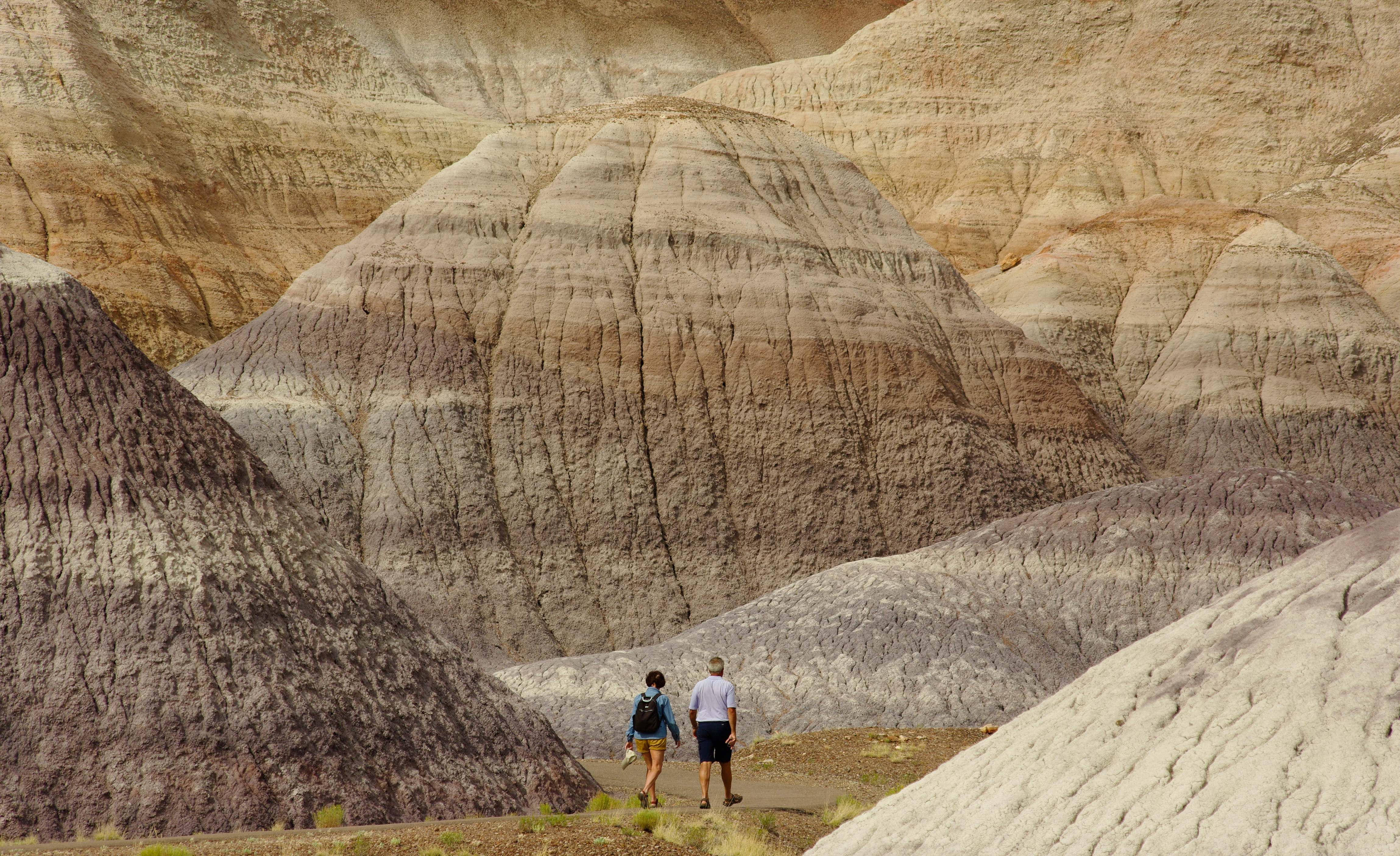 Photo: NPS Photo, public domain, via National Park Service
What Fossils You'll Find
You will not collect at Petrified Forest. What you can do is walk to in-place logs, vertebrate bone exposures, and trace fossils along ten developed trails, plus visit two museum exhibit halls. Identifications below follow the NPS resource pages and published work by Bryan Small, Bill Parker, and other Petrified Forest paleontologists.
- Araucarioxylon arizonicum. The dominant petrified-wood species. Logs up to 60 metres long and 3 metres across are exposed along Giant Logs Trail behind the Rainbow Forest Museum and at Crystal Forest, Long Logs, and Jasper Forest.
- Smilodendron, Woodworthia, and other conifer wood taxa. Several minor wood species occur with the dominant Araucarioxylon and are illustrated on the trail panels.
- Phytosaurs. Machaeroprosopus (formerly Pseudopalatus) and Smilosuchus skull and skeletal material is on display in the Rainbow Forest Museum. Phytosaur teeth and dermal scutes are common float on Chinle outcrops.
- Aetosaurs. Desmatosuchus, Stagonolepis, and Typothorax specimens come from the Sonsela and Petrified Forest members.
- Early dinosaurs. Chindesaurus bryansmalli, a small early dinosaur described from the park in 1995, is among the oldest known dinosaur specimens in North America.
- Metoposaurid amphibians. Koskinonodon skull material is exhibited in the Rainbow Forest Museum.
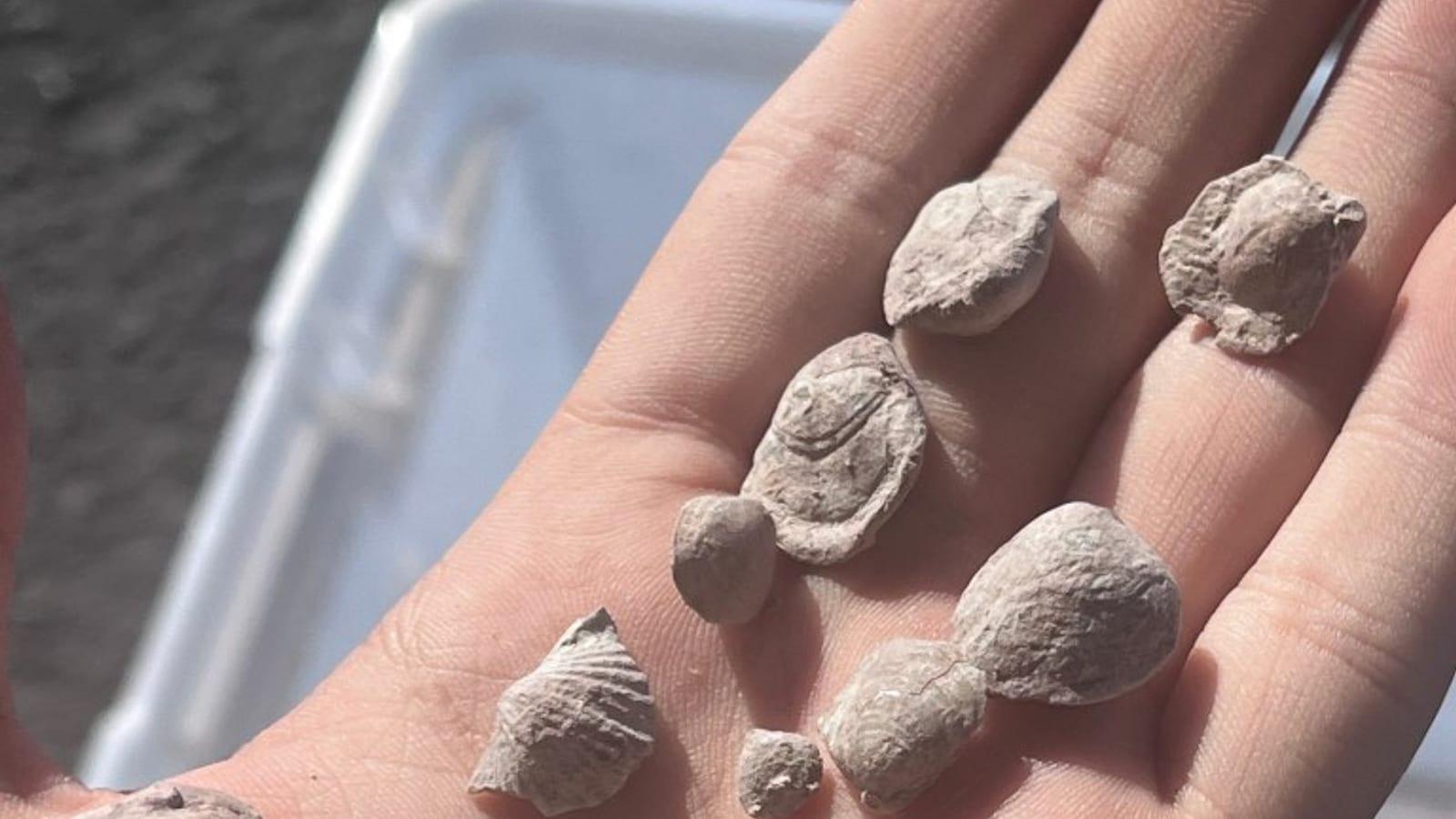
- Plant compressions and pollen. The Late Triassic flora includes ferns (Phlebopteris, Cynepteris), horsetails (Neocalamites), cycads, and ginkgophytes, recovered as compression fossils alongside the petrified logs.
The Rainbow Forest Museum and the Painted Desert Inn together display the largest selection of Petrified Forest specimens open to the public, including a mounted skeleton of the phytosaur Smilosuchus gregorii.
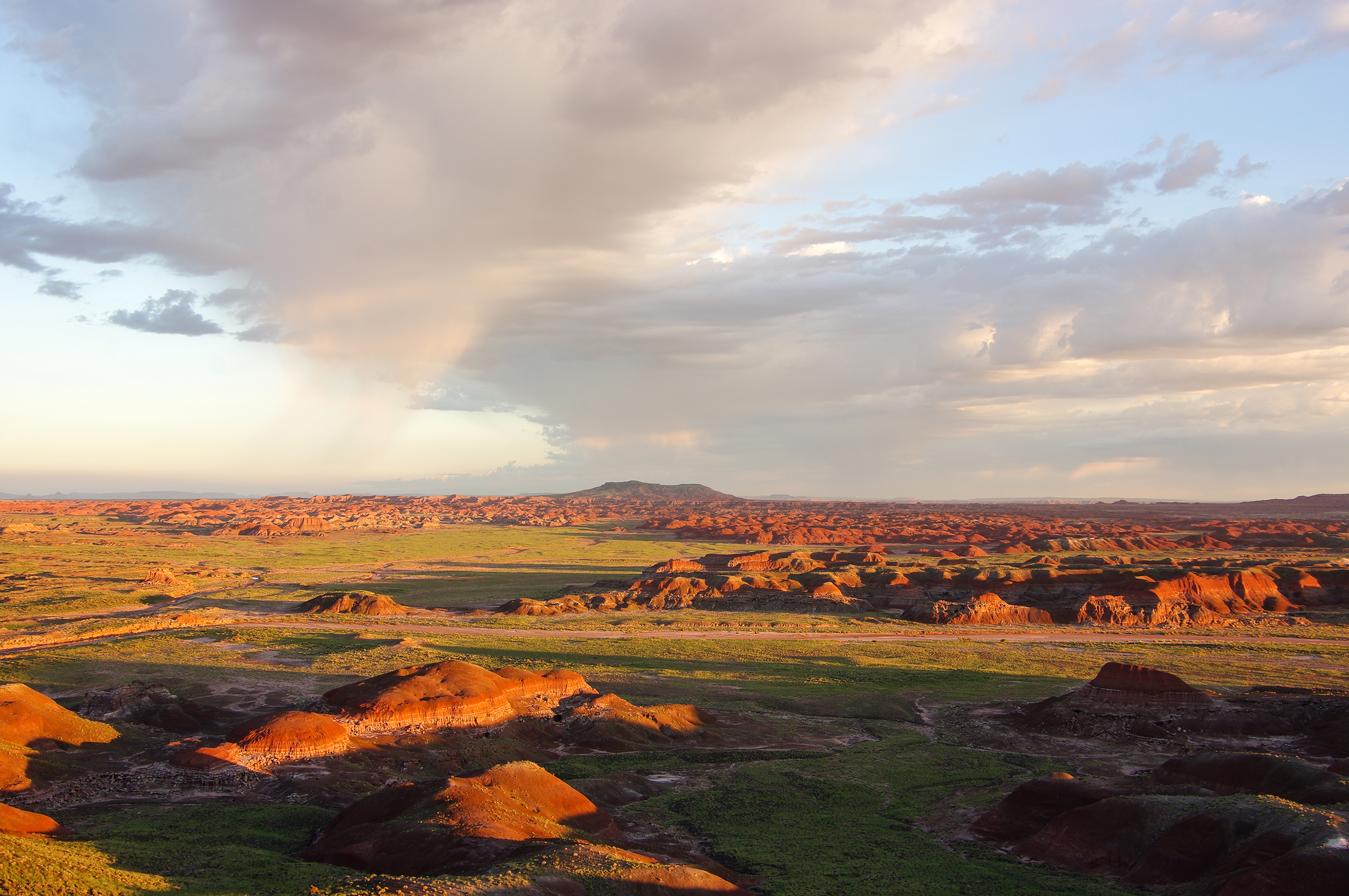 Photo: NPS Photo, public domain, via National Park Service
Geologic History
The fossil-bearing rocks belong to the Chinle Formation, a thick sequence of mudstone, sandstone, and reworked volcanic ash deposited in alluvial, lacustrine, and floodplain settings during the Late Triassic. Within the park, the Chinle is roughly 300 metres thick and is divided into several members, including the lower Mesa Redondo, Blue Mesa, Sonsela, Petrified Forest, and Owl Rock members. Radiometric ages on ash beds and detrital zircons constrain the section to between approximately 225 and 207 million years ago, spanning the Carnian and Norian stages.
During the Late Triassic, what is now northern Arizona lay near the equator on the western margin of the supercontinent Pangaea, in the broad Chinle basin of the southwestern United States. Streams flowed northwestward across a low-relief landscape dominated by conifer forests, fern meadows, and seasonal floodplain lakes. Volcanic arcs to the south and west fed periodic ash falls that fertilised soils and provided the silica that later replaced the buried wood.
The petrified logs at the park accumulated in fluvial channel sands. Trees uprooted upstream were transported during floods, jammed into log mats, and buried under sand and silt. Silica-rich groundwater, derived in part from altered volcanic ash, replaced the wood cell by cell, producing the preservation of growth rings, cellular structure, and original carbon content seen today.
The vertebrate fauna shifted through the section. Lower-Chinle assemblages contain the type material of several phytosaur and aetosaur species. Upper-Chinle beds in the Sonsela and Petrified Forest members include early dinosaurs and the youngest North American metoposaurs.
After the Triassic, the region was buried under thick Jurassic and Cretaceous strata, then uplifted along with the Colorado Plateau during the Cenozoic. Modern stream cutting and badland weathering have stripped the younger cover and exposed the Chinle in cross section across the park.
 Photo: Finetooth, CC BY-SA 3.0, via Wikimedia Commons
How Petrified Forest Became a Fossil Site
The petrified logs were known to Diné, Hopi, and other Indigenous communities long before European contact. United States Army Lieutenant Amiel Whipple led a railroad survey through the area in 1853 and described the wood in his official report. Lester F. Ward of the United States Geological Survey produced the first scientific monograph on the petrified logs in 1899.
President Theodore Roosevelt proclaimed Petrified Forest National Monument under the Antiquities Act on 8 December 1906, in part to halt the wholesale removal of petrified wood by commercial collectors. Vertebrate paleontology in the Chinle Formation began in earnest in the 1920s under Charles Camp of the University of California Museum of Paleontology. Modern stratigraphic and vertebrate work has been led by Bill Parker and Bryan Small, with collaboration from the Petrified Forest Field Institute and the Smithsonian. Active research collection continues each summer under federal permit.
Collecting Rules and Regulations
Collecting is federally prohibited. Petrified Forest National Park is administered by the National Park Service, and removing, damaging, defacing, or disturbing any paleontological resource on NPS land is a federal offense under the Paleontological Resources Preservation Act of 2009, the Antiquities Act of 1906, and 36 CFR 2.1. This includes petrified wood chips, vertebrate bone, plant material, and float pieces on the ground.
Practical rules:
- Stay on marked trails. Walking on or moving petrified logs is not permitted.
- Photography for personal use is welcomed everywhere in the park.
- Standard admission applies. Annual America the Beautiful and Petrified Forest passes are accepted.
- Drones are not allowed under NPS regulations.
- Pets must be leashed and are allowed on most paved trails. Pets are not allowed in buildings.
- The park has a long-running "conscience pile" of mailed-back petrified wood at the Rainbow Forest Museum. Visitors who think better of a souvenir frequently return wood by post.
- For visitors who want to bring home a piece of Chinle petrified wood lawfully, several private shops in Holbrook sell wood collected from private land outside the park.
Safety
Summer temperatures in the Painted Desert regularly exceed 100 degrees Fahrenheit. Carry at least 2 litres of water per person per half day and use sun cover. Lightning is a serious local hazard on exposed ridges during the July-August monsoon. Plan ridge trails for the morning.
Winter brings light snow and ice on the higher overlooks. The scenic road is plowed but trails can become slick.
The Painted Desert badlands are unstable in places. Stay on marked paths and watch foot placement on steep claystone slopes after rain.
Rattlesnakes are present across the park. Watch foot placement around rocks, logs, and trail edges. Drink only treated or carried water. Cell coverage is intermittent along the scenic road and absent in the wilderness area.
Sources
- National Park Service, "Petrified Forest National Park." https://www.nps.gov/pefo/index.htm
- National Park Service, "Fossils, Petrified Forest." https://www.nps.gov/pefo/learn/nature/fossils.htm
- National Park Service, "Geologic Formations, Petrified Forest." https://www.nps.gov/pefo/learn/nature/geologicformations.htm
- Parker, W.G., 2006. "The Stratigraphic Distribution of Major Fossil Localities in Petrified Forest National Park, Arizona." Museum of Northern Arizona Bulletin, 62.
- Ash, S.R., 1992. "Petrified Forest National Park: Fossil Plants of the Upper Triassic Chinle Formation." Museum of Northern Arizona Bulletin, 59.
.jpg)
