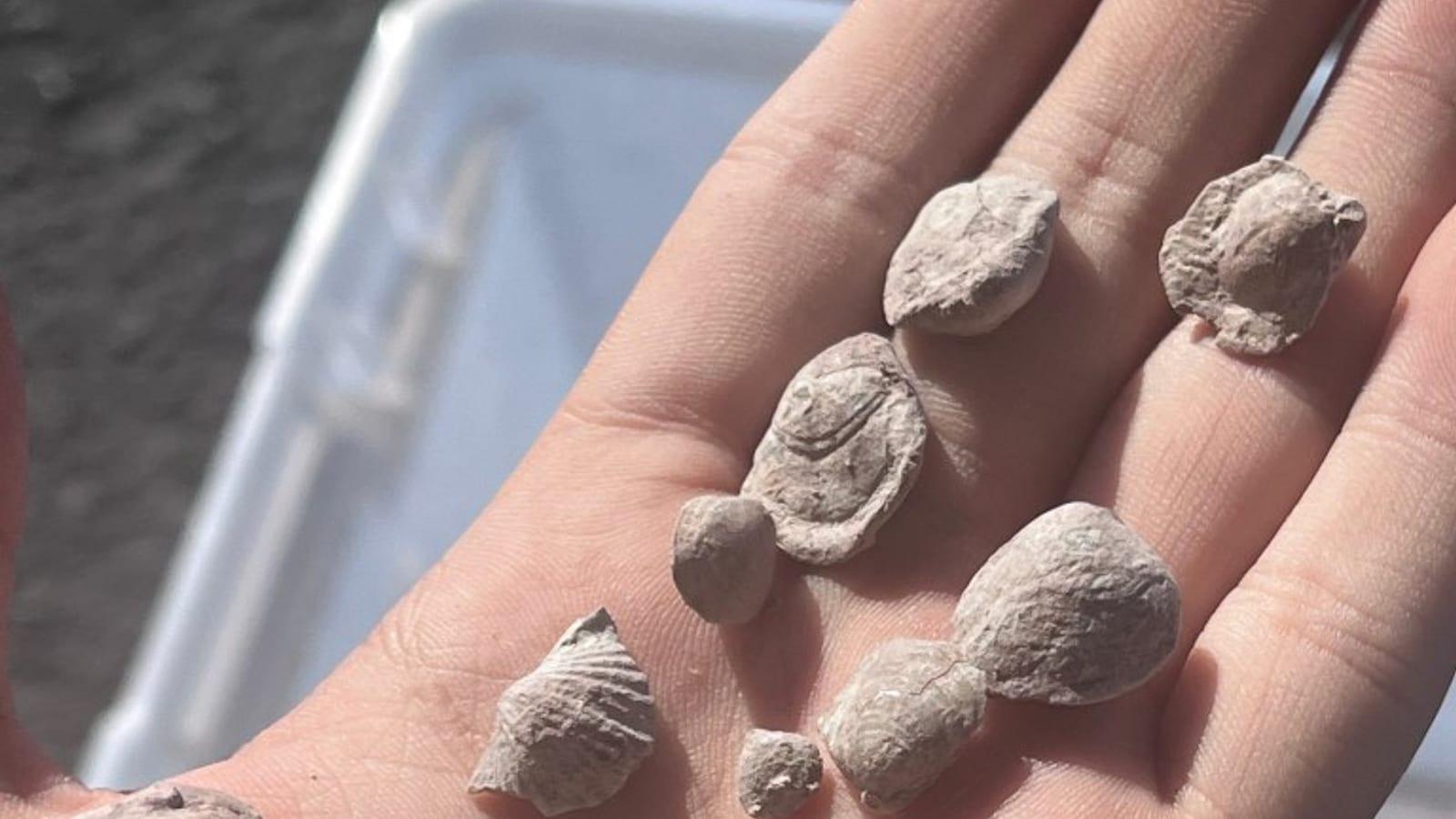
Kohls Ranch Fossils, Mogollon Rim Fossil Hunting Guide
Image: Brady Smith, Coconino National Forest (CC BY-SA 2.0)
The Pennsylvanian Naco Formation exposed along the Mogollon Rim near Kohls Ranch, in Gila County, Arizona, holds marine invertebrates from a warm sea of about 310 million years ago, including brachiopods, crinoids, corals, and bryozoans. The site was suggested by a reader.
By Edward Chen · Updated 3 August 2026
Introduction
Along the Mogollon Rim near Kohls Ranch, in Gila County, Arizona, the Pennsylvanian Naco Formation is exposed in road cuts and hillsides among the pines. This grey marine limestone and shale holds the shells and skeletons of animals from a warm, shallow sea that covered central Arizona about 310 million years ago, including brachiopods, crinoids, corals, and bryozoans. A reader suggested this locality, which is sometimes referred to informally as a paleo site.
The Naco Formation runs across a wide belt of central Arizona and is one of the state's better-known sources of Pennsylvanian marine invertebrates. Around Kohls Ranch it lies on Tonto National Forest land, where reasonable, casual collecting of common invertebrate fossils for personal use is generally allowed.
Location and Directions
Kohls Ranch sits along State Route 260 about 17 miles east of Payson, near 34.32°N, 111.11°W, on the Mogollon Rim in the Tonto National Forest. Exposures of the Naco Formation appear in road cuts and slopes in the area. Payson has fuel, food, and lodging, and it is the last major stop before the rim country.
Forest roads off the highway can be rough, and higher elevations here can hold snow in winter, so check conditions before you go.
 Photo: Richard N Horne, CC BY-SA 4.0, via Wikimedia Commons

What Fossils You'll Find
The Naco Formation preserves a shallow-marine invertebrate fauna. Brachiopods, the two-shelled lamp shells, are among the most common finds, weathering from the limestone and shale. Crinoids, or sea lilies, usually appear as round or star-shaped stem segments. Corals, both solitary horn corals and colonial forms, occur through the beds, and lacy bryozoans are common in the finer rock.
Look in weathered slopes and the loose material below outcrops, where the harder fossils concentrate as the softer rock breaks down. A hand lens helps with the smaller shells and bryozoans.
Geologic History
During the Pennsylvanian subperiod, a shallow tropical sea repeatedly flooded what is now central Arizona, and lime mud, sand, and the remains of sea-floor animals built up to form the Naco Formation. The brachiopods, crinoids, corals, and bryozoans found here all lived on or near that seafloor.
Long after the sea withdrew, the region was uplifted and the Colorado River system cut down through the rock, leaving the Mogollon Rim as a high, forested escarpment. Road cuts and erosion along the rim now expose the old marine beds.
Collecting Rules and Regulations
The exposures around Kohls Ranch lie on Tonto National Forest land. On U.S. Forest Service land, casual collecting of reasonable amounts of common invertebrate fossils, such as brachiopods and crinoid pieces, for personal, non-commercial use is generally allowed. Vertebrate fossils are protected and may not be collected without a permit, and commercial collecting is not permitted.
Confirm current Forest Service rules before you collect, do not collect on any private inholdings without permission, and never collect on a road cut where stopping is unsafe or prohibited. Take only a little, and leave the site as you found it.
Safety
This is rim country at elevation, with hot summers and cold, sometimes snowy winters, so dress for the conditions and carry water. Road cuts can shed loose rock, so wear eye protection when hammering and keep clear of unstable faces. Watch for rattlesnakes in warm weather, and stay well off the highway and away from traffic. Tell someone your plans, since forest roads are remote and cell coverage is patchy.
Planning an Arizona Fossil Trip
Spring and fall are the workable seasons on the rim, after the snow melts and before summer monsoon storms build over the high country in July and August. The Naco exposures pair naturally with Petrified Forest National Park about two hours northeast, where the Triassic logs are strictly viewing-only. Collecting a few Pennsylvanian brachiopods legally in the national forest and then seeing the petrified wood in place makes a full weekend of Arizona geology with the rules on your side at both stops.
Sources
https://earthathome.org/hoe/sw/fossils-cp/ https://en.wikipedia.org/wiki/Naco_Formation https://www.fs.usda.gov/tonto
Nearby sites
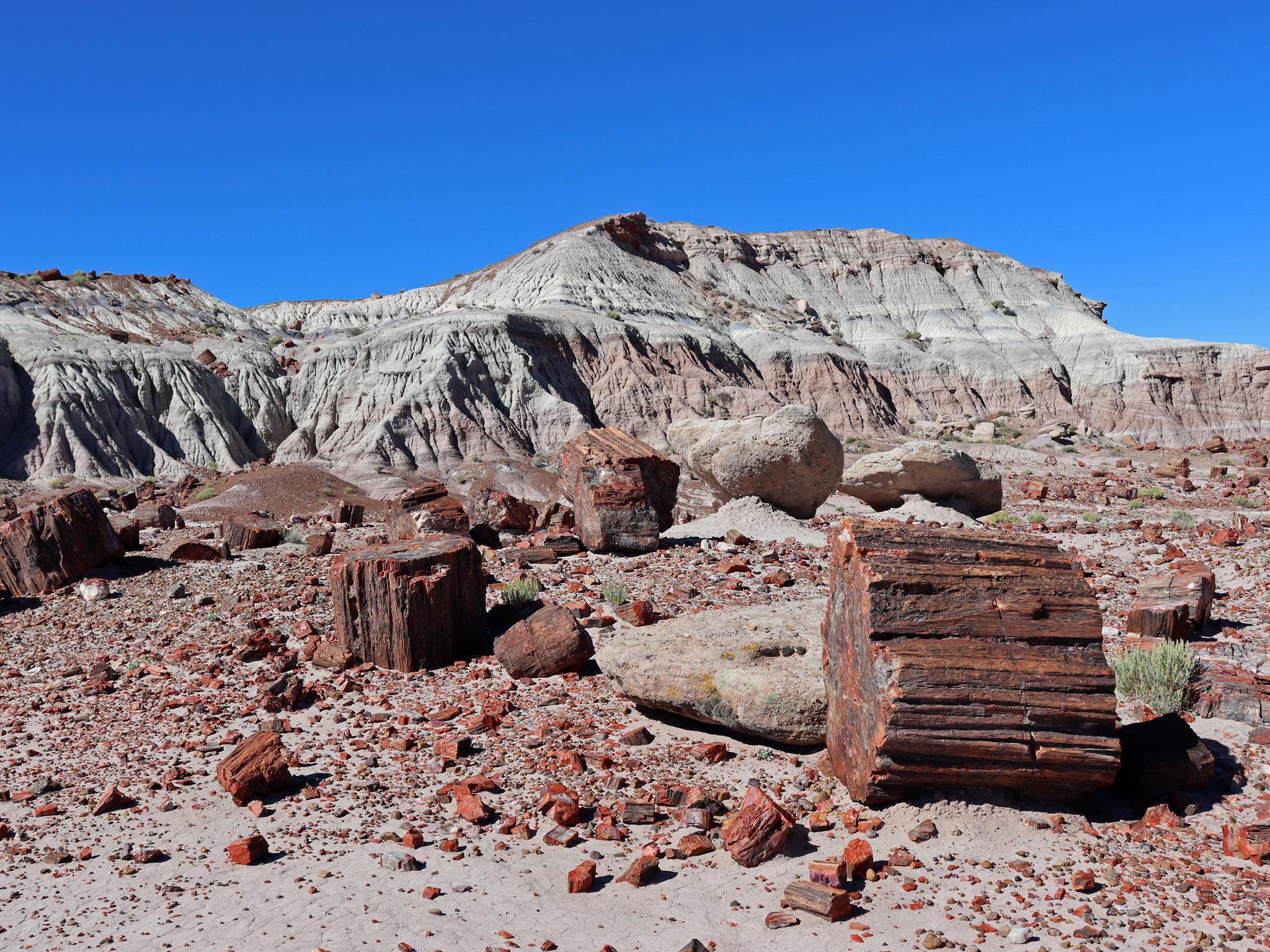 Petrified Forest National Park Fossil Hunting GuidePetrified Araucarioxylon logs, Phytosaurs
 Bisti / De-Na-Zin Wilderness Fossil GuidePetrified wood, Fossil leaves
 Marble Mountain Fossil Beds: Mojave Cambrian Trilobite GuideTrilobites, Brachiopods
 Tule Springs Fossil Beds National Monument Fossil Hunting GuideMammoth, Ground Sloth