Point Loma Fossil Hunting Guide
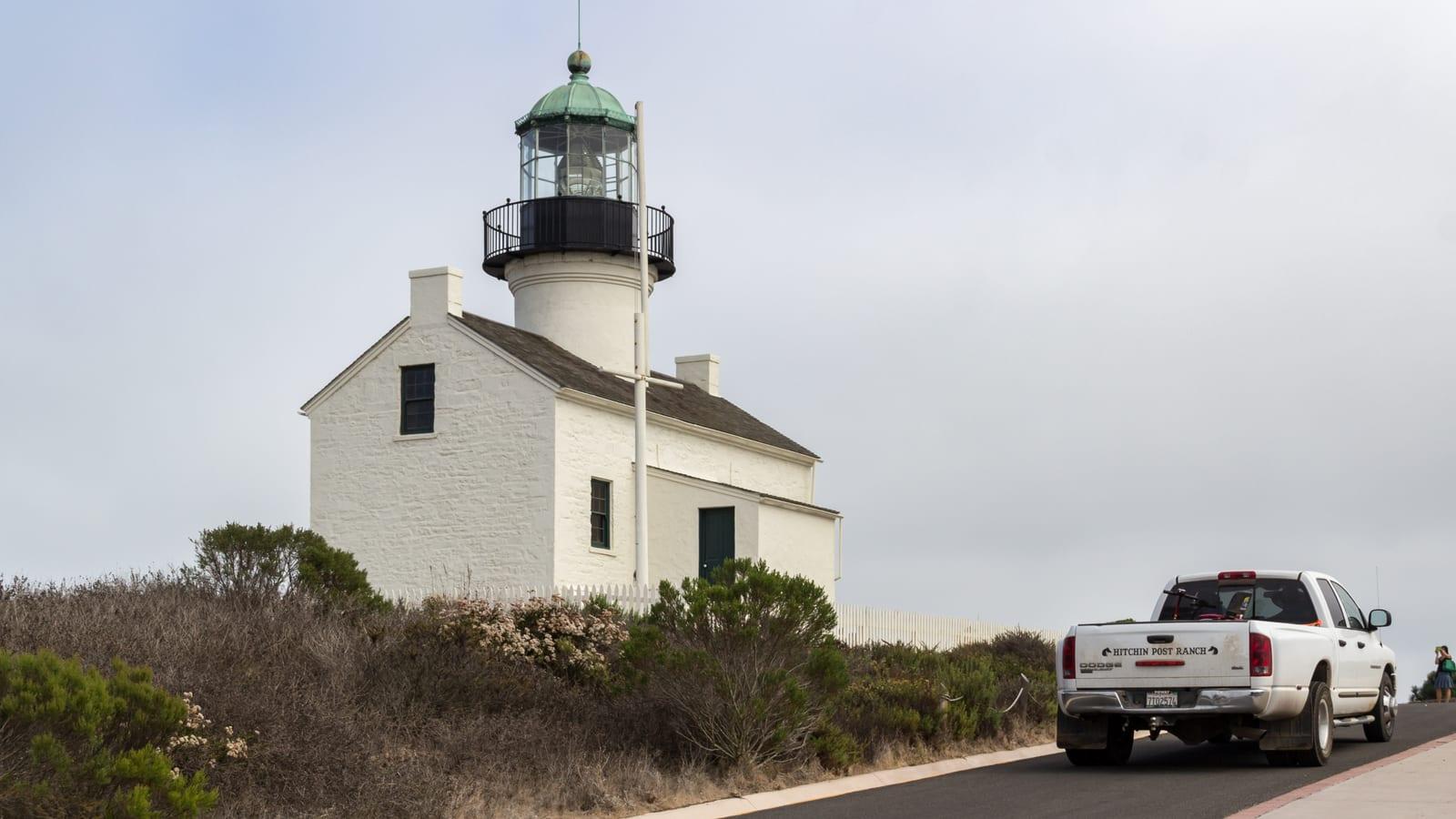
Image: Dietmar Rabich (CC BY-SA 4.0)
Point Loma is the long peninsula that forms the western edge of San Diego Bay, and the sea cliffs along its outer face cut directly through the **Point Loma.
By Edward Chen · Updated 3 August 2026
Introduction
Point Loma is the long peninsula that forms the western edge of San Diego Bay, and the sea cliffs along its outer face cut directly through the Point Loma Formation, a Late Cretaceous deep-marine sandstone and mudstone unit that records life on the California margin roughly 75 million years ago. The formation is best known among paleontologists for its dense suite of trace fossils, the burrows and feeding traces left by marine invertebrates that lived on a submarine fan in deep, dark water. Body fossils are uncommon and the cliffs themselves are unstable, so this is a viewing-only locality rather than a collecting site, but the trace fossils are unusually well preserved and visible in the wave-cut platform at the base of the cliffs. This guide covers how to access the exposures at Sunset Cliffs Natural Park and the Cabrillo National Monument tide-pool area, what to look for in the rock, the depositional history of the formation, and the rules that apply along this stretch of San Diego coastline.
Location and Directions
The fossil-bearing rocks of the Point Loma Formation crop out along the entire outer (Pacific) coast of the Point Loma peninsula in San Diego, California. Two access points are practical for visitors.
Sunset Cliffs Natural Park. From Interstate 8 in San Diego, take the Sunset Cliffs Boulevard exit and drive south for roughly four miles. The road becomes the eastern edge of the park. Pull-off parking is free along the bluff between Adair Street and Ladera Street. Walk the unpaved bluff-top trail and use the wooden staircases at marked points to reach the wave-cut platform below. The cliffs here are actively eroding and the staircases close after storms.
Cabrillo National Monument. Continue south on Catalina Boulevard, which becomes Cabrillo Memorial Drive, and follow signs to the monument. There is a per-vehicle entrance fee. From the visitor center, drive the spur road down to the tide-pool parking area on the western side of the peninsula. The wave-cut platform there exposes some of the cleanest Point Loma Formation outcrops, and the trace fossils are visible in the bedding planes underfoot.
Tide windows matter. The wave-cut platforms are submerged at high tide and the cliff base is impassable at higher water. Check the National Oceanic and Atmospheric Administration tide tables for San Diego before you go and aim to arrive within an hour of low tide. The cliffs themselves are unstable sandstone and mudstone. Do not stand directly under overhangs and do not climb the slope.
 Photo: Dietmar Rabich, CC BY-SA 4.0, via Wikimedia Commons
What Fossils You'll Find
The dominant fossils here are trace fossils rather than body fossils, and they record what marine organisms were doing on and beneath the seafloor rather than the animals themselves.
The most common is Ophiomorpha, a vertical to inclined burrow with a knobby, pellet-lined wall. The pellets are fecal balls that the burrow-maker, a callianassid shrimp or related crustacean, packed against the burrow wall to stabilize it in soft sediment. In cross section Ophiomorpha looks like a short tube with a textured rind. On bedding planes it appears as a circle of small bumps about a centimeter across.
Thalassinoides is the second common trace, a horizontal to gently dipping burrow system that branches in a Y-shaped pattern. Unlike Ophiomorpha the wall is smooth. Thalassinoides was made by the same general kind of burrowing crustacean working laterally through the sediment.
Other less common traces include Planolites, a simple horizontal feeding burrow without branching, and irregular grazing trails on bedding tops. Body fossils, when present at all, are rare ammonites and small bivalve fragments preserved in concretions. These are not common at the surface and should not be sought out.
The easiest way to recognize trace fossils in the field is to look for sub-cylindrical features that cut across or run along the bedding, with consistent diameter and shape. Naturally weathered cobbles in the wave-cut platform sometimes contain these traces in cross-section.
Geologic History
The Point Loma Formation is Late Cretaceous in age, deposited during the Maastrichtian and Campanian stages, roughly 75 to 70 million years ago. It is part of the broader Rosario Group of southern California and northern Baja California, a thick package of marine sediments that accumulated along the western edge of the North American plate while dinosaurs still walked inland.
The rock itself is a mix of massive sandstone beds, graded sandstone-to-mudstone couplets, and dark shale. Kern and others, in their 1974 Geological Society of America Bulletin paper, identified the unit as deep-marine, deposited largely by grain-flow and turbidity-current processes on a submarine fan. The thick lenses of mudstone clasts and the load-deformation structures in the massive sandstones indicate rapid deposition by sediment-laden currents flowing down the continental slope into deeper water.
The animals leaving the trace fossils were burrowing through the soft mud between turbidite events. Ophiomorpha indicates relatively shallow burial near the sediment-water interface, while Thalassinoides networks suggest a stable seafloor with enough food to support sustained colonization. Together the trace fossil assemblage points to a quiet, well-oxygenated bottom at outer-shelf to upper-slope depths, periodically interrupted by sand-laden flows.
Uplift and faulting along the San Diego coast during the Cenozoic raised the Cretaceous section above sea level. Active wave erosion along the Point Loma peninsula now cuts directly through the formation, exposing the wave-cut platforms and steep cliffs that visitors see today.
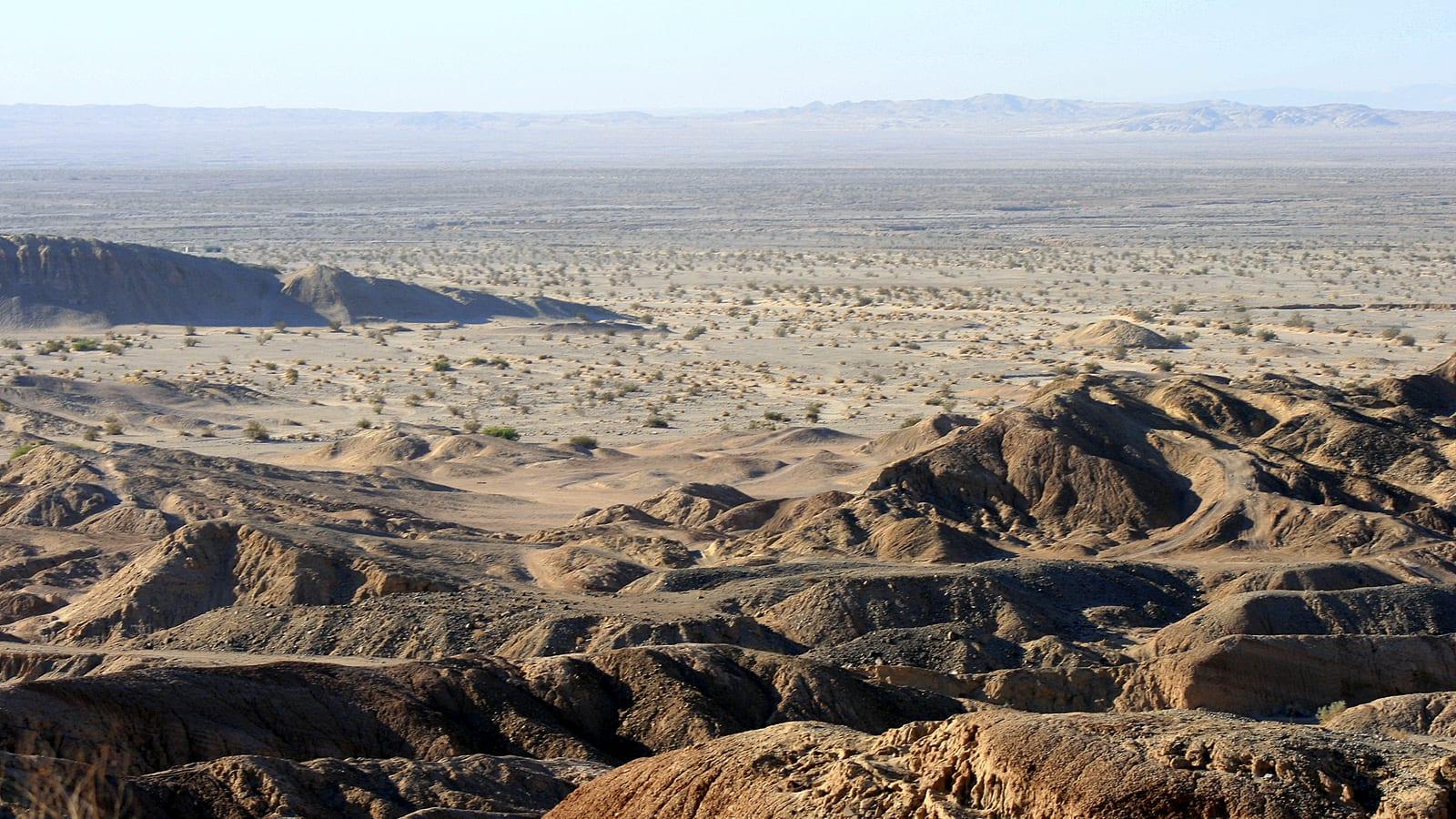
 Photo: Jstuby at en.wikipedia, Public domain, via Wikimedia Commons
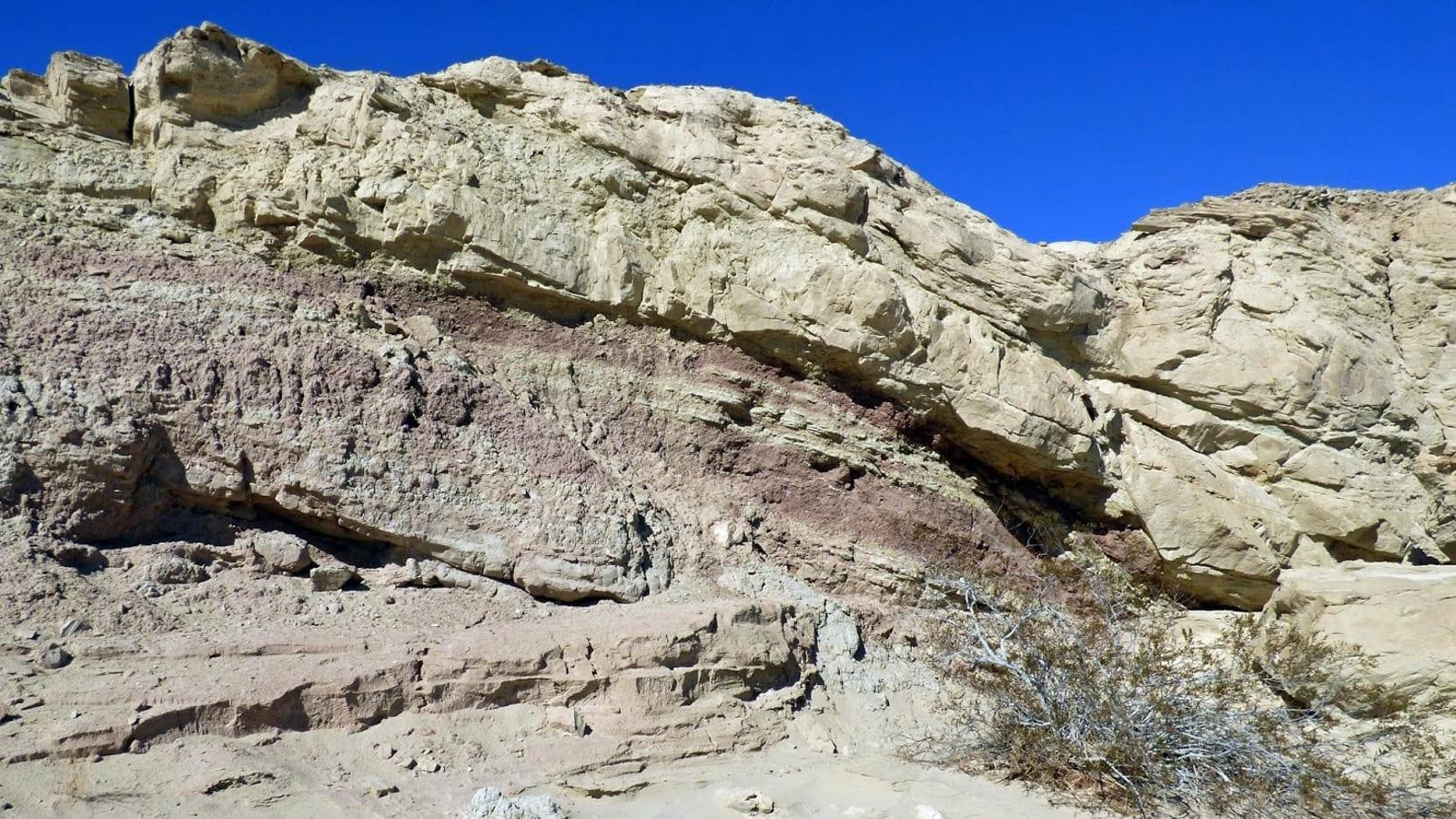
 Photo: Zimbres ---Credit to Eurico Zimbres, CC BY-SA 3.0, via Wikimedia Commons
How Point Loma Became a Fossil Viewing Site
The Point Loma exposures are entirely the product of natural coastal erosion. No quarrying or excavation has ever taken place along this stretch of cliff. Wave attack at the base of the bluffs continually undercuts the sandstone and mudstone, while groundwater seepage and winter storms drive slope failures from above. New trace fossil surfaces are revealed on the wave-cut platform every season as the older platform fragments are battered into cobbles and removed by longshore currents.
The peninsula was set aside in stages. Cabrillo National Monument was established in 1913 to commemorate the 1542 landing of Juan Rodríguez Cabrillo, and the southern tip of the peninsula has been federal land since then. Sunset Cliffs Natural Park was acquired in pieces by the City of San Diego beginning in the 1960s and is now managed as a passive-use coastal park. The combination of federal and city protection means almost the entire fossiliferous coastline is publicly accessible by foot and entirely off-limits to collecting.
Collecting Rules and Regulations
Collecting is not permitted. Both Cabrillo National Monument and Sunset Cliffs Natural Park prohibit removal of any natural materials, including rocks, fossils, shells, and minerals. This is a viewing-only and photography-only locality.
Practical rules and warnings:
- Examine fossils where you find them. Photograph rather than collect, and avoid scratching or chipping the rock surface.
- Stay on marked trails and staircases. The cliffs are sandstone over weak mudstone, slope failures are frequent, and the bluff edge is undercut in many places.
- Time your visit around low tide. The wave-cut platform is submerged at high tide and waves can pin a visitor against the cliff base.
- Do not climb the cliff face. The rock is friable and unstable.
- Cabrillo National Monument charges a per-vehicle entrance fee under the standard National Park Service fee schedule, and the federal Interagency Annual and Senior passes are accepted. Sunset Cliffs Natural Park is free.
- Dogs on leash are allowed at Sunset Cliffs but are restricted at Cabrillo National Monument. Check current rules before bringing pets.
- Cell coverage along the cliffs is good but signal can drop in the wave-cut platform area. Tell someone your tide window before you go.
Safety
The Point Loma cliffs and the tide pools below them are the attraction and the hazard in equal measure.
The sea cliffs are steep, crumbling, and dangerous. The Point Loma Formation is weak sandstone and mudstone that fails regularly, and people are injured and killed on San Diego's coastal bluffs with grim regularity, usually after climbing or standing at an undercut edge. Do not climb the cliffs, do not walk along the base of an overhang, and stay behind fences and back from the top edge, which is often undercut and gives way without warning.
Time the tide pools properly. The rocky intertidal below the point is accessible only at low tide, and the route back can be cut off as the water rises. Check a tide table, go on a falling tide, and keep an eye on the water rather than on the rocks. Waves surge across the platform unpredictably, so never turn your back on the sea, and be aware that the rock is slick with algae and cut by deep channels.
Wear closed shoes with grip. The reef is sharp and a slip on wet rock cuts badly.
The tide pools sit within a protected area where marine life, rocks, and fossils may not be collected or disturbed, and the rules are enforced. Look, photograph, and put back anything you lift. Sun exposure on the exposed point is strong even on cool days, so bring water and sun protection, and note that access hours are set by the park.
Sources
- Kern, J.P. and Warme, J.E., 1974. "Trace Fossils and Bathymetry of the Upper Cretaceous Point Loma Formation, San Diego, California." Geological Society of America Bulletin, Vol. 85, No. 6, pp. 893 to 900. https://pubs.geoscienceworld.org/gsa/gsabulletin/article/85/6/893
- National Park Service, "Cabrillo National Monument." https://www.nps.gov/cabr/index.htm
- City of San Diego, "Sunset Cliffs Natural Park." https://www.sandiego.gov/park-and-recreation/parks/regional/sunsetcliffs
- Kindel, G., "Fossil Collecting Sites in North America." http://www.digitalrockhound.blogspot.com
- National Oceanic and Atmospheric Administration, "Tide Predictions, San Diego, CA." https://tidesandcurrents.noaa.gov
,_Point_Loma,_Historic_Lighthouse_--_2012_--_5592.jpg)

