Joshua Tree National Park Fossil Hunting Guide
Image: Dietmar Rabich (CC BY-SA 4.0)
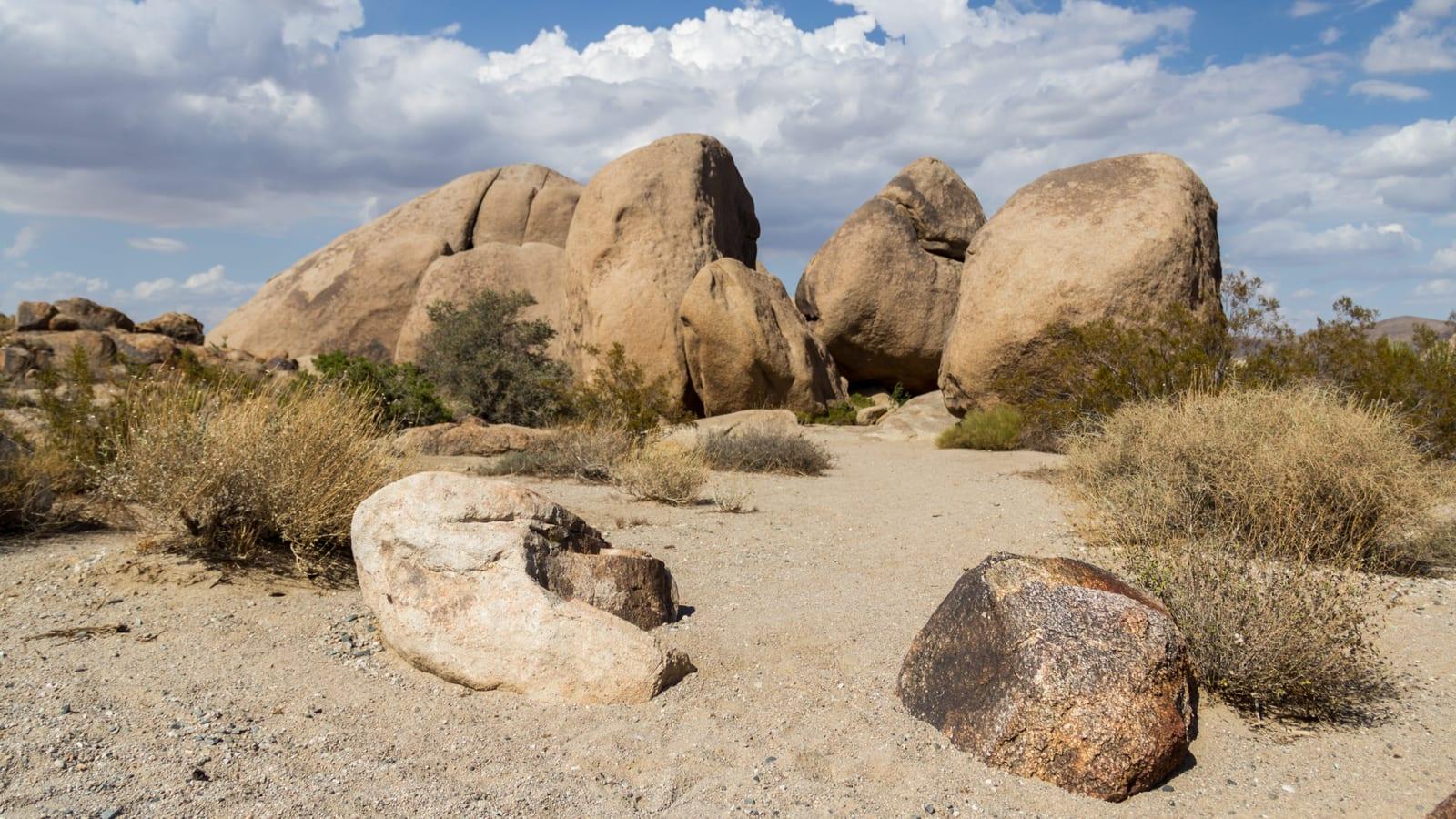
Joshua Tree National Park covers about 800,000 acres of high-desert landscape at the meeting point of the Mojave and Colorado (Sonoran) deserts in southern California.
By Edward Chen · Updated 31 July 2026
Introduction
Joshua Tree National Park covers about 800,000 acres of high-desert landscape at the meeting point of the Mojave and Colorado (Sonoran) deserts in southeastern California. The park is famous for its rounded granite domes, jumbled boulder piles, and the namesake yucca that grows across the higher Mojave half of the property. It is not, by any reasonable measure, a productive fossil-hunting destination. The bedrock visible across most of the park is Mesozoic plutonic granite and Proterozoic gneiss, both crystalline rock types that preserve no body fossils. Fossiliferous sedimentary rocks do occur in basins around the park, including Cenozoic lake sediments in the Pinto Basin to the south and Miocene marine sections farther west toward the Salton Trough, but these lie outside the park boundary or in remote and unmarked exposures within it. This guide is written to set realistic expectations. The park rewards visitors interested in plutonic geology, desert ecology, and landscape photography. Visitors hoping to find fossils will have a more productive trip at one of the dedicated Cenozoic localities listed elsewhere on this site.
Location and Directions
Joshua Tree National Park sits in southeastern California, roughly 140 miles east of Los Angeles, 175 miles northeast of San Diego, and 215 miles southwest of Las Vegas. The park has three vehicle entrances.
The West Entrance at the town of Joshua Tree is the busiest and is reached from State Route 62. From Interstate 10 near Banning, take Highway 62 east through Yucca Valley to the town of Joshua Tree, then turn south on Park Boulevard at the signed entrance.
The North Entrance is at Twentynine Palms, also on Highway 62. From the town, turn south on Utah Trail at the signed entrance.
The South Entrance is at Cottonwood Spring on Interstate 10, about 25 miles east of Indio. This entrance gives the most direct access to the Pinto Basin and the Cottonwood area in the southern half of the park.
Inside the park, all of the main scenic drives are paved. Side roads to Geology Tour Road, Covington Flats, and Black Eagle Mine Road are graded dirt and require a high-clearance vehicle, with a few sections that turn to soft sand or wash-bottom and require four-wheel drive. The park has limited cell coverage. Download maps before entering.
There is an entrance fee per vehicle, valid for seven days. America the Beautiful and other federal interagency passes are accepted. The park is open 24 hours a day year round, but the visitor centers in Joshua Tree, Twentynine Palms, and Cottonwood operate on shorter hours that vary seasonally.
 Photo: docentjoyce, CC BY 2.0 via Wikimedia Commons
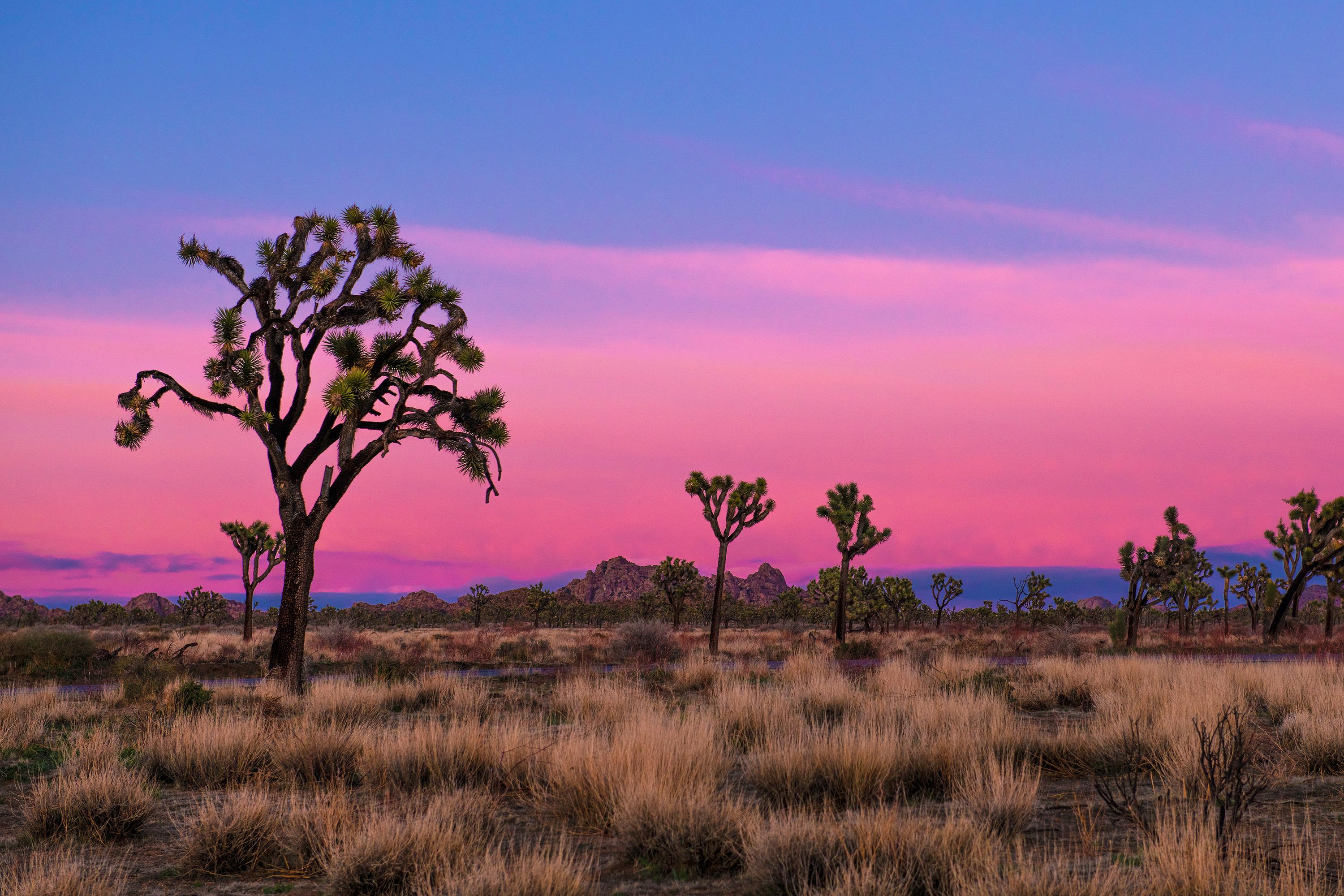 Photo: NPS / Emily Hassell, public domain, via National Park Service
What Fossils You'll Find
Realistic expectations are important here. The park's bedrock is predominantly crystalline and contains no body fossils.
The Mesozoic plutonic rocks that form the iconic domes and boulder piles are coarse-grained granites and granodiorites of Jurassic and Cretaceous age. These rocks crystallized from molten magma several miles below the surface and never contained organic material. No fossils occur in these rocks anywhere in the park.
The Proterozoic basement gneisses exposed in scattered outcrops, including the Pinto Gneiss in the Pinto Mountains, are highly metamorphosed crystalline rocks. Any original sedimentary structures or fossils were destroyed during deep burial and recrystallization. No fossils occur in these rocks either.
The Cenozoic basin fill in the Pinto Basin and along the southern edge of the park includes alluvial fan, playa, and minor lake deposits of Miocene to Pleistocene age. Vertebrate trace fossils and very limited plant material have been reported from comparable deposits in the surrounding Mojave region, including packrat-midden plant remains preserved in rock shelters. The park does not advertise any specific fossil localities, no interpretive signage points to a fossil site, and casual visitors are unlikely to encounter identifiable fossils on any of the established trails.
Visitors expecting to find marine invertebrates, shark teeth, or vertebrate bones inside the park will be disappointed. Those fossils do occur in the wider region, particularly in the Miocene marine sections west of the park toward the Salton Trough and in the Mojave Desert basins to the north, but none of those productive horizons are accessible inside Joshua Tree National Park.
Geologic History
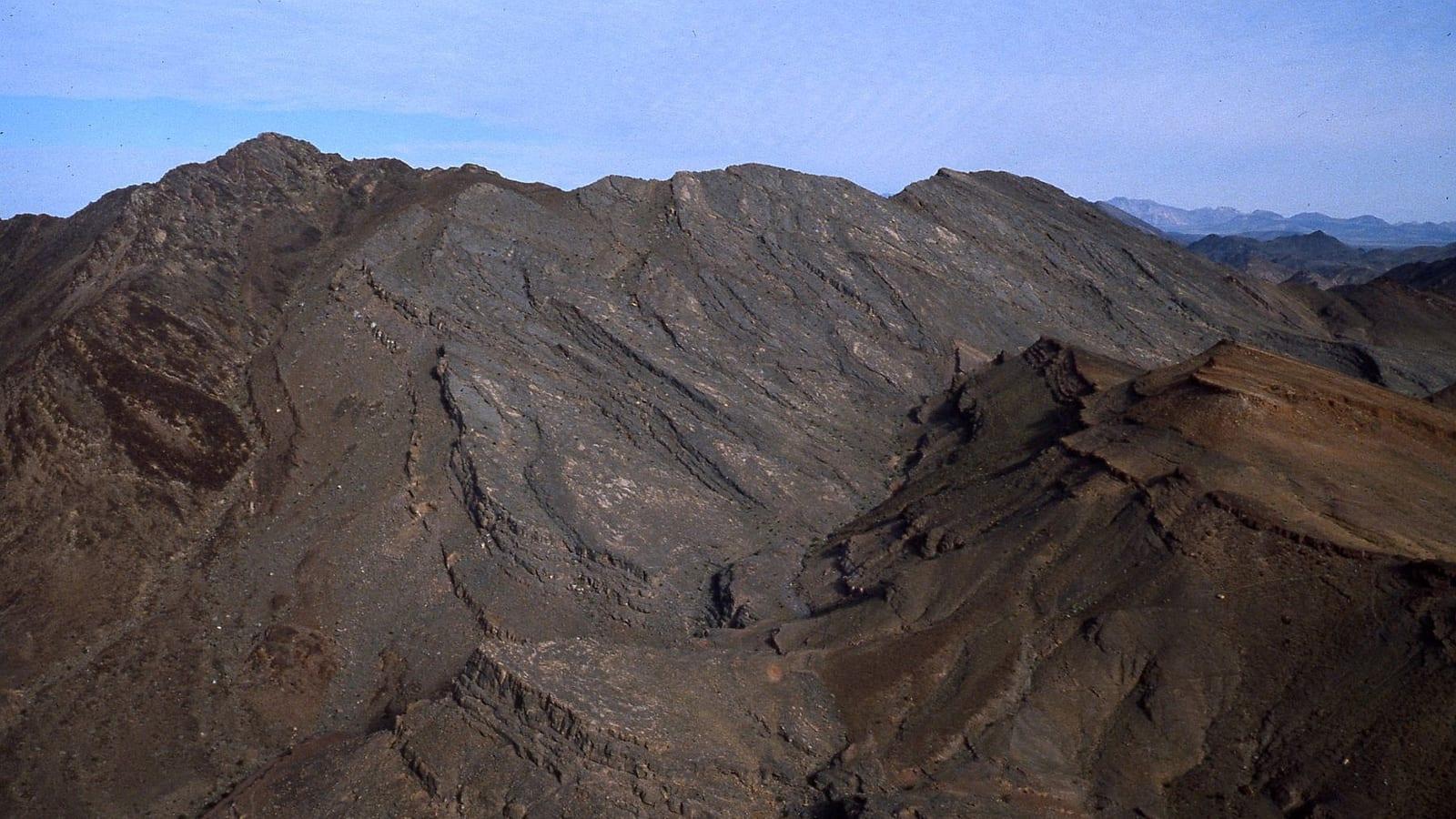
Joshua Tree exposes one of the most accessible cross sections of Mesozoic plutonic geology in southern California, with older Proterozoic rocks visible in tectonic blocks.
Proterozoic basement (1.7 to 1.4 billion years). The oldest rocks in the park are deeply metamorphosed gneisses and schists collectively called the Pinto Gneiss. These were originally sedimentary and volcanic rocks deposited on or near an early continental margin, then buried, deformed, and recrystallized at high temperature and pressure during Proterozoic mountain-building events.
Mesozoic plutonism (Jurassic to Cretaceous, ~165 to 75 million years). During the long-lived subduction of the Farallon Plate beneath North America, magma rose into the crust beneath what is now southern California and crystallized into a series of granite plutons. The two best-known plutonic units in the park are the White Tank Monzogranite and the Queen Mountain Monzogranite, both Cretaceous in age. These are the rocks that form Hidden Valley, Jumbo Rocks, the Wonderland of Rocks, and most of the famous boulder fields. The characteristic rounded shapes were produced by deep weathering along joints, followed by exhumation and removal of the surrounding softer material.
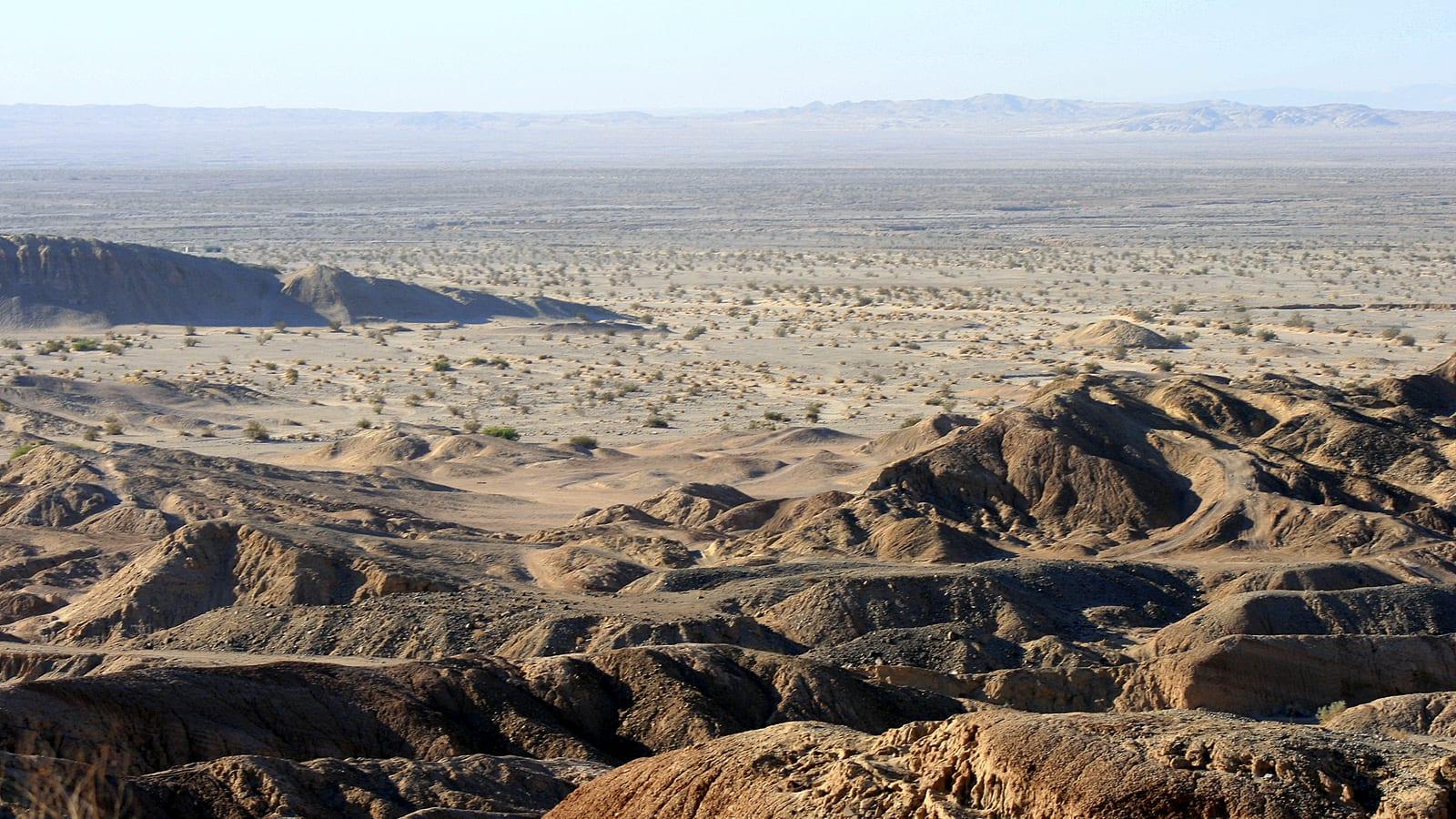
Cenozoic basin development. During the past 10 million years, Basin and Range extension and right-lateral motion on the San Andreas Fault System dropped a series of basins along the southern edge of the park. The Pinto Basin and the Salton Trough received thick sequences of alluvial fan and lake-bed sediments during this interval. Some of those sediments preserve scattered Pleistocene plant material and trace fossils, but the great bulk of the park surface is the older crystalline basement.
Modern landscape. Slow uplift and arid-climate weathering have stripped overlying sediments off the granite, exposing the boulder-strewn landscape visitors see today. Erosion is slow, the climate is hyperarid, and the bedrock surface has changed only modestly over the past several million years.
 Photo: National Park Service, Public domain via Wikimedia Commons
How Joshua Tree Became a Fossil Collecting Site
Joshua Tree did not become a fossil collecting site. It is a national park that was established in 1936 as a national monument and elevated to national park status by the California Desert Protection Act in 1994. The park was designated to protect plutonic geology, Mojave and Sonoran desert ecosystems, the Joshua tree itself, and a long human history that includes Indigenous use, ranching, and Depression-era mining. Any paleontological material within the park is protected under the National Park Service Organic Act and the Paleontological Resources Preservation Act of 2009.
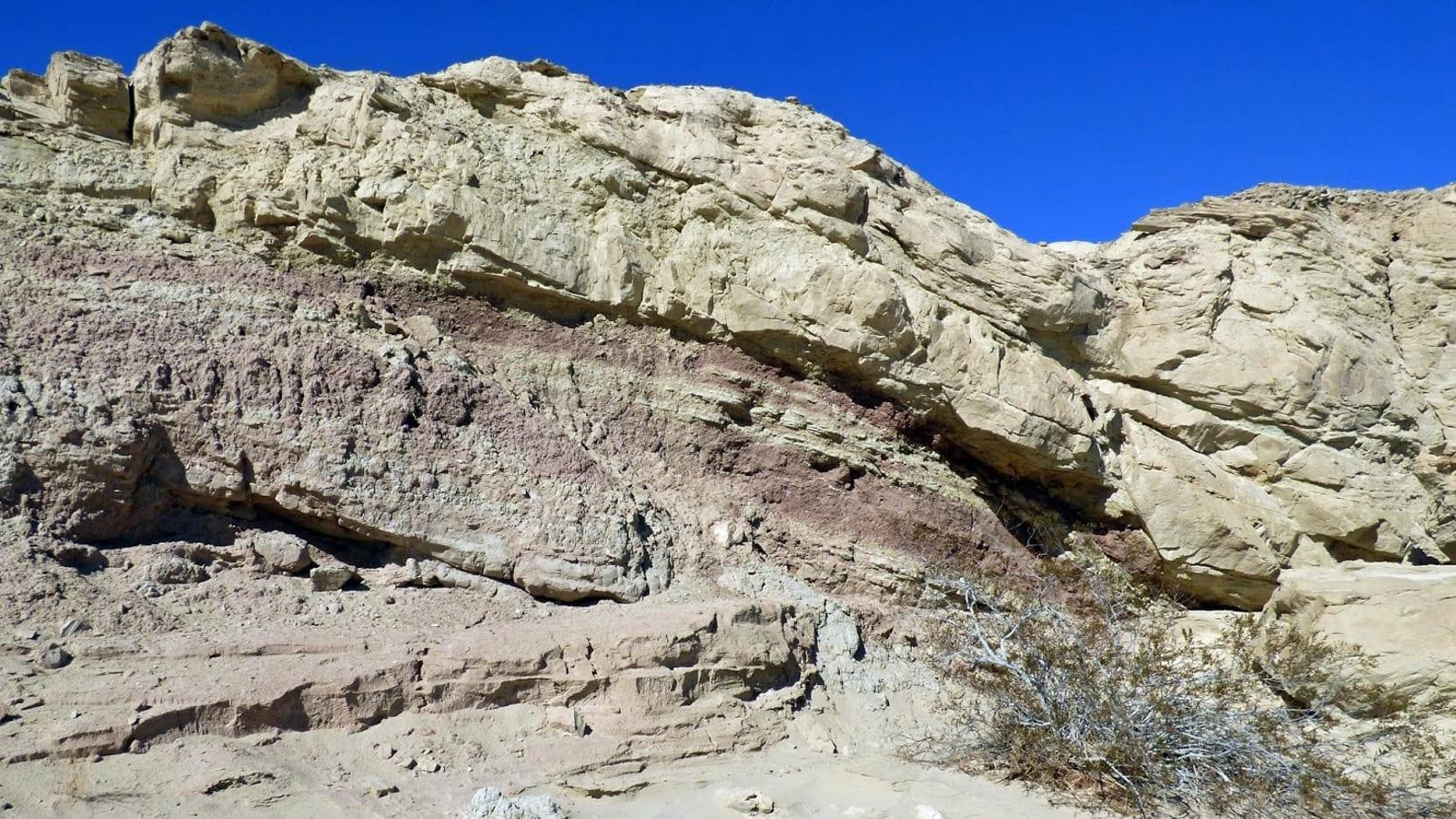
Some confusion in fossil-hunting literature stems from the proximity of Cenozoic marine and lacustrine basins outside the park, and from older generic claims about "Pliocene fossils" that conflate regional geology with the park boundary. There is no managed fossil-collection program at Joshua Tree, no permitted public dig, and no documented productive locality on park land that visitors are directed toward.
Collecting Rules and Regulations
Collecting is prohibited. Joshua Tree National Park is administered by the National Park Service, and removing, damaging, or disturbing any natural object, including rocks, minerals, plants, and any fossils, is a federal offense under the National Park Service Organic Act and the Paleontological Resources Preservation Act. This prohibition covers both vertebrate and invertebrate fossils and applies everywhere within the park boundary.
Practical rules:
- Stay on established roads and trails. Off-trail travel through the granite boulders is permitted but discouraged in heavily visited areas.
- Do not damage or deface rock surfaces. Climbing chalk is regulated and bolted routes follow a permit system.
- Photography for personal use is welcome throughout the park.
- Bring your own water. Summer temperatures regularly exceed 100 degrees Fahrenheit and there is no reliable water source on most trails. The park recommends carrying at least one gallon per person per day.
- Cell coverage is poor and unreliable. Carry paper maps and tell someone your route.
- Watch for rattlesnakes, scorpions, and flash floods in washes during summer monsoon storms.
- Federal entrance fees apply per vehicle. Confirm current rates with the National Park Service before your visit.
For visitors specifically interested in finding fossils in southern California, the published localities at the Salton Trough, the Mojave Trails National Monument north of the park, and the Anza-Borrego Desert State Park to the south are far more productive and clearly delimited.
Safety
Joshua Tree covers roughly 800,000 acres of desert at the meeting of the Mojave and Colorado deserts, and the scale of the place is itself the hazard. People get into difficulty here every year, usually through heat and navigation rather than anything dramatic.
There is essentially no water in the park. Fill up before you enter and carry far more than you expect to drink, several litres per person per day in warm weather. Summer temperatures are dangerous and daytime hiking in the hotter months is genuinely unsafe. Plan visits for the cooler months, and in warm weather stay near the road and go out early.
Navigation is harder than it looks. The boulder country and desert washes look similar in every direction, landmarks repeat, and people lose their bearings quickly once off a marked trail. Mobile coverage is poor to absent across most of the park. Carry a paper map, tell someone your route and expected return, and do not rely on a phone for either navigation or rescue.
Flash floods fill washes during storms, including from rain falling on high ground miles away. Do not enter narrow washes when weather threatens.
Rattlesnakes are active in the warmer months and shelter in the shade of rocks and under ledges, so look before placing hands and feet, particularly when scrambling on boulders. Cholla and other cacti detach readily and the spines are painful to remove. The granite is abrasive and rough on hands.
Remember that all fossils and rocks here are federally protected, so this is a place to look rather than to collect.
 Photo: Laurens R. Krol, CC BY 4.0 via Wikimedia Commons
Sources
- National Park Service, "Joshua Tree National Park." https://www.nps.gov/jotr/index.htm
- National Park Service, "Geologic Formations - Joshua Tree National Park." https://www.nps.gov/jotr/learn/nature/geologicformations.htm
- U.S. Geological Survey, "Geology of Joshua Tree National Park." https://www.usgs.gov/geology-and-ecology-of-national-parks/geology-joshua-tree-national-park
- National Park Service, "Directions and Transportation - Joshua Tree National Park." https://www.nps.gov/jotr/planyourvisit/directions.htm
- National Park Service, "Paleontological Resources Preservation Act." https://www.nps.gov/subjects/fossils/fossil-protection.htm

.jpg)
